Can AI Crack the "Anti-Aging Code"? A Chinese Scientist Born in the 1990s Triggers a Breakthrough in Anti-Aging, and Four Major Sectors in US Stocks May Be Repriced
If one day, AI can not only write code and conduct analysis but also proactively find ways to make the body “younger” from the real biological experiments accumulated over the past few decades, what kind of scenario would it be?
This scenario is now becoming a reality!
There has long been an important hypothesis in the field of aging biology:
There is a “biological age clock” inside the human body, which gradually speeds up as age - related damage accumulates.
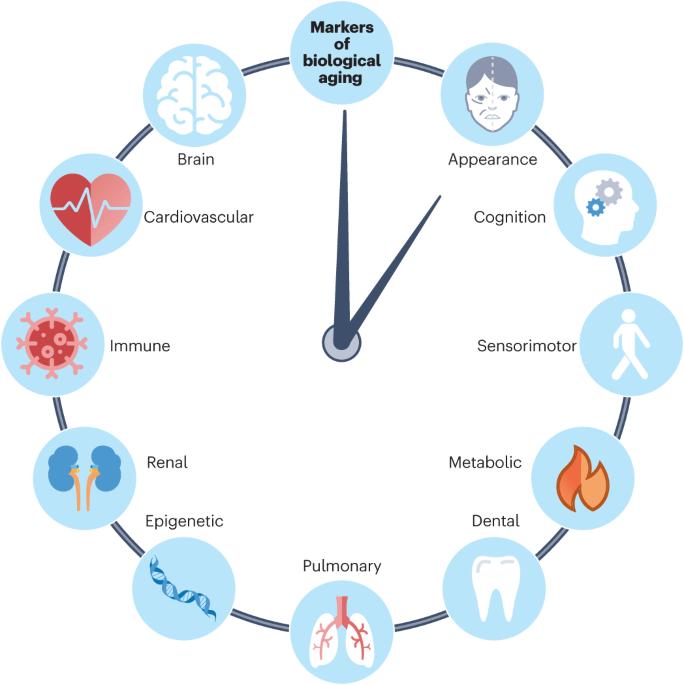
The real way to make this clock “slow down” or even “reverse” has always been the breakthrough that global researchers most want to find.
However, for a long time in the past, this was almost an impossible task. The vast and scattered data, lack of variables, and incomparability across laboratories made the cost of systematically searching for effective intervention methods extremely high and the speed extremely slow.
It wasn't until this year that research teams from institutions such as Harvard University, Stanford University, and the University of Washington proposed a brand - new direction:
Let AI understand, integrate, and analyze a large amount of real in - vivo experimental data from the past few decades, and proactively “mine” clues for reversing aging from it.
They named this platform ClockBase Agent, and the results it brings may be changing the valuation framework of the US stock biotech industry in the next few years.
AI Finds “Clues for Reversing Aging”
ClockBase Agent integrates more than forty aging clock models and automatically searches for patterns in more than two million sets of molecular omics data from humans and mice, reconstructs the experimental logic, and infers possible intervention methods that may affect the aging trajectory.
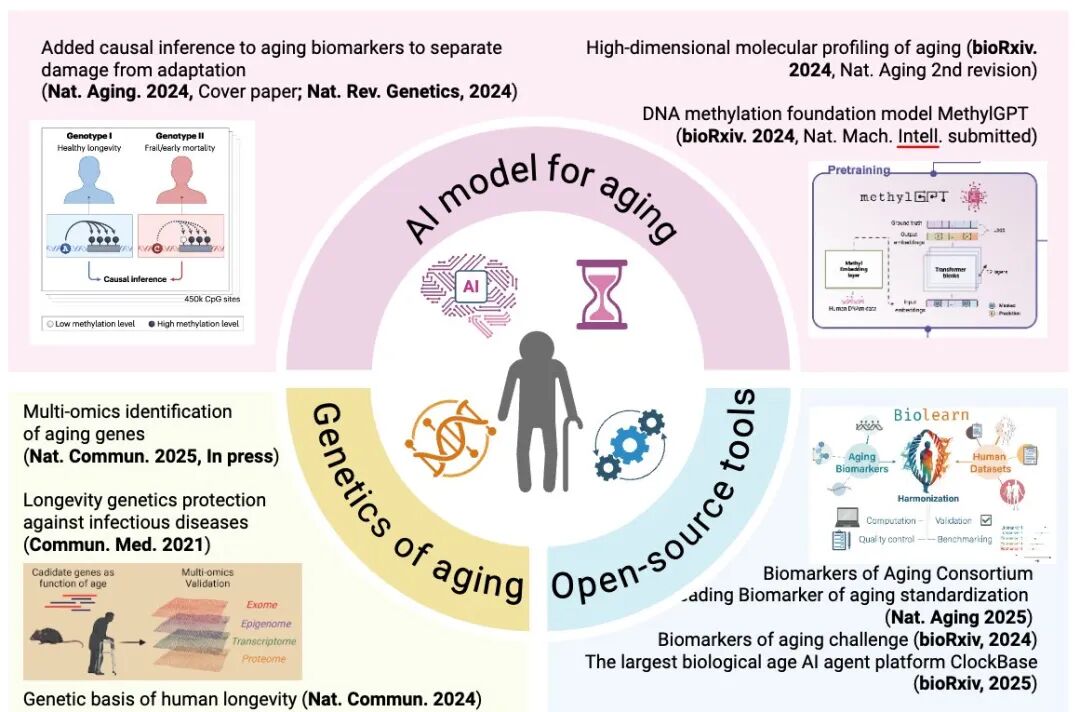
AI Panoramic Framework for Aging Research
This method is completely different from the previous “modeling and prediction - based” AI. Its characteristics are:
Instead of deduction, it searches for buried evidence from real experiments that have already been conducted.
After systematic analysis, ClockBase Agent screened out more than five hundred intervention directions with the potential to reverse aging and found a new anti - aging compound, Ouabain.
In mouse experiments, Ouabain significantly slowed down the frailty process in old mice, improved heart function and neuroinflammation at the same time, showing real and verifiable anti - aging effects.
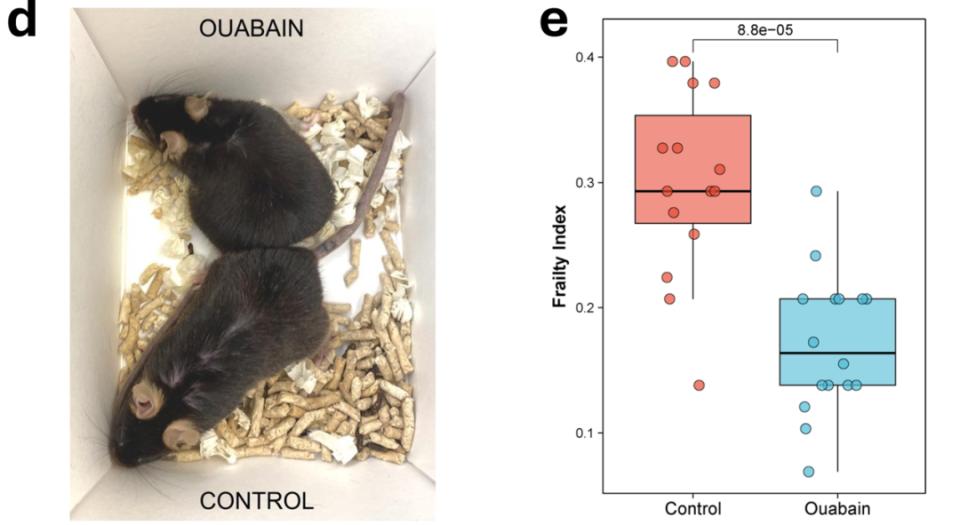
This means that in the field of aging research, which has long been considered difficult to analyze systematically, AI has found a brand - new entry point: not relying on assumptions or deductions, but directly searching for answers from the real experimental data accumulated over decades.
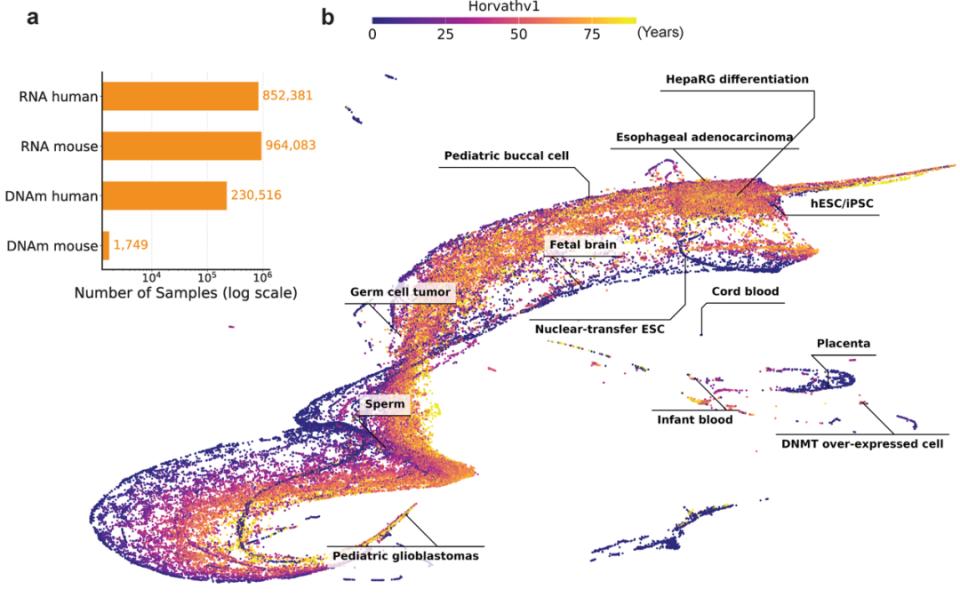
Comprehensive Biological Age Atlas Based on Molecular Characteristics of Humans and Mice
For the scientific community, this is a change in the research paradigm; for US stock investors, this is a change in the valuation logic.
What's the Fundamental Difference between This AI and the Previous Ones?
The difficulty in aging research lies not in the lack of data, but in the fact that the data is too much, too scattered, and too difficult to understand.
Over the past few decades, the key information in mouse experiments - age, gender, control group settings, and treatment methods - has often been scattered in the main text of papers, figure captions, or even supplementary materials, rather than neatly written in the data files themselves. Traditional bioinformatics and natural language processing methods can hardly automatically recognize these implicit structures, let alone conduct standardized analysis on the massive data across laboratories and years.
The change brought by ClockBase Agent is:
The research team no longer lets AI just “read data”. Instead, they try to make it act like a real researcher, actively asking questions, writing code, and testing hypotheses to understand the design logic behind each set of experiments.
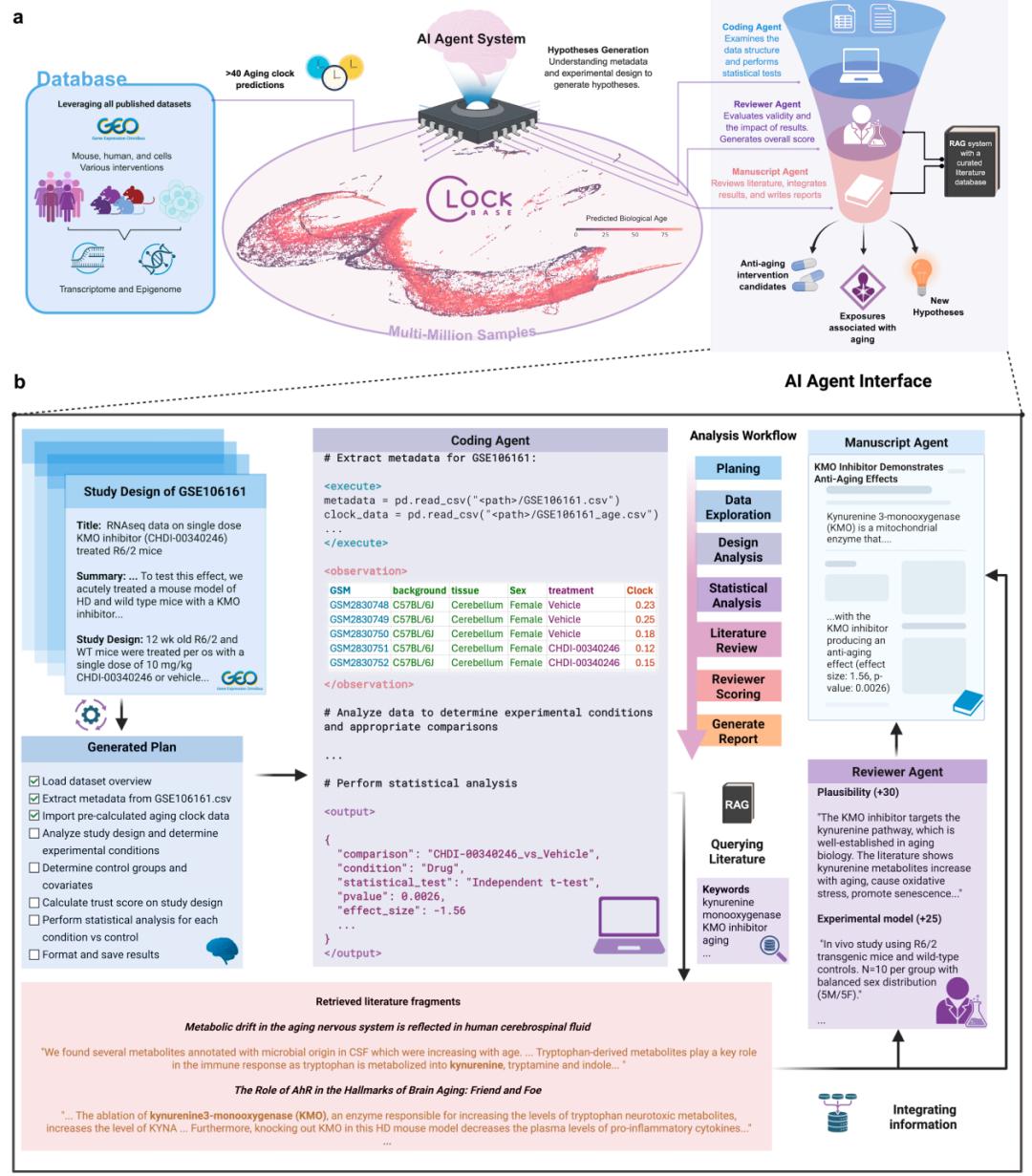
Schematic Diagram of the Whole Process of ClockBase Agent
The platform consists of three types of agents:
- The Coding Agent is responsible for writing code, reading data, drawing pictures, and conducting basic statistical analysis.
- The Reviewer Agent is responsible for evaluating the quality of experiments and judging whether a certain study is suitable for aging analysis.
- The Report Agent integrates the results of the first two and generates structured scientific research conclusions.
This model allows AI to no longer rely on preset paths. Instead, it can gradually understand the experimental structure, evaluate the reliability of data, summarize potential patterns, and finally provide candidate intervention measures with high confidence.
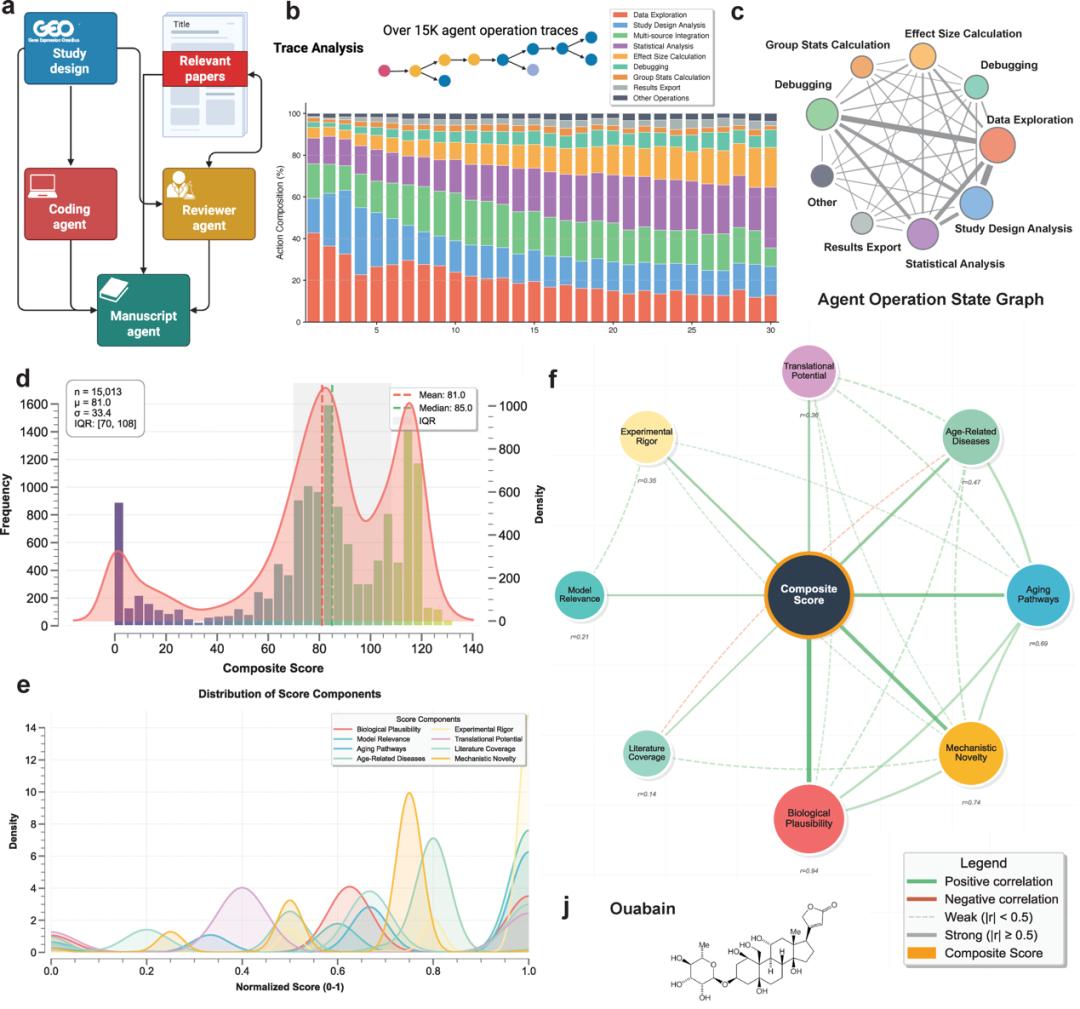
Workflow of AI Agent Operations and Multidimensional Scoring System
The research team also compiled a dataset covering a large number of recent aging research papers, allowing these agents to access existing knowledge backgrounds at any time and check whether their conclusions are consistent with existing evidence.
The results show that there is a statistically significant consistency between the high - confidence intervention measures provided by ClockBase Agent and the authoritative longevity gene and drug databases.
This means that it can not only find “possibly effective” directions but also prove that these directions are in line with real biological laws.
From the perspective of scientific research paradigms, this is the first time that AI truly has “systematic scientific research capabilities”; from the perspective of industrial impact, it directly changes the cost and time structures of drug screening.
The Logic of Anti - Aging Research Is Being Rewritten
The traditional R & D model is typically “hypothesis - driven”: researchers propose a possible pathway or molecule, conduct experiments at the cellular level first, then build a mouse model, and finally gradually advance to higher - level verification. This process is long and expensive, and failures often occur in the middle and later stages.
ClockBase Agent takes another approach: starting from the massive in - vivo experiments that have already been completed, it reversely infers which interventions have truly rewritten the biological age trajectory.
The research team analyzed more than 13,000 mouse RNA sequencing studies and more than 43,000 sets of intervention - control results, covering various types such as drugs, gene perturbations, environmental exposures, and disease models. This scale has almost exceeded the capacity of traditional single laboratories or even single disciplines.
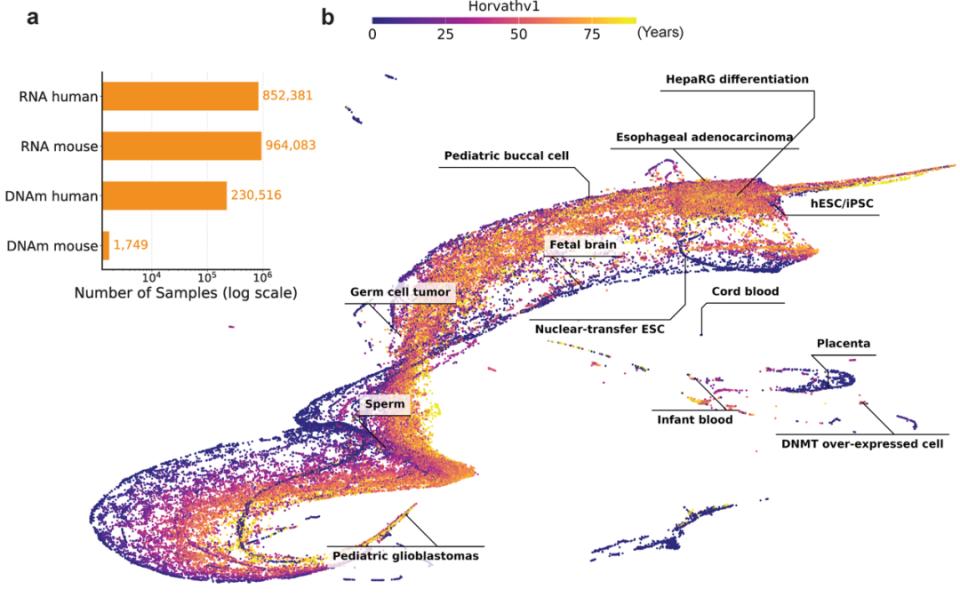
Age - Modifying Intervention Measures in the Mouse RNA Sequencing Dataset Identified by AI Agents
In this model, researchers no longer need to “bet on pathways” one by one. Instead, they can first let AI conduct a “general inventory of in - vivo evidence” at the system level and then screen out the directions truly worthy of investing experimental resources.
This brings about three - level changes:
First, the value of historical data is being re - evaluated. The experimental data scattered in the appendices of papers and public databases over the past few decades now have the opportunity to become sources of evidence for new drug discovery.
Second, research is shifting from single - line advancement to systematic advancement. Aging is a systematic problem, and single - pathway and single - gene hypotheses often yield little results with great effort. Systematic tools are expected to make research closer to the essence of the problem.
Third, protein design has entered a new stage. After systematic analysis of aging clocks and multi - omics data, the research team has begun to explore the redesign of proteins that can affect the aging trajectory through machine learning and protein engineering. This is no longer just “increasing or inhibiting the activity of a certain protein” but an attempt to make more profound changes to the life system at the sequence level.
From this perspective, ClockBase Agent is not just a “tool for finding drugs”. It is more like the starting point for the transformation of research methods in the biotech industry in the next decade.
Ying Kejun: The Path of a Post - 95s Scientist
Behind this work, there is a very clear main character line.
Ying Kejun, the first author and one of the co - corresponding authors of this research, graduated from Sun Yat - sen University with a bachelor's degree, completed his master's and doctoral training at Harvard University, and is currently conducting post - doctoral research at the Tony Wyss - Coray Laboratory at Stanford University and the David Baker Laboratory at the University of Washington. His research direction spans aging biology and protein design.

At a very early stage, he realized that aging is probably not a phenomenon that can be explained by a single pathway or a single gene. Instead, it is more like the result of the long - term accumulation of various damages throughout the body. This judgment has always centered his research path around a core: using systematic tools to re - understand aging.
During his doctoral studies, he participated in the development of an aging clock based on causal inference and participated in the construction of the MethylGPT model based on the DNA methylome. On this basis, he further promoted the birth of ClockBase Agent, using AI agents to systematically inventory the multi - omics in - vivo data from the past few decades.
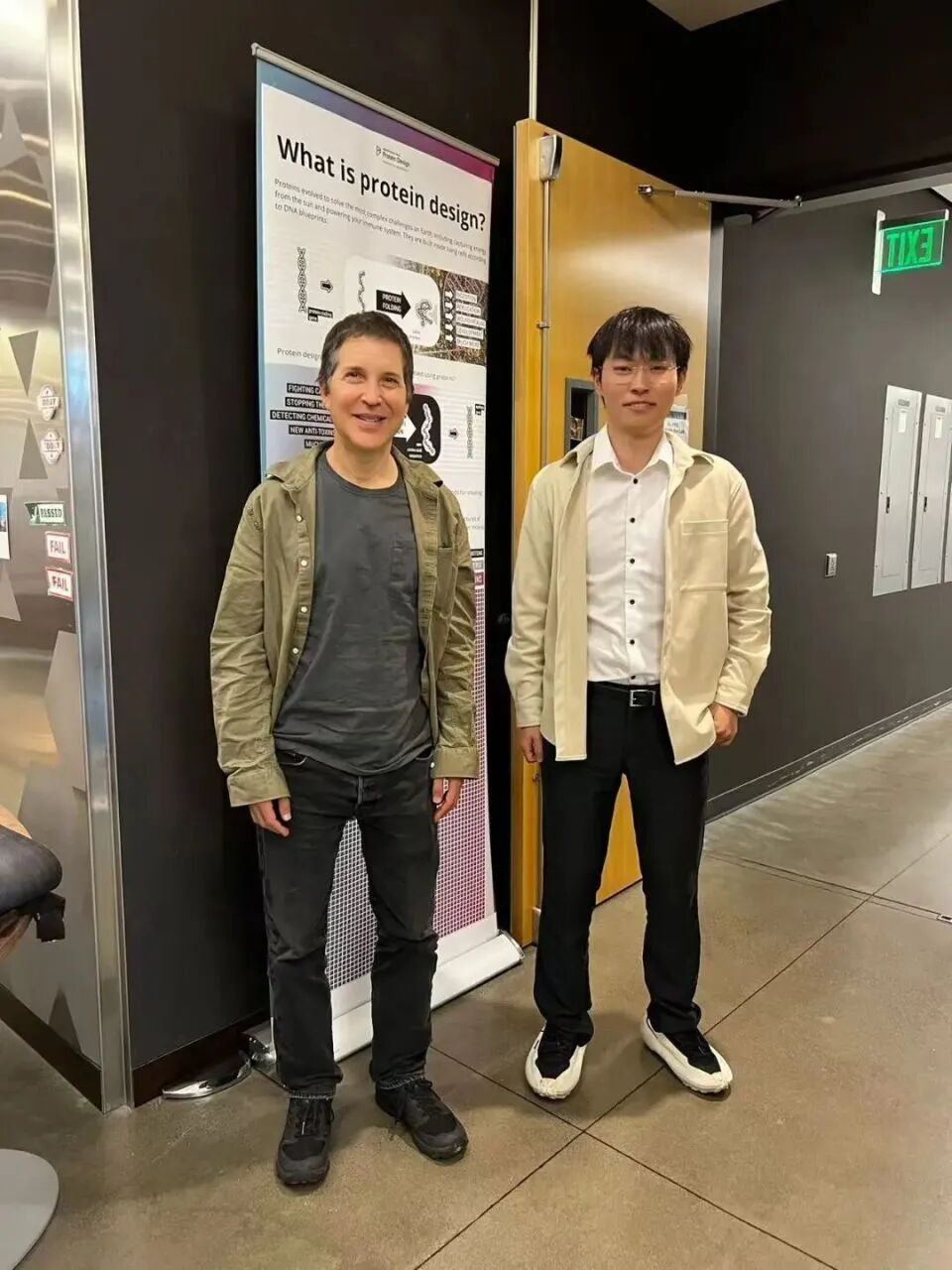
Ying Kejun and His Tutor, Professor David Baker
As the research deepened, he gradually formed a more radical and forward - looking judgment: if the action scale of existing drugs and gene interventions is still too small, the next step may need to move towards the redesign of proteins themselves. That is to say, it is not just about regulating the life system but an attempt to “rewrite” part of the life program at the molecular level.
For US stock investors, Ying Kejun represents not just the personal resume of a young scientist but a new research paradigm:
In the field of aging, which has long been regarded as a “scientific problem”, AI and multi - omics data are converging, promoting research from local problems to systematic problems and from hypothesis - driven to data - driven.
Which Types of US Stock Companies Will Benefit?
From the perspective of US stocks, the emergence of ClockBase Agent is not just “another breakthrough of AI in life sciences”. It is more like a structural turning point: for the first time, “reversing biological age” has changed from a theoretical hypothesis to systematic evidence based on real in - vivo experimental data. This change will be transmitted along the R & D chain to multiple tracks.
One type is AI biotech platform companies. For example, RXRX, EXAI, SDGR, etc. They have long focused on AI - assisted drug R & D, but there has always been a fundamental question in the market: is model prediction really reliable, and can it really reduce the number of experiments and R & D expenditures?
The direction represented by ClockBase Agent is to use real in - vivo data to train and calibrate AI, making its conclusions closer to the “real world at the experimental level”. Once this type of research is proven to be replicable, it will raise the industry status of the entire AI biotech sector, give related companies stronger bargaining power in cooperation with large pharmaceutical companies, and increase the market's confidence in their business models.
The second type is gene - editing companies. Such as CRSP, EDIT, NTLA. The biggest difficulty these companies have faced in the past is that target screening is extremely slow, and the cost of failure is extremely high. The aging and immune pathways themselves are highly complex and difficult to explain in the way of a single pathway or a single gene.
The systematic in - vivo data analysis of ClockBase Agent can screen out molecular changes significantly related to the aging trajectory from the vast historical data, helping gene - editing companies to more purposefully select targets and paths at the beginning of R & D.
In other words, it can make the R & D path of gene editing shift from “post - verification” to “pre - screening”, reducing failed experiments and also winning more patience from long - term funds for these companies.
The third type is companies in the fields of gene therapy and anti - aging. One representative is VERV, which focuses on cardiovascular gene therapy, and a few early - stage pipeline companies specifically targeting “extending healthy lifespan”. For a long time, these companies have had great imagination space in terms of narrative, but they have often been regarded as “too cutting - edge and too far - ahead” in terms of evidence, and the market lacks confidence in their effectiveness.
The fourth type is providers of computing power and AI infrastructure. This includes NVIDIA, as well as Google and Amazon, which provide large - scale AI cloud services. Platforms like ClockBase Agent are not “one - time projects” but will be embedded in the R & D processes of pharmaceutical companies and research institutions in the long term.
This type of application requires continuous GPU or TPU inference, long - term storage and repeated calculation of massive omics data, and the normal online operation of large models and agent systems. Once