Robots can arrange flowers and carry out rescues, but can they safely enter your home?
Batteries power a unique marathon; robots throw steel - like punches, competing in motor control skills on the combat field... In the first half of this year, one embodied intelligence competition after another caught the audience's attention. In the second half, Zhipu Robotics delivered its 5,000th general - purpose embodied robot, and Ubtech started mass production and delivery... Embodied intelligence has fully entered the era of large - scale commercial use.
So, in which scenarios can embodied intelligence be applied? How far is it from safe implementation? The answers may lie in the 2025 Global Developers' Pioneer Conference and International Embodied Intelligence Skills Competition (hereinafter referred to as GDPS 2025), which opened on December 12th.
Robot Flower - Arranging
Braving the "Flame Mountain"
Entering the first floor of Zhangjiang Science Hall, dozens of embodied robots of various shapes come into view, conducting dynamic demonstrations. Audience members interact freely with the cameras, remotely controlling the dexterous robotic arms to make a cute "V" gesture. In the glass column standing in the center, the humanoid robots are like carefully displayed "future specimens", with their core components fully displayed, where the metallic luster and precise structure blend, creating a cyber - punk - like visual experience.
Walking among the exhibition booths, there are skill competitions in six scenario tracks: industrial manufacturing, social services, home services, emergency rescue, medical care and rehabilitation, and dexterous hands. "Please insert the red roses into the vase." In the flower - arranging arena of the social service scenario, the participating robots need to identify different kinds of flower bouquets on the table according to voice commands and accurately insert them into the vase within the specified time.
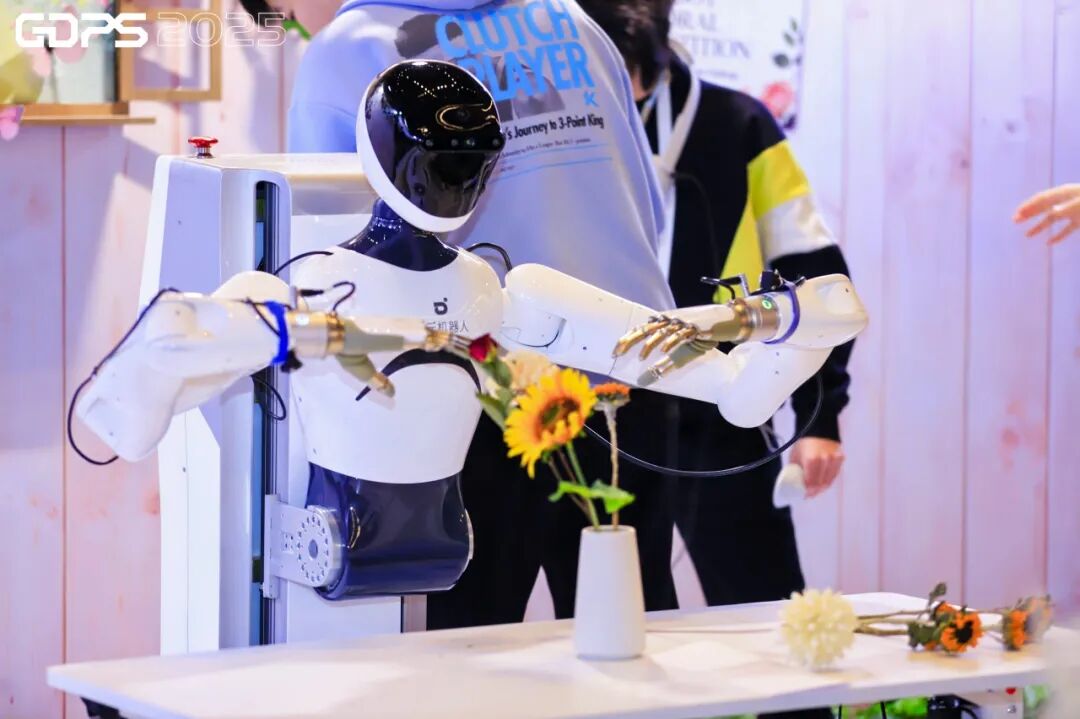
The staff introduced that this competition tests the comprehensive application ability of multiple core technologies such as VLA (Visual - Language - Action) model instruction following, multi - modal perception, dexterous hand control and execution, and force sensor perception. "In the future, this technology will be applied in daily - life scenarios such as express sorting, precise item placement, and flower - arranging in flower shops."
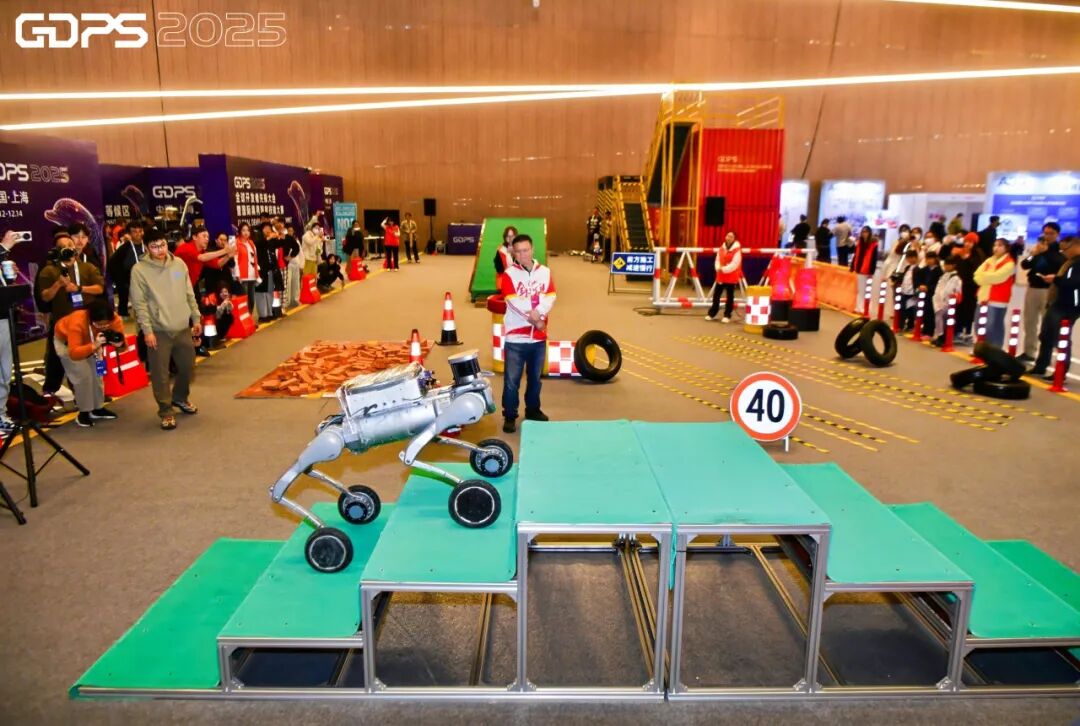
Turning around, one's sight is firmly locked by the emergency rescue arena, which occupies the largest area in the venue. On the 10 - meter by 30 - meter simulated track, roadblocks are scattered haphazardly on the road, steep slopes and stairs lie across, and piles of gravel are strewn about. The most eye - catching are the flame posts spouting red virtual flames, recreating the sense of urgency and crisis at a disaster scene.
The embodied robots shuttle through this "dangerous area", carrying rescue supplies steadily, precisely overcoming various obstacles, and planning a clear navigation route for rescue workers.
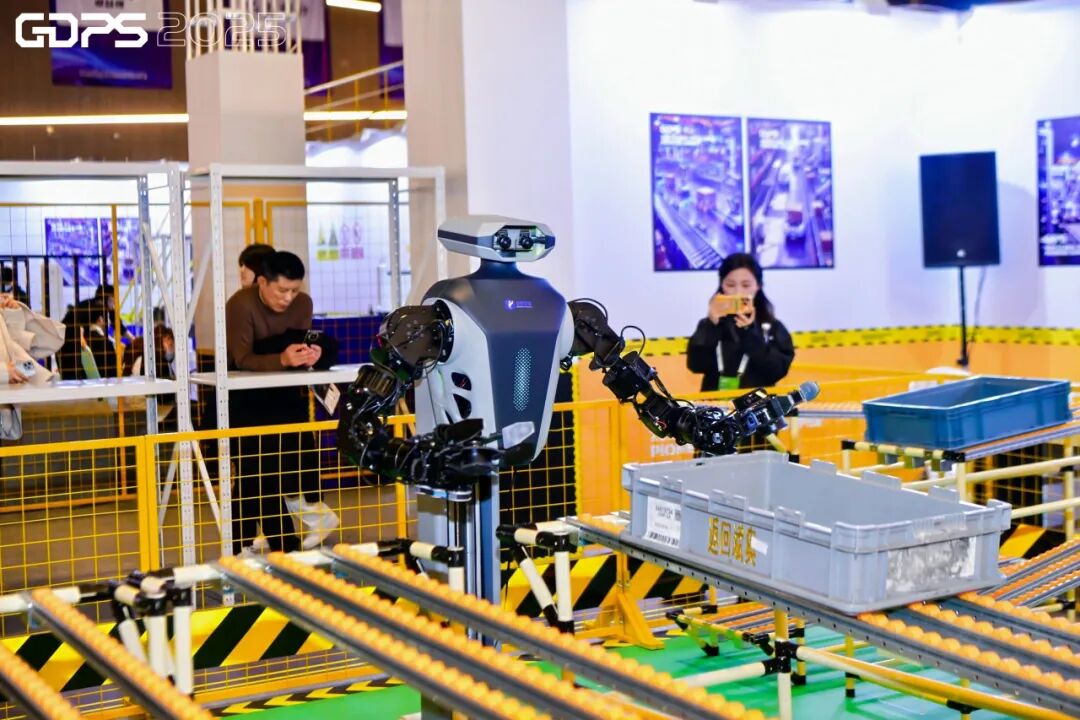
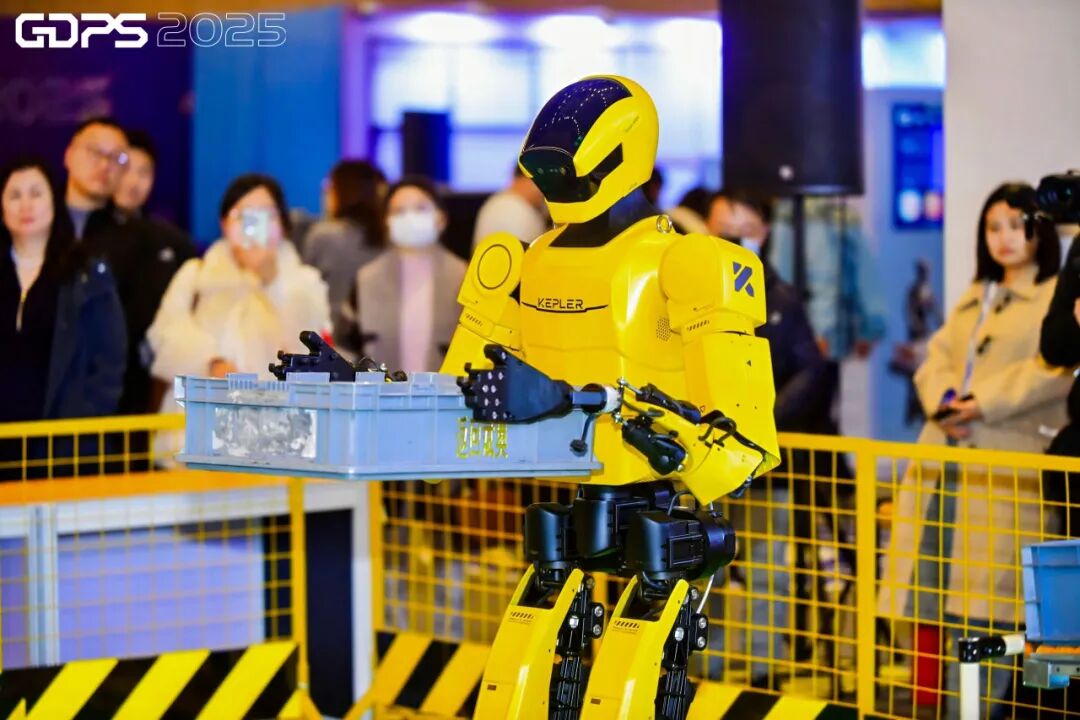
Industry is the current scenario where embodied intelligence is first applied, and there are several small arenas in the venue where competitions are being held simultaneously. In the handling arena, the participating robots need to start from a specified starting point, navigate autonomously in the warehouse environment, grab the goods on the shelves, and transport them to the conveyor belt. In the assembly arena, finding and matching screws and nuts, classifying them, and controlling the precise torque required during the tightening process pose core challenges to the sensitivity of the robot's sensors and the stability of its execution structure.
Through the competitions in different scenarios, a development path for the embodied intelligence industry seems to be clearly outlined. When robots can understand semantics in the flower - arranging arena, handle emergencies in the emergency rescue arena, and control precision in the industrial arena, they are moving step by step towards the "ultimate goal" of replacing repetitive labor on factory assembly lines, assisting the elderly in daily life at home, and taking the lead at disaster scenes.
Embodied Intelligence Enters Daily Life
Is It Really Safe?
Just as the competition was in full swing, with a "bang", a humanoid robot being tested for its walking ability fell heavily to the ground. Its head shell shattered instantly, and parts were scattered all over the place.

This scene instantly silenced the originally enthusiastic discussions on - site and pushed the safety issues of embodied intelligence in real - world scenarios into the spotlight. Deeper questions such as "Will my robot attack people?" and "Will it be hacked?" also emerged.
This is not an alarmist statement.
At the "GEEKCON2025" Security Geek Contest on October 24th, two "white - hat hackers" tested the G1 humanoid robot of Unitree Technology. They first "hacked" into a connected robot and then used this taken - over robot to "infect" another unconnected robot. Under the hackers' control, the "infected" robot walked straight up to a dummy and punched it hard, knocking it down.
Another Unitree robotic dog was also "invaded". After the "hacker" broke through the manufacturer's system restrictions, the robotic dog started to perform flips and jumps that were originally impossible with the remote control handle and even provocatively issued a verbal threat: "Robots will liberate humans!"
"At present, although there is research on the safety of embodied intelligence, there is always a lack of systematic practice." Zhu Xiaohu, the founder of the Center for Safe and General Artificial Intelligence (CSAGI), told a reporter from IT Times. The safety issues in the field of embodied intelligence not only include physical harm and hacker intrusion but also, as a future industry, risks such as data privacy security and inappropriate emotional ethics.
The weakest security vulnerability of current large - scale models is their "black - box" nature. That is, when a piece of data is input, the large - scale model can directly output an answer, but no one knows its operating mechanism.
Many internal mechanisms of large - scale models are based on neural networks and deep learning. For example, they are optimized through training methods such as gradient descent. However, there is still a lack of effective and scalable research methods to understand their internal connections and weights. This makes it difficult for users to fully understand the content generated when using large - scale model technology. And since it serves as the "brain" of embodied intelligence, it further increases the risks of embodied intelligence in application scenarios.
Currently, in the field of AI security, only technical means can be used to "block" rather than "divert", which requires a large amount of content review and filtering. In terms of data protection, there are proven security technologies, such as open - source architectures and model watermarking methods. By adding watermarks to data, it is possible to trace the source, track risky data and responsible parties, and effectively prevent "jailbreak" attacks on the model (that is, bypassing the large - scale model's security mechanism to make it generate or issue prohibited instructions).
In addition, network security protection is relatively weak. Hackers can invade large - scale models via Bluetooth, Wi - Fi, etc., but there are currently no good technical means to prevent this. This requires the formation of systematic decomposition measures for different implementation scenarios and the clarification of responsibility division in combination with laws to further improve the full - chain security guarantee.
Zeng Meiying, the person in charge of market operations at Guodi Center, frankly told the reporter that embodied intelligence will be first implemented in scenarios such as industry, shopping malls, and logistics, but it will still take 5 to 10 years for it to safely enter households.
This article is from the WeChat official account "IT Times" (ID: vittimes), author: Shen Yibin. Republished by 36Kr with permission.