Through a live stream, witness the power of HarmonyOS Smart Mobility's "togetherness"
On December 9th, Shanghai's Bund was ablaze with the presence of Chinese automobiles. Yu Chengdong, an executive director of Huawei, joined hands with the leaders of five major automobile manufacturers, including Seres, Chery, BAIC, Jianghuai, and SAIC, to conduct the first live - stream of the five brands under Hongmeng Smart Mobility: AITO, Luxeed, Enjoyer, Zunjie, and Shangjie. They engaged in in - depth discussions around technology, products, users, and future industrial organization models.
The timing of the live - stream was crucial. In the past 43 months, the cumulative deliveries of all models under the Hongmeng Smart Mobility brand reached one million units, a figure worthy of being inscribed in the history of China's new energy vehicle industry. Meanwhile, in the Chinese new energy vehicle market where prices are generally dropping, Hongmeng Smart Mobility not only ranks high on the sales list but also achieves growth in both volume and price.
In November, Hongmeng Smart Mobility delivered nearly 81,864 vehicles, a year - on - year increase of nearly 83%. Among them, the four models of the AITO brand totaled approximately 51,000 units. Both Luxeed and Shangjie reached the milestone of selling over 10,000 units per month. Enjoyer delivered over 6,000 units, and the monthly sales of the million - level Zunjie have been steadily above 2,000 units.
What's more worthy of attention than the numbers is another main theme revealed in the live - stream. The first collective appearance of the leaders of the five brands allowed the industry to witness for the first time that China's smart cars have shifted from "single - brand competition" to "systematic collaborative growth." With the five brands announcing a comprehensive deepening of strategic cooperation, they will also collaborate around unified technical standards, unified service systems, shared after - sales networks, co - built energy replenishment systems, and alliance innovation centers.
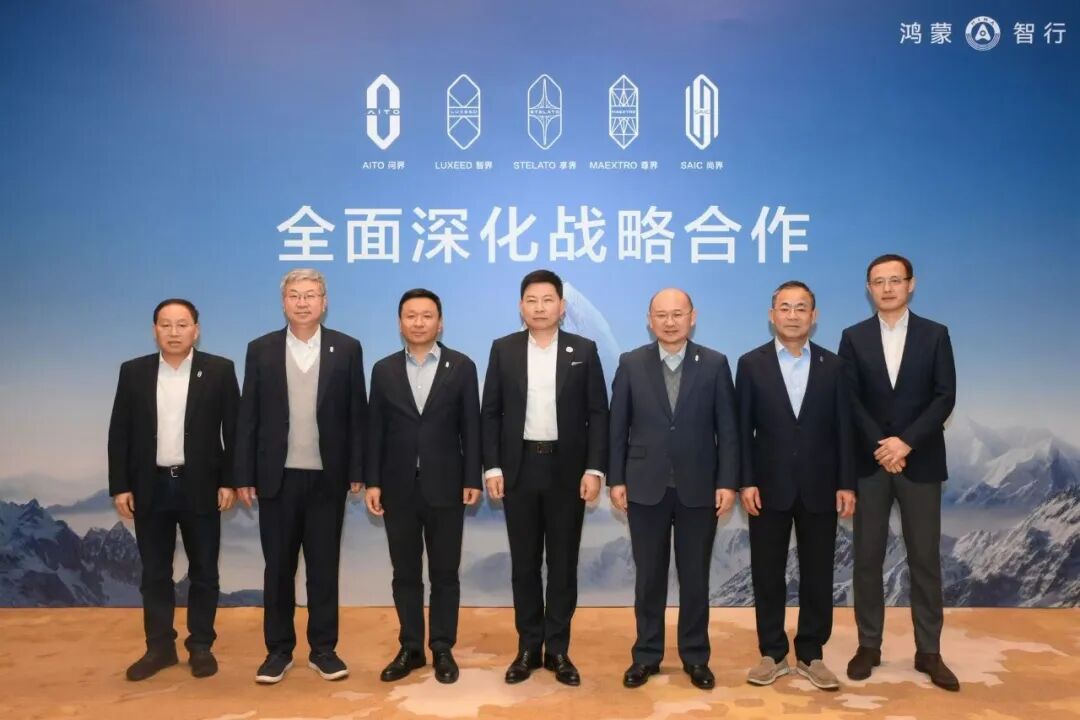
The gathering of the "five brands" shows that the success of Hongmeng Smart Mobility is the result of the two - way interaction between Huawei's technological capabilities and the manufacturing capabilities of Chinese independent brands. A new industrial cooperation model is taking shape.
To understand the success of Hongmeng Smart Mobility, we must go back to the very beginning. Why did several automobile manufacturers with different backgrounds and development paths choose to come together at this moment? The answer lies in the relationship between products, terminals, and systems.
Product Foundation: Setting the Benchmark for High - end Intelligent Experience
"They are good at building whole vehicles, while we excel in intelligence, chips, software, algorithms..." In the round - table forum session of the live - stream, Yu Chengdong summarized the core capabilities of Hongmeng Smart Mobility in this way. This is exactly what Hongmeng Smart Mobility is doing, providing the experience of Huawei's high - end brand to the "five brands" without reservation.
This is most intuitively reflected in the area of "safety," which users are extremely sensitive to. In this live - stream, the real - life experience of a car owner provided the most direct evidence of Hongmeng Smart Mobility's safety capabilities. A user of the AITO M9 had a flat tire in the uninhabited area of Delingha, Qinghai. Both the mobile phone and walkie - talkie signals were interrupted, and there was no one within dozens of kilometers. Eventually, the car owner used the Huawei Star River Communication system installed in the car to send a satellite distress signal, confirm the location, contact the rescue team, and safely escape.
This accidental incident revealed the boundaries of Hongmeng Smart Mobility's safety system. It doesn't just cover a certain type of road condition but every place where users may go.
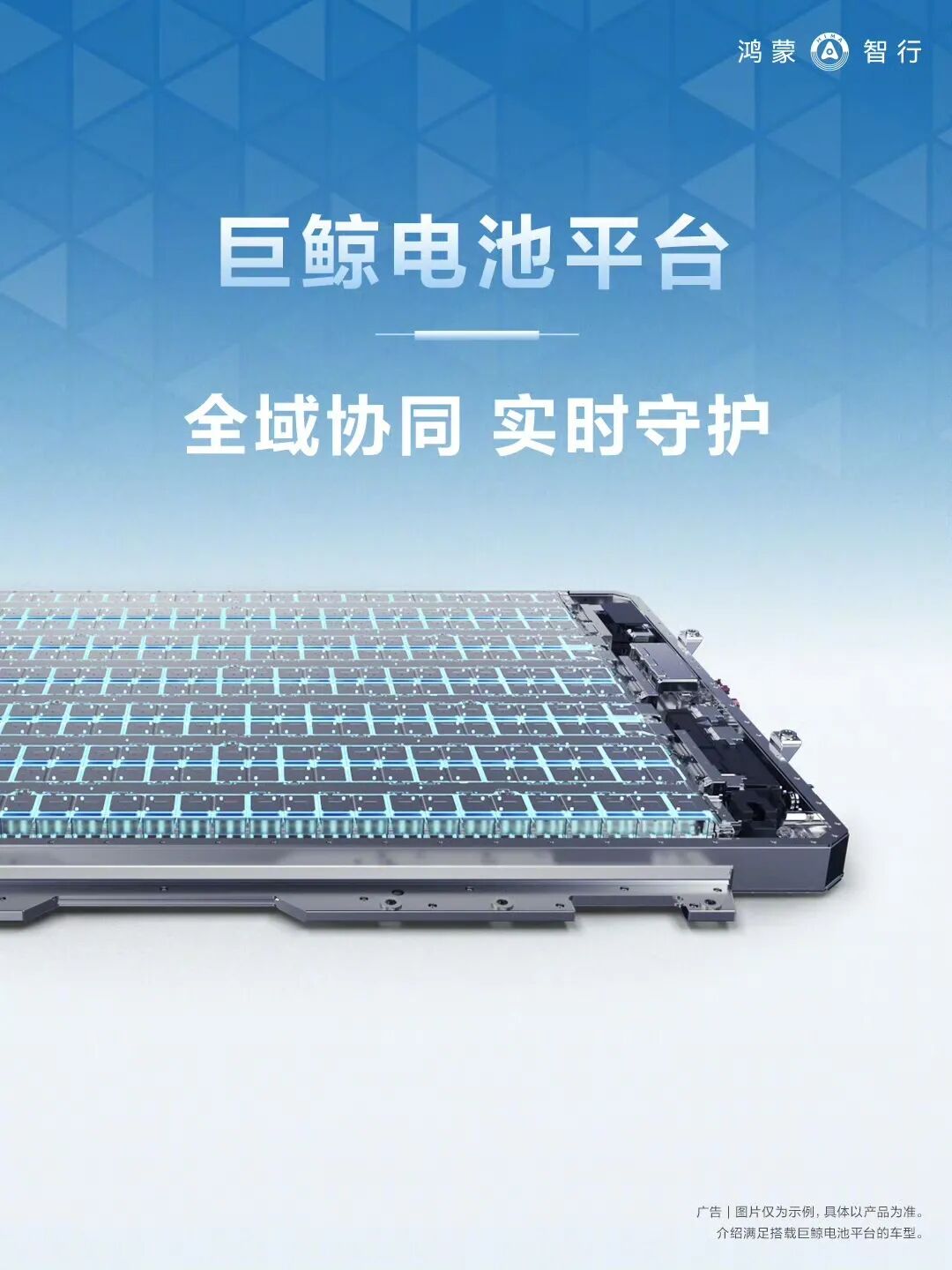
The same is true for battery safety, which new energy vehicle users are very concerned about. As of November 2025, the number of online battery cells on Huawei's Whale Battery Platform exceeded 150 million. Among the one million vehicles equipped with this platform, there has not been a single safety accident caused by battery cell quality or thermal runaway of the battery pack. Moreover, during the R & D phase, the Huawei Whale Battery Platform already met the new national standards that will be officially implemented in July 2026 in advance. Its requirements for thermal diffusion, waterproofing, and impact resistance are much higher than the current standards, and some tests even have a redundancy of "several times the national standard," which demonstrates the value of its systematic engineering capabilities.
The same applies to the assisted - driving capabilities. While the industry generally competes in terms of computing power and the number of sensors, Huawei's Qiankun Intelligent Driving ADS takes a different approach. Through long - term engineering optimization, the vehicle's understanding of real - world roads is closer to that of humans. Recognizing tidal lanes when exiting tunnels and continuous modeling in mixed - traffic scenarios are the results of long - term engineering optimization, large - scale data training, and the synergy between maps and perception.
The Huawei Qiankun Intelligent Driving ADS, with the ability to understand the integration of humans, vehicles, and roads, has been installed in the one - million - vehicle fleet of Hongmeng Smart Mobility that is already on the road. Based on the large number of products, this system accumulates new data and boundary scenarios every day, making its assisted - driving function evolve from "usable" to "reliable" and "excellent." Since 2023, Hongmeng Smart Mobility's active safety system has helped users avoid millions of potential collision risks. These "system actions" scattered in daily driving constitute an invisible but continuous safety increment that users may not perceive in their daily lives.
The technological experience of Hongmeng Smart Mobility users is constantly expanded by the cross - device and cross - scenario interaction capabilities empowered by Huawei. Functions such as opening the door with a gesture and the KK front trunk transform the interaction between users and the car from "pulling handles and pressing buttons" to more natural gesture communication. In the user experience, navigation on the mobile phone, an ongoing online meeting, or half - played music can be seamlessly transferred to the car's infotainment system and then switched back to the mobile phone or other Hongmeng - enabled devices at home before arriving.
Safety, intelligence, and convenience are the underlying logic for an automobile brand to truly establish itself in the high - end market. More importantly, Hongmeng Smart Mobility's product methodology of "taking experience as the boundary" is yielding more fruits. Take the Enjoyer S9T shared in the live - stream as an example. This station wagon, originally considered to have a "niche aesthetic," has found a path closer to real - world needs based on a new understanding of the changes in Chinese family structures, travel radii, and lifestyles.
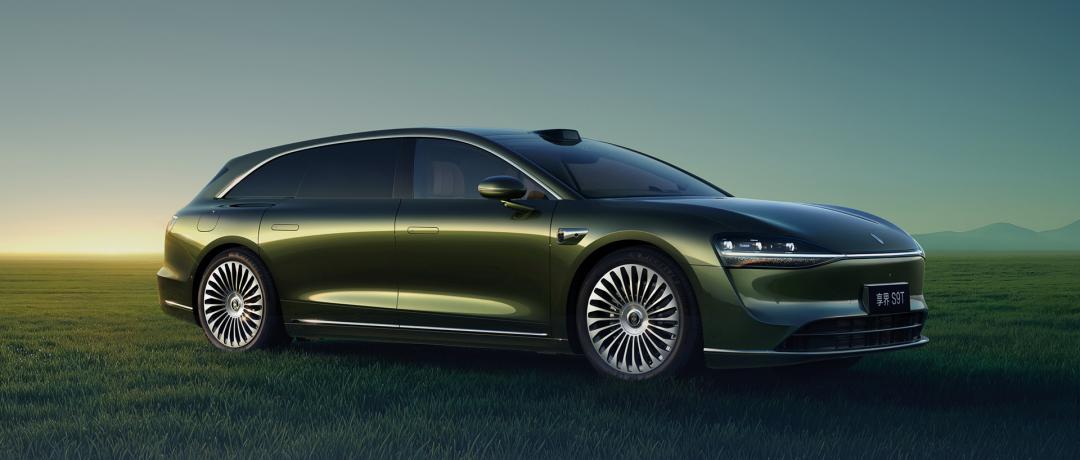
Data shows that within 66 days of its launch, the Enjoyer S9T received over 30,000 large orders, and its monthly sales exceeded the annual sales of traditional luxury station wagon brands. Two hours after the live - stream started, the new Enjoyer S9 received over 2,000 large orders. The cooperation between Hongmeng Smart Mobility and BAIC has transformed the niche station wagon market into a popular segment in the mass market.
In essence, this is the transfer of Huawei's long - honed "system - building" capabilities in the ICT field to the automotive products. Having the experience of fine - tuning the user experience on a scale of tens of millions of terminals naturally raises the starting point of intelligence to a new reference level.
Terminal Aggregation: Making Channels the "Amplifier" of Product Value
If product capabilities answer the question of "what a good car should be like," the terminal determines the version that users ultimately see. At the round - table forum, Wang Xiaoqiu of SAIC Group gave a straightforward judgment that explains why Hongmeng Smart Mobility has a leading edge at the terminal: "The understanding of quality in consumer electronics and the automotive industry is completely different."
The gap that Hongmeng Smart Mobility has created comes from transplanting Huawei's long - accumulated ToC system to the automotive field. This seems simple but is extremely difficult to imitate. When users visit Hongmeng terminals, during the pre - sales stage, they can test - drive the assisted - driving function on the spot, experience cross - device functions, and clearly see the product configuration and prices. This turns technology from an abstract concept into a tangible experience for users.
Once users understand the technology, they will spontaneously share their experiences, thus creating a dense stream of real - world word - of - mouth in the industry. The videos, pictures, and feedback uploaded by one million car owners on social networks every day give Hongmeng Smart Mobility's product experience a strong social amplification effect. This "user - generated content network" has become an important driving force for brand growth, rather than simply relying on advertising or promotional activities.
After - sales service is also integrated into a unified system. If the maintenance of a quality issue takes more than 24 hours, a replacement car or subsidy will be provided. If the appointment for basic maintenance is delayed, the service will be free. The "restaurant - style" store experience, 24 - hour roadside assistance, cross - regional energy replenishment, and self - driving support... These are difficult for traditional automobile manufacturers to achieve because it means treating after - sales service as an integral part of the product. For many consumers, this hassle - free experience is more decisive in determining whether they will continue to buy the same brand than any single function.
The power of the terminal system is reflected not only on the user side but also on the dealer side. Dealers of traditional luxury brands are the most sensitive group, being extremely sensitive to profit structures, experience chains, and user profiles. This is why many dealers are flocking to the Hongmeng Smart Mobility network because they have for the first time seen an automobile manufacturer operate its terminals as scientifically and efficiently as an Internet company.
For example, since 2024, Zhong Sheng Group, a listed dealer, has transformed 48 4S stores of luxury brands into Hongmeng Smart Mobility channels in two batches, including 40 AITO user centers and 8 full - service stores.
Many leading dealers have entered the channels of AITO, Luxeed, Enjoyer, etc. This is not a coincidence but an obvious manifestation of a market trend. In essence, what they are choosing is the definite product capabilities, the replicable operation system, and the brand influence that attracts traffic. When the terminal becomes an amplifier of product power, this contact point becomes the core force for Hongmeng Smart Mobility to continuously grow, accelerate penetration, and rapidly expand.
System Reigns Supreme: Five Brands, Ten Models, and What Hongmeng Smart Mobility Has Disrupted
How to summarize the year of high - speed growth of the "five brands"? Yu Chengdong's word for the year is "growth." He said that what Hongmeng Smart Mobility has achieved is not only sales growth but also the growth of its capability system. Wang Xiaoqiu believes that what has truly arrived is not a price war but "popularization," making intelligence shift from a high - end optional feature to a universal experience. Yin Tongyue talked about "anti - involution," emphasizing that Chinese automobiles must break away from low - price competition and bring value back to technology itself. Zhang Xinghai proposed "industrial reconstruction and value reshaping," believing that electrification and intelligence are redefining the automotive value chain. Zhang Jianyong summarized the breakthrough path of the Enjoyer S9T with the word "definition," redefining a niche category into a mainstream one. Xiang Xingchu emphasized the system upgrade brought by "extreme requirements," which is the confidence for Zunjie to enter the million - level luxury market.
The answers of these leaders may seem different, but they all point to one thing: For the first time, Chinese automobiles have shifted from single - point breakthroughs to systematic competition. Technology, products, brands, and operations are being re - combined into a complete capability network.
The five brands growing under the umbrella of Hongmeng Smart Mobility are no longer five parallel paths. Among them, Zunjie targets the ultra - luxury market, AITO undertakes the flagship models and large - scale production, Luxeed is aimed at young users, Enjoyer creates high - end self - indulgent scenarios, and Shangjie reaches the mainstream price range with high - level intelligence. Different models target different user groups, travel scenarios, and aesthetic preferences, but they share the same technical safety boundaries, interaction logic, and service standards.
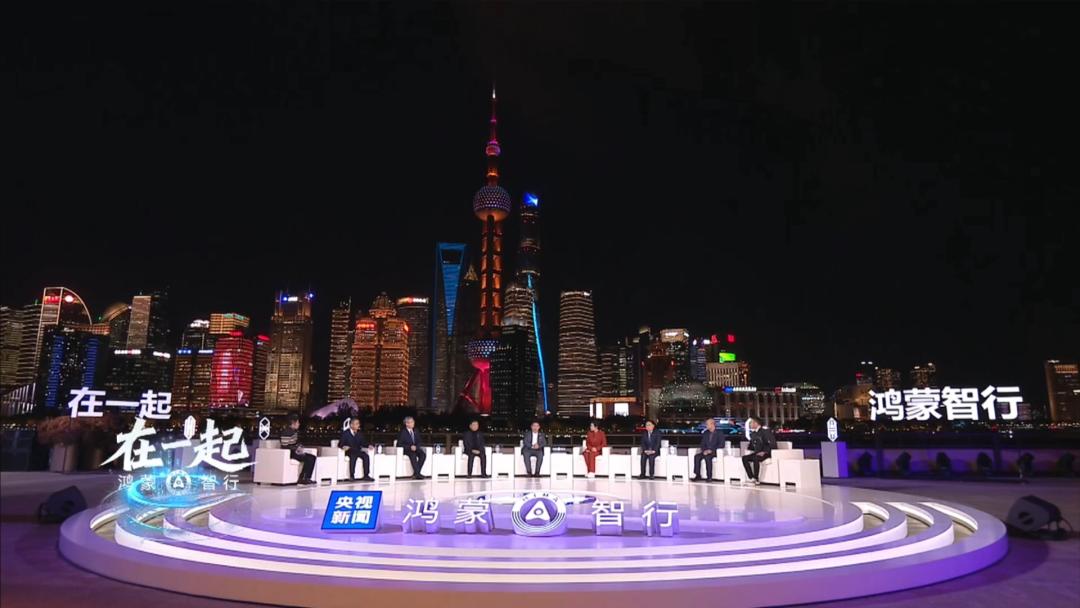
This is the real subversion of Hongmeng Smart Mobility. During the critical window period for China's automotive industry to move upmarket, it has completed a complete transfer of the value system. Similarly, the "five brands" are not limited to competing within the "performance, materials, and history" value coordinate system set by traditional luxury brands. Instead, they are redefining the value composition, creation method, and delivery standards of high - end intelligent vehicles with the underlying logic of the ICT industry.
Why Can Hongmeng Smart Mobility Rewrite the Rules of the Luxury Brand Game?
Let's go back to the original question: What is the real value of Hongmeng Smart Mobility after reaching one million units in sales?
Actually, the answer was clearly shown in the round - table forum of the live - stream. China's new energy vehicle industry has finally reached the turning point of "systematic competition" rather than "single - point breakthrough." The judgments from the leaders of the five brands from different perspectives all point to the same conclusion: Future automotive competition will no longer be about performance, materials, and pricing but about the ability to build a sustainable and evolving capability network.
The "five brands" have jointly set a very high standard for safety and reliability, turning "intelligence" from a marketing buzzword into a verifiable baseline for vehicle use. With transparent and efficient service processes, they have transformed the "luxury experience" from a story into specific details that users can feel every day. They have also turned the question of "how to create a high - priced intelligent vehicle brand" from a "mystery" mastered by only a few into a standard operating procedure that can be replicated by partners.
From the perspective of China's automotive industry, Hongmeng Smart Mobility has created a new model of high - end intelligent vehicles. Starting from technology, growing within the system, and being tested in the market. It's not so much that Hongmeng Smart Mobility is good at building cars, but rather that it provides a new way of industrial division of labor and a path for China's high - end new energy vehicles to participate in global competition.
The hustle and bustle of the automotive market will pass, and market cycles will fluctuate. Those who can stay in the game after passing through the fog are often the ones who have rewritten the rules of the game.