The most amazing female employee sets her sights on humanoid robots.
For Luxshare Precision, which values the future market potential of humanoid robots, what it needs are a sufficiently strong technological barrier, a well - structured layout, and the coordinated development of the entire industry.
The latest investor communication event has brought Luxshare Precision into the spotlight.
At the latest investor communication event of Luxshare Precision recently, Tian Yuming, the dean of the company's AI Research Institute, revealed that the company expects to ship 3,000 humanoid robots this year, all of which will be sold to external customers. This is a new attempt by Luxshare Precision to transform and expand its business boundaries after its automotive business.
Luxshare Precision is rapidly replicating its precision manufacturing capabilities accumulated in the consumer electronics field to the new track of humanoid robots, trying to explore a development path from a component supplier to an enabler of the intelligent manufacturing industry.
When the consumer electronics field faces development barriers and the automotive business is far from its explosive moment, it is an open secret that Luxshare Precision wants to find new growth points through humanoid robots.
Looking at the global market, Goldman Sachs predicts that the market size of humanoid robots may reach $154 billion by 2035. As a major global manufacturing country, China is actively deploying in this future - oriented industry.
However, it should be noted that although Luxshare Precision has delivered 3,000 humanoid robots, the reality of mass - production and delivery by many humanoid robot manufacturers before has verified that the humanoid robot industry is far from realizing large - scale value creation in the production and manufacturing process.
Simply put, the current humanoid robot track has not shown a clear path of return on investment to the outside world.
All along, Luxshare Precision has shown the outside world its transformation process from a small OEM factory to a technology - manufacturing enterprise. This exactly corresponds to the personal growth path of its founder, Wang Laichun: from a migrant worker in Foxconn to the founder of a listed company worth hundreds of billions.
Wang Laichun's personal struggle history is quite representative in China's manufacturing industry. This female leader, who has won the title of Forbes China's Most Outstanding Business Women multiple times, is one of the few corporate operators with the ability to comprehensively control the industry, strategic awareness, and capital operation capabilities. This can be seen from her continuous industrial integration, business boundary expansion, capital operation, and merger and acquisition activities.
However, in the current wave of industrial development, the industrial development trend is changing rapidly, which poses a more in - depth test for technological capabilities and strategic planning capabilities.
For Luxshare Precision, the story of humanoid robots has just begun, but the real test lies in whether it can transform its manufacturing advantages into a sustainable business model.
Fierce market competition, the ability to expand new businesses, R & D investment, etc., are all topics that Luxshare Precision should explore in depth.
Business Migration Starting from the Core Business
Founded in 2004, Luxshare Precision is a beneficiary of the global consumer electronics wave.
Starting from connectors and continuously accumulating resources, Luxshare Precision quickly grew into Foxconn's largest customer and established itself in the field of precision manufacturing.
After going public in 2010, founder Wang Laichun began to operate the company's vertical integration and horizontal expansion. By continuously acquiring companies such as LianTao Electronics, Jiangsu Wistron, and Suzhou Midea, it gradually entered Apple's core supply circle step by step.
Almost all of its business expansion has relied on "buying, buying, buying".
However, this simple and direct approach is indeed effective. By buying technology when it is lacking and buying companies when it needs customers, Luxshare Precision has rapidly grown into a giant OEM in the "Apple supply chain".
Previously, some analysts said that one of the secrets of Luxshare Precision's development is its ability to deeply bind with core major customers, such as Apple.
In fact, in Apple's industrial chain, Luxshare Precision is not satisfied with a single link. Instead, in the process of a series of mergers, acquisitions, and technological integrations, it continuously extends the industrial chain and finally achieves the ability to cover the entire chain from parts to modules to complete machines, so as to enhance the value of its manufacturing and customer stickiness. This ability to control the value chain through vertical integration is the "scarce resource" in the industry.
These constitute Luxshare Precision's traditional moat.
In fact, the profit margin of the consumer electronics OEM industry is quite limited. Especially under a strong customer like Apple, it is not uncommon for suppliers' profits to be squeezed. The transformation of production lines and the equipment updates to match products further compress Luxshare's profit margin.
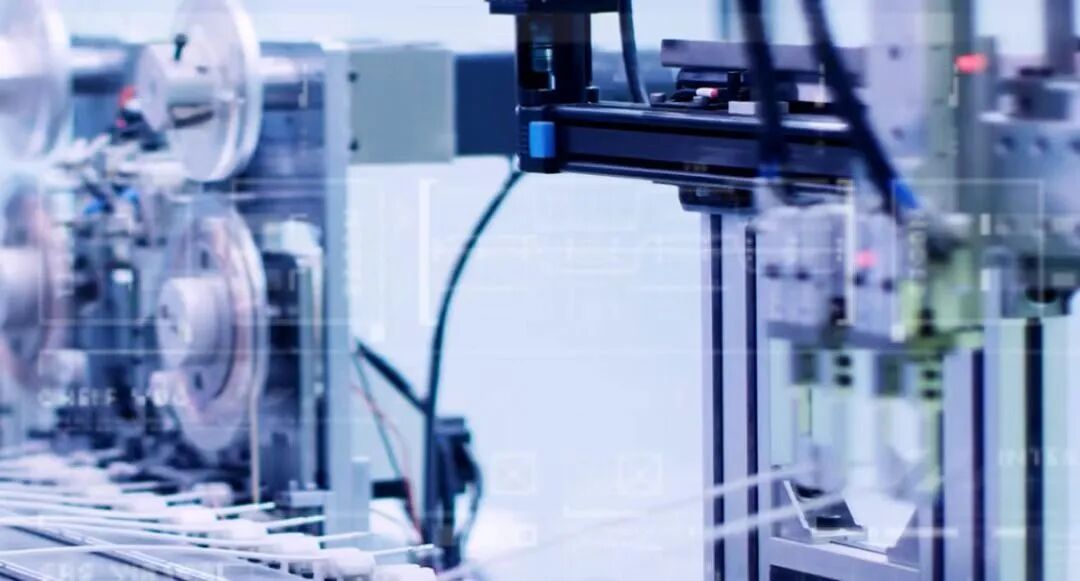
Picture / Luxshare Precision official website
The low gross profit in the entire consumer electronics field has always restricted Luxshare Precision to extreme cost control. However, signing long - term orders with major customers for several years at a time is an inevitable move in the face of external market competition.
Therefore, how to reuse technology based on the consumer electronics business is the focus of Luxshare Precision's current strategic migration.
Luxshare Precision needs to find a new engine for cross - border development.
Now, through the integration and acquisition of assets, Luxshare Precision has achieved the ability to design and assemble complete machines from core components to AI - accelerated computing servers, and has shown significant growth in the communication and data center business. In addition, by acquiring established automotive suppliers such as Leoni in Germany, it has also obtained an entry ticket to the automotive industrial chain.
According to its third - quarter report, in the first three quarters, the company achieved a revenue of 220.915 billion yuan, a year - on - year increase of 24.69%; the net profit attributable to shareholders of the listed company was 11.518 billion yuan, a year - on - year increase of 26.92%, higher than the upper limit of 25% in the previous performance forecast.
Among them, in addition to the consumer electronics business as the core, the expansion of new businesses such as communication and data centers and the automotive industry has contributed a lot.
New Aggregation of the Industrial Chain
In fact, entering the humanoid robot field is not Luxshare Precision's first cross - border move. In recent years, Luxshare Precision has been looking for new growth poles outside of consumer electronics.
As early as 2011, Luxshare Precision established an automotive division. The most basic business is the automotive wiring harness business based on the acquisition of the German company Leoni. As of 2024, the automotive wiring harness business accounts for nearly 60% of its automotive business.
On this basis, Luxshare Precision has also penetrated into the automotive industrial chain through various cooperation models. A typical example is the strategic cooperation with Chery using the ODM (Original Design Manufacturing) model. This model allows Luxshare Precision to not only obtain Chery's orders but also seek external cooperation.
After more than a decade of layout, in 2024, the revenue of Luxshare Precision's automotive electronics business was 13.758 billion yuan, with an obvious growth rate.
This in - depth layout of the automotive industrial chain has also given it a first - mover advantage in the transformation to other intelligent industries.
In September this year, Zhang Yongwei, the chairman of the China Auto Hundred Conference, pointed out at the First Aggregate Intelligent Industry Development Conference held in Wuhan Optics Valley that the three emerging industries of intelligent vehicles, embodied robots, and low - altitude economy (including flying cars) are deeply coupled in terms of technology, industrial chain, and application.
Wang Laichun has applied this reuse of homologous underlying technologies to the humanoid robot industry.
The greatest ability that Luxshare Precision has accumulated in the consumer electronics field is precision manufacturing. Years of OEM experience, production line management, and vertical integration capabilities have given it better expansion capabilities.
Industry data shows that the supply chain overlap between intelligent vehicles and embodied robots has exceeded 60%. Their underlying technologies both rely on the progress of artificial intelligence technology and follow the chain system from parts to modules to complete machines.
This is similar to the Apple industrial chain it serves, from acoustic devices to wireless charging modules, and then to the manufacturing chain of the complete AirPods model.
The high - speed connector technology, which has been well - developed in the consumer electronics field, can be upgraded to automotive - grade high - speed connectors according to the needs of automotive intelligent manufacturing; the thermal management capabilities in the consumer electronics field are also related to the heat dissipation modules in automotive applications and the heat dissipation requirements of robots.
Especially in the field of humanoid robots. The ability of precision manufacturing is the cornerstone for the application of humanoid robots.
However, it should be noted that the key to the implementation of humanoid robots is far more than just assembly. It is about achieving precise coupling of multiple functions such as electricity, magnetism, heat, and sensing in a limited space. Compared with headphones and smartphones, the requirements for precise coupling in humanoid robots are several times higher.
For Luxshare Precision, this is an industry that requires high - growth.
Although Luxshare Precision emphasizes that it has mastered the independent processing capabilities of core components such as harmonic gears and dexterous hands, the "tendon - driven dexterous hand" has only one less degree of freedom than the industry - leading product.
However, in terms of the precision and technical requirements of humanoid robots, a small step behind may mean several times more technical investment and iteration.
Commercialization Still Needs Time
From the amazing appearance at the Spring Festival Gala at the beginning of the year to various humanoid robot sports events such as the sports meeting and the marathon, humanoid robots have gradually integrated into people's daily lives.
The forecast data from institutions has further fueled the industry's popularity. According to GGII's prediction, the global market size of humanoid robots will be about 6.339 billion yuan in 2025, and it is expected to exceed 64 billion yuan by 2030, with a compound annual growth rate of more than 50%.
Wang Xingxing, the founder of Unitree Robotics, said at the 2025 Artificial Intelligence + Conference that the humanoid robots developed by Unitree can complete most work actions, whether through offline pre - learning or real - time imitation. He predicted that in the next decade, AI technology will enable robots to truly "understand the world".
This statement not only shows the technological achievements of Unitree Robotics but also reveals that the technological advancement of the entire industry may still have a long way to go.
Therefore, under the current wave of humanoid robots, the real challenges and potential risks in the industry are quite obvious.
Currently, humanoid robots still face problems in terms of stability, environmental adaptability, and energy consumption.
Humanoid robots are different from simple machine construction. Their core function is to achieve anthropomorphic capabilities, whether it is mobility or processing ability.
Obviously, even though the products of leading humanoid robot companies are frequently displayed in public, the frequent accidents and comical incidents have exposed the fact that they are still in the verification stage of application scenarios and have not yet met the requirements for large - scale commercialization.
Looking at the domestic market, there are also hidden risks of homogeneous competition.
Currently, there are more than 150 humanoid robot enterprises in China, more than half of which are start - ups or cross - industry start - ups. The National Development and Reform Commission has even stated bluntly that it is necessary to prevent the risk of highly repetitive products "crowding" into the market and the compression of R & D resources.
This more or less implies the potential over - heating risk in the current market.
Consulting firm Goldman Sachs also said in a report that Chinese robot supply chain enterprises have planned a huge production capacity of 100,000 to 1 million units per year, but no company has received large - scale real orders.
Currently, the humanoid robot industry has not achieved a real industrial breakthrough, and its technical difficulty and professionalism are at a new level. Judging from the current policies and technological situation, the large - scale development of this industry will not come soon.
Of course, past industrial development experience has also proved to us that a moderate market bubble may play a certain role in promoting the rapid growth of the entire industry. For the short - term development of the humanoid robot industry, more competitive technological capabilities and precision manufacturing capabilities are needed.
For Luxshare Precision, which values the future market potential of humanoid robots, what it needs are a sufficiently strong technological barrier, a well - structured ecological layout, and the coordinated development of the entire industry.
*Note: The title picture in this article is from Luxshare Precision's official website.
This article is from the WeChat official account "Entrepreneurship Frontline" (ID: chuangyezuiqianxian), written by Wei Shuai, and published by 36Kr with authorization.