Over 2,000 people attended the event, and more than 70 industry experts engaged in heated debates on the survival rules in the second half of the AI era. The "2025 Jiazi Gravity Year - End Gala" came to a successful conclusion.
At the moment when the trend roars into being, witness the unity of all things.
On December 3rd, 2025, the "The Roaring Trend, the Unity of All Things" 2025 Jiazi Gravity Year - End Gala was held in Beijing. This conference attracted over 2000 participants.
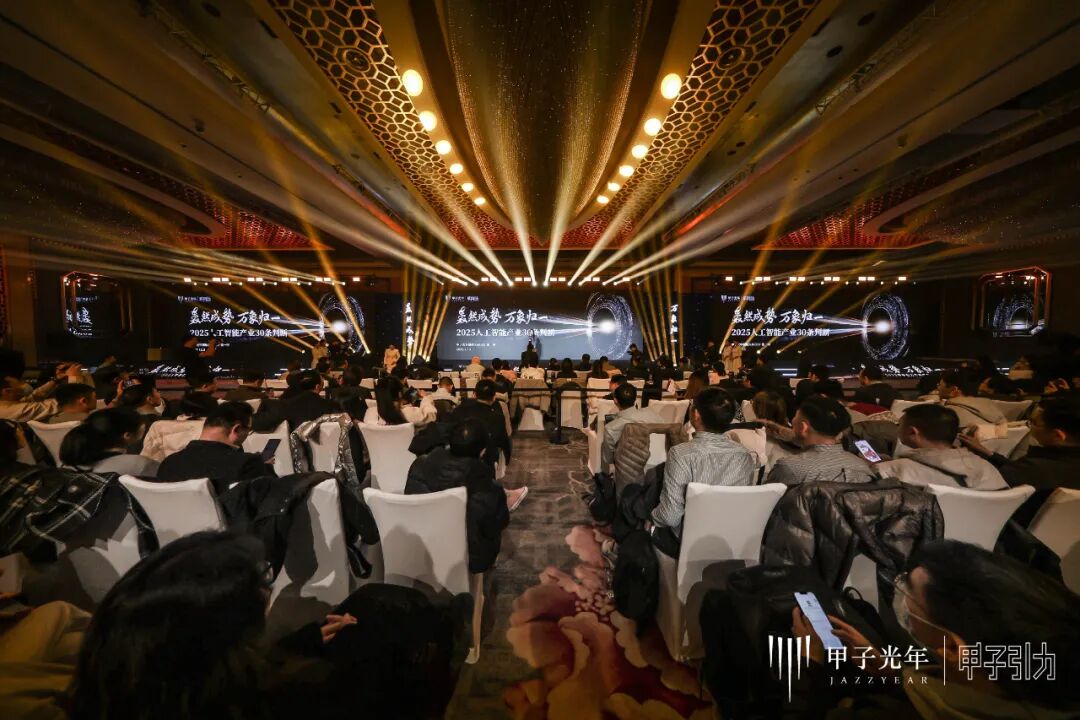
At the conference, more than 70 important guests in the technology industry shared their latest systematic insights and profound perspectives, covering core technologies such as algorithm innovation, infrastructure architecture, and embodied systems, as well as aspects like the open - source ecosystem, industrial implementation, and capital flow.
At the beginning of the conference, Zhang Yijia, the founder & CEO of Jiazi Guangnian, released the report "The Roaring Trend, the Unity of All Things: 30 Judgments on the 2025 Artificial Intelligence Industry".
The report points out that the development of artificial intelligence has passed the critical point, and its energy accumulation is "roaring into being", propelling the industry into a new stage with "Default AI" as the underlying logic. The 30 judgments in the report aim to penetrate the complex changes at the technical, product, industrial, and social levels, revealing the complete picture and future path of the intelligent revolution from its outbreak to the formation of a new order of "the unity of all things".
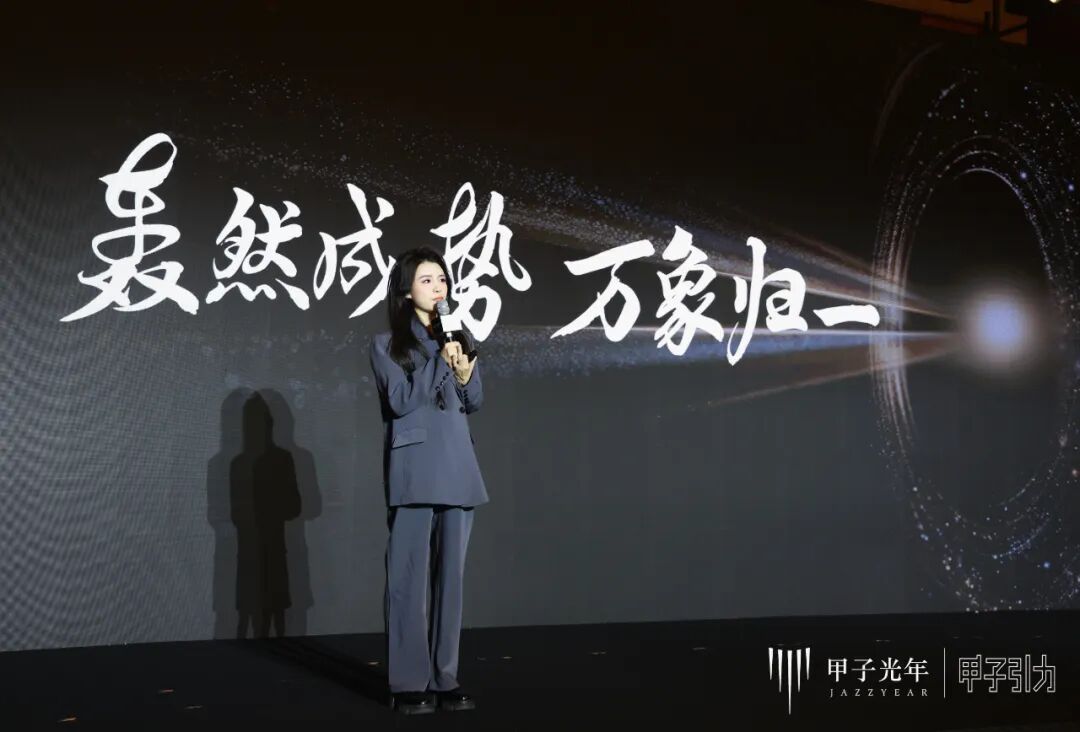
Zhang Yijia, founder & CEO of Jiazi Guangnian
In addition, the conference also featured two peak dialogues and three special sessions. The participating guests jointly explored the evolutionary path of AI from technological explosion to industrial implementation, and discussed how enterprises can navigate through the cycle and find new growth points in the era of "Default AI".
For a long time, "Jiazi Guangnian" has been deeply involved in hard technology, intelligent manufacturing, and digital transformation, tracking the latest trends in industrial development and independently presenting valuable industrial perspectives. To honor the pioneers driving the development of China's technology industry, at the award - ceremony session at the end of the conference, "Jiazi Guangnian" released the [Jiazi 100 List], [Jiazi Cool Vendor List], and [Technology Industry Investment List]. These lists record the most outstanding enterprises and individuals in China's technology circle in 2025, and offer new outlooks on the industry landscape and future.
(Due to space limitations, this article only extracts the highlights of the conference. The transcripts of each session will be successively released on the official channels of "Jiazi Guangnian". Please stay tuned.)
1. The Roaring Trend, the Unity of All Things: 30 Judgments on the 2025 Artificial Intelligence Industry

At the opening ceremony of the 2025 Jiazi Gravity Year - End Gala, Zhang Yijia, the founder & CEO of Jiazi Guangnian, released the report "30 Judgments on the 2025 Artificial Intelligence Industry" (click to read the full report).
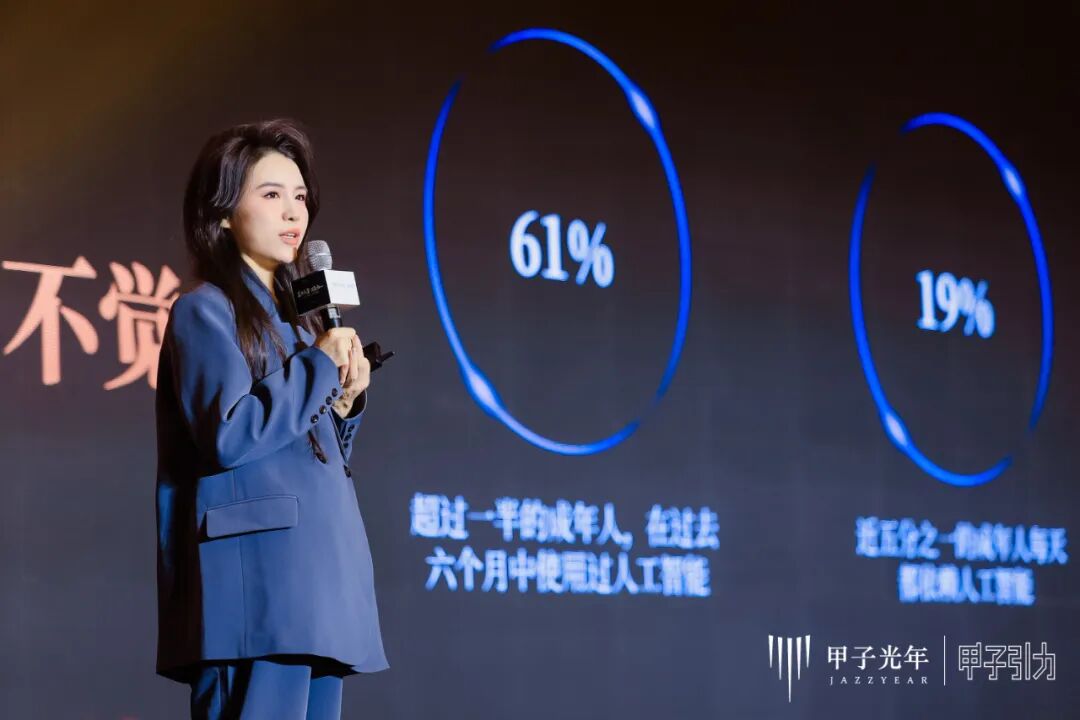
Zhang Yijia, founder & CEO of Jiazi Guangnian
Zhang Yijia characterized the current industrial situation with the eight - character phrase "the roaring trend, the unity of all things". Currently, the development of AI has evolved from single - point breakthroughs to the energy coupling of complex systems. Models, computing power, data, and applications are merging into a unified economic foundation, and the intelligent revolution is officially moving from the outbreak stage to the order - building stage.
Looking back at the industrial history, Zhang Yijia pointed out that after the "surprise" in 2023 and the "commercial interrogation" in 2024, the industry officially entered the "Default AI" stage in 2025.
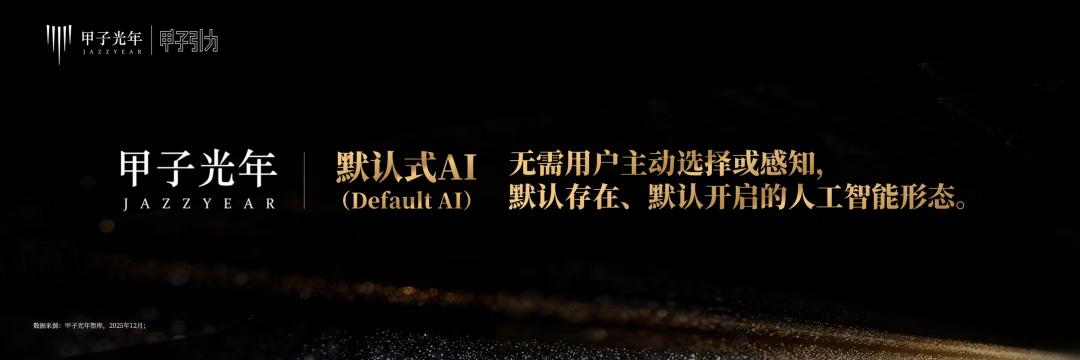
The so - called "Default AI" refers to the form of artificial intelligence that is enabled by default without the user's active selection, featuring three characteristics: non - selectivity, low perception, and system binding.
"AI is no longer just a tool or a partner; it has become the underlying logic of the world," Zhang Yijia emphasized. When turning off AI becomes an exception, it means that it has been deeply embedded in the social structure like the Internet.
Based on this, Zhang Yijia released 30 core judgments from four dimensions: technology, product, industry, and society.
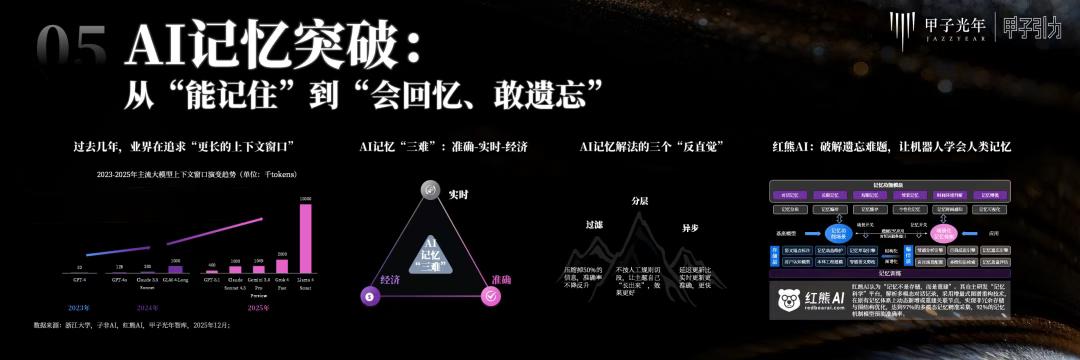
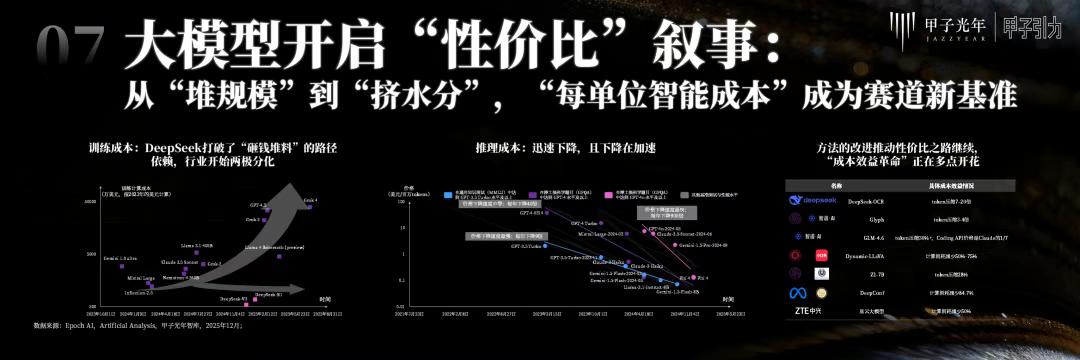
In the technological dimension, the narrative of "cost - effectiveness" has replaced the competition of "parameter scale", and the core of competition has shifted to the ultimate optimization of "cost per unit of intelligence". Meanwhile, the AI memory mechanism has undergone a qualitative change, and learning to "remember and forget" has become the key to higher - order intelligence.
The product form is moving towards a "headless" state, where software is disassembled into APIs for direct use by intelligent agents. "The best UI is to forget the UI." The interaction mode is undergoing a silent revolution from chat boxes to "invisible agents", and AI will be invisible in the business process and become the primary scheduling entity.
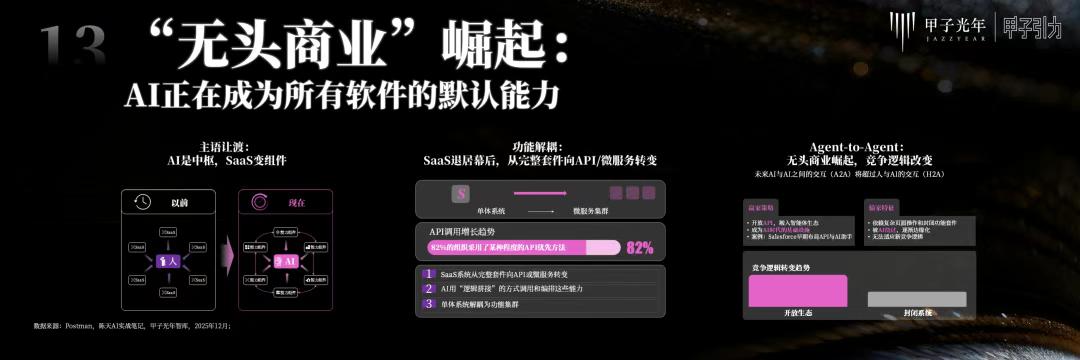
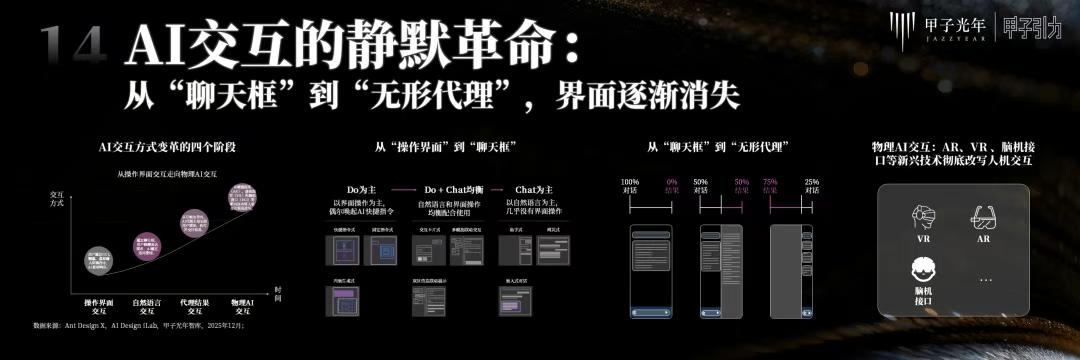
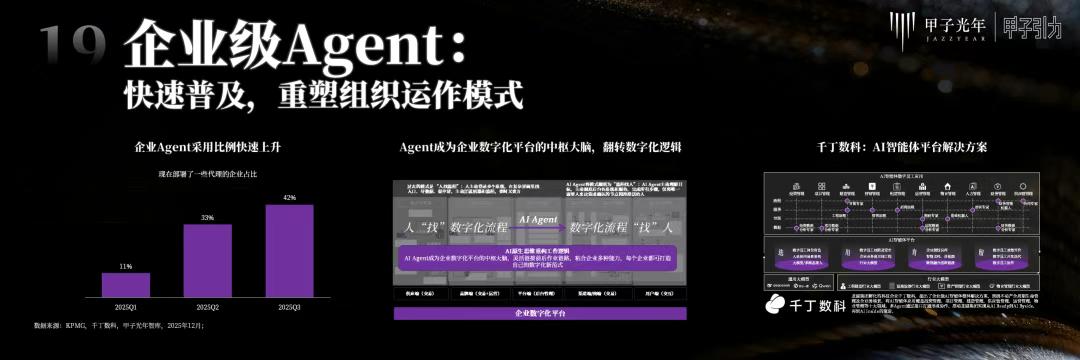
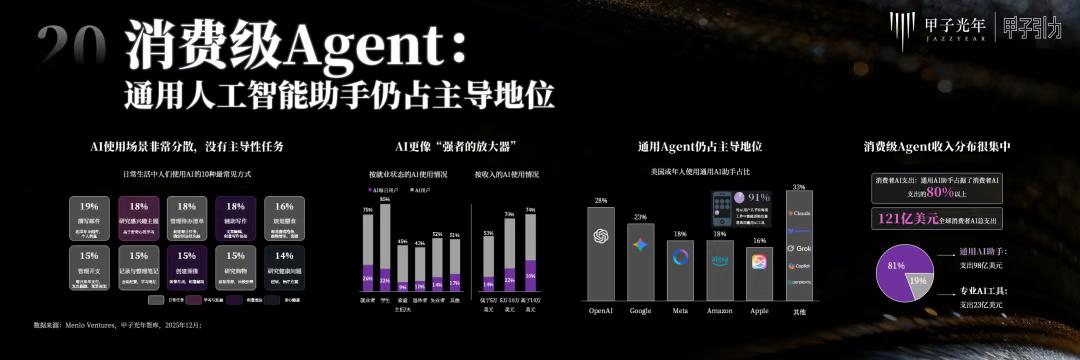
On the industrial side, the differentiation is clear: the B - side is competing for the "automation hub" and is committed to reconfiguring the workflow; the C - side is vying for the "super - entrance", and it is difficult for independent applications to survive. Meanwhile, embodied intelligence has reached an application inflection point, promoting the transformation of the manufacturing industry towards a "light - design, light - trial - and - error" model.
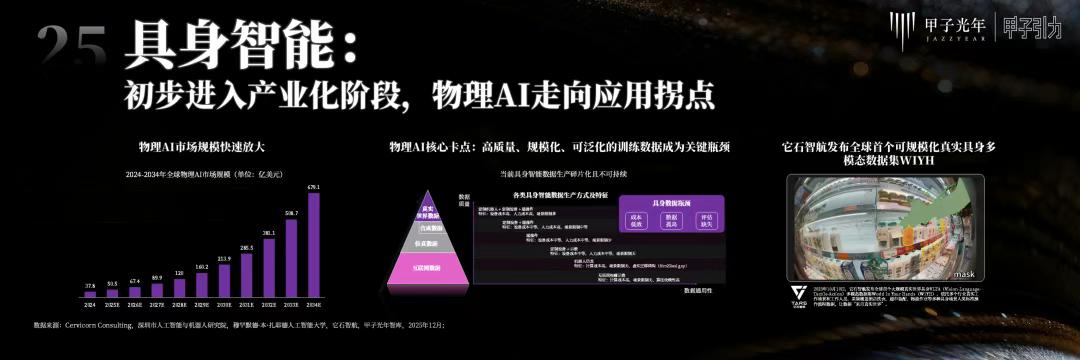
However, concerns are emerging at the social level. The polarization in the employment market is intensifying, with senior talents remaining stable while entry - level positions are at risk. In addition, new threats such as "cognitive debt" and "automatic jailbreaking" caused by over - reliance on AI require security mechanisms to shift from "patching" to "native design".
At the end of the report, Zhang Yijia posed a thought - provoking question - "the curse of intelligence". When a fully automated economic system no longer depends on human labor, are humans at risk of being "omitted"?
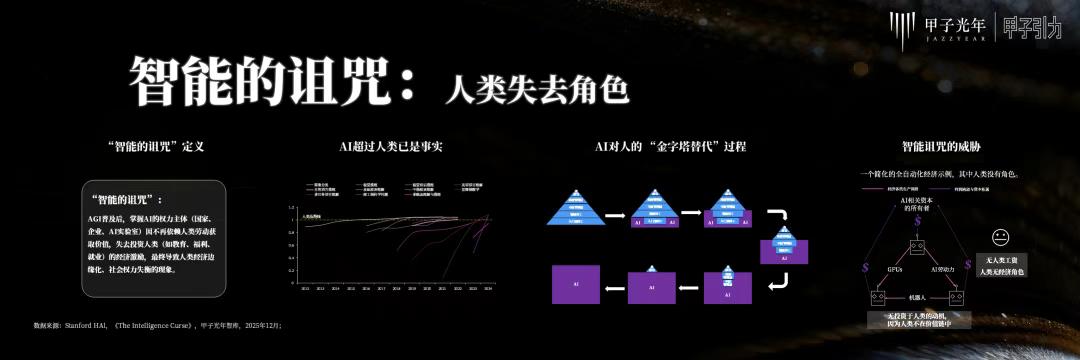
In response, she called for rewriting the incentive mechanism and building truly "human - centered AI".
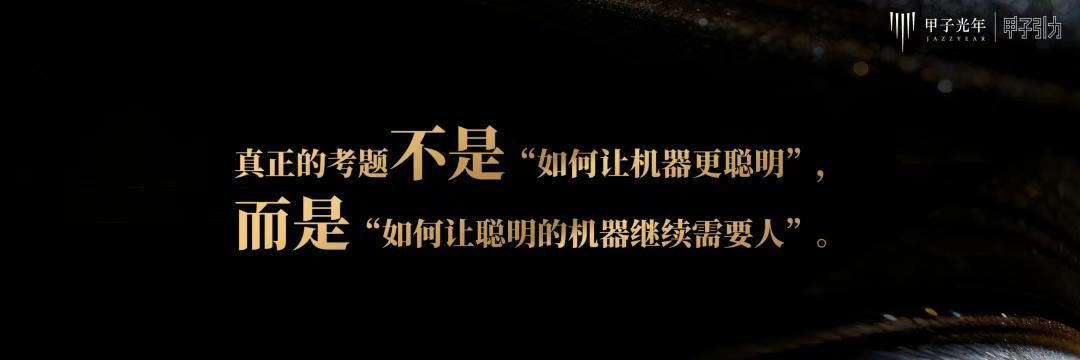
"If the industrial revolution amplified human power, AGI should amplify human value," Zhang Yijia concluded. In the future, the core question is no longer "how to make machines smarter" but "how to make smart machines still need humans".
2. Exploring the Essence of Intelligence, Winning the Second Half of the Industry

The report of Jiazi Guangnian pointed out the macro - direction for the industry, and the subsequent two peak dialogues revealed the difficulties and solutions in the AI industry from the two dimensions of "academic origin" and "commercial implementation".
In the first peak dialogue session, Zhang Yijia, the founder & CEO of Jiazi Guangnian, had a wonderful dialogue with Wang Yu, a professor and the dean of the Department of Electronic Engineering at Tsinghua University, a Distinguished Young Scholar of the National Natural Science Foundation, an IEEE Fellow, and the initiator of Wuwen Xinqiong; Dong Bin, a Boya Distinguished Professor at the Beijing International Center for Mathematical Research of Peking University and the executive vice - dean of Beijing Zhongguancun College; and Wang Zhongyuan, the president of the Beijing Zhiyuan Artificial Intelligence Research Institute, around the theme of "This Year of AI: Seeking Truth from False Appearances or Eliminating the False and Retaining the True?"
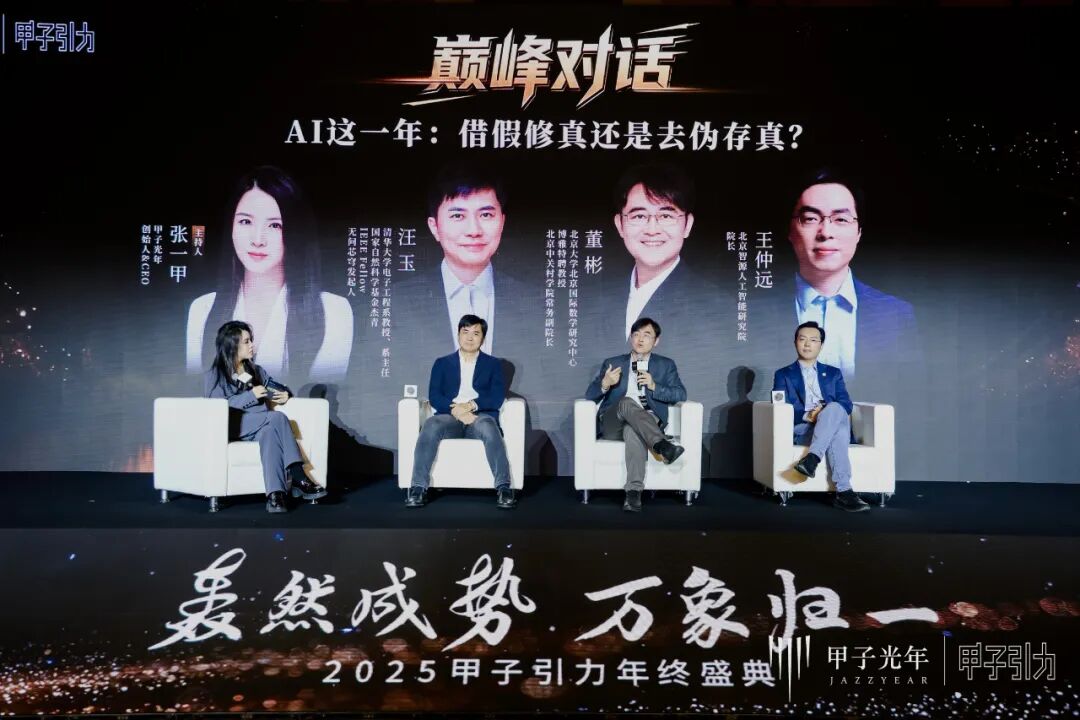
Wang Yu focused on the Chinese path and system optimization under the limitation of computing power.
He pointed out that the success of DeepSeek this year demonstrated the great potential of reinforcement learning in improving productivity and cross - level optimization. Facing the differences in computing power infrastructure between China and the United States, he emphasized that China cannot simply rely on scale expansion but must conduct vertical collaborative optimization