Just now, Google Glass was re-released, and Nano Banana was worn on the head for the first time. Together with Chinese manufacturers, they are going crazy in the market.
In 2012, Google launched the prototype of the "Project Glass" smart glasses. It could record videos, support voice interaction, and the LED screen on the lens, less than an inch in size, could also display the interfaces of some applications, making it seem like science fiction had come to life.
Ultimately, due to reasons such as privacy disputes and technological limitations, this advanced device had a short lifespan. However, it also gave the world a glimpse of a brand - new form of smart device.
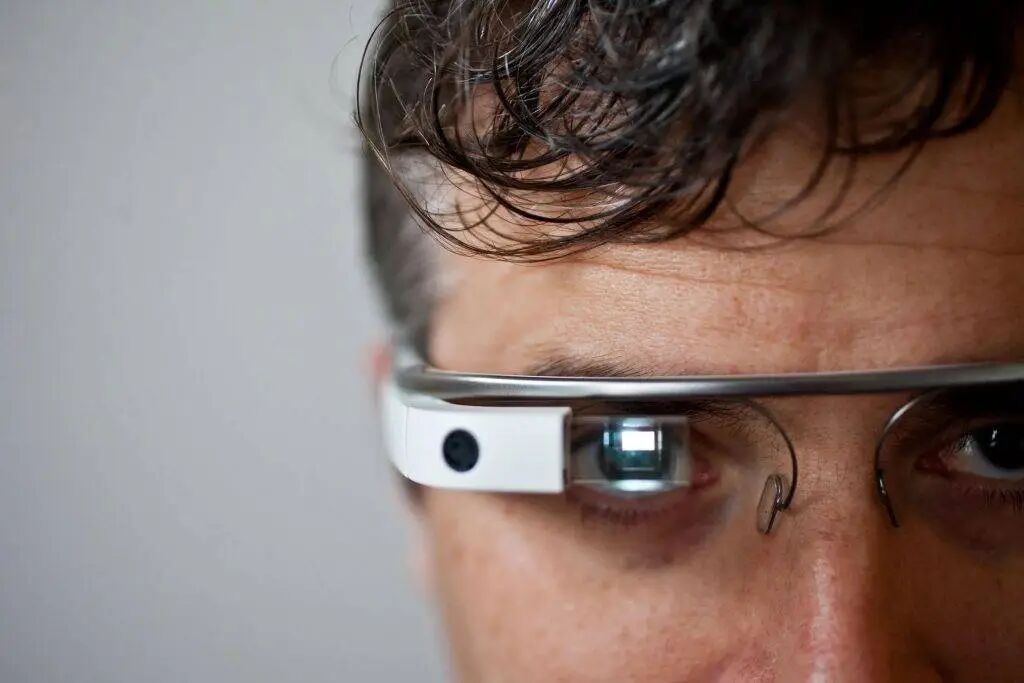
Thirteen years later, in 2025, smart glasses have become an emerging hardware trend. As a former pioneer in this category, Google has made a comeback with Android XR and Gemini.
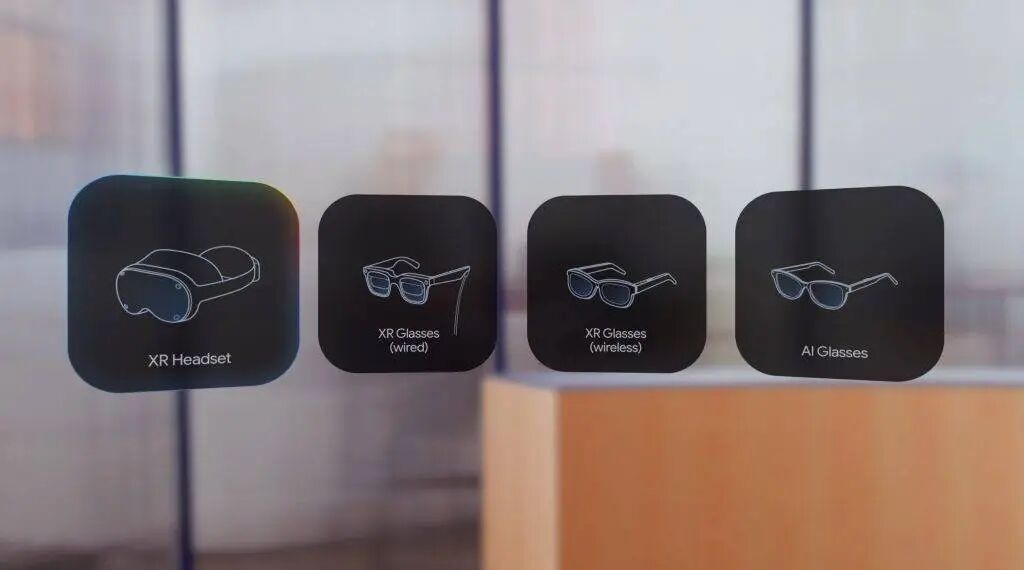
The just - concluded Android Show event lasted only half an hour, but it was packed with valuable information. Google officially revealed four XR device routes in their view:
- XR head - mounted devices
- Wired XR glasses
- Wireless XR glasses
- AI glasses
Android XR: Expanding the Market
The Android XR system was officially announced for the first time at the end of last year. As the name suggests, it is an Android system developed for XR devices.
Google emphasized that developing for Android means developing for Android XR. The latter can directly be compatible with most mobile and tablet applications on the Google PlayStore.
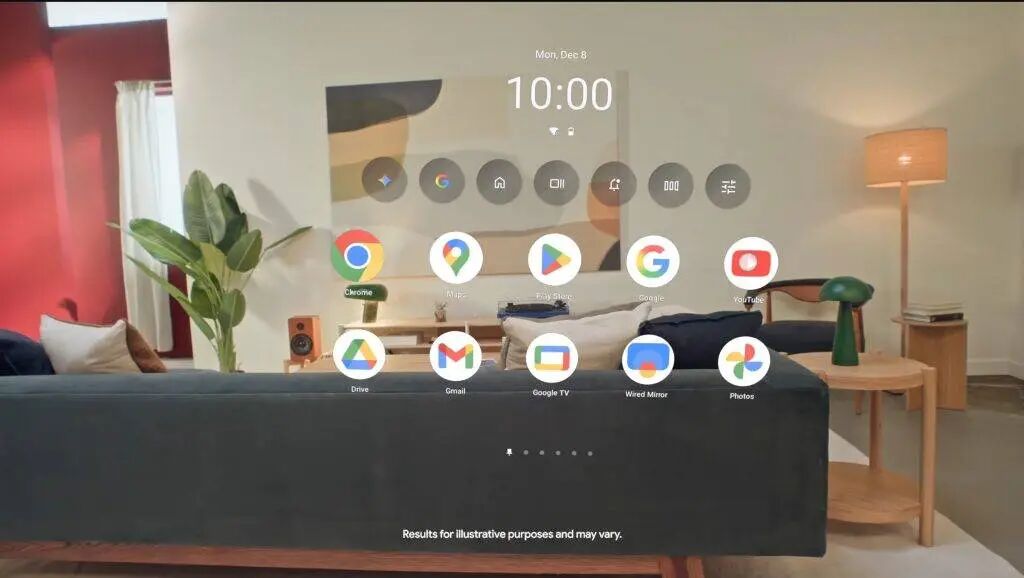
Similar to Android on mobile phones, Android XR provides a fairly comprehensive system and ecological platform for manufacturers in the industry. It can directly utilize the existing Android application ecosystem, call Google services and Gemini AI. Developers who specifically develop XR applications also get a platform to distribute their applications.
For new XR startups, Android XR is the long - awaited platform. Xu Chi, the CEO of XREAL, told The Verge:
Currently, there are only two companies in the world that can truly build an ecosystem: Apple and Google. Apple doesn't cooperate with other companies, so Google is our only choice.
The Verge had an early experience with an Android XR prototype. When the editor used Uber to book a taxi, a small Uber widget popped up on the glasses' display, showing information such as the estimated pick - up time and license plate number, as well as a map route guide to the pick - up point. These functions all came directly from the original Android application of Uber.
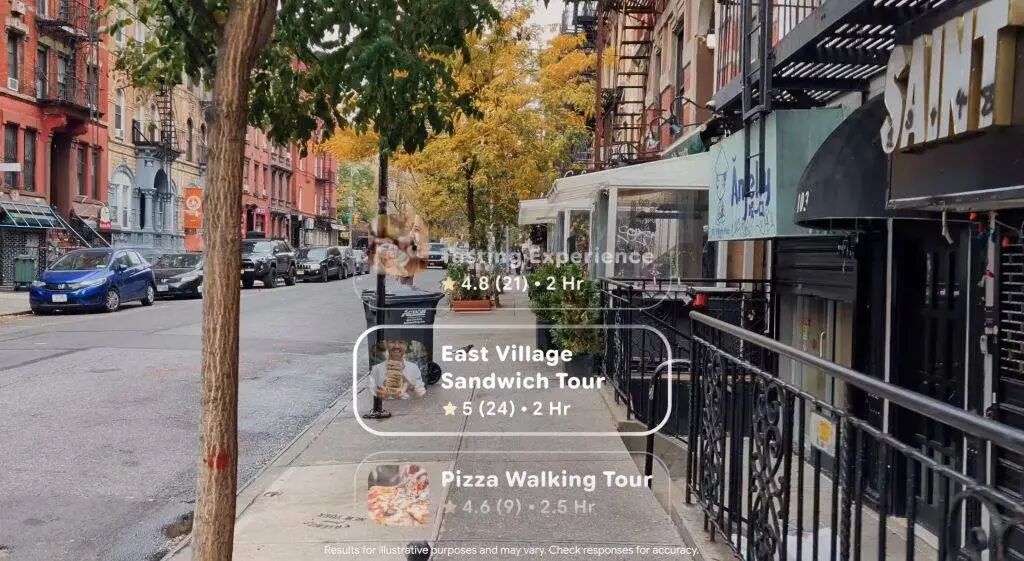
Android XR has a stronger appeal than the Meta Horizon platform and is more open than Apple. This means that in the future, more third - party manufacturers will develop Android XR devices, expanding the market. Producers of XR applications and content are more willing to join the ecosystem.
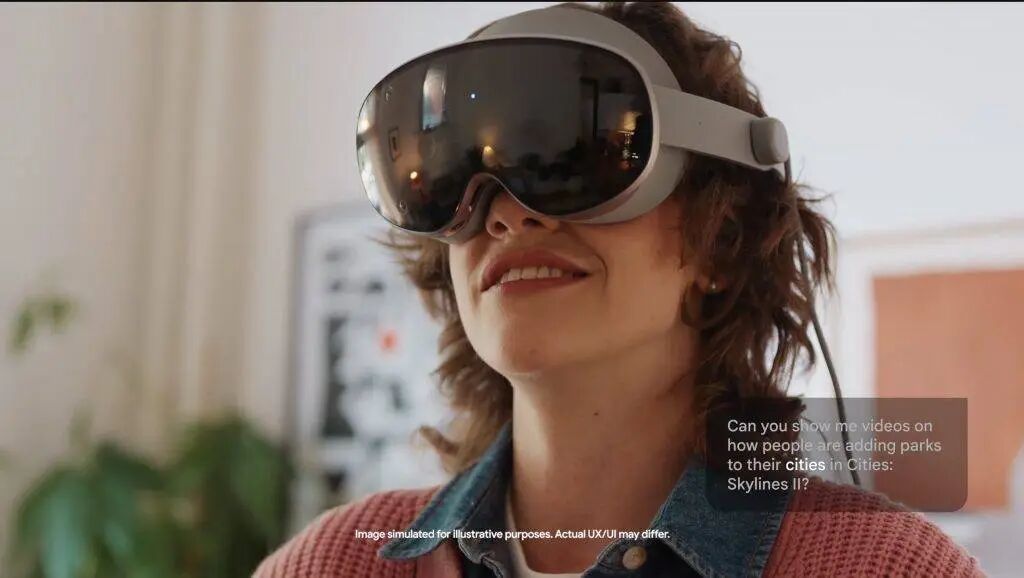
The Android XR device we are most familiar with is naturally the Samsung Galaxy XR head - mounted device released at the end of October. Ifanr has reported on it in detail before. At this event, Google also introduced three updates:
- PC connection, allowing users to view Windows windows in a floating manner
- The Likeness function, which enables users to create their own digital avatars
- The automatic spatialization function, which can convert some traditional 2D content into immersive 3D content.
The highlight of this Android XR event is, of course, the three different types of glasses.
Project Aura: As Compact as Glasses, as Powerful as Head - Mounted Devices
At the I/O Conference in May this year, Google first announced the Project Aura product developed in cooperation with the domestic AR glasses manufacturer XREAL. Today's event brought more details about the experience and usage.
Project Aura is a "wired XR glasses" device. The concept of this device is simple: it achieves a binocular XR effect similar to that of a head - mounted device in the form of lightweight and convenient glasses, making it suitable for outdoor use.
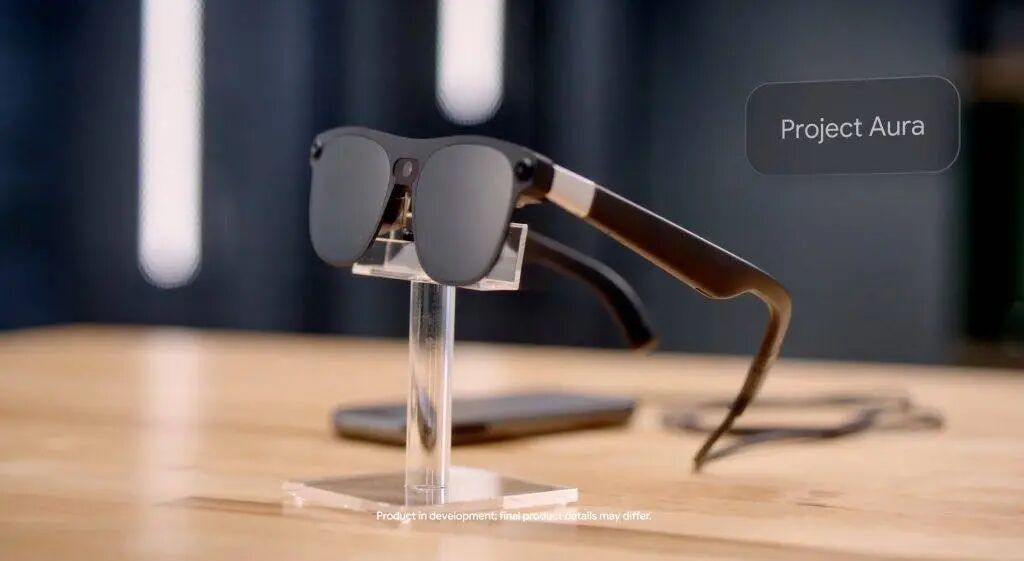
Of course, compared with traditional glasses, Aura is larger and heavier. Its hardware form is very similar to other products of XREAL: an AR projection glasses connected via a cable to an Android XR computing terminal, which can also serve as a touchpad.
The difference is that Aura supports gesture interaction similar to that of a head - mounted device and has a see - through effect, allowing users to see the surrounding environment with the application interface projected on it.

The reason why Google chose the startup XREAL is probably because of XREAL's strong strength in manufacturing AR glasses hardware: Aura achieves a 70° FOV, which is the largest practical field of view for consumer - grade AR. It allows the Gemini assistant to better interact with the real world and provides an immersive movie - watching experience. In terms of performance, it uses the same Qualcomm Snapdragon XR2 Plus Gen 2 chipset as the Galaxy XR.
Thanks to the Android XR system, Aura can directly use XR applications developed specifically for the Galaxy XR head - mounted device. As long as there is a corresponding SDK, the functions and experience of the applications can be automatically adjusted to suit the XR glasses.
Compared with large and heavy head - mounted devices, Project Aura is more suitable for the "PC connection" function. Users can use Aura as an external large - screen display during work. Windows applications can be displayed in large windows on Aura, and users can even ask Gemini to teach them how to perform operations they don't know during work.
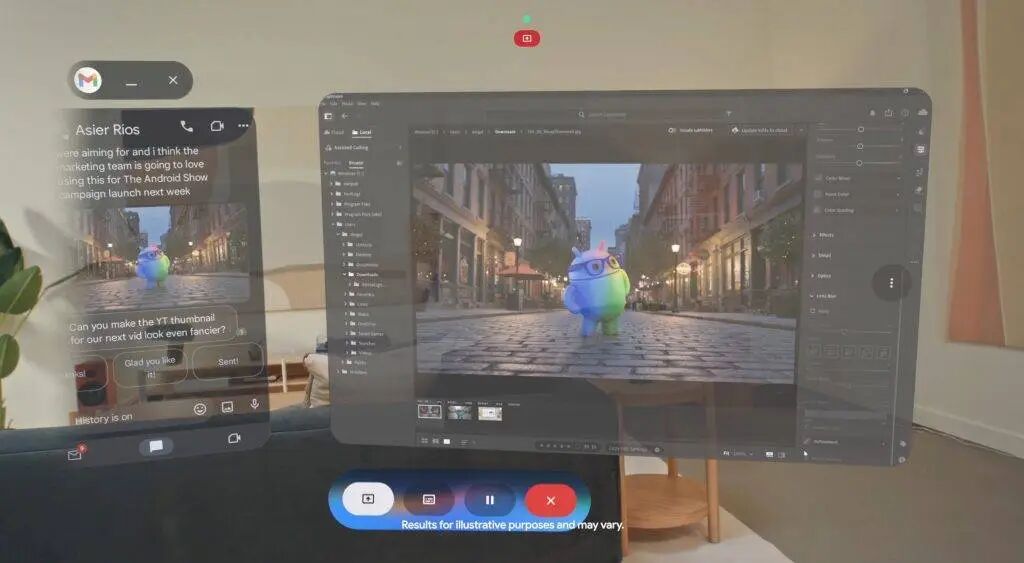
According to multiple foreign media, the usage experience of Project Aura is indeed very similar to that of the Galaxy XR head - mounted device, but it is much lighter in weight. However, considering its compact size and powerful performance, heat generation and battery life will be a problem for Aura.
However, Project Aura was still not officially launched at this event. Google promised to release it next year.
For Smart Glasses, the First Priority is to Make People Willing to Wear Them
The other two types of glasses are completely wireless products, more suitable for daily wear. Therefore, the fashion attribute needs to be emphasized. In addition to Samsung, Google also announced that it will cooperate with two traditional trendy eyewear brands, Warby Parker and Gentle Monster, on this type of product.
The first type of glasses is in the most basic form, similar to Ray - Ban Meta. We call it "AI glasses". It doesn't have any display screen. Users can communicate with Gemini, take photos, and listen to music using the glasses. Although this product is not a real "XR" glasses, it is the most widely accepted category among the public.
Google places more emphasis on the second type. In fact, it adds a monocular AR display screen on the basis of the first type to display some simple cards and components, similar to the Meta Ray - Ban Display. This is also the category demonstrated at the I/O Conference this year.

▲ The prototype shown at the event
There are two ways to control this XR glasses. The first is to use the touchpad on the glasses' temple, and the second is, of course, voice input through Gemini. Gemini Live can complete multi - step and complex tasks based on the current visual context of the environment and the user's natural voice control.
The content demonstrated this time is similar to that at the I/O Conference, also showing the smart glasses' abilities in voice command recognition, object recognition, memory, navigation, real - time translation, etc.
The key point is that Google's monocular XR glasses are a "mobile phone accessory". Most of its operations are carried out on the mobile phone, and it directly uses applications on Android mobile phones. In contrast, Meta can only use a few of its own social media applications. The interface of Aura is simple and clean, without an application list, only reminding users of the most important information from real - time notifications of mobile phone apps, giving a feeling more like a smart watch.

▲ Image source: Android Authority
Even though smart glasses are developing rapidly, in the next decade, everyone will still carry a smartphone in their pocket. Google understands this well. So their goal is to gradually reduce the number of times you take out your phone through this monocular XR smart glasses. Compared with Meta's monocular XR glasses, Google's product is also much more compact.
Moreover, Google also told The Verge that in order to enable more people to use the multi - modal capabilities of the glasses, Android XR glasses will support iOS next year.
Google also specifically addressed the privacy issue, which was another trigger for the failure of Google Glass back then. These Android XR glasses will emit bright pulsed light when recording, and use red and green lights to distinguish between recording and the use of the Gemini camera.
Like Project Aura, these two AI glasses products will also be launched next year. Currently, Google is constantly adjusting the products with its partners such as Samsung, Warby Parker, and Gentle Monster.
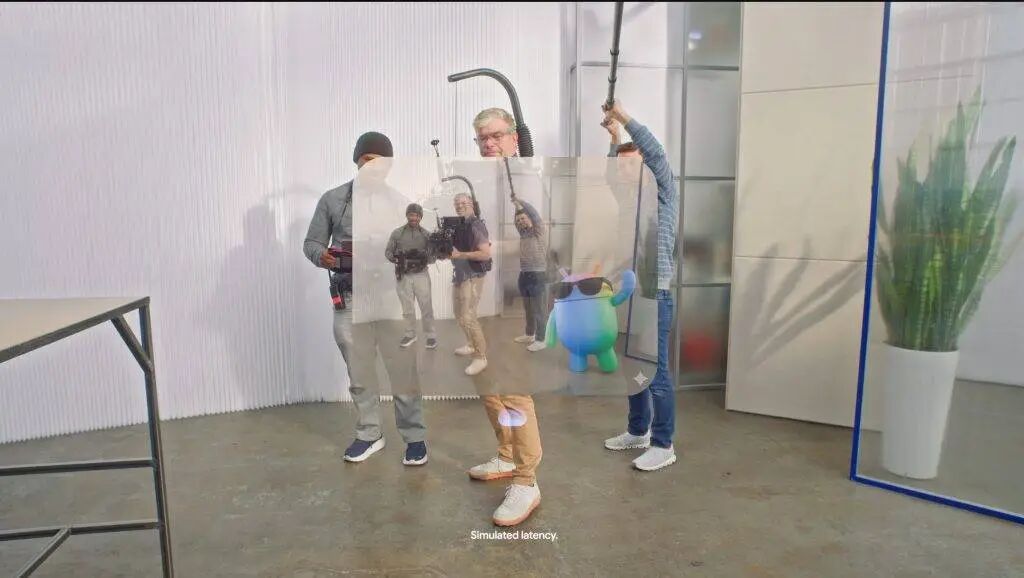
▲ Use voice to let Gemini take photos and call Nano Banana for creation
Reviving Google Glass, Google is Well - Prepared This Time
As a former pioneer ahead of its time, in the face of the smart glasses trend in the past two years, Google has been moving at a much slower pace than expected, even later than Apple, which is good at "striking late and winning".
Android XR was officially announced at the end of last year. During this period, Google has found many partners, including long - time partners Samsung and Qualcomm, new friend Xreal, and cross - border partners Warby Parker and Gentle Monster.
▲ Android XR is jointly developed by Google, Samsung, and Qualcomm
Currently, these four different product forms all have different degrees of compromise and are obviously not the final forms.
Actually, Google "spoiled" a new product that was not announced at the event to Android Authority. The actual demonstration effect impressed the media deeply: Wireless binocular XR glasses with a wider field of view and better picture quality, integrating the advantages of the four currently announced products.
However, Google said that the wireless binocular XR glasses will not be sold to the public in the short term, and the earliest it will be available is in 2027.
Obviously, this mysterious product with a bit of an Easter - egg nature is the upgraded version of "Google Glass" in Google's mind. However, they didn't choose to directly release this product, nor did they mention it at the press conference.
Google actually doesn't have to worry about falling behind in this fierce competition in the emerging hardware field. They have learned the lessons from Google Glass back then and are coming back with two aces in hand: Android XR and Gemini.
Not only for Google Glass, but also for current XR glasses, the lack of application and content ecosystem and the absence of killer - level scenarios are still difficult problems to break through.
Android XR can not only utilize the existing App ecosystem, but this platform itself can also attract a large number of device manufacturers and developers, greatly lowering the threshold. Its growth rate is worth looking forward to.
