From potential to productivity: Lost foam casting meets the lightweight requirements of the new national standard

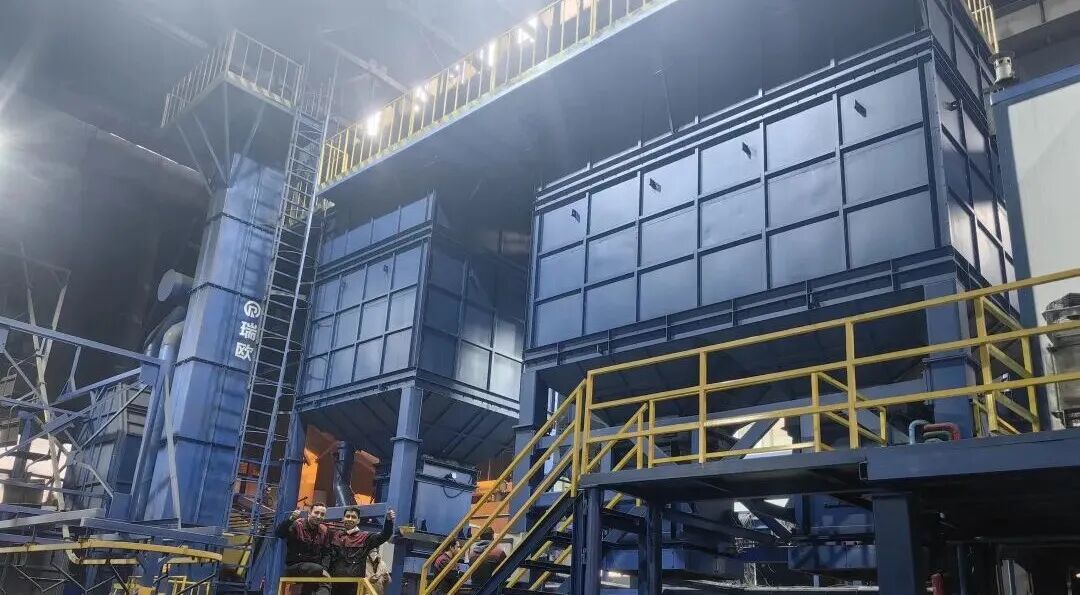
Recently, the Certification and Accreditation Administration of the People's Republic of China issued the "Announcement on Strictly Managing the Compulsory Product Certification of Electric Bicycles", which clearly stipulates the production and sales of electric bicycles. The new regulation clearly limits the mass proportion of plastic parts in the whole electric bicycle to less than 5.5%. This key change directly drives the lightweight transformation of the body structure, such as "replacing plastic with magnesium and aluminum". As a result, unprecedented high requirements are put forward for the precision forming process of key metal parts such as frames and hubs. Under this trend, the green casting technology represented by lost foam casting, which can achieve near-net shape forming and integrally manufacture complex thin-walled parts, has precisely matched its technical advantages with industrial needs.
Driven by this clear market demand, the lost foam casting technology is rapidly moving from niche markets into the spotlight of the industry. On the one hand, continuous breakthroughs are being made in technological sophistication: China has successfully applied this technology to achieve the "integrated casting and forming" of key complex components of a certain type of aero-engine. Not only has the production process been significantly shortened, but the performance has also reached the international advanced level. On the other hand, commercial applications are accelerating: Enterprises like Shenyue Foundry, which has been deeply involved in this field for nearly 30 years, have successfully undertaken benchmark projects from international well-known enterprises such as Delphi, Bosch, Mercedes-Benz, and BMW. This marks that this green casting process has entered a new stage of large-scale application and value verification.
For a long time, lost foam casting has been regarded as a "promising stock" in the basic manufacturing field because it can achieve near-net shape forming and significantly reduce machining allowance and material waste. However, limited by key technical bottlenecks and high initial investment thresholds, its application was once confined to specific fields. As a result, only a handful of domestic companies have mastered the lost foam non-ferrous metal casting process, and the number is also very small globally. Now, the situation is undergoing fundamental changes. At the macro level, policies such as the "Evaluation Standard for Green Foundry Enterprises" are pushing "process innovation" to the core of carbon reduction. At the micro level, new energy vehicles, aerospace, high-end pumps and valves, and electric bicycles that are undergoing material and process innovation and other industries have an urgent need for complex thin-walled and integrated structural parts, which perfectly matches the technical advantages of lost foam casting.
Therefore, innovation and layout around this technology are accelerating. Moving from precision samples in the laboratory to large-scale production lines, lost foam casting is crossing the key threshold from "potential" to "productivity". The future casting model it represents, featuring high precision, low energy consumption, and low emissions, is attracting the forward-looking attention of capital and the industry, opening up a new investment narrative driven by basic processes for industrial leapfrogging.

Analysis of the Principle and Core Process Development of Lost Foam Casting Technology
The lost foam casting (LFC) technology was first invented in the United States in the 1950s and developed in industrial powers such as Germany and Japan. China began industrial application research in the 1980s. After the 21st century, with the increasing requirements for casting accuracy, complexity, and environmental protection, it entered a stage of large-scale application and rapid technological iteration.
(I) Analysis of the Technical Principle and Core Process Flow
Lost foam casting, also known as full-mold casting, is essentially a precise "replacement" art. This technology uses foam plastics to make solid models that are exactly the same as the final castings. After coating with high-performance refractory coatings and drying, the models are placed in a sand box filled with dry sand and vibrated to compact the sand. Then, under negative pressure, high-temperature molten metal is poured into the sand box. During the filling process, the molten metal quickly gasifies and eliminates the foam model, precisely replicating its spatial shape, and finally solidifies to form the casting. This process integrates the pyrolysis of polymer materials, the dynamic filling of metal fluid mechanics, and the synergistic effect of physical fields (negative pressure and vibration). Its core goal is to achieve the precision forming of complex components with almost no machining allowance while minimizing environmental pollution. Therefore, it is widely recognized as a key branch of green casting technology.
1. Core Process Flow and Key Technical Nodes
The production of a high-quality lost foam casting highly depends on a closely linked and precisely controlled process chain. This process can be systematically deconstructed into the following six key steps, each of which has a specific technical mission.
Step 1: Production of high-precision foam patterns. This is the starting point of all processes, and its quality determines the initial contour accuracy of the casting. Patterns are usually made of expandable polystyrene (EPS), methyl methacrylate-styrene copolymer resin (STMMA), and other materials through pre-foaming, aging, mold foaming, or numerical control machining. For castings with complex structures, the process of forming parts separately and then bonding them together is often used. This stage (often referred to as the "white area" process) is considered the most critical link in determining the final casting quality. Therefore, the design level of the mold, the pre-foaming density, and the uniformity control of the beads are crucial.
Step 2: Integrated combination of modules. Single or multiple foam patterns are precisely bonded with the gating system and riser system using special adhesives to form a "model cluster". This design realizes the cluster production of "multiple parts in one box", significantly improving production efficiency and the utilization rate of the sand box. It is the basis for modern lost foam production lines to achieve economies of scale.
Step 3: Coating and drying of high-performance refractory coatings. The coating layer is the only barrier between the foam pattern and the high-temperature molten metal. Its performance has a dual nature: on the one hand, it must have extremely high refractoriness and strength to resist the scouring and static pressure of the molten metal; on the other hand, it must have excellent gas permeability to timely discharge the large amount of gas generated by the foam gasification. The coating thickness needs to be precisely adjusted according to the casting material and structure, usually between 0.5-2mm. After coating, it needs to be fully dried to remove moisture and strengthen the coating.
Step 4: Dry sand vibration molding. The coated model cluster is placed in a special sand box, and molding materials such as binder-free and dry silica sand or ceramsite sand are filled. Then, a three-dimensional micro-vibration compaction table is started. Through vibration at a specific frequency and amplitude, the dry sand flows around the model and in the internal cavity and reaches a high degree of compaction. This firmly supports the cavity during pouring, ensures a clear casting contour, and prevents the sand box from expanding or deforming.
Step 5: Pouring and replacement under negative pressure. This is the most critical phase change moment in the entire process. A plastic film is covered on the top of the sand box for sealing, and a vacuum system is started. Under the negative pressure of 0.02-0.06 MPa, the molding sand is further compacted to form a high-rigidity mold. Then, the high-temperature molten metal is poured. The foam model rapidly pyrolyzes and gasifies at high temperatures, and the generated gas is pumped away by the negative pressure system through the gaps in the coating and the sand mold. The molten metal advances synchronously to precisely replace the space occupied by the model.
Step 6: Knockout and casting cleaning. After the casting solidifies and cools, the negative pressure is released, and the sand box is turned over. The dry sand naturally flows out under the action of gravity, and nearly 100% of it can be reused. After the casting is taken out, only simple shot blasting is needed to obtain a near-net shape product with a smooth surface. Compared with traditional casting, the cleaning workload is significantly reduced.
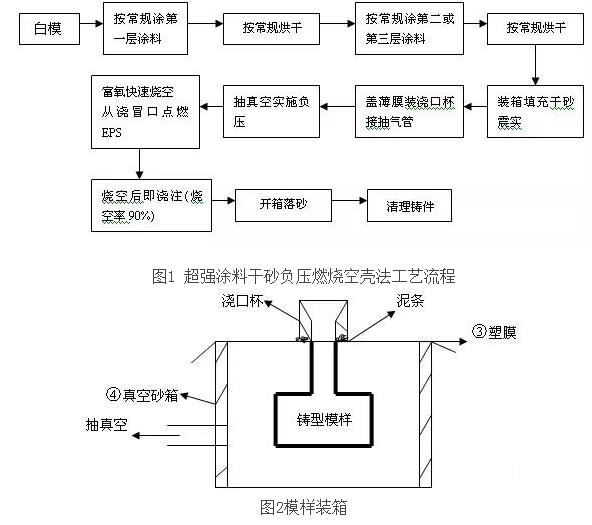
Schematic diagram of the lost foam casting process flow
2. In-depth Collaboration of Key Process Elements
The smooth execution of the above process depends on the in-depth collaboration and precise control of the following three major elements, which together form the "iron triangle" of the lost foam casting technology.
① Selection and evolution of the pattern material system. The pyrolysis characteristics of different materials are directly related to the formation of casting defects. Currently, the mainstream materials show a gradient application pattern, as shown in the following table:

② The core role of coating technology. The coating is the "key" to the success of the process. An ideal lost foam coating must balance multiple seemingly contradictory properties: good coating performance, sufficient strength at room and high temperatures, excellent gas permeability, and peelability after high-temperature sintering. In actual production, defects caused by coatings account for a relatively high proportion. For example, insufficient coating strength can lead to sand washing, poor gas permeability can cause gas holes and incomplete pouring, and poor crack resistance can cause the coating to crack during drying. Therefore, advanced enterprises represented by Shenyue Foundry regard the research and development and customized formulation of coatings as their core technical barriers and develop special coating systems for different alloys and casting structures.
③ Precise closed-loop control of process parameters. This is a dynamic optimization process, mainly including three dimensions:
Pouring temperature: It needs to be 30-50°C higher than that of sand casting of the same material to compensate for the latent heat absorbed by foam gasification and ensure the filling ability of the molten metal.
Negative pressure: It is dynamically adjusted according to the alloy type and casting structure. Generally, it is 0.02-0.03 MPa for aluminum castings, 0.04-0.06 MPa for iron castings, and the upper limit is taken for steel castings. Negative pressure not only strengthens the sand mold but also is the main driving force for discharging pyrolysis gases.
Vibration parameters: They include frequency, amplitude, and time. The optimization goal is to make the dry sand reach uniform and sufficient compaction in the complex curved surfaces and branches of the model, avoiding local looseness that may cause the molten metal to penetrate and form mechanical sand adhesion.
(II) Key Technical Difficulties and Breakthrough Directions
Although the lost foam casting technology has significant advantages, it still faces a series of recognized technical challenges in the process of industrial application. Overcoming these difficulties is the main battlefield for industry technological progress and leading enterprises to build competitiveness.
1. Bottlenecks in Pattern Material and Preparation Precision
The quality of the foam pattern is the innate factor. The current difficulties mainly lie in the contradiction between low density and high strength. To reduce the gas generation, it is hoped that the pattern density is as low as possible. However, to ensure that it does not deform during handling, coating, and vibration, sufficient strength is required. Secondly, it is difficult to form complex inner cavities and thin-walled structures. For castings with complex internal flow channels or ultra-thin walls (<3mm), it is extremely difficult to form and demold the foam pattern and control the uniformity of subsequent coating. Finally, controlling dimensional stability is also a challenge. The foam shrinks during aging and drying and is greatly affected by environmental temperature and humidity.
Breakthrough directions: In terms of materials, new copolymers and modified materials with lower pyrolysis residues and higher specific strength are being developed. In the preparation process, concurrent engineering and digital design are widely used, that is, three-dimensional simulation analysis of casting processability and pattern manufacturing processability is carried out simultaneously during the product design stage to optimize the parting and structure. In addition, high-precision numerical control machining has also become an important means of manufacturing prototype parts or small batches of complex patterns, which is directly driven by the CAD model, avoiding mold costs and cycles.
2. Challenges in High-performance Coating Technology
The coating performance directly determines the reaction result at the metal/mold interface. The main difficulties are as follows: First, balancing high-temperature strength and gas permeability. Many coatings perform well at room temperature, but their strength drops sharply under the long-term scouring of high-temperature molten metal above 1600°C, leading to sand washing defects. Second, unifying crack resistance and coating performance. The coating will generate shrinkage stress during drying due to water evaporation, which is prone to cracking at corners or thickness junctions. Third, ensuring the stability of the coating process. This includes the suspension stability of the slurry, the ability to resist fermentation and deterioration, and the consistency control of performance between batches.
Breakthrough directions: Frontier research focuses on developing high-temperature ceramic coatings. This type of coating has the process performance of conventional coatings at room temperature, but it can undergo ceramic sintering at a certain high temperature to form a strong and porous network skeleton structure, thus achieving both extremely high high-temperature strength and excellent gas permeability. In addition, functional coatings targeting specific defects are also being developed, such as coatings that facilitate coating peeling and chill coatings. In terms of application processes, single-layer coating processes are being explored, aiming to achieve the performance of the original double-layer coating (surface layer + back layer) through a single layer, simplifying the process and reducing defects caused by interlayer bonding problems.
3. Refinement of Process Control and Defect Prevention
Lost foam casting is a "black box" process in which multiple physical and chemical processes such as molten metal filling, foam gasification, gas discharge, and metal solidification occur simultaneously and are difficult to directly observe. This has led to carbon defects (wrinkles, carbon deposits, carbon slag holes) and gas hole defects being long-standing problems in the industry. The root cause of these defects is that the pyrolysis products (liquid or solid hydrocarbons) of the foam fail to be discharged from the cavity in time or are involved into the molten metal.
Breakthrough directions: The industry is shifting from passive detection to active prevention and process intervention. On the one hand, through process monitoring and intelligence, data such as pouring temperature, negative pressure curve, and vacuum degree are collected in real-time, and a data model associating process parameters with defects is established to achieve predictive control. On the other hand, some revolutionary process changes have emerged:
Shell casting technology: Before pouring the metal, the foam pattern is first ignited through the riser, and a small amount of oxygen is injected, causing it to burn violently and completely gasify in the mold to form a clean "shell" cavity, thus completely eliminating the carbon source. This technology is especially suitable for materials sensitive to carburization, such as low-carbon steel and alloy steel.
Vibration pouring technology: