In 2025, has the logic of doing cross-border e-commerce changed?

Looking back ten years ago, the boom and long - standing success of China's e - commerce were always attributed to the traffic dividend. However, in the deep waters of traffic, the cornerstone supporting the trillion - dollar market is actually the "efficiency leap" brought about by infrastructure such as communication, logistics, and supply chains.
From faster logistics, full - link fulfillment certainty to longer - term quality assurance commitments, these invisible "utilities" form the new infrastructure of e - commerce, making global high - quality products accessible and giving global sellers the confidence to maintain long - term business success.
Now, the same scenario is "playing out" in Southeast Asia.
People's expectations for e - commerce have shifted from simply "seeking cheap deals" to "demanding good experiences". When local consumers have started to get used to "next - day delivery" or even "hourly delivery", the competitive dimensions of the e - commerce industry have also undergone fundamental changes.
Recently, Shopee, which just won the WISE 2025 Cross - border Service Globalization Enterprise Award, as a leading e - commerce platform in Southeast Asia, is sending a clear signal to the market: Under the trend of localized fulfillment, the traditional "cross - border" boundaries are disappearing.
In the future, Southeast Asian e - commerce may no longer use the origin of goods as a rigid distinction. Instead, it will be the "speed" and "slowness" of localized services. For Chinese enterprises going global, they are also crossing that "invisible" coastline, striving to obtain an entry ticket to the new era of Southeast Asian e - commerce.
01. Localized Fulfillment Has Become a "Must - Have" for Cross - border Business
In 2025, the Southeast Asian e - commerce market still maintains strong growth resilience.
The Southeast Asian Digital Economy Report jointly released by Google, Temasek, and Bain&Company predicts that the GMV of Southeast Asian e - commerce is steadily approaching the scale of tens of billions of dollars, continuously releasing consumer vitality. Behind the overall growth, the underlying logic of the industry is quietly changing: the market has entered the mature stage from the explosive stage, and localized operation has accelerated from an "optional item" to a "must - have item".
Also in this year when the rules are "quietly changing", Shopee has established localized fulfillment as its core strategy. This strategy is supported by real data: on the day of the 11.11 promotion this year, services such as "express delivery" and "next - day delivery" provided by Shopee stimulated the sales of single - site localized fulfillment to increase by up to 14 times.
In this just - ended shopping spree, Southeast Asian consumers showed strong interest in products that meet services such as "next - day delivery". As a result, on the day of the 11.11 promotion, the overall sales of Shopee's official warehouses and the sales of cross - border brands increased by 6 times. New cross - border sellers even took advantage of the situation to break through, increasing their sales by 11 times, and found "certain" growth in the uncertain overseas market environment.
In the past few years, Shopee has continuously made efforts in integrating regional warehousing resources, helping cross - border sellers break through the efficiency bottleneck of traditional logistics, and then upgrading localized warehousing to localized fulfillment. This corresponds not only to efficiency improvement but also to faster delivery and better shopping experiences.
The "fruits" of localized fulfillment nurtured by long - term layout of official warehouses are becoming the trump card driving cross - border growth and opening up more diverse product categories in this wave of going global by leveraging existing platforms.
The pain points in the furniture and home appliance industry are a microcosm of the traditional cross - border "ceiling". For a long time, large and heavy goods have been restricted by the marginal effect of logistics costs, compressing the profit margins of products and preventing many high - quality product categories and merchants from "going global".
It's not that there is no market demand, but the supply - chain model is daunting. Therefore, once the problem is solved, a promising niche market will emerge. Now, localized fulfillment is changing the situation, enabling new - force cross - border brands such as ANTBOX to break the deadlock.
ANTBOX is a brand mainly engaged in heavy - duty storage cabinets. It started to independently expand into the Southeast Asian market around 2021. The Southeast Asian storage products market is growing at an average annual rate of 7%. The huge market dividend makes sellers with strong manufacturing capabilities like ANTBOX eager. However, under the traditional direct - shipping model, the proportion of logistics costs in the selling price remains high, and long - distance transportation is prone to cause goods damage, resulting in low profit margins.
After cost calculations and effectiveness verifications at the core sites, ANTBOX began to gradually access the localized fulfillment system: in the Malaysian market, considering the overall cost - effectiveness, it chose to reduce the overall operating costs through the commission incentive policy and traffic tilt of Shopee's official warehouses; then, through the warehousing and distribution plans for different sites, it brought the logistics costs of different sites back to a controllable range. Most products can be delivered in about three days.
In the long run, localized fulfillment is creating three core values for cross - border e - commerce:
Firstly, a significant improvement in logistics timeliness, compressing the long waiting time of cross - border direct mail to the immediate satisfaction of local retail, enabling cross - border merchants to improve the service levels of core dimensions such as products, business methods, and shopping experiences;
Secondly, a structural reduction in comprehensive transportation costs, releasing valuable profit margins for merchants and extending the "lifeline" of going global;
Thirdly, and most disruptively, a comprehensive breakthrough in the boundaries of category expansion.
Localized fulfillment has activated a large number of SKUs that were previously restricted by logistics rules. High - consumption - potential "sensitive goods" such as lithium - battery 3C accessories and liquid cosmetics, which are prohibited from air transportation, can now be pre - stored in overseas warehouses through compliant sea - shipping channels. Cross - border sellers from the Chinese manufacturing industry have achieved a supply - side upgrade from "what can be shipped" to "what can sell well", and have entered the lives of Southeast Asian consumers without discrimination.
02. Brand Trust Requires Not Only "Speed" but Also "Bold Commitments"
After solving the problem of "getting in", the next challenge for brands going global is "staying". The process of retaining growth is also the process of building brand trust.
In the ever - changing traffic methods and business rules of e - commerce, the first logic for building trust is actually very simple: speed.
Especially during large - scale consumption promotions like 11.11, the impulse, curiosity, and stock - piling psychology behind the traffic all correspond to consumers' immediate satisfaction. Longer shipping periods, slower customer - service responses, and longer waiting times will lead to more loss of trust and psychological cooling. And "speed" is the hard currency to offset this uncertainty.
In Southeast Asia today, the "speed" of localized fulfillment not only represents a good experience but also is brand trust itself.
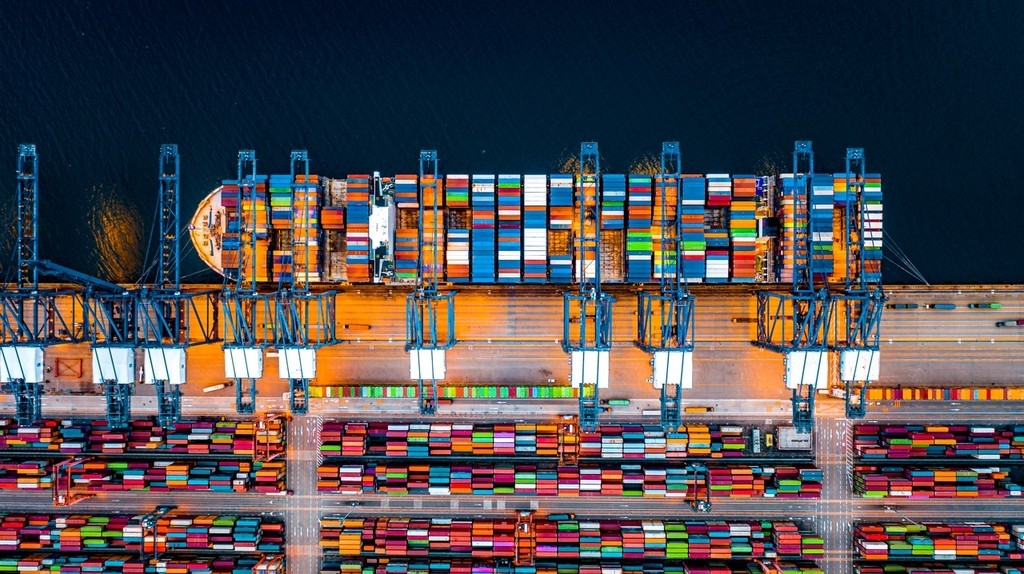
Especially in high - decision - cost categories such as mother - and - baby products and outdoor products, where it is easier to build brand trust and generate long - term repeat purchases, consumers' last hesitation before placing an order often stems from concerns about delivery timeliness. Localized fulfillment solves this core concern by closing the full - link service loop, and the purchase - decision - making path for many long - term, high - unit - price product categories can truly be shortened.
Beyond speed, the second logic for building trust lies in "commitments". Even today, from China to Southeast Asia, although logistics is no longer an obstacle, the relatively long delivery time is still a "trilemma", involving a game of interests among the "people, goods, and places".
Therefore, enabling brands to make bold service commitments and consumers to place orders with confidence, thus building deeper brand trust and connections, is the long - term value of the localized fulfillment model. The explosive growth of categories such as mother - and - baby products, outdoor products, and household items on the Shopee platform this year also well illustrates the role of localized fulfillment in eliminating this "psychological barrier".
Take the mother - and - baby brand gb Goodbaby as an example. As a high - unit - price brand, gb Goodbaby once faced a "trust challenge" in the Southeast Asian market: a "Made - in - China" stroller that meets the needs of young people naturally has the starting advantages of technological patents and brand recognition, but still seems a bit "out of place" in the face of after - sales pain points such as returns.
Worried, gb Goodbaby began to leverage the platform's power to layout its own localized fulfillment system and opened up the reverse logistics for after - sales. For example, returns are directly sent back to Shopee's overseas warehouses, where the platform conducts quality inspections and reshelves the products, avoiding the high costs of cross - border return shipping.
In the past year, most cross - border sellers like gb Goodbaby, which lead the category rankings and maintain strong growth, have been implementing a dynamic complementary strategy of "main - push products in overseas warehouses + regular SKUs through cross - border direct mail". Behind this strategy, localized fulfillment has also begun to quietly reshape the consumption habits in Southeast Asia, making the brand experience brought by "speed" and "full - link service guarantee" a new driving force for the conversion rate of content - based product recommendations, the repurchase rate of popular products, and the long - term brand premium.
In today's Southeast Asia, the degree of localized fulfillment determines the height of brand trust.
03. Ecosystem Symbiosis: The "New Infrastructure" for Long - termists
Once upon a time, the narrative logic for Chinese sellers going to the Southeast Asian market was very simple: take advantage of the information gap and move Chinese goods to the low - traffic areas.
However, from a long - term perspective, this logic will not always work. Traffic is getting more and more expensive, and conversion is becoming more and more difficult. The limitations of the "mass - listing + advertising" model have plunged countless merchants into growth anxiety.
However, when the hustle and bustle fades away, the essence of business has never changed: consumers are always willing to pay for "good products" and "good services".
The profound inspiration behind Shopee's award this time is that it is guiding the industry to return to business common sense.
The core logic of the "new infrastructure" built by speed, experience, and certain commitments is to achieve symbiosis and co - prosperity of the "localized ecosystem" through in - depth localization.
For cross - border sellers, this also means that the overseas expansion model has shifted from the early stage of going it alone to "going global by leveraging existing platforms" in a mature ecosystem. More and more back - end delivery problems are being solved in the localized ecosystem. Correspondingly, front - end localized operations are no longer about the extensive consumption of traffic but the precise accumulation of brand assets.
If localized fulfillment is the skeleton that supports the certainty of transactions, then the localized ecosystem is the flesh and blood that gives brands the vitality to weather economic cycles.
What Shopee is doing is to help Chinese merchants open up the "main channels" of traffic and services, completing the upgrade of the operation model from simply "going out" to "going in".
The future of Southeast Asia belongs to those sellers who adhere to long - termism, are willing to deeply cultivate localization, and pursue sustainable growth. For Chinese enterprises going global, localized fulfillment is the "borrowed" Noah's Ark and an irreversible trend of the times.