40,000 people are vying for an experience. Japan's AI bathing robot has gone viral. Has the smart bathroom finally become a reality?
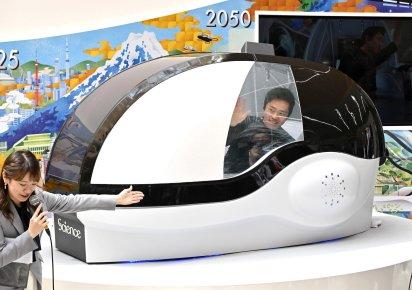
Putting a child in a washing machine to take a bath used to be a prank in the news, but now it may become a reality. The "Future Human Bath Machine" previously exhibited by Japan's Science company at the Kansai Expo of the World Expo is planned to be exhibited at a specialty store in Tokyo's Toshima Ward in the near future, and trial experience services will be provided.
(Image source: Chosun)
The "Future Human Bath Machine" exhibited by Science allows users to complete the entire process from bathing to drying in just fifteen minutes. During this process, the back sensor will collect the user's health data, provide analysis and suggestions for bathing modes, etc. Although it sounds more like a washing machine for humans, it does bring us one step closer to fully automatic bathing.
40,000 people are vying to experience it. What's the charm of the AI bath machine?
After Science released the news of publicly recruiting experience users, 40,000 consumers flocked to sign up for the experience in a short period of time.
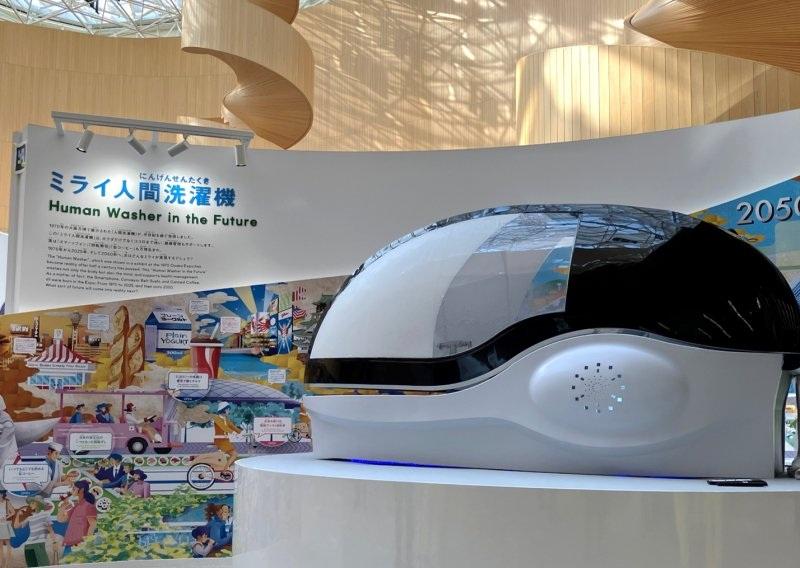
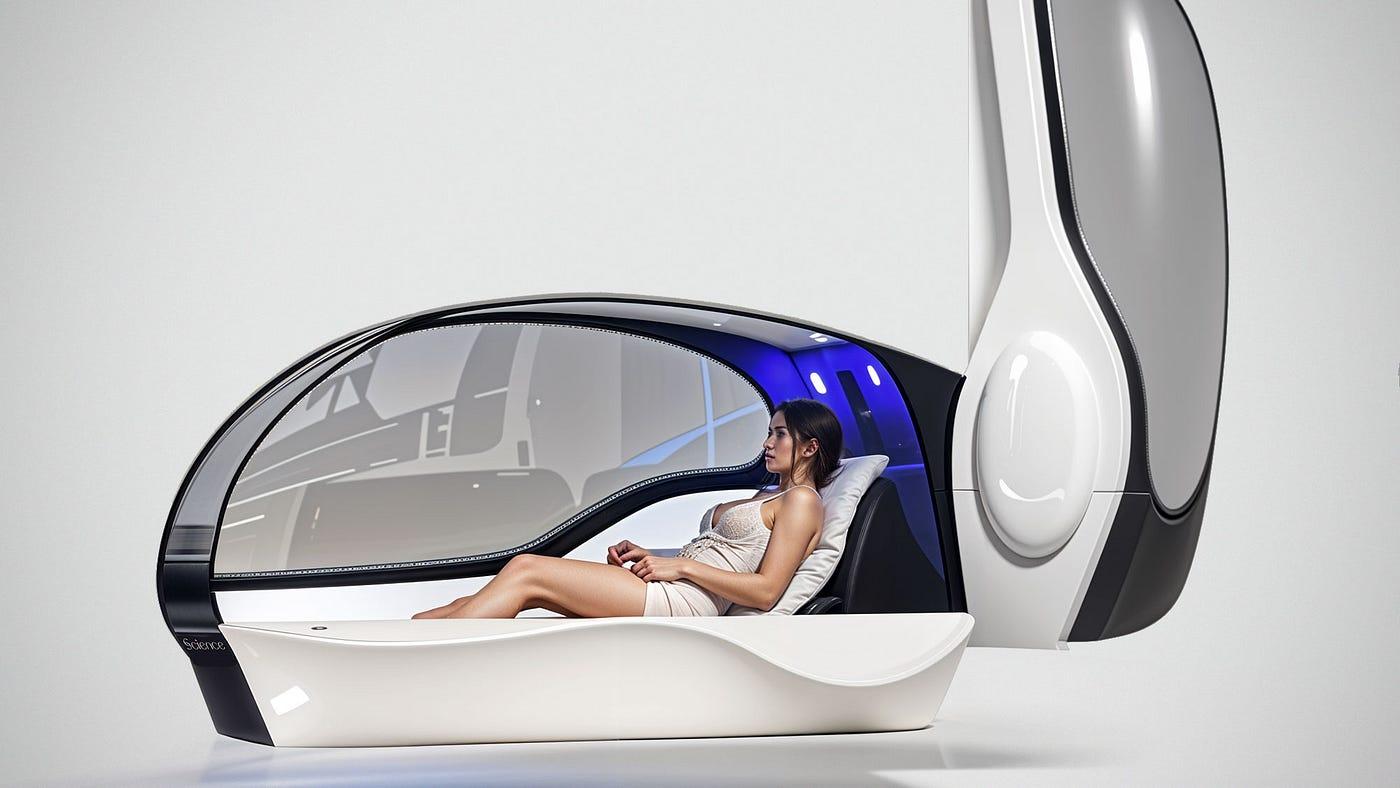
In fact, the ability to attract so many curious consumers is still related to the design concept of this product. Science's AI bath machine is like a simplified "personal care cabin", shaped like an oversized capsule. It is not the common shower system we see, but a closed - space.
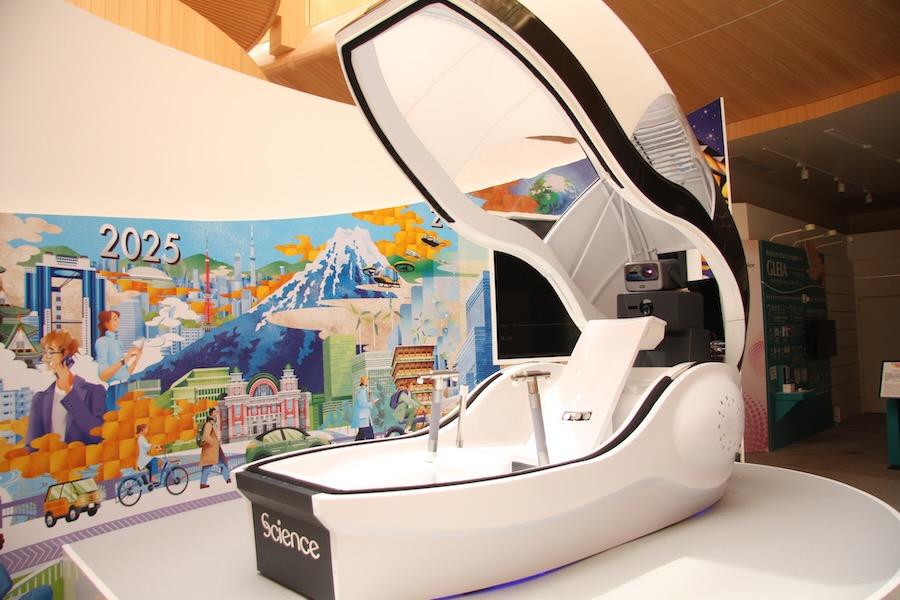
When users enter the cabin, all operations will be automatically executed by the machine. Multiple sets of nozzles and air circulation modules are arranged inside the device. The system will automatically provide a cleaning program based on sensor data such as body temperature, skin humidity, and water - flow contact area. Currently, the program only has three steps: washing, rinsing, and drying. Throughout the process, users don't need to adjust the angle, turn on or off the faucet, or control the water volume. It is truly "fully automatic".
(Image source: Threads)
So where is its AI? The answer lies in the large number of sensors at the bottom of the cabin and the in - machine algorithm model. Science revealed that people of different body types and ages have different sensitivities to water pressure and temperature. This device will collect a set of benchmark data during the first bath, and subsequent programs will be automatically optimized. For example, when a person who is afraid of the cold enters, the cabin will pre - heat first; for people with dry skin, the water - flow intensity will be automatically reduced to avoid harming the skin.
But the current problem is that if you want the machine to recognize your preferences, you still have to train it during use. So we can also imagine, if these data are collected by other devices in the smart home, will it be more user - friendly?
Actually, this is one of the reasons why 40,000 people signed up for the experience. Consumers' expectations for smart homes and whole - house intelligence are getting higher and higher. In the living room, you can control the lights by voice and let the air conditioner automatically adjust the temperature with sensors; in the kitchen, there are now automatic range hoods and smart cooking sets. But the bathroom doesn't seem to have changed much.
(Image source: Threads)
There have been many ideas about smart bathrooms in the early days. For example, in the 1970s, Sanyo in Japan demonstrated the first - generation "human washing machine". The concept was very sci - fi, but the internal structure was complex and the cost was extremely high, so it could only stay in the laboratory. In recent years, many manufacturers have also tried to solve the problem of smart bathing with other solutions. Overseas, there is hai's smart shower head, which can record water consumption and adjust the spray mode through an app; in China, brands such as Arrow and Hamac have also launched smart shower heads or shower systems with functions such as constant temperature, temperature display, and mode switching.
However, compared with other mature single products in the whole - house intelligence system, the intelligence level of these products is obviously relatively basic, and their automation ability is also slightly insufficient compared with the "Future Human Bath Machine" exhibited by Science. In this way, it seems quite reasonable that the exhibition of the "Future Human Bath Machine" can attract 40,000 people to participate in the experience.
Will the AI bath machine become a breakthrough point for smart bathrooms?
The bathroom has always been a space that is easily overlooked in the whole - house intelligence.
The reason why the "Future Human Bath Machine" has caused a lot of discussion is mainly that there hasn't been a single product with such a high degree of automation in smart bathing for a long time. As we mentioned before, there have indeed been some smart shower systems in the past, but most of them only help you adjust the water temperature and record some data. Compared with other smart home products that can change the color temperature and illuminance of the room lights according to your habits, or adjust the air mode according to the external weather and mood, the intelligence level is indeed relatively average.
But there are indeed some practical problems in bathroom intelligence. Compared with other spaces in the home, the bathroom not only has water and electricity but also steam. These combinations require manufacturers to provide a safer service system. This has led manufacturers to mainly make small upgrades on the periphery in the past, such as adjusting the flow of smart shower heads, adjusting the temperature of smart heaters, and adding displays to smart mirrors. But when it comes to the real "bathing" process, users still have to do it themselves.
Will the "Future Human Bath Machine" become the first hit product in the new - era smart bathroom? Lei Technology believes that this is almost impossible.
First of all, the currently exhibited version of the "Future Human Bath Machine" is still not a consumer - grade product, so it has not been improved for ordinary consumers. The cabin of this machine is nearly 2.5 meters long, 1 meter wide, and 2.6 meters high. Such dimensions mean that it can't fit into most consumers' bathrooms. Unless you are willing to renovate your home and reserve more space for it.
Secondly, there is the price. Science said that the current production volume of this machine is expected to be 40 - 50 units, and the main service target is not ordinary consumers. Therefore, the price is as high as 60 million yen (2.7 million RMB). However, Science is also planning to launch a version for ordinary consumers, but it is still in the R & D stage.
(Image source: Science)
More importantly, as a machine that features a high degree of intelligence and automation, the "Future Human Bath Machine" is not designed to be linked with other smart home appliances, which means it cannot be integrated into the whole - house intelligence system and cannot share data information with other devices.
But in the end, the greatest significance of the AI bath machine is to make consumers and the industry refocus on the bathroom space in the home. It also makes the public re - examine that there can be intelligent solutions for "bathing". And the soaring popularity of this product may make the next battlefield of whole - house intelligence fall on the bathroom.
The smart bathroom is the last hurdle for whole - house intelligence
In the past few years, whole - house intelligence has been advancing rapidly, and the layout of each company has become clearer. Midea was the first to take "air", "energy efficiency", and "active intelligence" as core strategies, integrating high - frequency large - scale appliances such as air conditioners, fresh air systems, water purification systems, and water heaters into a set of space - intelligent systems, using HomeOS as the underlying connection to form a whole - house intelligence solution; Haier's Three - Winged Bird uses a complete set of solutions to solve the overall experience of spaces such as the kitchen, living room, and bedroom, and the solutions are more mature; Huawei's whole - house intelligence has obvious advantages in underlying communication, large - bandwidth device connection, and space control, giving the impression of turning the whole - house intelligence into an oversized HarmonyOS mobile phone.
It can be seen that the leading manufacturers in whole - house intelligence have completed the layout from single products to connection and underlying capabilities. However, in the bathroom scenario, it still mostly stays at relatively basic parts such as constant temperature of the shower and control of the bathing atmosphere lights.
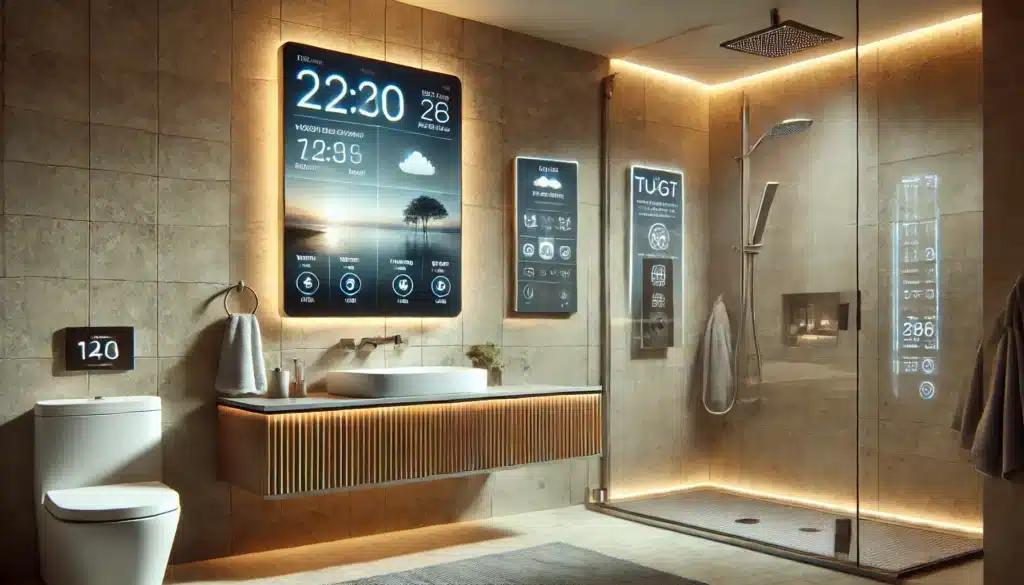
Research data from market research institution Grand View Research shows that categories such as smart showers and smart bathroom products have maintained double - digit annual growth rates in the past few years, and are one of the relatively stable sub - tracks in the smart home system in terms of growth. Although the current market scale is not large, the growth curve is healthy enough, which also shows that consumers have a demand for more intelligent bathing products.
(Image source: Top Room)
Looking back, is it necessary to make the bathroom intelligent? Actually, it is necessary. Compared with other scenarios in whole - house intelligence, such as reading, sleeping, and cooking, taking a bath is also a high - frequency action, once a day, at least five times a week, and the accumulated time spent in a year is also considerable. Moreover, the individual needs for bathing are also very high. For example, the water temperature and water - flow speed that the skin of the elderly and children can tolerate are different from those of ordinary adults, and people with sensitive skin have their own bathing methods.
Of course, Science's "Future Human Bath Machine" will definitely not be the final form of this track, but it at least plays a "pilot" role and provides reference value for the industry. This also makes people can't help but look forward to when a truly usable and popularized AI bath machine will appear? Which manufacturer will be the first to take the plunge? When will we achieve fully automated bathing? All these questions need time to answer.
This article is from the WeChat public account "Lei Technology", and is published by 36Kr with authorization.