Is Cook about to leave Apple? The battle for the CEO position among nine contenders has begun.
Earth - shattering changes at the top of Apple! At 65, Tim Cook is starting to tremble. The low - key Cook intends to retire, leaving behind a fierce power struggle within the "Cook Cabinet". The latest development is that the father of the M - series chips has resigned, and Cook wants to create a CTO position to keep him. The father of the iPod is also building momentum to be the most suitable candidate to succeed Cook as Apple's CEO.
In Cupertino, California, in 2025, the sun still generously bathes the huge curved glass of Apple Park.
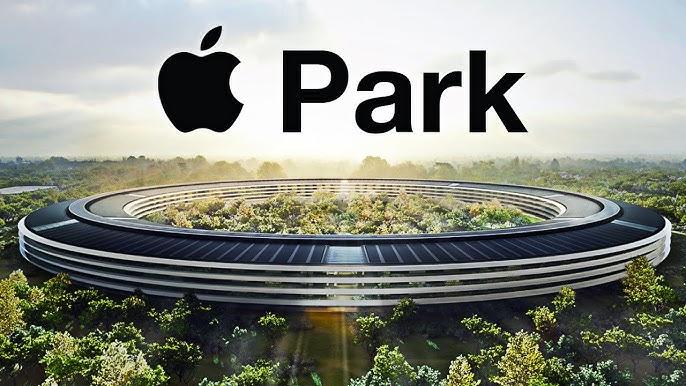
This circular building, which cost $5 billion and was regarded by Steve Jobs as his last masterpiece, resembles an alien spaceship parked on the Earth's surface, symbolizing an almost divine and perfect order.
Here, even the design of the packaging boxes has patents, and the planting position of each tree is precisely calculated. The air is filled with an extreme obsession with "control".
However, inside this holy land, regarded as the "Vatican" of the tech world, an imperceptible but fatal upheaval is spreading.
Top - notch engineers, designers, and architects who once regarded the Apple employee badge as the highest honor of their careers are now flocking to find "life - rafts".
They are not leaving because of meager pay or because they are tired of the California sun.
They are leaving because they feel that although this spaceship is still sailing smoothly, it seems to have deviated from the course to the future.
They drive north, across Interstate 280, and flock to Meta's campus in Menlo Park or the OpenAI headquarters in San Francisco, a place full of geeks and idealists.
This is a migration of faith.
According to cross - verification from multiple sources such as Bloomberg and The Wall Street Journal, Apple is experiencing the most severe brain drain since Steve Jobs returned in 1997.
From the designer who defined the touch feeling of the iPhone, to the chip creator who controls the computing power of hundreds of millions of devices globally, to the algorithm experts trying to break through in the wave of generative AI, every name on the list of departures is enough to make headhunters of competitors lose sleep with excitement at night.
If in the past two decades, the center of the talent gravitational field in Silicon Valley was in Cupertino, now, this gravitational field is undergoing a drastic magnetic pole reversal.
This is the harsh friction sound when the wheel of tech history turns.
Chapter 1: The "Northern Expedition" of the Design Soul: When Perfectionism Meets Generative Chaos
At Apple, the design team (Industrial Design & Human Interface) is not just a department; it is the soul of the company, the supreme will above engineering and finance.
However, this once - united elite club has now become the hardest - hit area for talent loss.
Alan Dye's Turnaround and Meta's Gamble
Alan Dye may be a relatively unfamiliar name to the outside world, but inside Apple, he is the guardian of the elegance and user - friendliness of Apple's software after Jony Ive left.
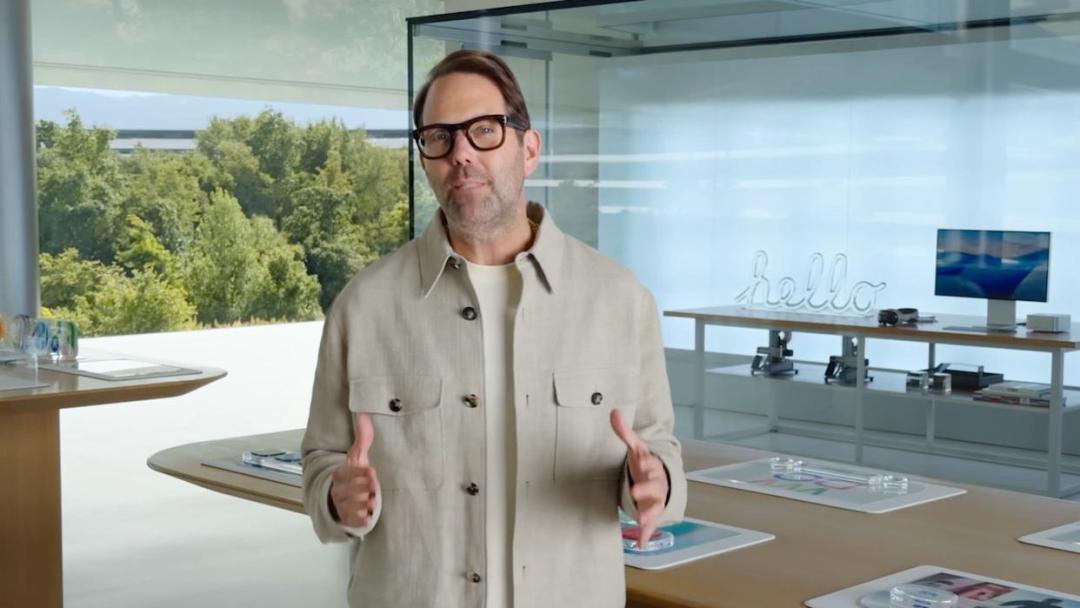
As the vice - president of human - machine interface design, he led the interface design of iOS, watchOS, and the amazing yet controversial Vision Pro.
He spent 19 years at Apple, and the minimalist aesthetic has been deeply engraved in his bones.
But at the end of 2025, Alan Dye decided to leave.
His next stop is Meta.
This job - hopping caused a shock in Silicon Valley no less than when Anthony Levandowski jumped from Google to Uber.
Why Meta?
In the eyes of many Apple elites, Meta used to be synonymous with a rough and even slightly "evil" data company.
But the reality is that Mark Zuckerberg is investing almost crazily to turn Meta into a new hardware innovation laboratory.
Along with Alan Dye, his deputy, Billy Sorrentino, who is also very important in Apple's design team, also went to Meta.
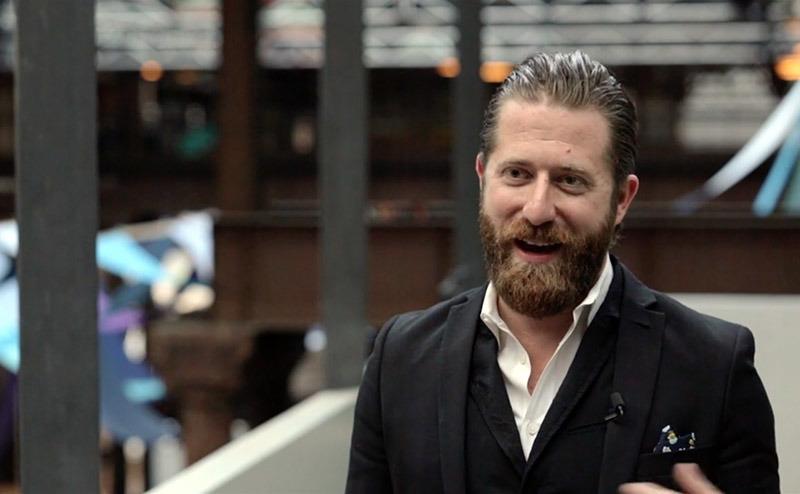
Before them, Meta had already poached a large number of Apple's design backbones.
This migration of design talents reveals the collision of two design philosophies.
Apple Model: It pursues definitive perfection. Every rounded corner, every animation frame rate, and every shadow depth is carefully designed and controlled. Designers are like gods, and users stroll in the Garden of Eden created by the gods.
Meta/AI Model: It pursues generative possibilities. In the AI era, the interface is no longer static but fluid and generative. Designers no longer control every pixel but design a set of rules for AI to generate the interface.
For top - notch designers like Alan Dye, although Vision Pro is exquisite, it is still the pinnacle work under the old paradigm - it is still a screen (virtual screen).
Meta's Orion prototype and Zuckerberg's vision of "embodied intelligence", although rough, provide a wilder and less - restricted canvas.
They are tired of spending years polishing a 0.1 - millimeter chamfer. They are eager to define the interaction language of the next decade - a future that may not even require a screen.
The Violent Aesthetics of Compensation
Of course, besides sentiment, Meta's "money power" is also an undeniable factor.
According to insider information, to poach top - notch AI and design talents from Apple, Meta has offered astonishing compensation packages.
For some core architects, the transfer fee plus long - term stock incentives (RSU) have an average annual value of up to $25 million.
This compensation structure reflects Zuckerberg's wartime mentality.
He once used the metaphor of "Patriot missiles" in an internal memo, and in the talent war, he is clearly using nuclear weapons.
In contrast, although Apple offers good pay, its compensation system is relatively rigid. And as the stock price consolidates at a high level, the growth potential of RSU is not as good as that of Meta or OpenAI, which are on the verge of an AI explosion.
Chapter 2: The Shaking of the "Creator" and the Hidden Worries of the Chip Empire
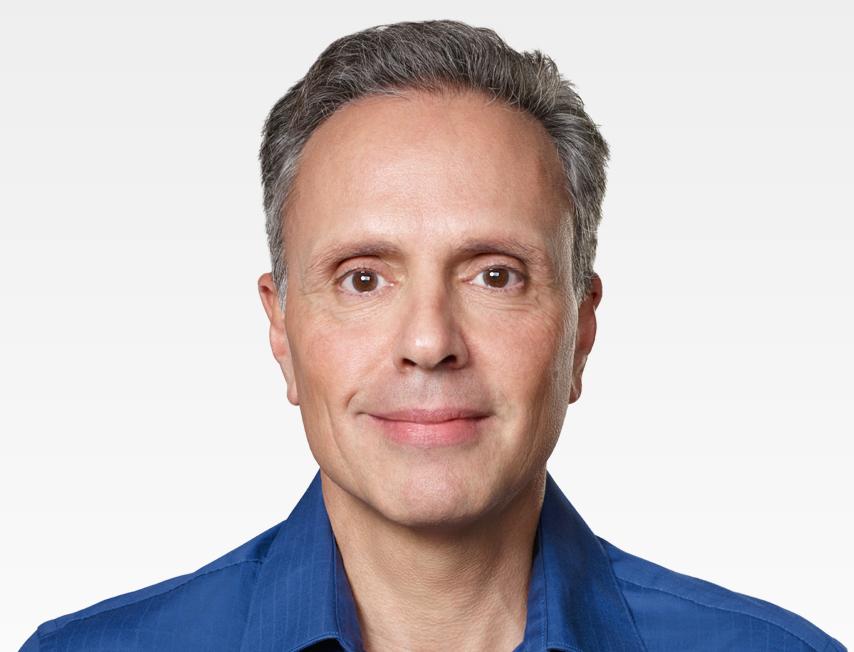
If the departure of designers means losing the "face", then the wavering of Johny Srouji may make Apple lose the "core".
The Silent Cornerstone
Among Apple's current executive team, no one is as irreplaceable as Srouji.
As the senior vice - president of hardware technology, he is a silent ace.
Since joining Apple in 2008, he has built the Apple Silicon team from scratch. From the trial of the A4 chip, to the unrivaled dominance of the A - series chips in the mobile market, to the rebirth of Mac with the M - series chips, completely getting rid of Intel's constraints, Srouji is the digger of the moat for Apple's trillion - dollar market value.
It is because of Srouji's chips that Apple can find that incredible balance between power consumption and performance, and allow the MacBook Air to edit 8K videos without being plugged in.
He is the "creator" of the hardware world.
"There's No Place for Me Except the CEO Position"
However, the cold wind at the end of 2025 blew into Srouji's office.
Bloomberg reported a bombshell: Srouji has informed Tim Cook that he is "seriously considering" leaving Apple.
This is not an ordinary retirement notice.
Rumors in the market suggest that Srouji's attitude even has a certain sense of determination.
Although the statement "Make me CEO or I quit" may be a bit of a dramatic exaggeration, it precisely hits the core of the problem: In Apple's current power structure, the ceiling for technical bureaucrats has been reached.
The succession plan seems to favor John Ternus, the head of hardware engineering, or executives with an operations background, which is in line with Cook's consistent "steady" style.
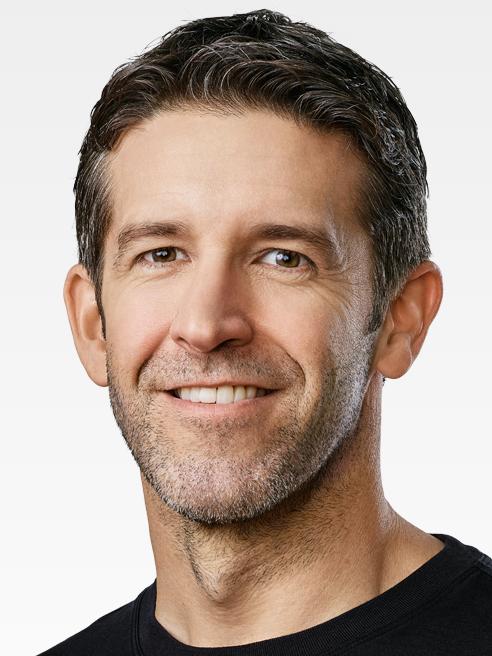
For a leader like Srouji, who has absolute authority in the technical field, if he cannot reach the highest position, and if giants like Intel, OpenAI, or other companies eager to develop their own chips are willing to provide him with a new territory of his own, leaving becomes a rational choice.
The "Butterfly Effect" of Losing Srouji
If Srouji really leaves, the damage will be nuclear - level and have a lag effect:
Technical Disruption: The chip R & D cycle is as long as 3 - 5 years. The iPhone 18 next year may not be affected, but who will make decisions on the planning of 2nm or even 1nm chips in 2028?
Talent Avalanche: Chip design is a field highly dependent on "generals". Srouji's prestige holds together a large army composed of elites from Haifa, Israel, Austin, Texas, and Silicon Valley. Once the commander leaves, this army is likely to be disassembled by Qualcomm, NVIDIA, or Microsoft with high salaries.
Capital Turbulence: Wall Street gives Apple a high valuation largely because it believes in the absolute leading position of Apple's hardware performance. Once this belief is shaken, Apple's premium ability will be greatly reduced.
Chapter 3: The Stray in AI: From the "Death of Siri" to the "Charm of OpenAI"
In Silicon Valley, there are two types of departures: one is to retire after achieving success, and the other is due to inability to cope.
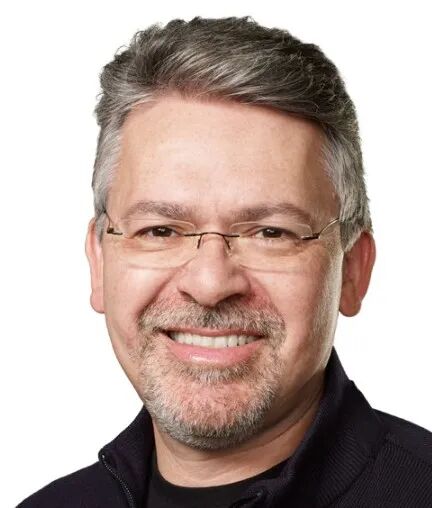
John Giannandrea's disheartened departure undoubtedly belongs to the latter.
The Lost Seven Years
In 2018, when Giannandrea joined Apple from Google with the aura of an "AI commander", the outside world had high hopes that he could save Siri, which could only tell cold jokes and often couldn't understand human speech.
However, seven years have passed, and Siri is still struggling. After the emergence of ChatGPT, it even seems like an antique from the last era.
In December 2025, Apple announced that Giannandrea would step down as the senior vice - president of AI/ML strategy and retire in the spring of 2026.
He will be replaced by Amar Subramanya, a former executive from Microsoft and Google.
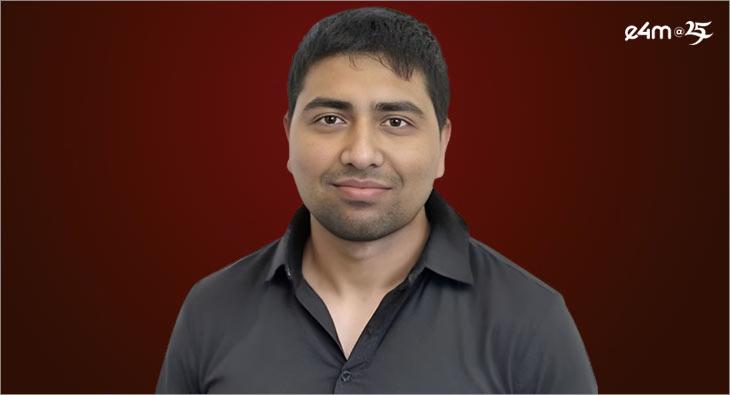
This is Apple's disguised admission of the complete failure of its first - stage AI strategy.
Prisoners of Culture: The Cost of Privacy - First
Why did the former head of Google's AI "not adapt" at Apple?
The core contradiction lies in culture.
The progress of AI, especially in the era of large - scale models, depends on extremely open academic exchanges, collaboration in open - source communities, and large - scale data throughput.
OpenAI's success is built on a certain "public madness".
But at Apple, secrecy is the highest belief and an administrative order.
Academic Isolation: Apple researchers are prohibited from freely publishing papers at top - level conferences such as NeurIPS and ICML, which has led to their "silence" in the academic circle. For top - notch scientists, being unable to publish papers means death in the academic world. This makes it difficult for Apple to recruit the most ambitious doctoral students.
Computing Power Beggars: Incredibly, reports have pointed out that Apple's internal AI team even has to "beg" for computing resources. Apple's data - center architecture has long been designed for iCloud storage and services, not for tasks with extremely high throughput such as large - model training. While Meta is hoarding hundreds of thousands of H100 graphics cards, Apple's engineers are still worrying about GPU quotas.
Siri's Technical Debt: Giannandrea spent a lot of time patching Siri's old, rule - based underlying code, trying to build a skyscraper on an old foundation instead of starting from scratch like OpenAI and directly building a generative architecture based on Transformer.
Talent Flowing to OpenAI: A Change of Faith
Meanwhile, OpenAI has become the biggest talent harvester for Apple's AI talents.
Statistics show that within just one month, dozens of Apple engineers have joined OpenAI's hardware and model teams.
Among them, the most eye - catching is Pang Ruoming, who was once the head of Apple's basic model team.
Extended Reading: The Inside Story of a Genius Leaving Apple for $200 Million in Four Years First Exposed! Pang Ruoming Sent a Farewell Letter, Marking Apple's Big Defeat in AI
His departure directly led to the stagnation of Apple's large - model R & D progress.
Core backbones like Tom Gunter and Frank Chu have also switched to Meta or OpenAI one after another.
This flow is like a "change of faith".
In this era where AI defines the future, engineers are more willing to go to a place that regards AI as the core product and as a "god", rather than a place that