Tsinghua-affiliated embodied intelligence company secures hundreds of millions in Pre-A round financing, wins orders from leading customers such as Mitsubishi | Exclusive from Hardcore Kr
Author | Huang Nan
Editor | Yuan Silai
Yingke has learned that Lumos Robotics, an embodied intelligent robot company (hereinafter referred to as "Lumos Robotics"), recently completed two rounds of financing, Pre - A1 and Pre - A2, with an amount of hundreds of millions of yuan. We have summarized the information of this round of financing and several highlights of the company:
Financing Amount and Investment Institutions
Financing Rounds: Pre - A1, Pre - A2
Financing Scale: The total amount reaches hundreds of millions of yuan
Investors: The Pre - A1 round was led by CDH Investments, followed by Nanjing Venture Capital, Jinjing Capital, and Jingu Co., Ltd.; the Pre - A2 round was invested by Shenneng Chengyi Investment
Use of Funds: This round of financing will be used for the company's continuous investment in the fields of embodied intelligent data and hardware
Basic Company Information
Establishment Time: September 2024
Registered Address: Bao'an District, Shenzhen City, Guangdong Province
Enterprise Positioning: Lumos Robotics has long been focusing on the R & D and sales of embodied intelligent robots and core components, and has built a full - stack capability closed - loop from real - machine data collection, hardware body innovation to operating system models. Relying on its self - developed FastUMI efficient data collection system and high - performance robot hardware platform, it provides enterprises with embodied intelligent infrastructure covering data, hardware, and algorithms, and promotes the large - scale implementation and commercial application of embodied intelligent technology in multiple fields.
The company focuses on high - value industrial scenarios such as home, logistics, and manufacturing. Its core products include LUS and MOS series humanoid robots, as well as key components such as robot joint modules and visual - tactile modules.
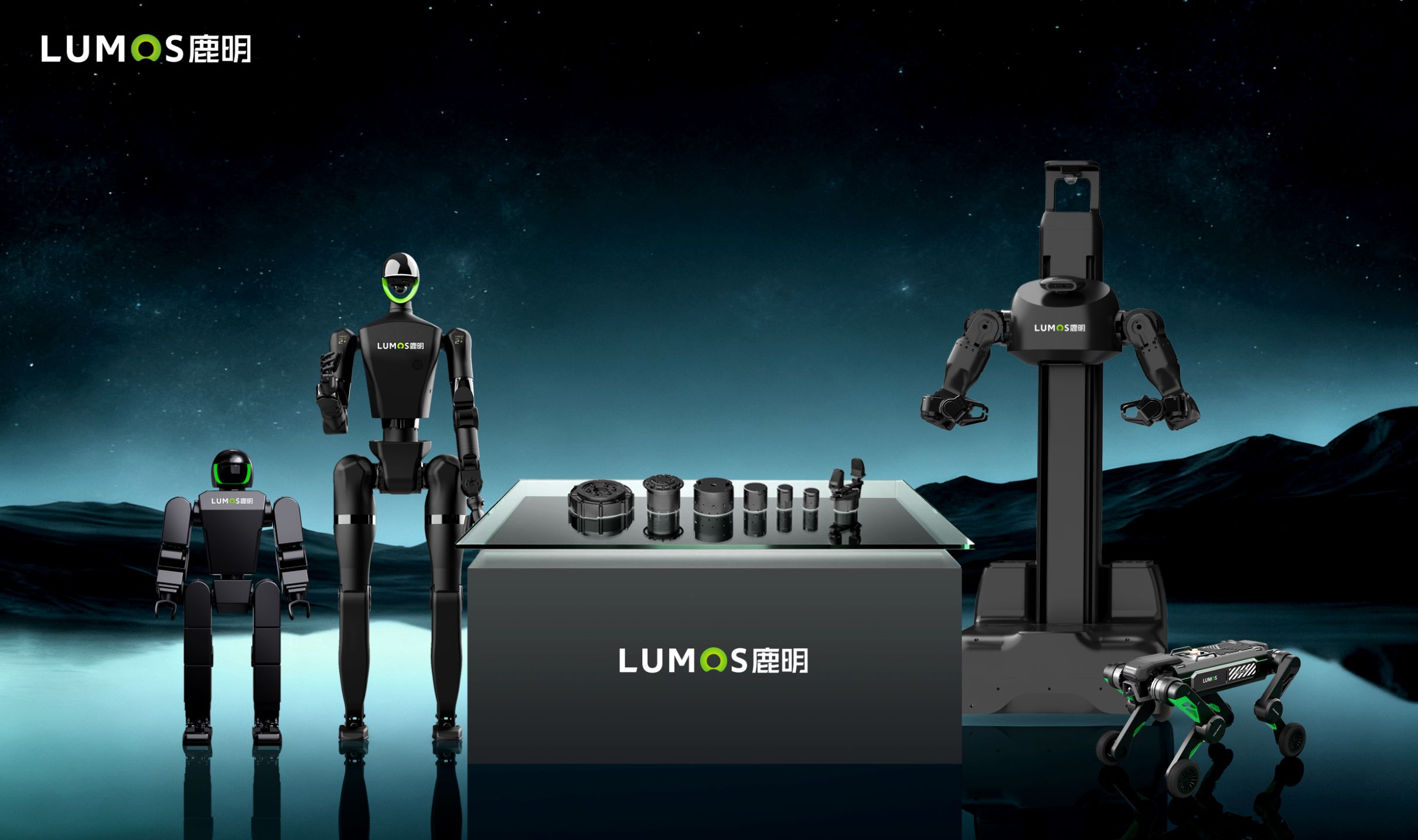
Product matrix of Lumos Robotics (Source/Enterprise)
Team Background: Yu Chao, the founder and CEO, graduated from Tsinghua University. He has been engaged in the research of robot learning algorithm field since 2016. He once led the construction of the embodied robot business of Dreame Technology and participated in the development of several consumer - grade robot products such as the robotic dog "Tiedan". Cao Junliang, the CTO, is a doctor of mechanical engineering from Shanghai Jiao Tong University and has deeply participated in the R & D of several high - performance embodied robot products. Ding Yan, the co - CTO, is a doctor of artificial intelligence from the State University of New York and a former star researcher at Shanghai AI Lab. Currently, R & D personnel account for more than 70% of the company, including more than a dozen doctors. It is a team with profound industrial experience and technical accumulation.
Technical Highlights: In the past year, Lumos Robotics has launched four robot products. Focusing on two major directions of training data and hardware body, the company has formed a full - stack R & D capability from data collection, body design, motion control, perception algorithm to system integration.
Real - machine training data is the key infrastructure for the general operating brain of robots. Cost, efficiency, and generalization are its core consideration dimensions. Previously, the GEN - 0 large model launched by the US Generalist company initially verified the Scaling Law in the field of embodied intelligence through 270,000 hours of real - machine data collection. However, most of its data was obtained through UMI data collection technology. Lumos Robotics' FastUMI efficient data collection system is an iterative optimization and performance leap of its data collection solution.
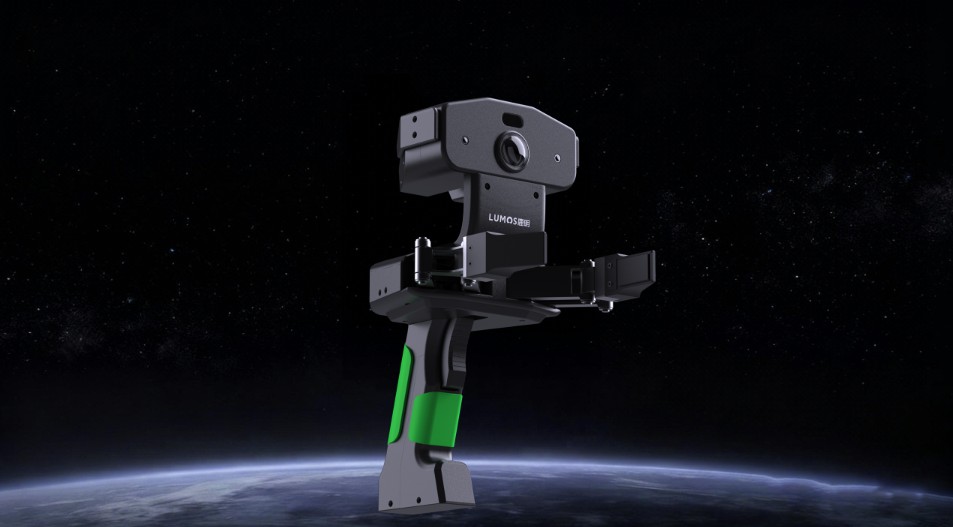
FastUMI Pro, the data collection software and hardware system of Lumos Robotics (Source/Enterprise)
Compared with traditional data collection technology, the FastUMI data collection system can triple the data collection efficiency, with only one - fifth of the cost of traditional solutions, and the accuracy can reach 1 - 3mm. Relying on this core technology, Lumos Robotics has initially completed the accumulation of 10,000 hours of real - machine data and the training of the base model, and is building a complete embodied data ecosystem around the full - chain capabilities of data hardware, software, and models.
In terms of hardware body, Lumos Robotics has launched a high - performance modular robot platform. Its self - developed high - torque - density integrated joint is the first robot system in the industry to achieve a 50 - kilogram load on both arms. At the same time, the cycloidal joint module made of all - PEEK material realizes a 40% weight reduction and a 60% increase in torque density, and has the characteristic of low - noise operation, providing support for the diverse application scenarios of future humanoid robots.
Market Volume
The market scale of humanoid robots is showing a rapid and continuous expansion trend. According to the report of GGII, in 2025, the global market scale is expected to reach 6.339 billion yuan, with China accounting for more than 50%. It is expected that by 2030, the global sales volume of humanoid robots will be close to 340,000 units, and the market scale is expected to exceed 64 billion yuan. The Yole Group predicts that the global market scale of humanoid robots will reach 6 billion US dollars in 2030 and is expected to soar to 51 billion US dollars in 2035.
Business Progress
In terms of industrial ecosystem layout, Lumos Robotics has established in - depth cooperation with leading enterprises such as Mitsubishi in Japan and COSCO Shipping, and introduced strategic shareholders with industrial resources such as Fosun Group, SenseTime, Dematic Technology, and Jingu Co., Ltd.

Reached cooperation with leading enterprises such as Mitsubishi (Source/Enterprise)
Currently, the company is successively cooperating with well - known enterprises such as Dematic Technology, a provider of intelligent logistics solutions and core components, and COSCO Shipping, a global shipping giant, in aspects such as the implementation of embodied intelligence in scenarios such as logistics and intelligent manufacturing, the development of core components, the exploration of new application scenarios, and the in - depth integration of the robot industry chain and innovation chain, to accelerate the commercial implementation of embodied intelligence in the industry.
Thoughts of the Founder & CEO
Yingke: Lumos' Fastumi technology has completed the accumulation of 10,000 hours of real - machine data. At present, to what extent does large - scale and high - quality real - machine training data determine the large - scale implementation of embodied intelligence?
Yu Chao: Compared with simulation training, the quality of real - machine training data is the highest. The effect of the GEN0 model trained based on 270,000 hours of real - machine data is evidence of this.
Real - machine training brings high - fidelity dynamic information in complex physical interactions, robust modeling of real - world environmental noise and uncertainties, and the core basis for cross - scenario task generalization. It has unparalleled advantages over simulation training in reducing the transfer gap from simulation to reality (Sim2Real) and ensuring the safety and reliability of action execution. Therefore, we believe that large - scale and high - quality real - machine data is the key to achieving large - scale implementation.
Currently, there are three core pain points in real - machine data collection for robots: high collection cost, low efficiency, and poor cross - body adaptability. These bottlenecks seriously restrict the large - scale accumulation of high - quality training data, which in turn affects the implementation speed and stability of embodied intelligence in real - world scenarios.
Lumos' FastUMI technology can solve the above problems, increasing the data collection efficiency to three times that of traditional methods, reducing the cost to one - fifth, and achieving an accuracy of 1 - 3 millimeters. This is precisely for the efficient accumulation of such infrastructure.
Yingke: How to further optimize the closed - loop of data collection and model training?
Yu Chao: Next, our team will continue to promote it in the following three directions. First, enrich and expand the hardware product system. Focusing on the diverse needs of industrial and service scenarios, the team is building a hardware product matrix covering multiple types of grippers, force - controlled/non - force - controlled structures, and portable forms to meet the differentiated usage needs of customers in different industries with flexible and configurable solutions.
Second, systematically upgrade data and algorithm capabilities. In the data collection and processing process, we are continuously optimizing the full - link process, building a high - standard data quality evaluation system, strengthening data credibility and processing efficiency, and providing reliable data basis and algorithm support for the evolution of upper - layer intelligent capabilities.
Third, conduct scenario - based development for the next - generation embodied intelligent model. We are gradually integrating multi - modal data such as tactile and force - control data through cooperation with leading scientific research institutions, promoting the evolution of the model towards higher - dimensional perception and autonomous decision - making capabilities. In early March next year, Lumos Robotics plans to release a new - generation model for core industrial operation scenarios.
Based on the triangle of data - whole machine - scenario. Through high - quality whole - machine products, operating in business scenarios, accumulating real - machine data, training better models, and then applying them to broader scenarios is Lumos' overall business path. It can be said that all our businesses are carried out for the accumulation of real - machine data. Combining with the commercialization process, achieving the large - scale accumulation of real - machine data while commercializing is the main goal of Lumos Robotics in the next 1 - 2 years.
Yingke: The company's self - developed core hardware such as integrated joints and lightweight cycloidal modules have achieved breakthroughs in load, noise reduction, etc. How will these technologies support the long - term and reliable operation of robots in different scenarios such as industry and home? What strategies does Lumos have in balancing hardware cost and performance?
Yu Chao: When robots enter the home and become consumer - grade products, cost and reliability are very important considerations, which are also what Lumos' hardware design focuses on. In balancing cost and performance, through full - stack self - development from the body to core components and then to algorithms, we can control costs while ensuring product reliability, laying a foundation for the large - scale implementation of robots.
Currently, Lumos Robotics has built a robot hardware system that combines high - load performance and family - friendly features.
For heavy - load tasks such as logistics handling in industrial scenarios, the integrated joint technology developed by us has achieved a breakthrough in high - load performance. Taking the Lumos robot as an example, its double - arm load capacity can reach 50 kilograms, which can stably support high - intensity operation requirements.
For future home service scenarios, we have also launched a lightweight cycloidal module, which not only reduces the structural weight but also significantly reduces operating noise and improves safety performance, providing technical support for the reliable operation of robots in the home environment.