A former ByteDance team starts a business to develop screenless AI hardware for children's oral English practice | Exclusive Report from Yingke
Author | Huang Nan
Editor | Yuan Silai
When "eye protection" and "immersive learning" have become the two most important factors for contemporary parents when choosing educational products, a "screen-free" product is trying to reshape the form of learning companionship.
Yingke learned that Beijing Hezhi Technology Co., Ltd. (hereinafter referred to as "Hezhi Technology") had previously completed a multi-million - yuan angel round of financing. We've summarized the key highlights of the company:
Financing Amount and Investment Institutions
Financing Round: Angel Round
Financing Scale: Several million yuan
Lead Investor: Miracle Plus
Use of Funds: The funds from this round of financing will mainly be used for technological R & D investment to accelerate product iteration, optimization, and updates, and to promote the large - scale mass production and delivery of the first batch of hardware products.
Basic Company Information
Establishment Time: November 2023
Registered Address: East Zhongguancun Road, Haidian District, Beijing
Company Positioning: Hezhi Technology targets the rigid - demand market of foreign language learning for children aged 6 - 12. It has developed and launched an AI - powered intelligent oral practice companion hardware product, which is positioned as an "AI hardware version of Duolingo". By combining multi - modal technology with self - developed hardware, it creates an integrated software - hardware learning ecosystem, providing professional, personalized, and eye - protecting learning solutions for families.
Technological Highlights: The product concept of Hezhi Technology aims to use AI technology and screen - free hardware to address the core pain points of high input, low speaking frequency, passive learning, and lack of interaction in children's oral practice scenarios. Its first product, LOOKEE Oral Practice Buddy, is like a children's hardware version of "Duolingo". It reshapes oral teaching content that conforms to children's cognitive patterns through the self - developed AURA dynamic regulation system and integrates learning algorithms into the portable screen - free interactive hardware design.
LOOKEE Oral Practice Buddy focuses on the oral learning scenarios of children aged 6 - 12 in a screen - free companion form. The advantage of being screen - free is not only to protect eyesight but also to force children to return to the essence of language, "listening" and "speaking", by removing visual dependence. They understand questions and give responses in pure audio interaction, building an internal language logic.
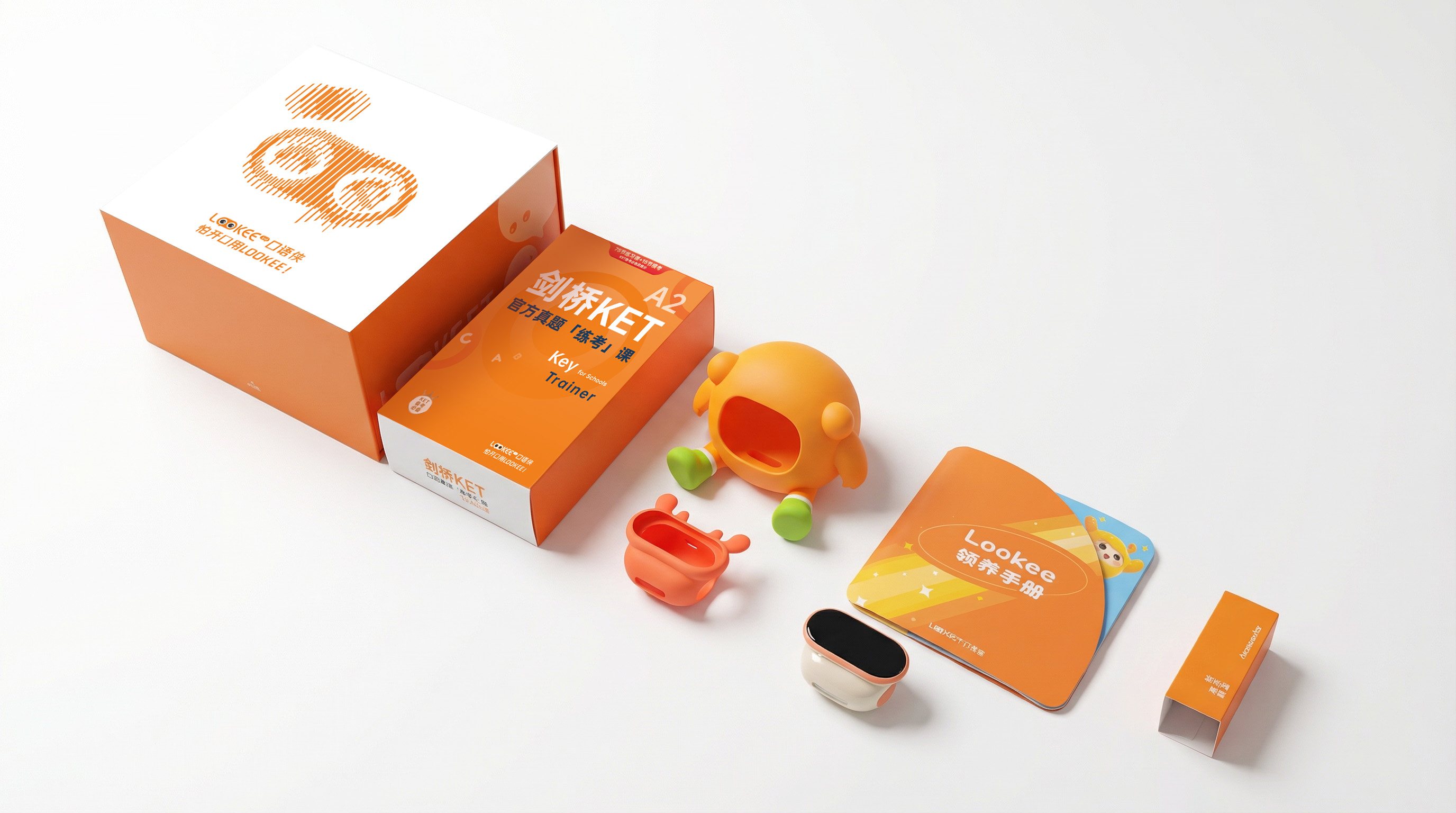
Product image of LOOKEE Oral Practice Buddy (Source/Company)
On this basis, LOOKEE is committed to transforming the experience from "human - machine dialogue" to "human - machine friendship". Its self - developed AURA intelligent teaching system uses anthropomorphic "big - eye" lighting effects and instant incentive feedback, which can give timely feedback during interaction and establish an emotional connection with children. This system transforms traditional, one - way follow - up exercises into a realistic dialogue experience that allows two - way interaction, can sense emotions, and actively guides children.
In addition, the team also attaches great importance to creating a relaxed and natural social atmosphere. It introduces multiple roles and voice algorithms of children's IPs to create a dialogue atmosphere, encouraging children to express themselves actively like chatting with friends and building oral confidence in auditory interaction.
In the future, the team plans to extend the "screen - free + socialized AI" learning model to more languages and scenarios, and build a more complete hardware product ecosystem around children's cognitive development and social nature.
Market Size
According to the "2024 White Paper on the Consumption Trends of Children's Education in China" by iResearch, the overall market size of children's educational products in China reached 286 billion yuan in 2024. As an important carrier of teaching and research products, the market size of educational hardware has exceeded 68 billion yuan and is expected to grow to 185 billion yuan by 2030, with an average annual compound growth rate of 18.3%.
Among them, oral practice companion hardware, as a segmented track of intelligent educational hardware, is mostly included in the statistics of the practice - companion robot industry and has shown explosive growth in recent years. According to a report by Boyan Zhishang, the market size of this industry reached 1.473 billion yuan in 2024 and is expected to climb to 1.902 billion yuan in 2025, a year - on - year increase of about 29.1%.
Team Background
The founder and CEO, Lu Yaqi, graduated from Columbia University with dual master's degrees in education and economics. She has nearly a decade of experience in the education and AI industries and has worked at TAL Education Group, ByteDance, and Kuaishou. During her tenure at ByteDance, she led the strategic planning of educational products and promoted the in - depth integration of AI and educational scenarios. Many core team members graduated from top - tier universities and have backgrounds in leading technology companies, with profound technological R & D experience and product implementation capabilities in education, hardware, and AI.
Founder's Insights
Yingke: As the first product of Hezhi Technology, LOOKEE Oral Practice Buddy features a screen - free design. What are the main considerations behind this design?
Lu Yaqi: In fact, the launch of this screen - free device is an attempt on our part to define a new category of educational products.
Traditional language learning products mostly use screens as the core carrier and achieve teaching goals by presenting text - based interactive content. However, this model goes against the underlying rules of second - language acquisition. Some studies have clearly shown that when the brain processes information through multiple senses, visual information is processed first, which in turn inhibits the reception of auditory information. This also explains why most people's reading ability in English far exceeds their listening and speaking abilities. In the past, users used screens for language input, having enough time to process visual information and strengthen their understanding ability, but they ignored the millisecond - level speaking rhythm in normal communication, resulting in limited development of listening and speaking abilities and difficulty in the flexible use of language.
In our view, the ultimate goal of language learning is for daily use, not just for exams. To achieve this goal, we need to follow the natural learning sequence of "listening, speaking, reading, and writing". The core innovation of LOOKEE Oral Practice Buddy is the complete removal of the screen. On the one hand, it is to closely simulate real - life communication scenarios, allowing children to feel as if they are communicating face - to - face with foreigners and focus on their listening and speaking responses. On the other hand, it conforms to the cognitive development law of children and returns language learning to its origin.
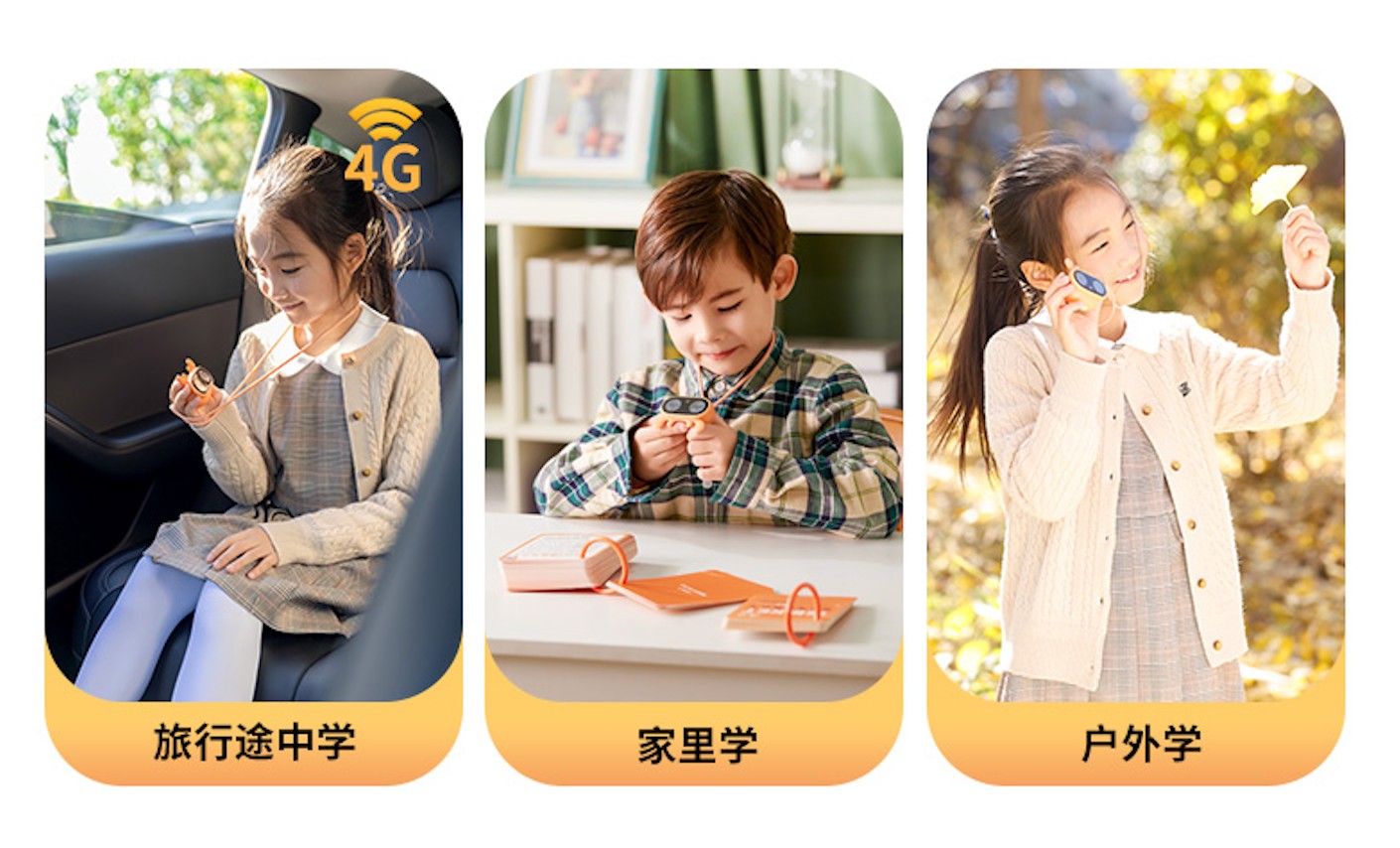
Multiple usage scenarios (Source/Company)
In addition, the screen - free design has many additional benefits, such as alleviating parents' concerns about children's eyesight damage, making the device more portable, enabling immersive learning in fragmented scenarios, and the more compact and cute design also improves user acceptance and product promotion.
Yingke: Considering the easily distractible nature of children, how does LOOKEE Oral Practice Buddy design relevant mechanisms to ensure that children can maintain a stable daily usage time and effective communication volume?
Lu Yaqi: We have set up a three - level mechanism around "cultivating habits, proactive recall, and continuous motivation", which not only suits children's psychological characteristics but also ensures the effectiveness of learning.
The first level is "high - frequency scenario binding + habit - forming design" to naturally integrate the product into children's daily lives.
We use a detachable structure between the device and the charging dock. The cute design of the charging dock can stimulate children's willingness to "put things back in place". Through this sense of ritual, we guide children to charge the device actively, solving the problem of product idleness due to low battery. At the same time, the device is also closely integrated with the "morning alarm" high - frequency scenario. Parents can set the wake - up time on the device, and children will hear English content that suits their abilities and interests as soon as they open their eyes every morning, including English songs, interesting news, and weather forecasts. This not only realizes immersive language input but also makes the product appear frequently in children's sight, constantly reminding them of the need to use it and gradually cultivating their usage habits.
The second level is the "flexible recall mechanism", which uses various ways to encourage learning and actively draw back children's attention.
We draw on the gamified incentive logic of Duolingo to enable the device to have anthropomorphic interaction capabilities. If a child hasn't used the device for a long time, the device will actively remind the child through interesting expressions and kind voices. For example, it may say things like "Why haven't you come to see me?" or "There's an interesting thing today. Do you want to hear it?" These gentle expressions replace harsh reminders and arouse the child's interest in an acceptable way, cultivating the child's habit of chatting with the device.
The third level is "instant feedback + goal visualization" to ensure the single - use duration and concentration.
There is a 25 - minute progress bar on the product's appearance, corresponding to the core learning goal duration. Every time a child completes a conversation, the progress bar will increase synchronously, accompanied by instant positive feedback such as plus signs, likes, and stars. This design precisely targets children's psychology of "craving recognition and seeking a sense of achievement". Through clear goals, executable paths, and continuous positive motivation, it guides children to actively complete 25 minutes of effective communication. In addition, around the points system, we have also designed gameplay such as ranking PK, peripheral exchange, and social sharing, transforming points into social currency to enhance children's long - term motivation to use the product and ensure the achievement of learning goals.
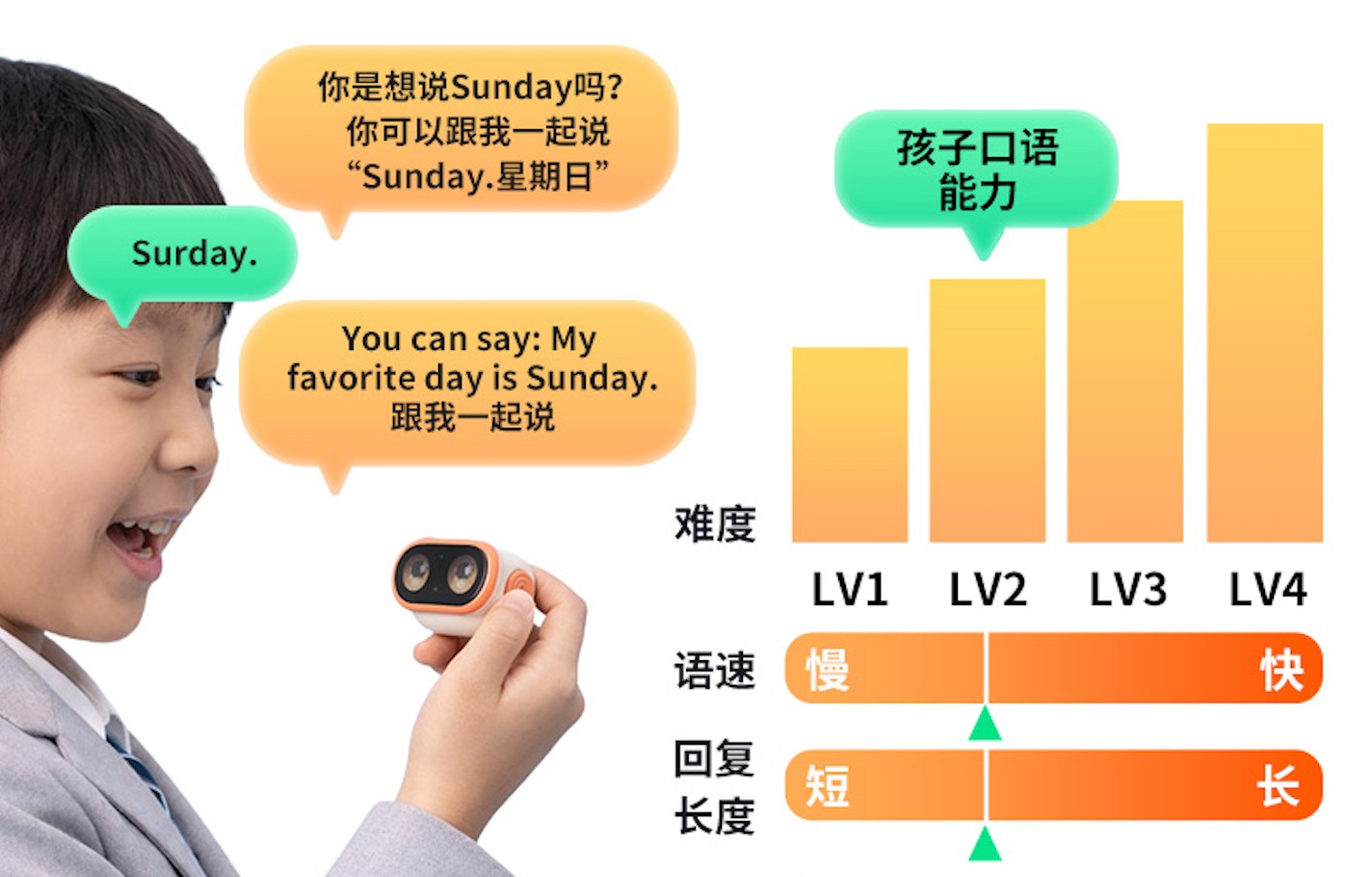
Instant feedback + goal visualization (Source/Company)
Yingke: In the past two years, many children's AI hardware products have emerged in the market. In your observation, has the domestic users' awareness been cultivated? What is your core user profile?
Lu Yaqi: Our target users are not attracted by the product's appearance but are focused on the groups preparing for English proficiency tests such as KET, PET, and FCE. The demand of this group is extremely rigid.
For parents, the registration fee for KPF exams is nearly 1,000 yuan, and the cost of a single class in the pre - exam cram school is 400 - 500 yuan, usually in small - group settings. Oral English accounts for 25% of the exam score, and its improvement cannot rely on exam - oriented teaching but must be achieved through continuous practice. These parents have already invested hundreds of thousands of yuan in their children's English education. Compared with the cost, they value the effectiveness of the exam - preparation plan, that is, whether it can help their children achieve high scores, which is directly related to their children's school - admission plans.
Therefore, the core value we convey to parents is not "the intelligence, cuteness, or fun of the smart hardware" but "an effective and cost - effective KPF oral exam - preparation plan". This precise positioning is sufficient to attract our target users. Statistics show that there are millions of people preparing for KPF exams in China every year, and the overseas market is even larger. This group of people constitutes our core and precise user base.
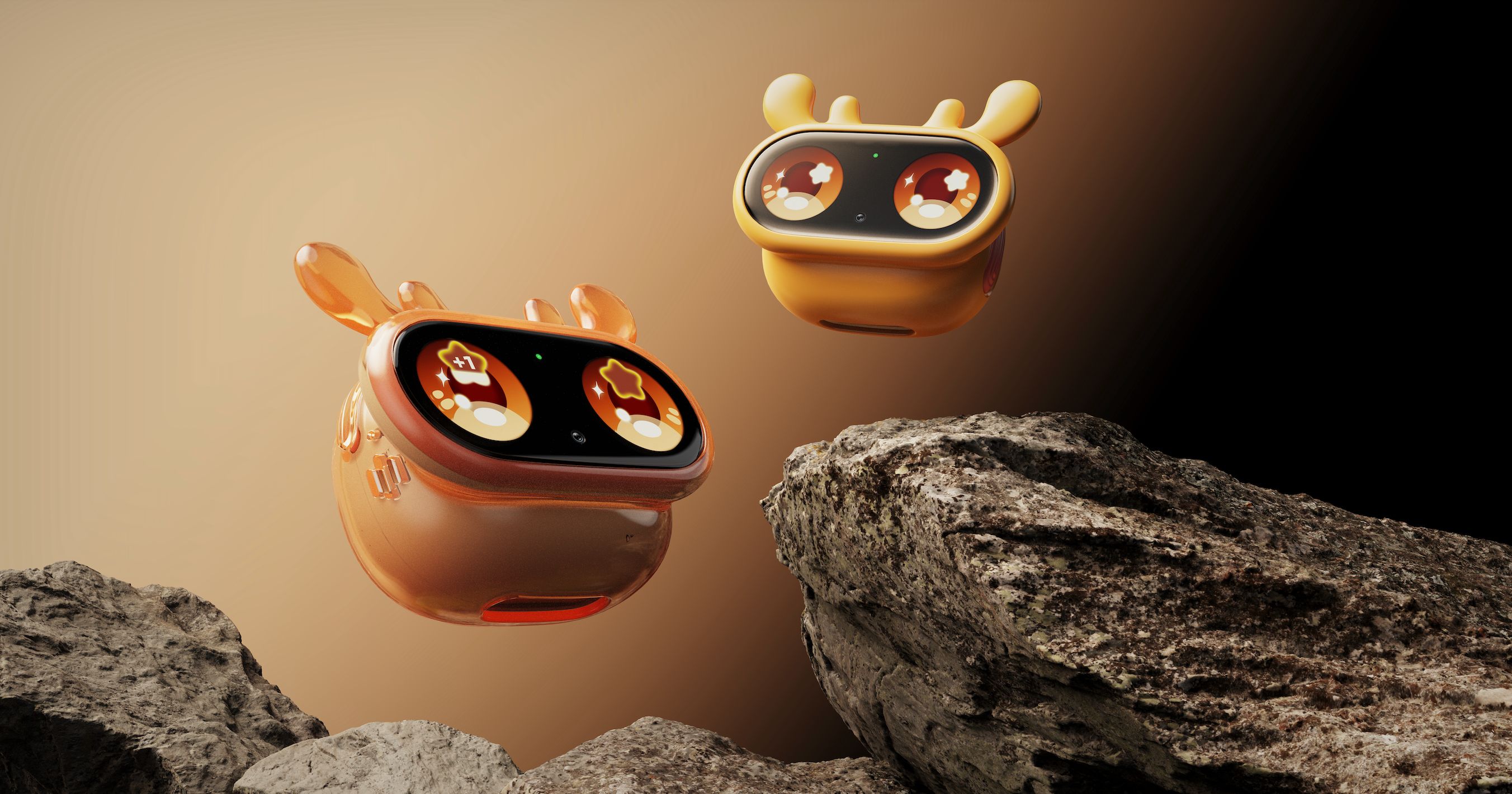
Product image of LOOKEE Oral Practice Buddy (Source/Company)
In the long run, the trend of English education reform is also expanding the user base. The current teaching model has deviated from the traditional "grammar + vocabulary + alphabet" cramming path and instead starts with dialogue, highlighting the essence of English as a "communication skill" and guiding students from top - to - bottom to speak up. However, the reality is that public schools generally start English classes in the third grade, with only two classes per week, which seriously contradicts the high - difficulty textbooks. Children with no foundation often have difficulty keeping up with the curriculum. This gap between "policy orientation and teaching supply" forces parents to supplement English learning resources for their children. In addition, oral English assessment has been included in the high - school entrance exams and college entrance exams in many places, and hundreds of millions of primary and secondary school students will face the pressure of improving their language application abilities in the future.
It can be seen that our user expansion path is clear. First, we focus on millions of students preparing for KPF exams. In the long term, we gradually cover the vast student population in the national public - school system to meet their core needs for oral practice and language application.