A new model for brands going global: OXKNIT, a niche player breaking into the European and American markets
If the past decade saw Chinese brands' overseas expansion as more of a scale competition, a new rhythm has emerged in recent years: Going global is not a game for the few, but it can start by targeting a niche market.
OXKNIT is a typical example of this type of brand.
It had no financing, no large team, no large - scale advertising, and even lacked a complete brand manual when it was founded in 2021. What it truly relied on was a neglected niche market: the retro style from the 1960s to the 1970s.
In the past few years, this brand built by a small team of 21 people gradually expanded its channels such as independent websites and Amazon through cold - starting on social media and advertising, truly achieving the "from 0 to 1" transformation of an "independent clothing brand".
There were almost only advertisements in the early stage. Systematically promoting retro - themed outfit collocations, collaborating with KOCs, and encouraging user - generated content are plans for next year.
The story of OXKNIT is worth telling because it provides a more realistic and achievable path for all small and medium - sized overseas - going brands: In the right niche market, targeting the right audience, and with the right supply - chain structure, doing the right things in the long run is more important than chasing a single hit product.
01 A Long - term Business in the Niche Market
Carl, the founder of OXKNIT, first got in touch with cross - border e - commerce in 2019. At that time, the industry was in an atmosphere of "the larger the volume, the better". People talked most about cost - cutting, creating hit products, and increasing the number of product listings. It seemed that as long as there were enough SKUs and heavy advertising investments, one could reach the next level.
However, Carl, who scrolled through dozens of pages of reviews and read countless return reasons every day in the background, saw a completely different picture. Especially European and American users, their sensitivity to the wearing experience was much higher than the data shown on the platform. They would complain about "itchy fabric", "stuffiness", "color fading", and "strong polyester smell". Some even repeatedly emphasized in the comment section that they needed "real cotton" rather than "plastic - feeling" clothes.
The apparent business logic was "launch more new products, list more items, and invest more in advertising", but the real voices in the comment section constantly reminded him that many users were actually tired of the disposable clothing experience. The clothes were cheap, but they lost their shape and feel after just one or a few washes.
This huge gap between the "industry narrative" and "user feedback" became the starting point of OXKNIT. "Rather than competing in the red ocean with homogeneous products, it's better to create a brand centered on fabric and wearing experience." For Carl, after spending several years in the front - line of cross - border business, this was a redefinition of this business:
If everyone is talking about efficiency, then someone needs to focus on "the clothes themselves".
His entry point was the retro style from the 1960s - 1970s, an extremely niche category at that time.
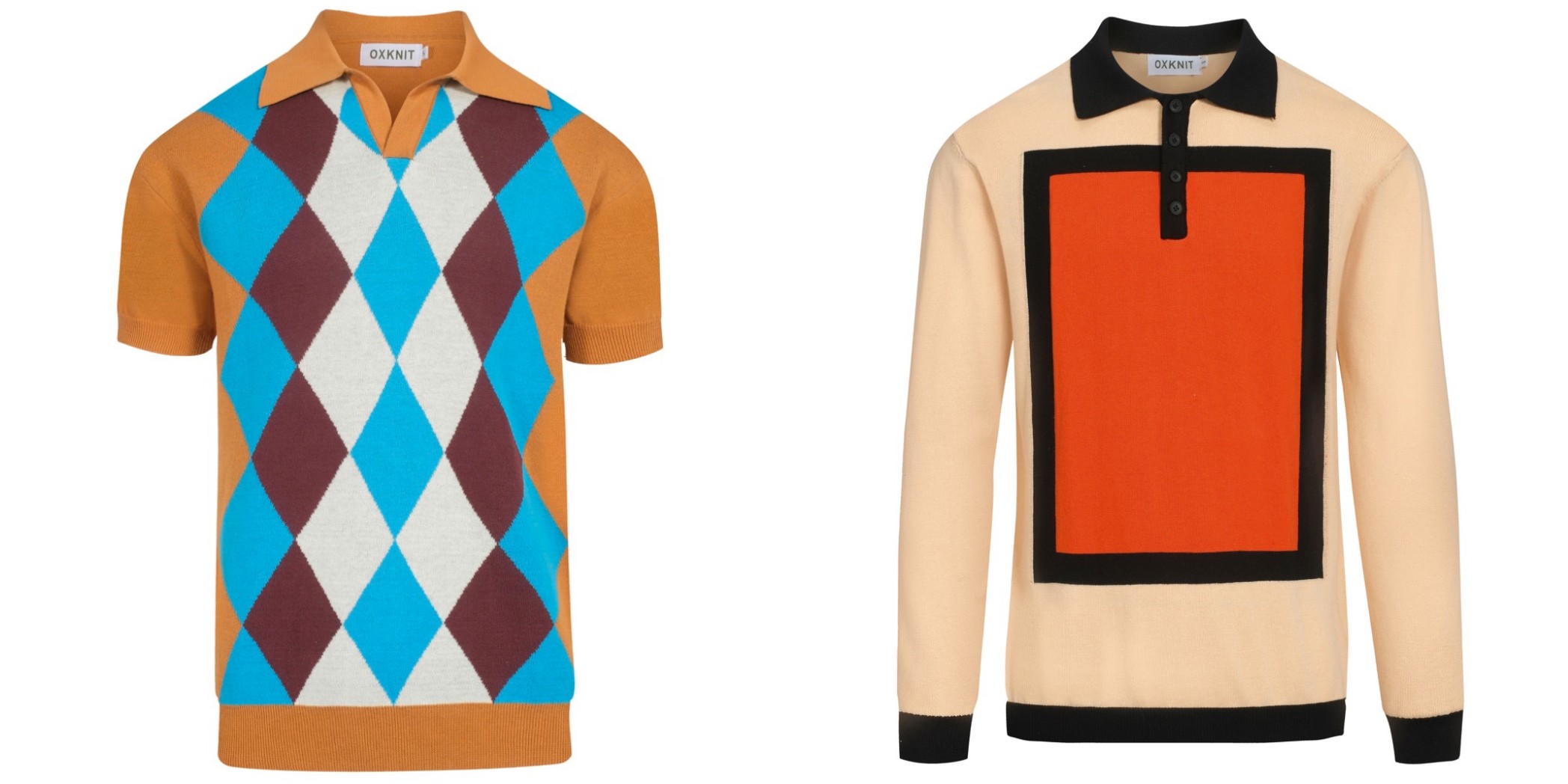
This consideration is in line with the market. Retro style is a cyclical trend, and this era - specific style has a unique position in Europe and America: It has a group foundation based on nostalgic culture and relatively fixed outfit scenarios. For OXKNIT, this is a niche but stable market.
This is not an easy - money choice. Carl found that although there is a stable demand, these users have almost nit - picky preferences for the style, color, and texture of clothes. It's difficult to support this with a low - cost supply chain, but it's very suitable for a small team willing to dig deep into details.
From a business perspective, this is not a market with an immediately obvious large scale, but it has a very precious characteristic for small brands: The aesthetics and needs of users are relatively stable. As long as you are willing to take their picky demands seriously, they will remain loyal in the long run without being forced to follow every seasonal trend.
Following this path, OXKNIT's start was not very dramatic. It was more like a series of practical small decisions gradually piled up. The team has always maintained a steady pace, so steady that some peers thought they were "too slow": Every piece of clothing must go through several rounds of trial - wearing. They would rather abandon some colors than take the risk of listing them. They also resisted the impulse to follow popular trends and only focused on the retro line.
Advertising is important, but it's not the only thing. The team pays more attention to the customer - service background, to those seemingly trivial messages and reasons for returns: Where it's uncomfortable, which colors look different in the light, which sizes are considered too "Asian" in Europe... These unflattering voices are much more intuitive and harsh than data, but they are the best feedback for decision - making.
That's why many of OXKNIT's decisions are not as exciting as the "big bets" in the business world. But precisely because they are not exciting, they truly form the foundation of the brand. This is not a story of sudden success but a path that has been steadily built step by step.
02 Social Media and Cross - border E - commerce: The Dual - engine to Leverage the Market
One of OXKNIT's methodologies is that even niche products should not be "self - indulgent". All directions need to pass the user test first. Whether it's a concept drawing or a small - batch trial production, the goal is to quickly find out "if this piece of clothing has a future".
Their early testing method was like a makeshift laboratory: They would post concept drawings to see if anyone would stop and take a look; produce a small batch and observe the reasons for returns; then adjust the design repeatedly based on real feedback until they found the common ground acceptable to most users.
No piece of clothing can be made perfect at once, and no product line can be supported by random decisions.
The product strategy of using pure cotton, high - end craftsmanship, and small - batch production is not considered "smart" by peers. Especially in the cross - border industry that emphasizes efficiency, many peers even said directly that "they will never grow big this way". But OXKNIT is well aware that their retro - style users are not those driven by price. Instead, they are willing to pay for the touch, appearance, and durability of clothes.
This is a group of extremely picky people, but once they trust a brand, they will stay in the brand's ecosystem much longer than ordinary fast - fashion consumers and won't easily switch to other brands. Users have become the real focus of product refinement.
OXKNIT's sizing system was also "forced" out in this way. The body - shape differences in different regions have caused them many problems: A piece of clothing that sells well in Europe may be returned in large numbers in the United States. The difference in color brightness between natural light and indoor lighting can directly increase the return rate by several percentage points.
Later, they simply regarded the customer - service background as a "second production line". Every return reason is traced back to the style, stitching method, fabric weight, and post - wash state. Then, like correcting a map, they gradually improve the boundaries of sizing and craftsmanship.
OXKNIT's product system has been carved out in this way. For a small team without financing and no large - scale manpower, this seemingly stupid method is actually the most reliable way to grow.

Besides the product, the brand also needs to be visible. OXKNIT realized early on that in the retro culture, users don't need to be persuaded; they just need to see. So on social media, OXKNIT's initial content always carried the same style: the relaxed feeling of the old - era color tone, the sense of real - life outfit collocation, and an emotion deeply rooted in users' memories.
This emotion is long - lasting. On social media, it's like a slowly growing flame. The first batch of users were almost all attracted by this atmosphere. They were willing to leave messages, share, and take their own photos. All the early momentum of the brand came from these people, and finally formed a visual field that was easy to remember.
Eventually, OXKNIT's fans across the network began to grow rapidly. On Instagram alone, the number of fans increased from 26,700 to 250,000.
Of course, the core engine of growth is advertising investment.
Advertising was gradually increased only after the content had gained a foothold, mainly to verify the direction. The team always adheres to a simple principle: Advertising can only amplify the right content, not the wrong direction. If an advertisement performs worse than the content, it's not a problem with the advertising but that the content fails to show the brand's true image.
On the advertising side, Meta, Pinterest, and TikTok play different roles: Meta is used to capture aesthetic preferences, Pinterest is a bridge between interests and styles, and TikTok is for testing potential hits and lightweight content. No single platform can support the brand alone, but they complement each other, like three antennas collecting different signals.
When it comes to collaborating with KOCs, they don't pursue big - name influencers but look for those who naturally fit the brand's context, people who like retro style, have a stable lifestyle, and are willing to show real outfit collocations in front of the camera. This kind of content - driven growth is relatively slow but more sustainable.
In terms of channel expansion, OXKNIT's decision - making is clear. The independent website is the foundation, carrying the brand story, style, and long - term user accumulation; Amazon is like a high - speed entrance, attracting all consumers who actively search for "knitwear" or "retro sweater". One goes deep, and the other goes wide, and the two lines complement each other.
Of course, in this process, they also encountered some very real setbacks, such as a sharp drop in conversion due to incorrect color translation, a large number of returns caused by inaccurate product descriptions on the page, and American users misjudging the size because the size description was too "Asian - centric".
These mistakes seem small, but they are very dangerous for a new product. OXKNIT later established its own system, bringing every tiny link into the standard process for confirmation, ensuring that every mistake is made only once.
It can be seen that OXKNIT's "from 0 to 1" transformation didn't rely on luck. It just regarded every seemingly insignificant link as a variable that could determine its fate.
03 The Confidence Needed for Brand Overseas Expansion
For cross - border overseas expansion, the domestic supply chain is the most solid foundation. However, for a new brand focusing on a niche market, the previous path of price competition based on cost advantage is not suitable.
At first, OXKNIT thought it only needed to "find the right factory, confirm the sample, and ensure stable production". Later, they found that what really stabilizes the product are dozens of fragmented details that almost no one wants to talk about.
Cooperating with the factory is more like a process of adaptation rather than "production according to order". Using pure cotton sounds simple, but in practice, it's like walking on a tightrope: A slight change in the yarn for a new batch can cause a color deviation; if the machine is in poor condition, the stitch spacing will be uneven; if a batch of products is rushed, the shrinkage rate will immediately cause problems. None of these problems can be solved by relying on experience alone. They all require repeated trial productions, small - batch testing, and continuous reviews to be stabilized.
OXKNIT seems a bit stubborn in this regard. They don't accept "making do" or "almost good enough". They seal samples for each batch, test every color under different lighting conditions, and break down the key parameters of each style clearly. They seem more like a research team than a clothing brand.
But this stubbornness is forced by reality. Retro - style users are very discerning. They not only require accurate colors, smooth textures, and a clean touch but also expect the clothes to maintain their shape after a couple of washes. This basically rules out half of the quick - production factory's methods.
They have to rebuild the supply chain on their own, from sample - making to small - batch trial production and then to large - scale production. Every step is like passing a difficult test.
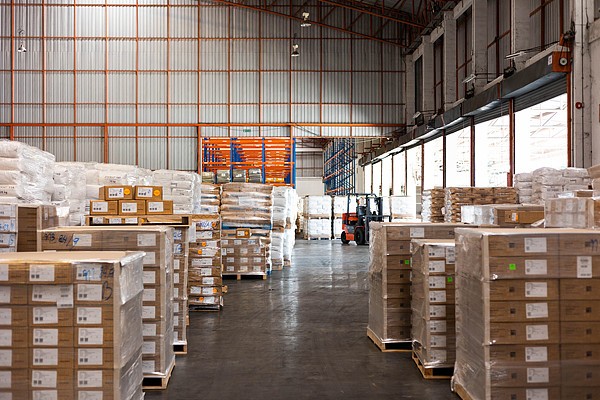
Over time, a relationship of "mutual understanding" has formed between them and the factory. The factory no longer sees them as just a single order but as a brand willing to invest in the long term; they no longer regard the factory as a simple supplier but as the other half of the brain for product quality. Many improvements in details, such as color - difference control, style consistency, and batch stability, are the result of the two sides' efforts. It's a process that money can't speed up.
For a small team, this supply - chain approach is "labor - intensive", but it's also the reason they can keep going. The market changes quickly, and traffic is unstable. The only way to avoid pitfalls is to keep the product stable.
Now, the problem OXKNIT faces is not "whether it can still sell products" but "whether people will think of us when they see this piece of clothing". This problem is much more difficult than sales because it requires a brand to stand out not by relying on a hit product but by having a continuous, consistent, and memorable style.
In the past few years, they have been regarded as "a well - performing group in cross - border independent websites", but the team members are well aware that even if they do well, it's still just a seller's mindset, which only means that they have successfully operated a product category, a traffic model, and a group of users. The difficulty of building a brand lies in that you can't explain yourself by a single piece of clothing or a single season. Instead, you need to make users willing to wait for your next piece, next season, and next expression.
This transformation is not achieved overnight. It's more like a slow and self - correcting process: The style should be unified like a language rather than a label, the product rhythm should change from "launching new products" to "building a series", and the content should change from "attracting people" to "creating a stable image of the brand in people's minds".
Building a brand is not an easy task. But for OXKNIT, this direction is also more irreplaceable because it makes the short - term fluctuations have less impact on the team and makes the brand's image clearer.
They have gradually summarized their own path: Let the stability of the product build trust, let trust lead to repeat purchases, let repeat purchases support content creation, and let content naturally form a community. It's not about doing community e - commerce but about creating brand - related stories in users' real - life usage scenarios.
For the future, they hope that OXKNIT will not only be a provider of retro style but also a carrier of a certain era's style. In the European and American markets, you can't expect users to remember many new brands. But if you can occupy a niche in a specific era and aesthetic, they will keep you in their long - term wardrobe.
For OXKNIT, building a brand means filtering out short - term noise and doing the right things in the long run.
This is a group of people who are not willing to be passive and go with the flow. They believe that as long as they keep focusing on the product, style, and supply chain in a narrow and deep direction, the brand will eventually grow into its rightful form.