WEI Fanjie of Shanghai Future Industry Fund: Innovation Surges: Building an Entrepreneurial Ecosystem to Drive "Chinese Innovation" | WISE2025 King of Business
From November 27th to 28th, the 36Kr WISE2025 King of Business Conference, hailed as the "annual technology and business trendsetter", was held at the Conduction Space in the 798 Art Zone in Beijing.
This year's WISE is no longer a traditional industry summit but an immersive experience carried by the "technology blockbuster short dramas". From AI reshaping the boundaries of hardware to embodied intelligence knocking on the door of the real world; from the globalization of brands in the wave of going global to traditional industries equipping with "cyber prosthetics" - what we restore is not only the trends but also the true knowledge honed in numerous business practices.
In the following content, we will dissect the real logic behind these "blockbuster dramas" frame by frame and witness the "scenic beauty" of the business world in 2025.
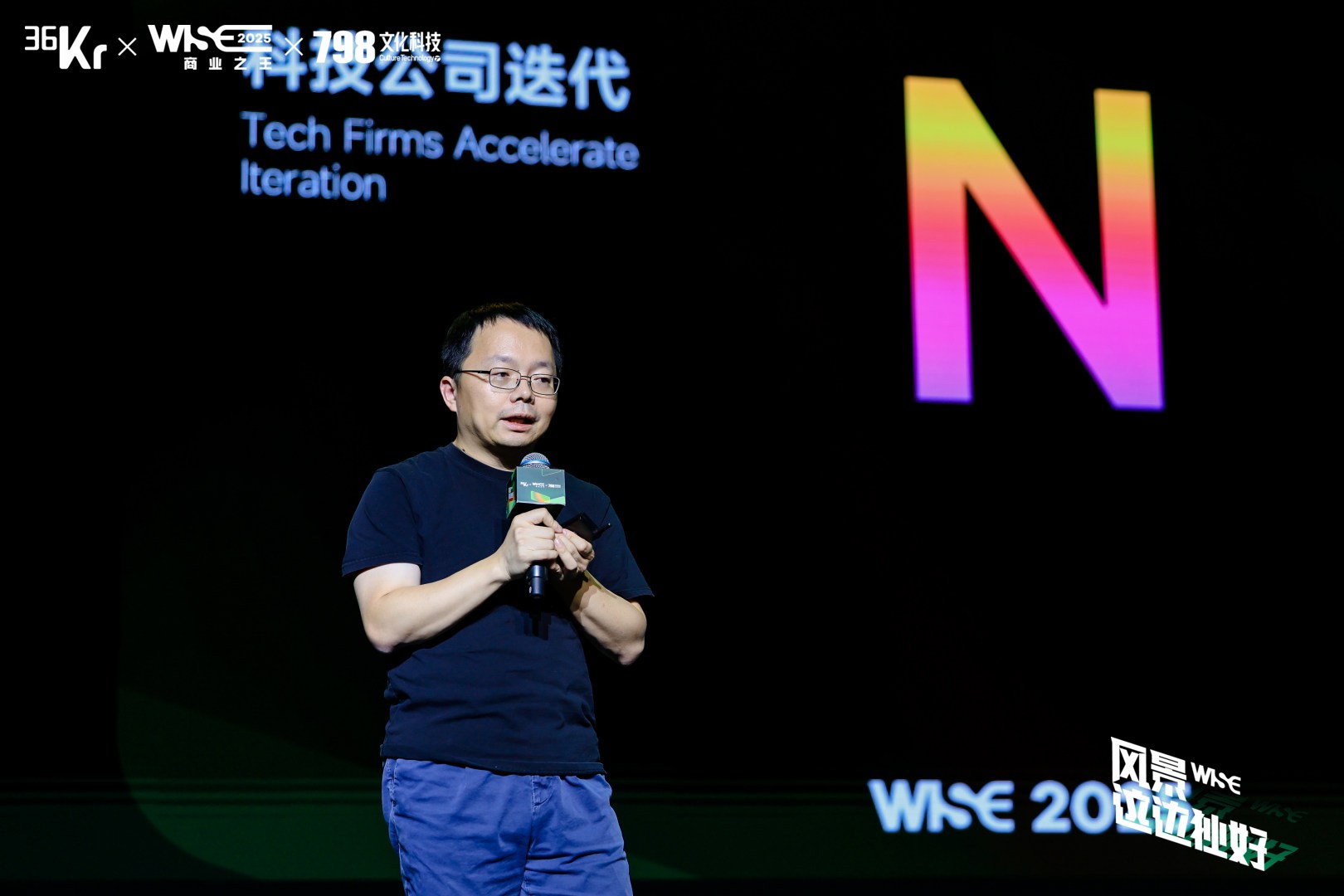
Wei Fanjie, General Manager of Shanghai Future Industry Fund
The following speech content is from Wei Fanjie, General Manager of Shanghai Future Industry Fund, and has been sorted out by 36Kr -
Shanghai established a mother fund this year called the Shanghai Future Industry Fund. We are exploring some new ways to promote early - stage investment and incubation. This year, we have been quite active in the market. In total, we have invested in more than 20 GPs, and direct investment is also in progress, especially in some cutting - edge fields.
Recently, the Shanghai Future Industry Fund is building a community. From the perspective of the mother fund, we hope to build an innovative ecosystem through the linkage between the community and the fund. Next, I would like to share our practices with you.
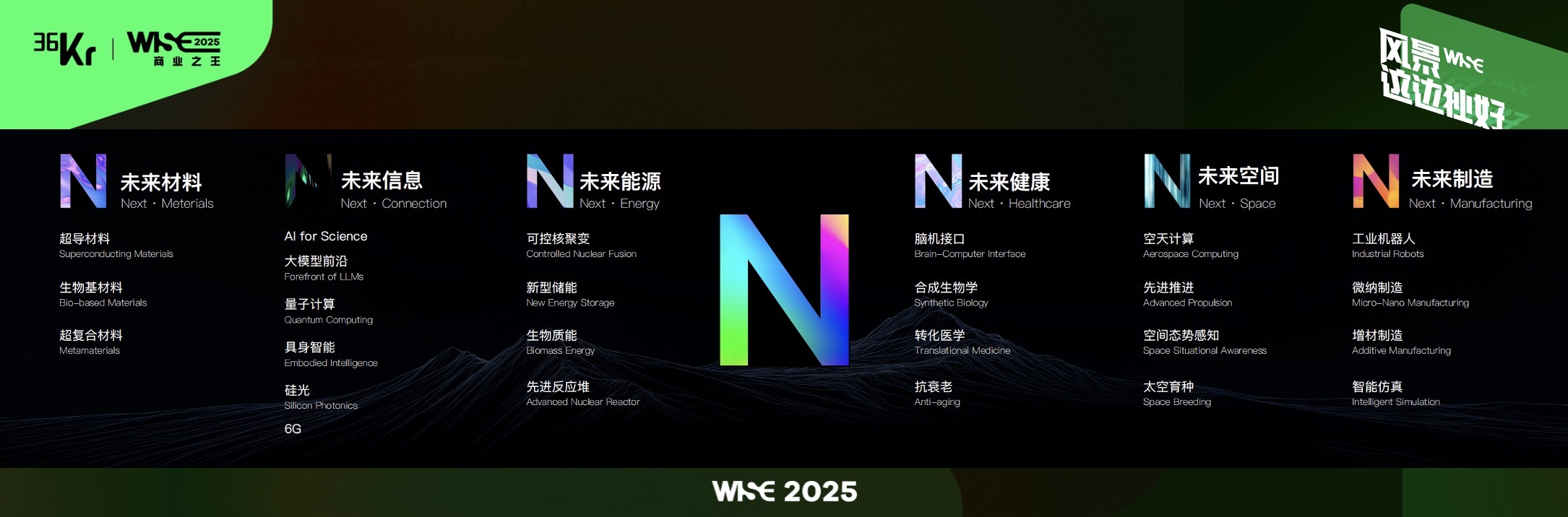
We have made a lot of cutting - edge investments around future industries. This year, we invested in a very large controlled nuclear fusion project, which was launched in Shanghai. In the first round, the company raised more than 10 billion yuan.
We believe that the entire innovation has shortened the distance between science and engineering. Ten years ago, it was unimaginable for the nuclear fusion field to raise so much money at once, and all from market - oriented funds. But now, especially this year, the financing in the nuclear fusion field in Shanghai has been very active, with new projects emerging every month. The same goes for quantum computing, where new projects keep coming out.
Another significant change is in education. We have also started to invest in entrepreneurs born in the 2000s or around 1997 - 1998. Young star entrepreneurs in the market have also raised a large amount of money. For many outstanding people, school education has become very flat. We think this will have a huge impact on education in the future.
Last year, when we promoted the establishment of the entire nuclear fusion ecosystem in Shanghai, we conducted a lot of analysis. Why is the disruptive innovation in future industries iterating so rapidly? We think there are four reasons:
Government support innovation. Recently, we also studied the development process of some nuclear fusion startups in the United States. In fact, the U.S. DOE provided a lot of support. The government is supporting the incubation of cutting - edge fields from the perspective of an investor.
Technology companies are iterating. A major reason is the pursuit of flatness and rapid iteration. Many startups, including those in nuclear fusion and commercial spaceflight, are using this new organizational structure.
Venture capital incubates innovation. Venture capital has various structures, and the overall transformation of the venture capital in cutting - edge fields has received greater support.
Artificial intelligence catalyzes innovation. This is common knowledge, so I won't elaborate.
These four reasons are also the original intention of establishing the Shanghai Future Industry Fund as a mother fund. We hope to promote the transformation of achievements in more cutting - edge fields in China, the very fields we just mentioned.
Actually, we are now a fund plus a community, and this community is a public - welfare organization.
Currently, the Shanghai Future Industry Fund has a scale of 15 billion yuan, with 8 billion yuan already paid - in. By the end of the year, 11 billion yuan will be in place. So this year, we should be one of the most active angel and VC mother funds in China. The fund has a very long term, 5 + 10+3, which is 18 years. So we actually have enough patience to promote the transformation of some very cutting - edge fields.
In terms of direct investment, we focus very much on the 0 - 1 stage. From September to now, we have invested in more than a dozen projects, covering many fields, including nuclear fusion, quantum computing, brain - computer interface, aerospace computing, etc. Most of them are in the first two rounds, and the fields are relatively new.
Starting from the ecosystem of the mother fund, we are also building a top - notch talent community. There are three types of people in the community: scientists, entrepreneurs, and investors. We hope to link these three types of people through our methods.
In addition, we strongly support cross - disciplinary, cross - field, and cross - platform exchanges. For example, the intersections of cutting - edge fields such as AI for fusion, brain - computer interface, and the combination of AI and quantum in Shanghai, we think will generate a lot of valuable emergences.
Overall, from the perspective of the mother fund, we support several types of people: one is scientists with entrepreneurial potential. We have a strategic scientist committee, which includes academicians and young scientists on the front line with a strong understanding of the industry, as well as entrepreneurs with scientific knowledge. Another type is investors with a strong scientific understanding, which we are most familiar with. In addition, we hope to support young people.
The Shanghai Future Industry Fund is also promoting something, which is to hope that several institutions in China can be established, similar to Flagship, with the ability to invest in science. So now we are using some methods, including a profit - sharing mechanism, to encourage institutions to move towards earlier - stage investment in science. In addition, we think the biggest advantage of Flagship is that in a single institution, there are scientists, various CXOs, venture capital, and various external cooperation networks. We hope to build an enabling platform from the perspective of the mother fund.
In terms of direction, we still hope to leave our mark in certain areas. For example, in nuclear fusion investment, we are now one of the most influential investment institutions in China. Basically, new startups in the nuclear fusion field in China will come to talk to us. In addition, we are now fully promoting the AI for Science community. Through the construction of the community, we can build cross - disciplinary exchanges in AI for Science and generate some new projects.
What to do next? Starting from January this year, from the perspective of the mother fund, we hope to build an entrepreneur community. We are communicating with leading technology media like 36Kr and excellent GPs, hoping to build a good community to amplify the resources of mother - fund investors. By September this year, we established the Shanghai Engine Community, an extension of the community. It is a public - welfare organization, and we want to do something open - source and purely for public welfare.
As you can see, a single ant is not very complex, but millions of ants form a very complex structure. You can also see that neurons are very simple, but the connection of countless neurons is human wisdom and civilization. So, we firmly believe in the complexity of connection. By gathering various resources, scientists, entrepreneurs, investors, mathematicians, physicists, life - science experts, AI experts, and all kinds of people in the community, we can achieve in - depth collaboration. We believe that this complexity and connection can generate emergences.
We have four definitions for the future:
Future talents. How to discover future talents is the first thing we need to do.
Future cognition. We need to precipitate the cognition of talents.
Future paradigms. We are now exploring some new paradigms in the community, especially the laboratory - company model. We think that for some very important and cutting - edge fields, the traditional financing model is not a very good way. We think there should be some new paradigms.
Future connection. We firmly believe in the power of connection. So the most important work of our community is to connect people with various cross - disciplinary backgrounds.
Then how to do it? We want to establish some cognition through interviews. For example, in December, we will hold the first annual meeting of the Future Industry Fund and the Future Starting Point Community. In the past month, we have sent out about 200 questionnaires. These questionnaires simply discuss one question. We sent them to scientists, entrepreneurs, and investors. We want to ask them about their judgments on the future, what changes they think will happen in their fields in the next 3, 5, or even 10 years, what changes will happen to talents and paradigms. We sent these questionnaires to many people, including some academicians who are at the forefront of scientific research in China, entrepreneurs, and about 30 - 40 investors who are partners of first - tier investment institutions in China. We will continue to do this. Through interviews, we can actually connect with a group of people with the most in - depth cognition in China.
In addition, through GPs, partners, and also 36Kr, we will interview young people, such as associate professors, assistant professors, even doctoral students, and even undergraduates with strong cognition in universities. We hope that through this way, on the one hand, we can establish a cognition of future directions, and on the other hand, we can connect with some real future entrepreneurs and scientists in China.
So we hope to persevere in this open - source community. I think if we persevere for two or three years, or even five years, we will be able to cover and reach a large number of the best, even future, entrepreneurs in China.
In addition, we will also hold a lot of ecological activities in this community, which have been intensively carried out recently. Generally speaking, we want to build a community of communities. We won't do very heavy - handed operations for various activities ourselves, but we will empower various good community activities. On the one hand, it is the empowerment of investors. After all, when we leverage our 15 billion yuan, it will basically form an angel investment and early - stage fund of 50 - 60 billion yuan, and basically the best investment institutions in China are connected with us.
We will precipitate the interviews we just mentioned into an Agent, an agent of a large - scale model. We are developing this product. We connect these cognitions, these people, and a lot of external data, as well as many partners. It is an agent for talents and cognitions. We will make this open - source later. There are also many community activities where entrepreneurial partners can support each other. This is also an exploration. Defining this product is actually something very new.
We hope to continue our work on talents, cognition, paradigms, and connection. We now have a future industry fund and a community. We are still exploring, and we may establish a scientific public - welfare foundation later to support earlier - stage ideas in a purely public - welfare form, including the What's Next interviews we are conducting. These will be better ways to support early - stage innovation.
Thank you all!