Matter chips are really popular.
In recent years, Matter has risen rapidly, and its version has iterated to 1.5. It has also been recognized by terminal manufacturers. Ecological giants such as Amazon, Samsung, and Apple are sparing no effort to support and maintain Matter, and many engineers have also expressed their expectations.
In China, although each platform has built its own ecosystem, currently, BLE mesh or other wireless private protocols are still the main ones, and Matter may not be suitable for Chinese manufacturers. However, for a large number of manufacturers going global, Matter remains a crucial standard not to be missed.
Recently, a large number of manufacturers have been increasing their layout of Matter chips. So, how is the development of the Matter standard currently, and what are the latest layouts of chip manufacturers?
Understand the Matter Technology
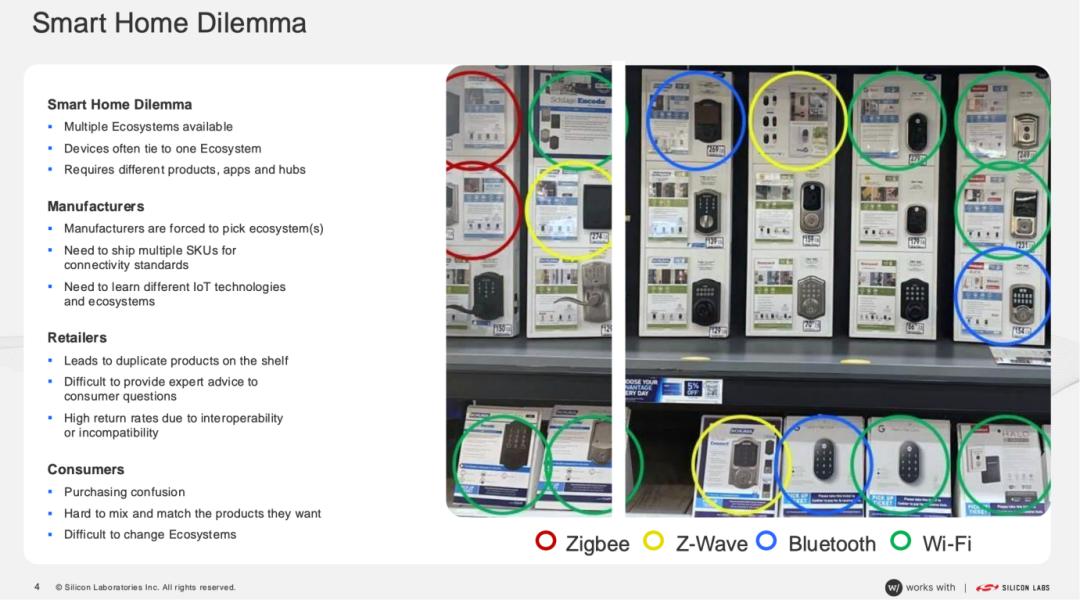
Matter can be regarded as the terminator of the chaotic era of IoT. Since its inception, it has been tasked with eliminating "fragmentation".
Today, there are more and more smart products in our homes. From network terminals such as mobile phones and tablets, to small devices such as light bulbs and switches, and then to large household appliances such as audio systems and sweeping robots, all have networking capabilities. However, the coexistence of multiple protocols has led to a high level of system complexity, and Matter has emerged as a result.
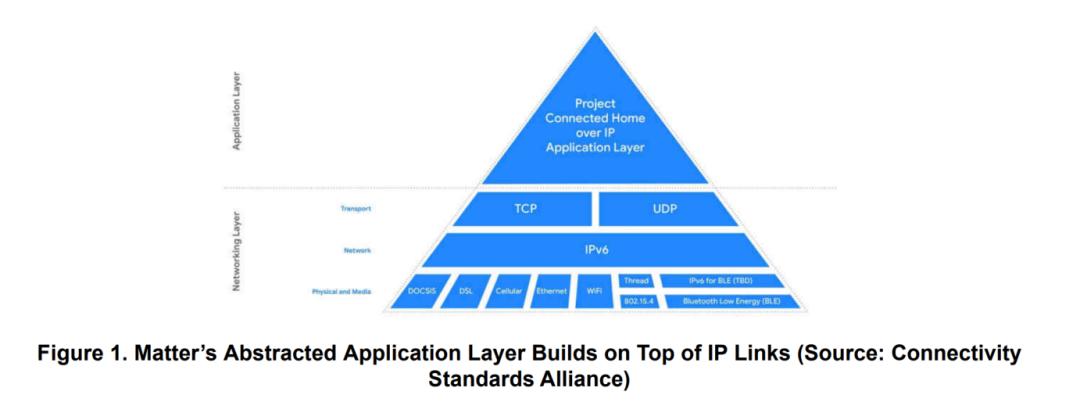
Matter provides an abstract application layer built on IP protocols such as Wi-Fi, Ethernet, and Thread. This unified application layer based on the IP protocol not only improves the interoperability of consumer devices but also simplifies the development process across connection protocols and technologies for solution providers.
The concept of Matter was first proposed in December 2019, when it was called CHIP (Connected Home Over IP). Later, in May 2021, it was officially proposed as a new connection standard. In October 2022, Matter released its first official version, 1.0. Subsequently, it was updated to versions 1.1 and 1.2 in May and October 2023 respectively, and continued to evolve. In 2024, the standard further expanded its application areas: Matter 1.3, released in May, included energy management-related functions for the first time; and in the 1.4 version launched in November of the same year, support for the home network architecture was strengthened, the application of renewable energy solutions was deepened, and the performance of key technologies such as human presence sensing was improved.
In November this year, the Connectivity Standards Alliance (CSA) officially released Matter 1.5. The most notable update of the new standard is the native support for smart cameras. The new standard allows camera devices to directly access the Matter ecosystem without relying on manufacturer-specific custom APIs or complex integrated development. It also added support for various closures and soil sensors and significantly enhanced energy management capabilities.
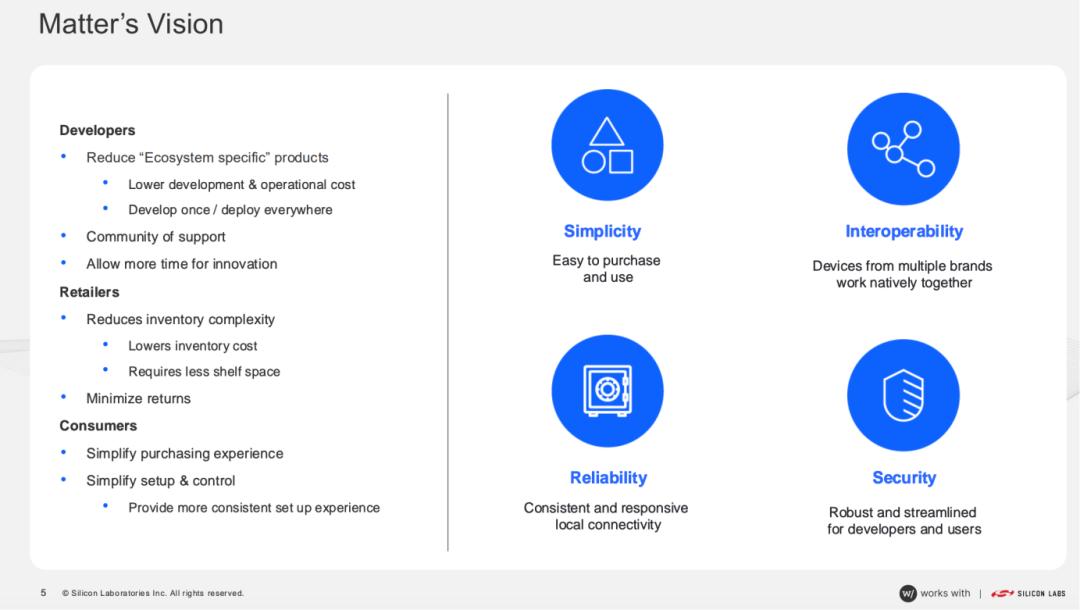
The reason why Matter has been very popular in recent years is that it has five major characteristics: first, it can achieve excellent seamless interoperability; second, it is relatively simple to use; third, it has good security; fourth, it accelerates customers' innovative ideas; fifth, it has a high level of ecological acceptance. If customers have all these five points, they can have good applications:
First, in terms of seamless connection, the Matter protocol effectively solves the problem of multi - protocol compatibility. Users can organically integrate new and old devices without replacing existing devices, protecting their existing investments. Second, in terms of ease of use and acceptance, Matter has been supported by international giants such as Apple, Google, and Samsung. Although its promotion progress in China is relatively slow, Matter's flexible interface design provides more possibilities for future ecological expansion. Finally, in terms of security, it is Matter's outstanding advantage. The built - in security mechanism at the bottom layer relieves the burden of security design at the application layer, allowing developers to focus on user experience innovation.
The technology itself is excellent, but for its vigorous development, chip technology must also keep up. Currently, devices supporting Matter can adopt two configuration schemes:
System - on - a - Chip (SoC): The Matter SoC runs all Matter protocol layers on a single device and is suitable for systems with Matter applications as the core function, commonly found in mass - produced products such as lamps, sensors, or smart door locks.
Co - processor: The Matter co - processor runs part of the Matter protocol layers and cooperates with another main processor to form a complete Matter solution. Co - processors are divided into two types: Network Co - processor (NCP) and Radio Co - processor (RCP).
ST: The Industry's First Matter NFC Chip
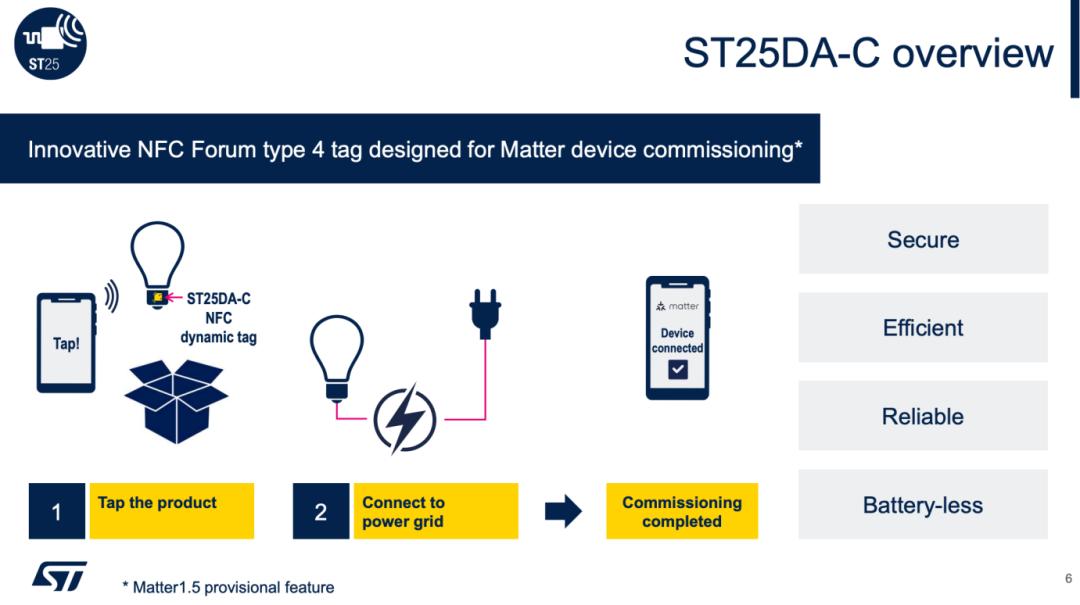
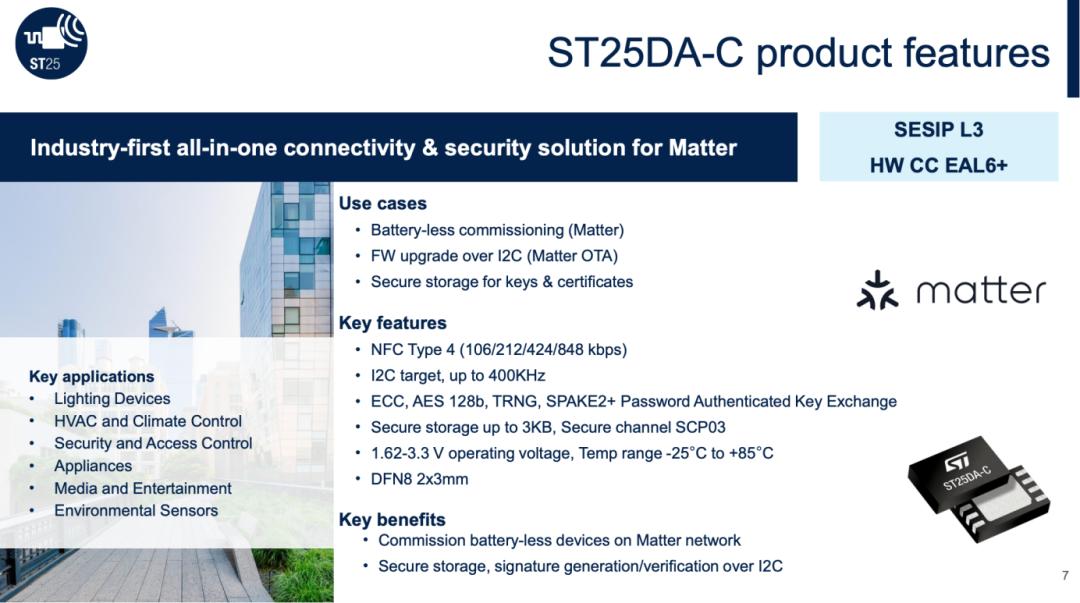
In November this year, ST (STMicroelectronics) released the ST25DA - C, the first secure NFC device compatible with NTL (NFC Transport Layer) debugging, complying with the latest Matter 1.5 standard. In short, this is the first time that Matter devices can use NFC technology to configure nodes to access the network, replacing the traditional Bluetooth Low Energy (BLE) method.
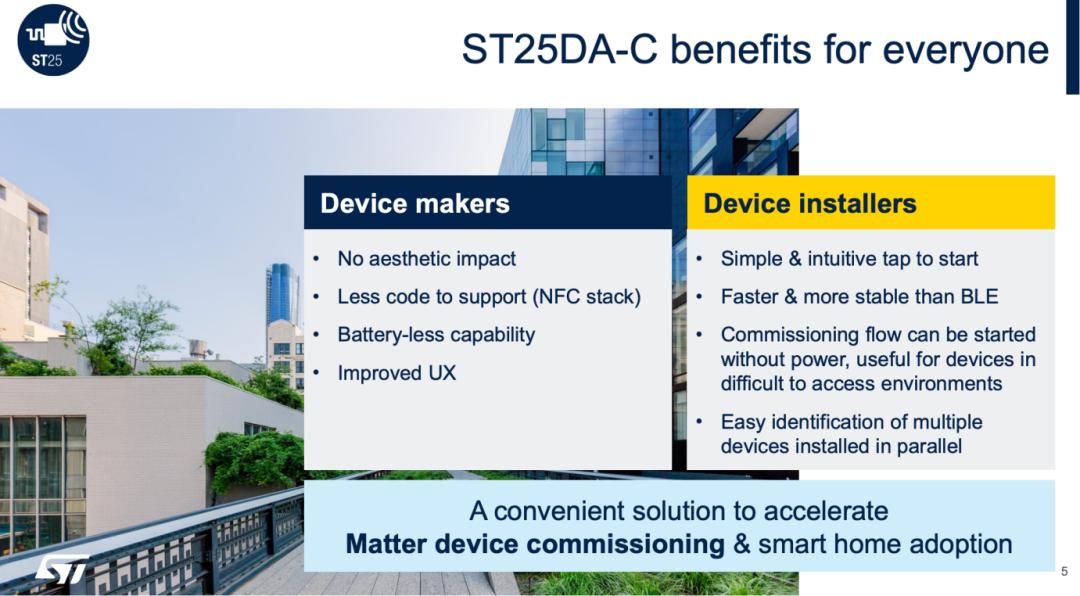
Why did ST launch such a chip? According to ST, QR codes and BLE have limitations. Currently, many Matter terminal devices need to scan QR codes, enter information on mobile devices, and then smartphones or tablets must communicate with terminal nodes through BLE connections to verify codes, check credentials, install certificates on the terminal devices, and finally share connection information to enable them to access the gateway. There are many problems with this process. First, scanning QR codes is not convenient. Second, when the external power supply is unavailable, BLE cannot be used for configuration.
NFC is different. It can achieve "one - touch configuration". As a member of the CSA, ST has been exploring this method. Thanks to the functions of NFC, terminal nodes can even use dynamic passwords to further enhance security. However, before Matter 1.5, NFC could only be used to start the network access process, which means that when configuring devices, it still needed to rely on BLE connections for key exchange and the protocols required to join the Thread or Wi - Fi network. Now, with the arrival of Matter 1.5, it brings more possibilities for NFC.
From the perspective of the chip itself, the ST25DA - C is very small in size (a 2mm x 3mm ultra - thin DFN8 package), and its internal computing power is also quite strong. To minimize the occupied space, this Type 4 NFC component integrates a 78 - pF tuning capacitor, allowing the use of a highly integrated antenna. At the same time, engineers can still ensure its good compatibility with most smartphones and other mobile devices. Therefore, the entire packaging solution can be applied to smart devices with extremely limited space, such as light bulbs and smoke alarms.
Security has always been the strength of ST's NFC chips. This chip has also passed the Common Criteria EAL6+ certification, which is one of the highest - level guarantee levels for such products, making it the safest and most reliable co - processor for the main MCU. Of course, ST's ambition does not stop there. According to ST, "We will start the SESIP Level 3 verification process and are confident of obtaining the certification next year. Although the Matter standard does not mandate this certification, we have decided to make this investment to provide stronger security guarantees for our IoT partners."
Qorvo: Solving the Compatibility Problem of Matter
Previously, Percy Yu, a senior market manager at Qorvo, shared with EEWorld that it is difficult for developers to transition to Matter, especially for those whose existing products need to support multiple standards. This will lead to product launch delays and increased development costs to ensure compatibility and performance in different ecosystems. Matter needs to support multiple wireless standards, such as Zigbee, Thread, and Bluetooth Low Energy, which in turn leads to increased design and manufacturing complexity because developers need to integrate multiple communication technologies while maintaining high performance. When devices have to handle various network protocols and standards, it is difficult to ensure a smooth and intuitive user experience. Due to delays, connection problems, or inconsistent performance, end - users may feel frustrated, resulting in a decrease in satisfaction and adoption rate.
In the existing smart home ecosystem, this is reflected in the two challenges of "backward compatibility" and "forward compatibility". Therefore, it is very difficult to achieve good and smooth backward and forward compatibility at this time. Regarding the above - mentioned compatibility problems, Qorvo's multi - connection technology can well help Matter achieve forward and backward compatibility. This technology includes several dimensions of technical features.
First, in terms of Multi - Radio, the radio part integrated in Qorvo chips allows customers to add different radio signals simultaneously, including BLE, Zigbee, and Matter, to add data without time blind spots and without the need for switching time, thus ensuring simultaneous connection at the physical layer.
Second, in terms of Multi - channel, the Matter layer or protocol layer supports the parallel use of up to three 802.15.4 data channels. This feature allows different protocols such as Zigbee and Matter to occupy independent channels for operation, avoiding connection interruptions or data loss caused by multiple protocols competing for the same channel.
Finally, in terms of antenna control, two core technologies are adopted: the antenna grading technology can increase the radio frequency capacity by 6dB, significantly enhancing the signal quality; it supports excellent coexistence, especially the coexistence control of Wi - Fi, including a hardware signal and a simple API.
In practical applications, Qorvo's multi - connection technology shows significant advantages. The multi - protocol router function that previously required three chips can now be completed with a single Qorvo chip, while integrating Zigbee, Matter, and Bluetooth functions. For terminal devices such as light bulbs and switches, this technology supports the parallel operation of Zigbee and Matter dual protocols, achieving a truly plug - and - play experience.
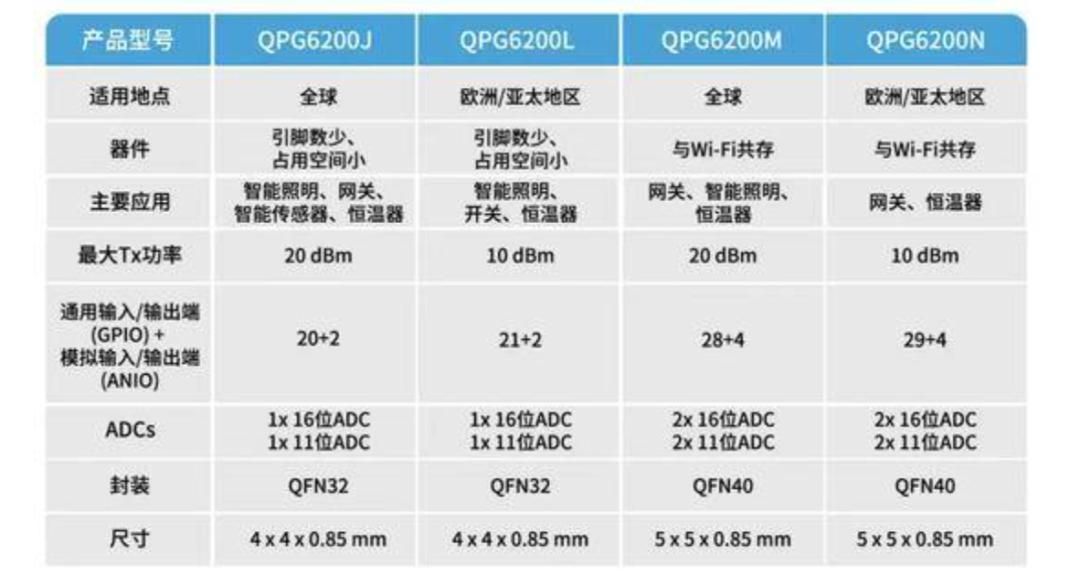
From the product level, Qorvo's current products supporting multi - protocol/multi - connection are the QPG6200 series of chips. This product has extremely low power consumption and has an industry - leading power consumption level in sleep, connection, and even radio frequency reception. In battery - powered application scenarios, a chip with lower power consumption can reduce the corresponding battery capacity and save costs. Interestingly, if the frequency of connection and data transmission is not particularly high, energy harvesting methods such as solar panels or other energy harvesting power sources can be selected to power this product.
TI: Started Layout Early
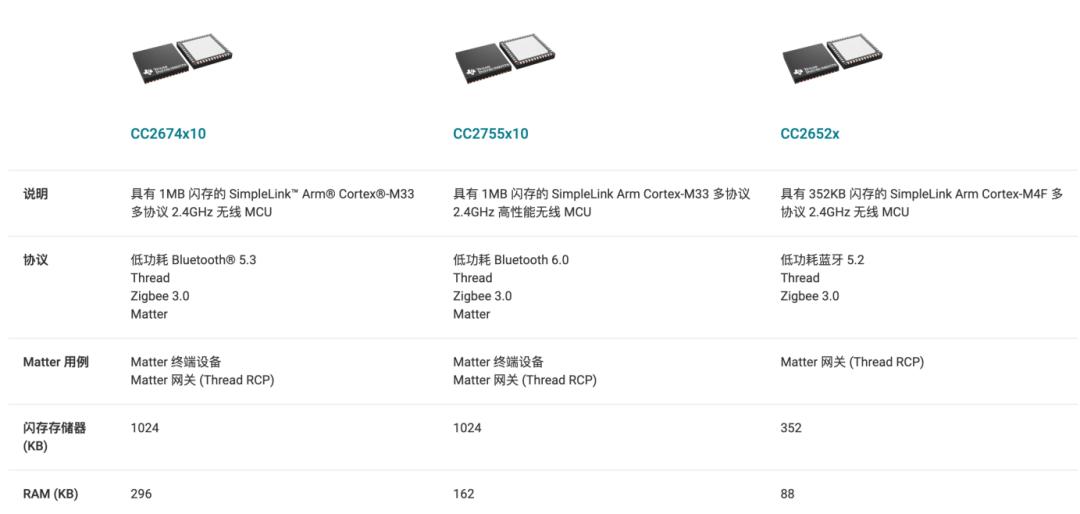
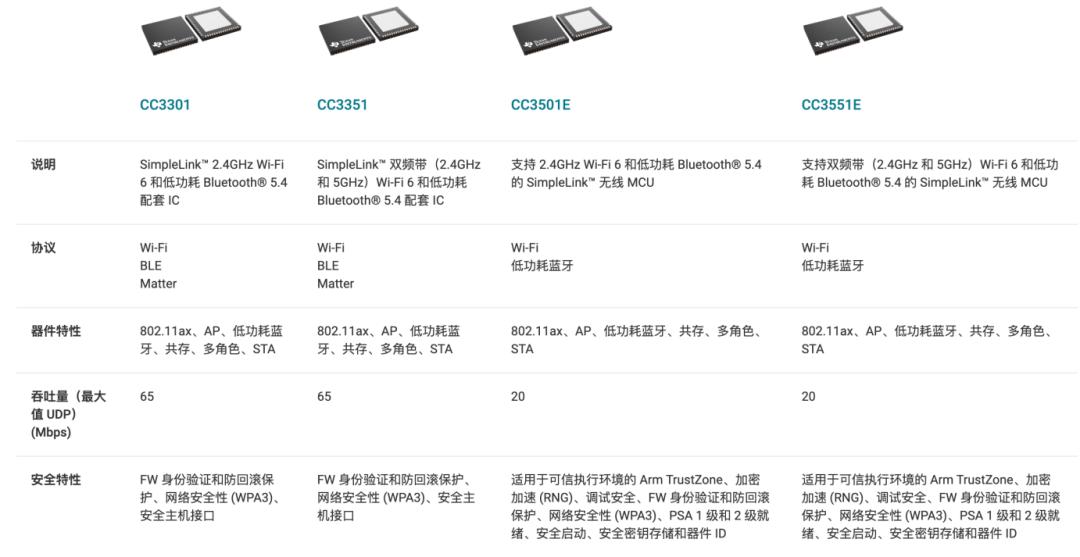
For 10 years, TI has been a member of the CSA board of directors and has participated in the development of Matter. In addition, TI is also a contributing member of the Thread Group and a member of the Wi - Fi Alliance, with more than 20 years of experience in the connectivity field. Its Thread products supporting Matter include CC2674x10, CC2755x10, and CC2652x. TI's Wi - Fi products compatible with Matter include CC3301, CC3351, CC3501E, and CC3551E.
NXP: Two Key Focus Points for Matter
According to NXP's sharing, there are two key focus points in the strategy to promote the development of the Matter standard: on the one hand, it is to use Matter to achieve secure and seamless wireless connection; on the other hand, it is to create innovative solutions tailored to various application scenarios based on Matter.
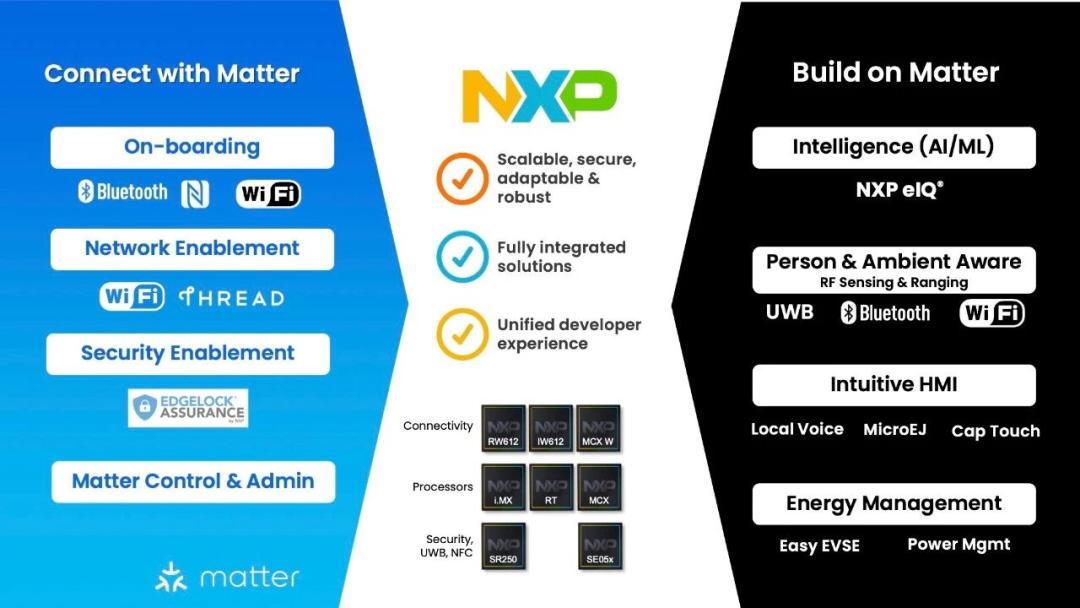
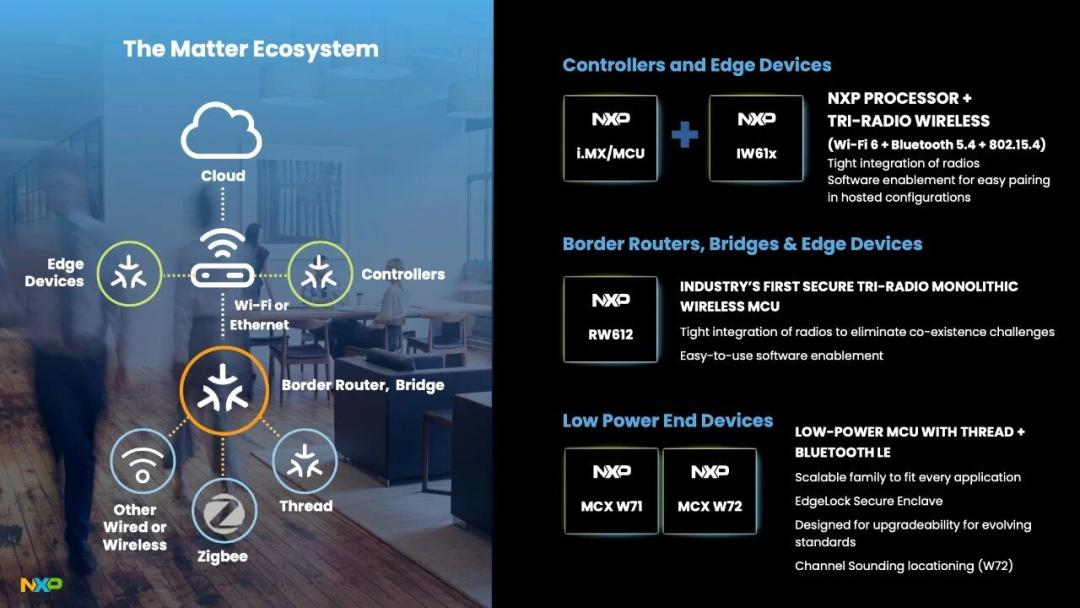
To build a complete Matter connection ecosystem, NXP provides multi - protocol solutions, fully supporting the implementation of the Matter standard in the network and accelerating the development of Matter products.
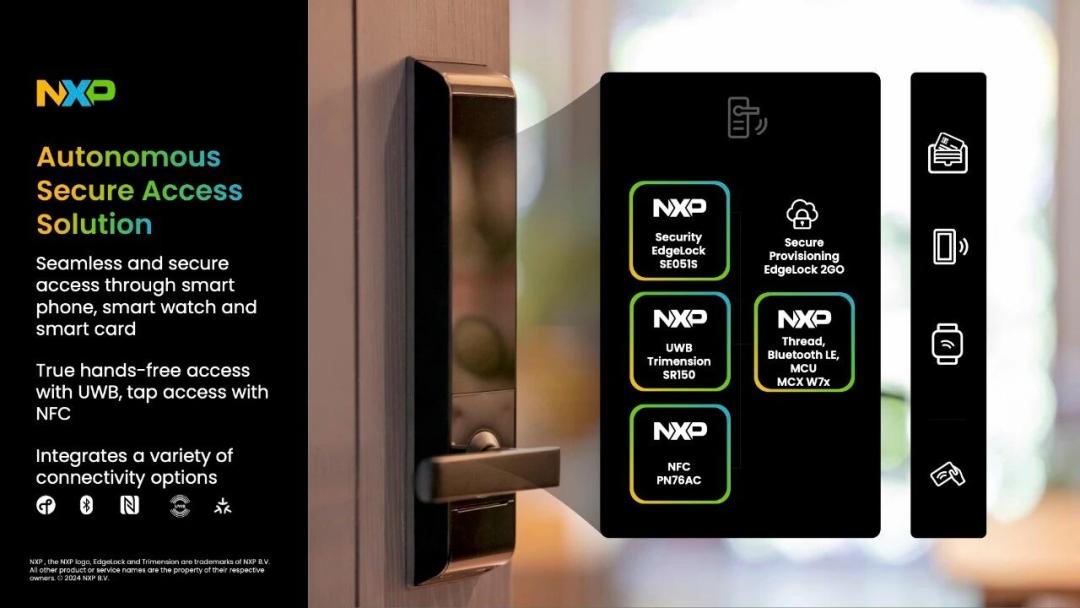
In the development of innovative applications, NXP has also carried out many explorations and practices. Among them, the seamless smart access control and digital key solutions integrated with Matter are a successful example.
With the expansion of support for the home energy management system in the Matter 1.4 version, NXP has also integrated technologies and products such as processing, connection, and security to launch an automated energy system platform, accelerating the development of the