Is there a huge bubble emerging in another popular sector?
01
Humanoid robots, the hottest area in the technology industry this year, are recently facing serious doubts. First, on November 7th, Goldman Sachs released a research report on the Chinese humanoid robot supply chain.
The overall tone of this report is to be optimistic about the development of the humanoid robot industry, stating that various enterprises are well - prepared and ready to take off. However, one detail has been highlighted. Among the 9 surveyed companies:
None of the companies has confirmed that it has received large - scale orders or has a clear production schedule.
The report also mentioned earlier that the production capacity of these companies has reached 100,000 to 1 million units per year. With such strong production capacity but no corresponding strong market demand, where lies the problem?
There are two possibilities: Firstly, the so - called production capacity is false, and all companies are faking it, but this possibility is relatively low. Or, the production capacity is real, but the humanoid robot market is actually very small, and the industry has a bubble.
Another piece of news comes from Li Chao, the deputy director of the Policy Research Office of the National Development and Reform Commission. At a press conference, she talked about the industrial risks of humanoid robots.
Low - level repeated "crowding" squeezes the space for R & D and innovation; capital dispersion and impetuous expectations weaken global competitiveness; the lag in commercialization hinders the synergy of the industrial chain.
In simple terms, the current product level of humanoid robots is still very low. Everyone rushes to increase production capacity, but there is a lack of scenarios for actual implementation. Capital is impetuous, and there is a risk of speculation.
At the beginning of the year, a humanoid robot was spinning a handkerchief on the Spring Festival Gala stage, causing a great deal of amazement. By the end of the year, the spokesperson of a national department was talking about industrial risks, which shows the rapid development of the industry.

02
To talk about humanoid robots, we have to start with robots. In the past decade, robots have been booming, with a large number of applications emerging and being popularized. The progress they have brought in different fields can be called revolutionary.
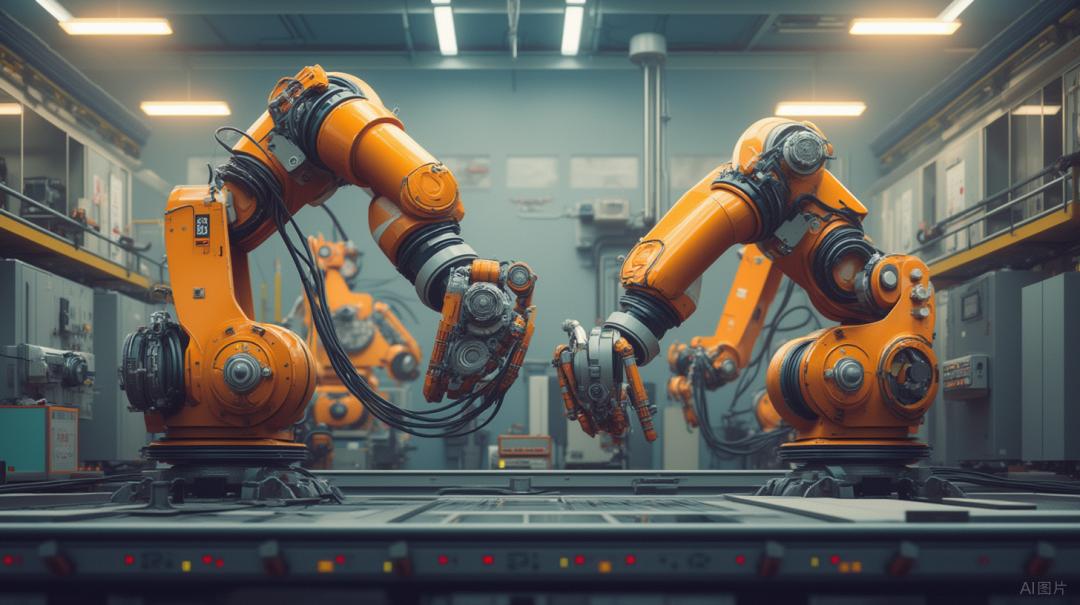
For example, industrial robots come in various forms. From load - bearing, grasping, stretching to rotating, they have different applications. A large number of manual assembly - line operations are being replaced by robots.
The robots used in automobile manufacturing have mechanical arms as flexible as an octopus. They can perform multiple welding, tightening, and painting operations simultaneously. Their amazing dexterity and high efficiency are truly astonishing.
The sorting robots in the express delivery industry don't have hands. They are just conveyor belts with sensing devices. Express packages are conveyed like a revolving sushi, and these robots can automatically weigh the packages, identify addresses, and quickly pick and classify them.
The public is more familiar with household robots, such as vacuum - cleaning robots, food - delivery robots, and queue - taking robots. They are small and cute, can emit voices, and have largely replaced human work.
The common feature of these robots is that they do not have a human form. They can fully meet the needs of real life by leveraging the characteristics of machines and providing corresponding services.
Looking like a human actually magnifies the "human - form" defects. Humans are bipedal animals and not very fast runners. The human body is tall, with a relatively high center of gravity, unstable chassis, and limited load - bearing capacity.
Humans are complex animals. Making machines deliberately imitate humans will increase the complexity and instability of the machines, making them less competitive. When carrying a load, the stability of bipedal robots is inferior to that of quadrupedal robots. The flexibility of joint movement is far less than that of wheels and tracks, and the complexity increases geometrically.
How many human activities in daily life require the overall "human form"? Very few. Most activities only require certain human abilities, and machines can simply extract and amplify these abilities.
For complex brain thinking, big data and AI can assist in calculations. For dexterous hand and foot movements, more sensitive and tireless machines can be invented to replace humans.
Some complex human skills are actually simpler for robots. For example, doing laundry is just soaking, rubbing, and rinsing clothes repeatedly. Machines can do this better than humans. Whether the machine looks like a human is simply unimportant.
03
Beyond industrial production and daily life, are there any fields where humanoid robots will be used in the future? The industry's prospects mainly focus on high - risk environment operations, home care, and battlefield applications.
These promising fields are currently unreliable and still far from practical application.
Take fire rescue as an example. Many people imagine that humanoid robots carry water guns, fearless of high - temperature flames, break through walls and doors, and rush into burning buildings to save people. In the real world, firefighters can easily enter most burning buildings with their professional equipment. If robots are needed in complex situations, they are often ineffective, as high - temperature explosions can instantly disable delicate parts.
If a "Iron Man" were to appear in the future, it would probably be a scene in a movie: humans equipped with highly sophisticated anti - high - temperature gear, holding mechanical tools to enter the scene and save people - rather than being replaced by humanoid robots. In contrast to humans, robots are still too clumsy.
The same is true for underwater rescue. Under high - pressure deep - water conditions with turbulent currents, the failure rate of underwater robot operations is extremely high. The industry mainly uses remotely controlled equipment as an auxiliary. The application of humanoid robots in underwater rescue is still a long way off.
The much - talked - about home care for the elderly also currently lacks practical application scenarios.
I once visited a nursing home for the disabled in Shenzhen, which is well - known for its advanced technology and is equipped with many new products from technology companies. I found that most of the improvements in care are achieved through intelligent solutions and still highly rely on human labor.
Elderly people need to turn over occasionally while sleeping to prevent bedsores. In the past, this was done manually. Now, intelligent sensor beds have been invented. These beds can recognize the elderly's heart rhythm (when they are in a semi - awake state) and movements, and help them turn over from time to time.
When an elderly person falls, image recognition can trigger an alarm for help. When an elderly person forgets to take medicine, an automatic reminder pill box (available on the market) can be used. In short, intelligent devices assist humans in their work.
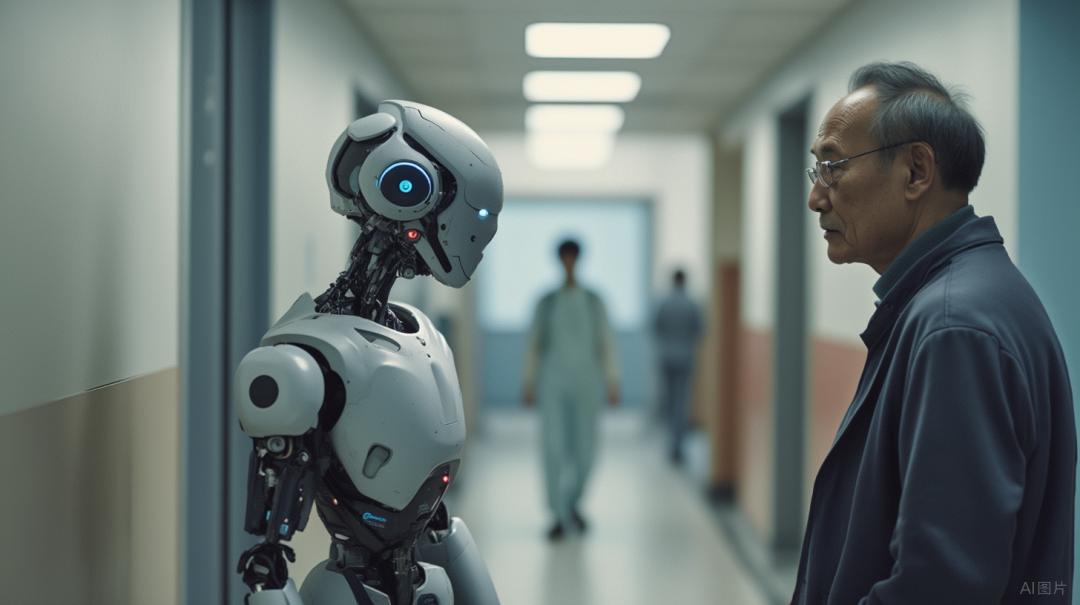
What can humanoid robots do? Nothing. They can't even handle the simplest task of feeding. Taking care of the elderly is not just simple mechanical companionship; it requires emotional investment and effective feedback. If a robot fails to recognize instructions, it will drive the elderly crazy after a few attempts.
The application of humanoid robots on the battlefield also currently faces problems: First, drones and robot dogs are very popular, being more efficient and flexible, so humanoid robots have no advantage. Second, the application of artificial intelligence in the military field has always been a concern of the international community, and China has always maintained a cautious attitude.
The lack of practical use is the current embarrassment of the humanoid robot industry in recent years. Some technology writers say that the industry's development cannot be rushed. Humanoid robots are not yet mature, and they will definitely find their uses in the future.
Optimism is good. However, don't forget that capital investment is ultimately for profit. If there is a clear development direction, capital can wait with the industry. Without practical application scenarios and a way to make a profit, capital will eventually lose patience.
04
In the past two years, humanoid robots have been very popular, and capital has been continuously flowing in. What is the reason? The popularity lies in curiosity and the space for imagination. The more a humanoid robot looks like a human and behaves like a human, the more it can arouse people's amazement.
At the beginning of the year, a humanoid robot from Unitree Robotics danced on the Spring Festival Gala stage and became an internet celebrity. At the end of the year, XPeng released a female humanoid robot, IRON, whose figure and gait are close to those of a human model. But these humanoid robots can't just be for people to look at.
Currently, its biggest function seems to be exhibition and performance. At various technology exhibitions, humanoid robots are always the focus. There are also some special exhibitions, such as robot marathons, where they can even achieve better results than human athletes. Does humanity really need such a marathon? Actually, no. Self - driving cars can run much faster.
This year, several local governments deployed "robot traffic police" on the streets. They wear traffic police uniforms and direct traffic with hand signals. It is said that they can also recognize and capture vehicles violating traffic rules. This news stunned netizens. Can't traffic lights and electronic eyes do a good job in directing traffic? Why use humanoid robots? It's all about curiosity. Some local governments are using public funds for show.
Once humanoid robots become common and people no longer feel curious, where will this industry go? So far, the industry has not given a clear direction. Looking at the market, everyone is just watching the show, and there are hardly any reliable practical application scenarios.
The private commercial sector, which spends its own money on services, is quite cold towards humanoid robots. As the Goldman Sachs report mentioned, the industry is full of enthusiasm and has sufficient production capacity, but there are no orders. This is the reason.
Finally, many people mention the value of "emotional companions". As robots become more and more human - like, they will inevitably become the spiritual attachment of some people. This market does exist, but it will not become the mainstream.
Emotional interaction between people is a fundamental core need of human society and is difficult to be replaced by robots. The more a robot looks like a human, the more it will trigger the "uncanny valley effect" - psychology tells us that humans instinctively dislike and fear things that are highly similar to themselves but still different.
Under the influence of public opinion, humanoid robots as "emotional companions" will only exist among a marginal and small group of people. This market is very small and non - mainstream, and those involved have to endure strange looks from others.
Perhaps the development path of the humanoid robot industry was wrong from the start. Robots should surpass humans, not just imitate them. Persistently pursuing "human - likeness" is a kind of over - ambition and imagination, similar to the idea that "aliens look like humans". On this development path, a huge amount of resources need to be invested, and the competitor is humanity, which has evolved over hundreds of thousands of years. Such a competition is not cost - effective and has little chance of success.
This article is from the WeChat official account "Kungfu Finance" (ID: kongfuf), written by Chen Xingjie and published by 36Kr with authorization.