First hands-on with Samsung's triple-foldable device: Folded up, it's a phone; unfolded, it's actually... a computer?
Details are hidden in
the system
No one expected that the long - rumored Samsung triple - foldable phone, which had been talked about for nearly two years, was quietly launched through Samsung Newsroom on a stuffy morning in December.
As predicted earlier, Samsung gave this tri - fold product an unassuming name: Galaxy Z TriFold. It doesn't follow the numbering of the Z Fold series, which means it's starting a new line.
Since then, Huawei's Mate XT series is no longer the only player in the triple - foldable phone market. For consumers, a competitive market is a market that makes progress.

Although it's called Galaxy Z TriFold, its unfolding method doesn't use the Z - shaped hinge with "outward - flip and inward - fold", but a G - shaped hinge similar to folding a quilt — the two sides of the inner screen close towards the middle, and then the outer screen on the back can be flipped and used.
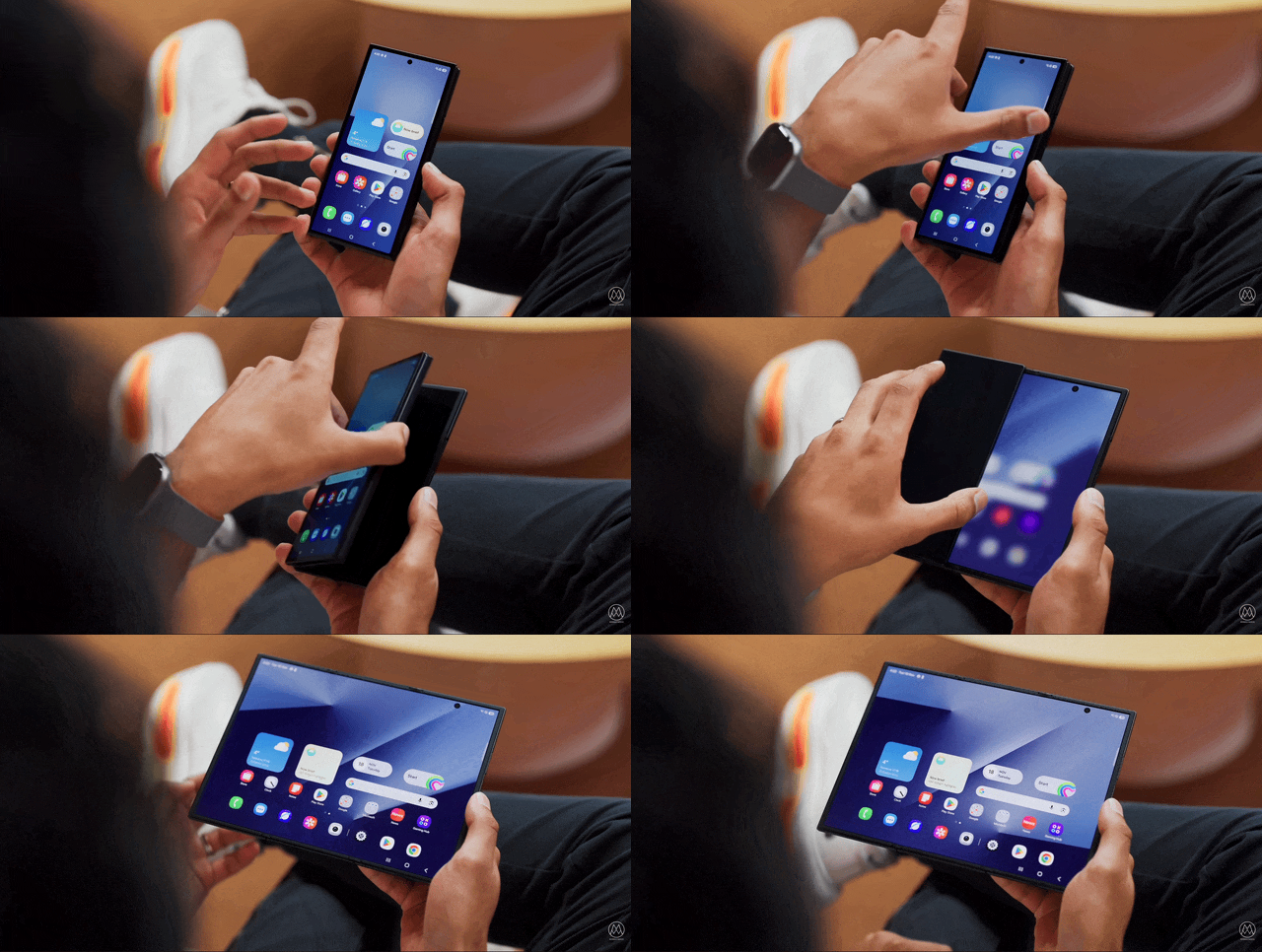
▲ Hands - on by Mrwhosetheboss
In this way, the Galaxy Z TriFold only has two usage forms: "fully unfolded" and "fully closed". You can either use the 10 - inch inner screen with a resolution of 2160 x 1584 or the 6.5 - inch outer screen.

Although it lacks the dual - fold usage form like Huawei's Mate XT and XTs, based on our actual experience when evaluating the XTs, "the dual - fold form of a triple - foldable phone" isn't that commonly used. There's nothing wrong with the choice made by the Galaxy Z TriFold.

To accommodate the bodies with different thicknesses on both sides, Samsung has also made quite a few improvements in the hinge technology.
The "Armor FlexHinge" on the Galaxy Z TriFold uses a double - rail structure, allowing the bodies on both sides of the hinge to move in coordination. Even if the weights are different, it can achieve smooth and stable opening and closing.
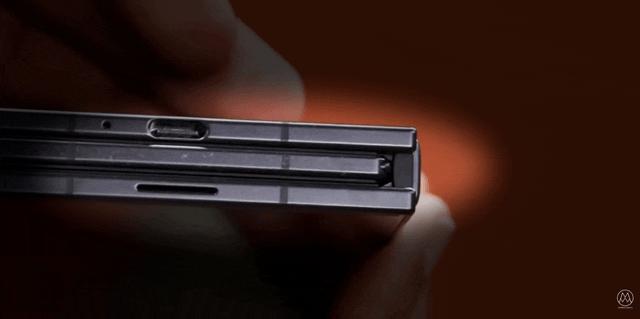
▲ Hands - on by Mrwhosetheboss
In addition, the Galaxy Z TriFold also uses the ceramic used in the domestic W series. Its 6.5 - inch outer screen is Corning Gorilla Glass Ceramic 2.0, and the back panels on both sides of the body use a "ceramic glass fiber - reinforced polymer back panel", which significantly enhances the crack resistance compared to the glass on the Z Fold7.
However, the drawback is obvious: the three glossy back panels of the Galaxy Z TriFold are undoubtedly fingerprint collectors. Coupled with the fact that it only comes in black, wiping it frequently is inevitable.
In addition, Samsung has also standardized the folding method. The system will give visual prompts when folding, and the inner screen cannot be used if it's not fully unfolded, which is basically consistent with the system preview leaked in July:
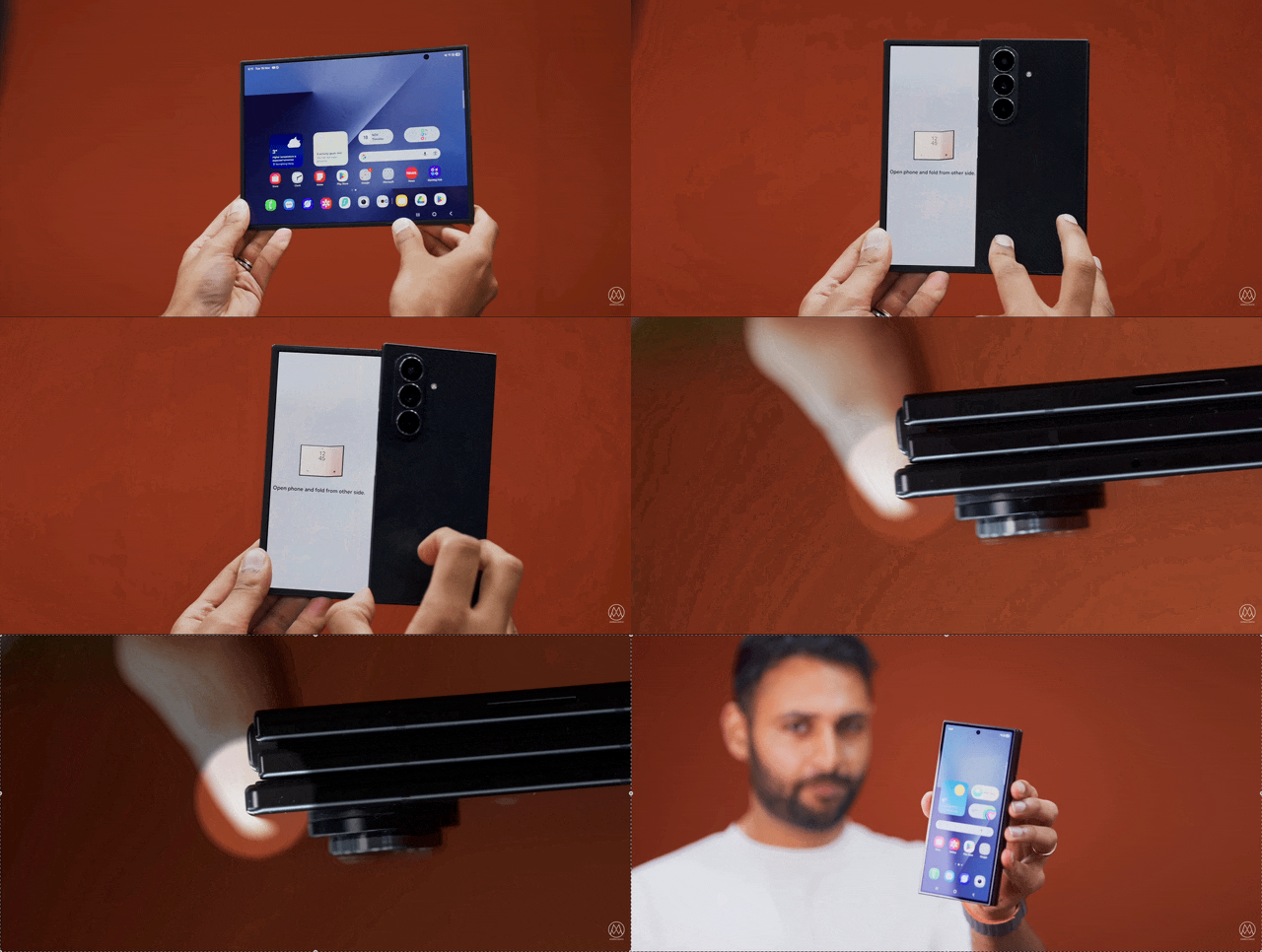
▲ Hands - on by Mrwhosetheboss
Although the Galaxy Z TriFold doesn't have a strict dual - fold mode, Samsung has retained the function of using the rear camera for selfies by opening one side of the screen, so there's no serious lack of functionality.
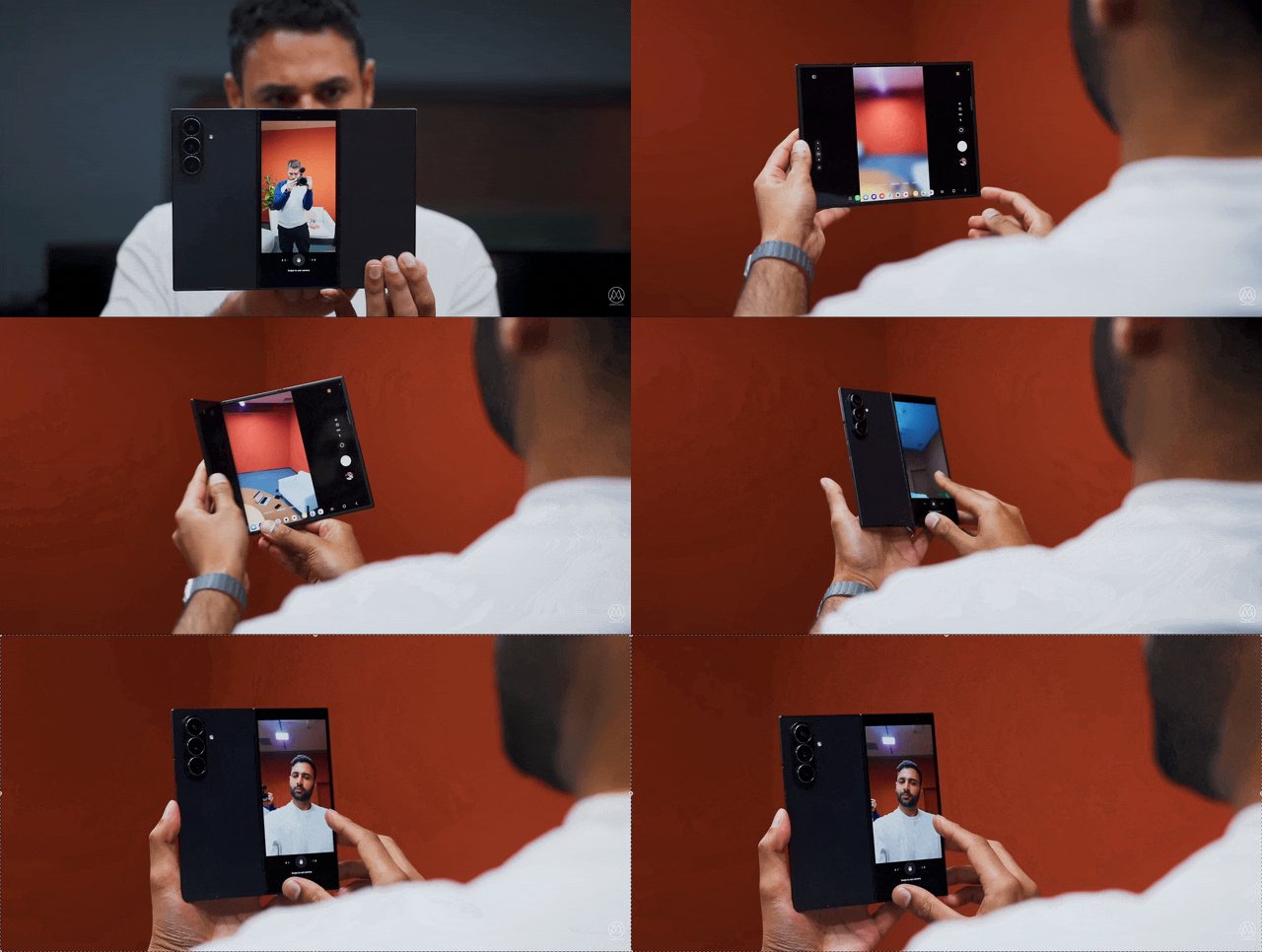
▲ Hands - on by Mrwhosetheboss
The inner and outer screens of the Galaxy Z TriFold are both Samsung's Z - series Dynamic AMOLED 2X. The peak brightness of the 10 - inch inner screen is 1600 nits, and the 6.5 - inch outer screen on the back can reach 2600 nits. The specifications are almost the same as those of the Z Fold7.
And it's not just the outer - screen specifications that are similar to the Z Fold7. The Galaxy Z TriFold is also equipped with a 200 - megapixel f1.7 main camera, a 12 - megapixel ultra - wide - angle camera, and an abstract 10 - megapixel 3x telephoto camera. With such "solid" parameters, there's little to expect from its photography performance.
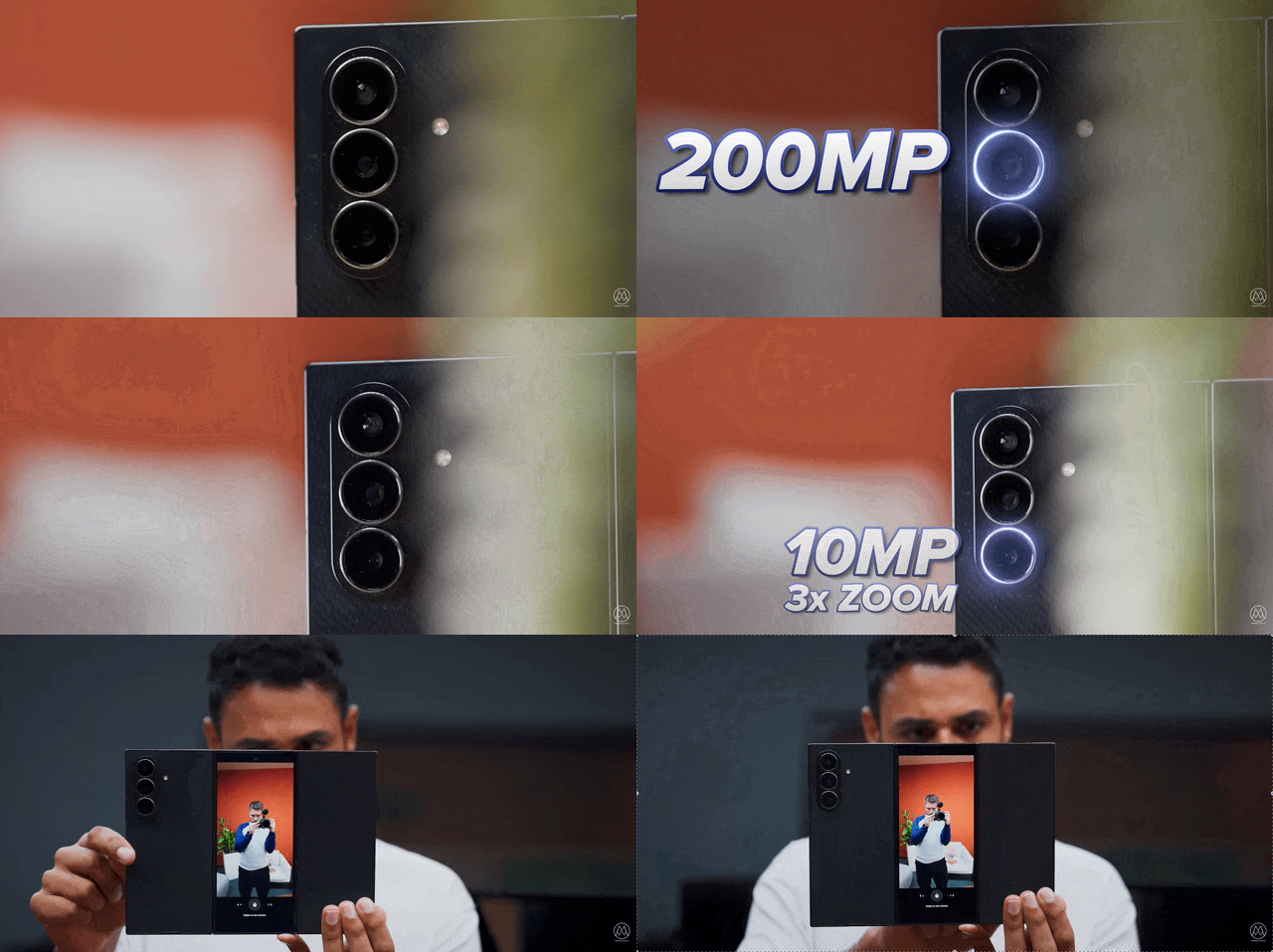
▲ Hands - on by Mrwhosetheboss
In addition, the Galaxy Z TriFold also uses the same Snapdragon 8 Elite for Galaxy custom - edition processor as the Z Fold7. Regardless of the capacity, it comes standard with 16GB of RAM and only has two SKUs: 512GB and 1TB, which is a bit more generous than the 12 + 526GB Z Fold7.
It's worth noting that Samsung has adopted some new material technologies on the Galaxy Z TriFold. For example, in addition to the traditional aluminum alloy frame, the central axis cover of the Galaxy Z TriFold has been changed from aluminum to titanium, which can effectively prevent scratches on the larger - area cover.

At present, in the ultra - high - end price range of "over ten thousand yuan" (excluding the iPhone), how to use software to enhance hardware capabilities is the focus of manufacturers. As one of the few "full - ecosystem" players that are involved in products from smartwatches to TVs, Samsung should be able to give us a good answer.
The most important one, and the one that differs the most from the Huawei Mate XTs, is the DeX mode in Samsung's OneUI that it's proud of.

▲ Hands - on by Mrwhosetheboss
For the first time, Samsung allows the activation of the DeX mode without an external monitor on the Galaxy Z TriFold. It can open a quasi - computer - level desktop based entirely on a keyboard and mouse on the 10 - inch inner screen, which is more thorough than the "Free Multi - Window" mode on the Mate XTs and really feels more like a small computer.

▲ Hands - on by Mrwhosetheboss
In addition, the DeX mode of the Galaxy Z TriFold also supports adding a second virtual desktop like Windows and macOS. Users can quickly switch between the application groups on the two desktops. After all, having 16GB of RAM gives more leeway.
However, the Huawei Mate XTs supports a stylus, while Samsung, which has been deeply involved in stylus operations for many years, seems to be gradually giving up this path. Similar to this year's Z Fold7, the Galaxy Z TriFold physically removes the hardware for stylus detection, and the supported peripherals are limited to Bluetooth keyboards and mice.
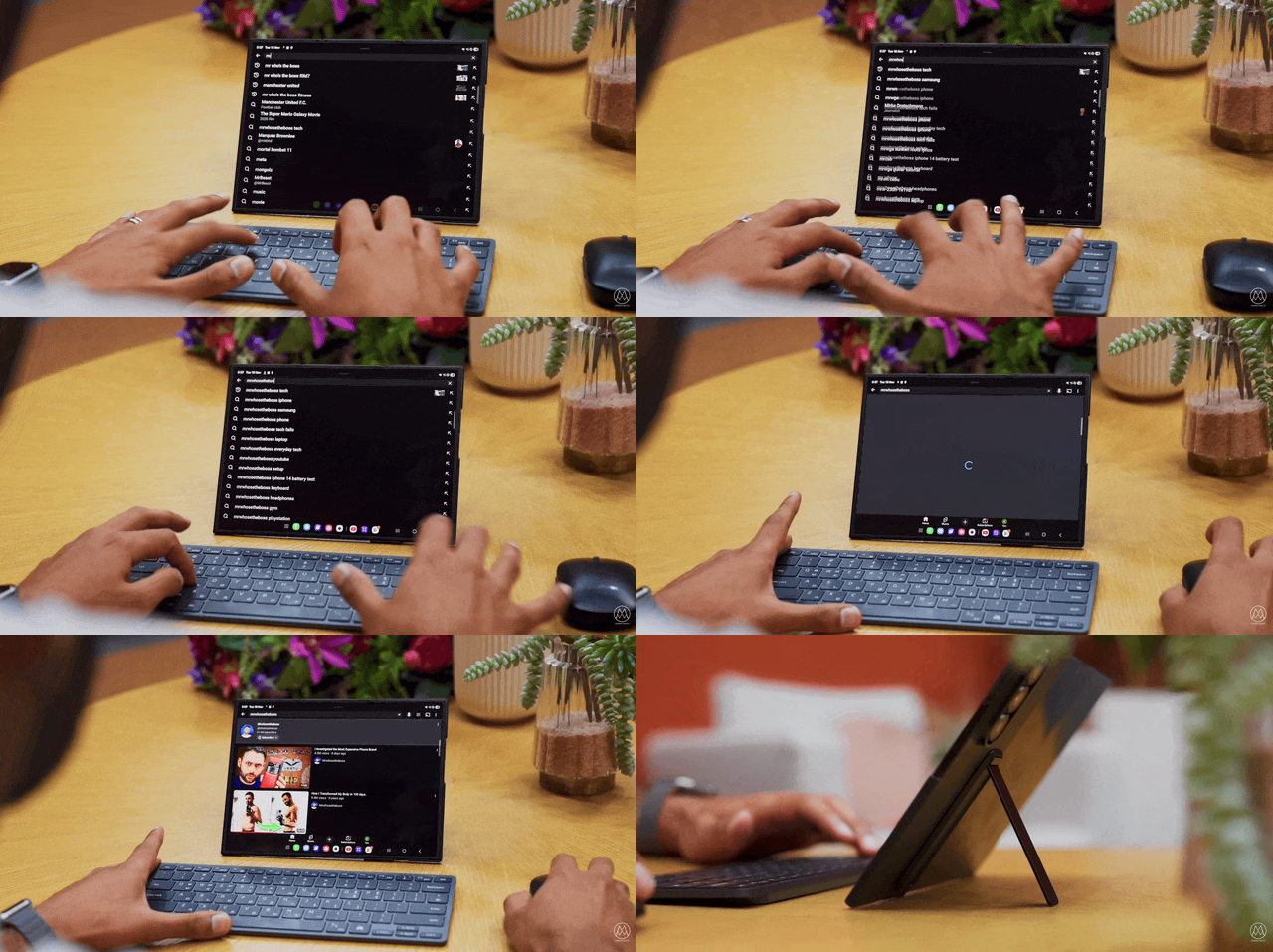
▲ Hands - on by Mrwhosetheboss
If you really want to use a triple - foldable phone for mobile office work, a dedicated Bluetooth mouse is much more practical than the "air - mouse mode" of the Huawei M - Pen 3. Of course, the Mate XTs can also be connected to an external mouse.
In addition, thanks to the dual support of Google and OneUI, we expect the Galaxy Z TriFold to perform well in software adaptation for ultra - wide screens — of course, only for foreign apps developed in a standardized way. As for a few domestic "problematic" apps that don't even support Huawei, they naturally won't support Samsung either.
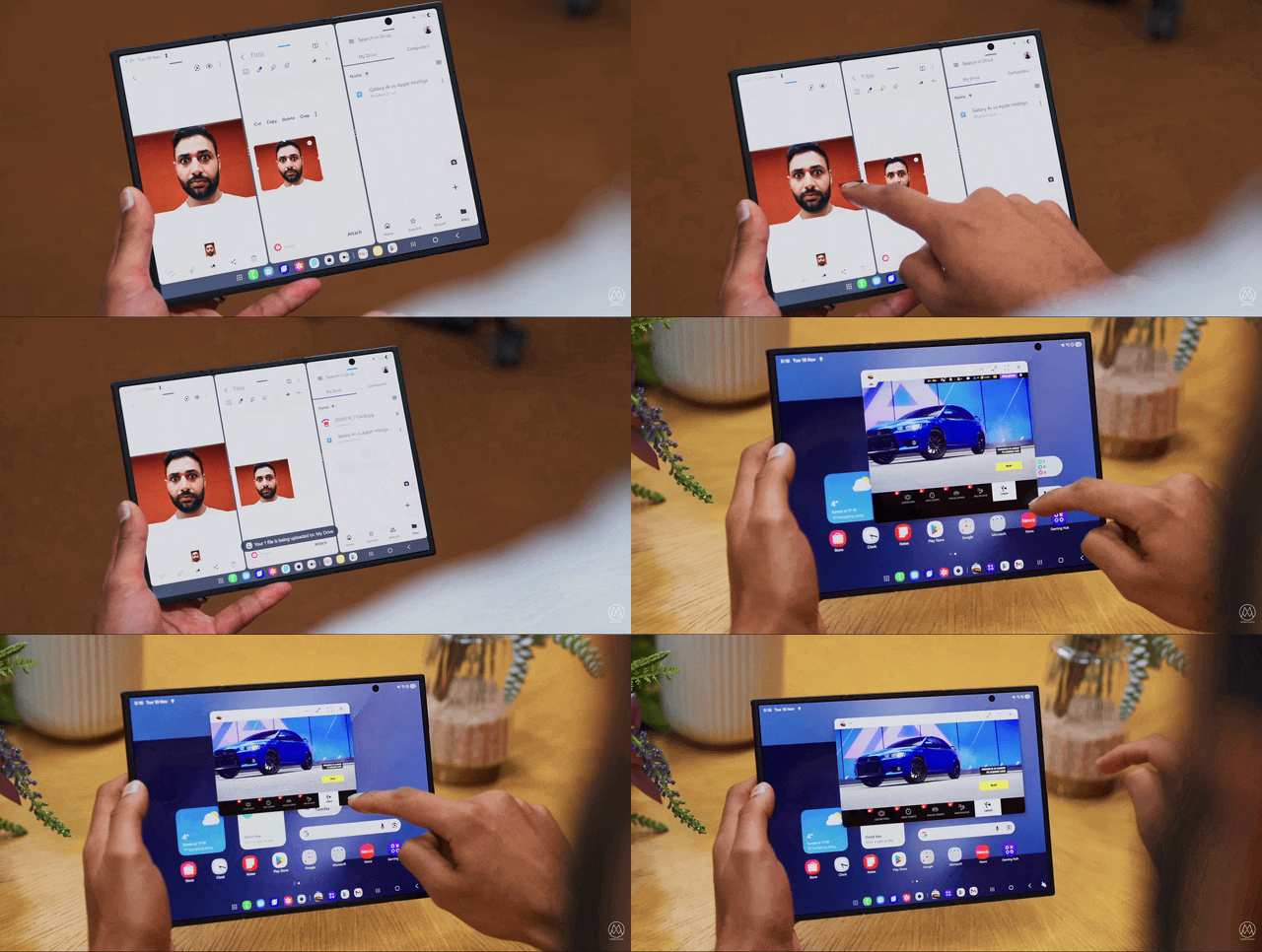
▲ Hands - on by Mrwhosetheboss
Currently, the price of the Samsung Galaxy Z TriFold has not been announced, and the overseas official website only shows that pre - orders will be accepted starting at 10:00 on December 9th.
According to Samsung's introduction, this triple - foldable product won't be available globally. It will be launched in South Korea on December 12th, and then promoted to regions such as China, Singapore, and the UAE. The US version will have to wait until the first quarter of 2026.
However, the good news is that the pre - order entrance for the new product has been launched on the domestic Samsung Store. Samsung also said on the Galaxy Community that pre - sales will start at 10:00 am on December 9th, but the domestic price is still not announced.

According to the hands - on predictions of some overseas bloggers, the final price of the Galaxy Z TriFold may be around $2400 (about 17,000 RMB). The final domestic price is expected to be in the 17,999 - yuan range, but many predictions suspect that Samsung will raise it to around 20,000 yuan.
In short, as the only two players in the global triple - foldable phone market at present, it's quite exciting to see what tricks Huawei and Samsung will come up with in the triple - foldable form.

Whether it's One UI vs HarmonyOS or DeX vs Free Multi - Window, the real key is how to make these "ultra - high - end flagships" priced at over 20,000 yuan use software to drive hardware and perform the most beautiful dance despite the constraints.
This article is from the WeChat public account "ifanr" (ID: ifanr), author: Ma Fuyao. It is published by 36Kr with authorization.