A Cambridge Ph.D. Promotes "HUD for All", Breaking Away from High-Cost Wedge Film Dependence | Exclusive Report by 36Kr
Author: Ou Xue
Editor: Yuan Silai
Yingke has learned that AR display technology company "ReaVis" recently completed a Series B financing of tens of millions of RMB. We have summarized the information of this round of financing and several highlights of the company:

Financing Amount and Leading Investor
Financing Round: Series B
Financing Amount: Tens of millions of RMB
Leading Investor: Lanpu Capital
Use of Funds: Mainly used to deepen the research and development of "Parallel Vector Ghost-image Free Technology" (PV technology), expand the scale of laboratories and production lines, and accelerate the large-scale application of HUD in multiple scenarios
Historical Financing: Cumulatively received over 100 million RMB in financing

Basic Company Information
Establishment Time: 2021
Registered Address: Nanjing
Technological Highlights: ReaVis mainly focuses on the in-vehicle head-up display (HUD) system and has built a full range of product matrix covering from basic display to immersive interaction.
The company was the first in the industry to systematically propose the concept of "HUD for All". With the independently developed Parallel Vector Ghost-image Free Technology (RV Parallel Vector Ghost-image Free Technology, abbreviated as PV technology) as the core breakthrough, it achieves high-quality ghost-image free projection on ordinary windshields, completely getting rid of the industry's dependence on high-cost "wedge films", and broadens its application boundaries in multiple scenarios such as passenger cars, commercial vehicles, and rail transit. This breakthrough can not only be applied in the transportation field, but also expand HUD from in-vehicle to all scenarios, ultimately forming an intelligent display ecosystem across transportation, industry, public, and consumer terminals.

Schematic diagram of HUD usage: Compatible with ordinary windshields, no need for customized wedge films (Source/Enterprise)
In terms of product layout, the company has formed a clear technological evolution path: First, W-HUD/AR-HUD (already in mass production): Based on PV technology, it achieves clear and stable display on ordinary windshields, with strong compatibility and low-cost advantages; Second, Multi-focal plane 3D AR-HUD (in progress): Through single optical engine multi-depth imaging, it improves AR fitting accuracy, relieves visual fatigue, and enhances the driving experience; Third, Digital holographic 3D AR-HUD (in pre-research): Based on the phase LCoS holographic optical engine, it realizes real-time full-color 3D images and continuous zoom, creating the next-generation immersive cockpit display.
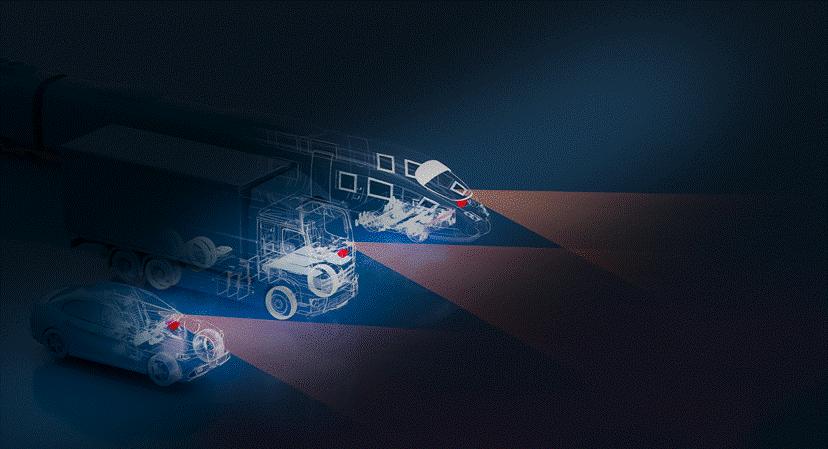
AR-HUD usage scenarios: Compatible with various windshield tilt angles, thicknesses, and surface shapes (Source/Enterprise)

Market Size
Currently, the Chinese HUD market is in a stage of rapid growth, and HUD configurations are mainly concentrated in high-end models.
Monitoring data from the Gaogong Intelligent Automotive Research Institute shows that from January to September this year, there were 375 models of passenger cars on sale in the Chinese market with standard HUD configurations, a year-on-year increase of 21.75%; among them, the number of AR HUD models increased by as much as 45.78% year-on-year.
According to a report released by CINNO Research, it is predicted that the penetration rate of HUD in the Chinese passenger car market will reach about 17% in 2025, among which the standard configuration rate of AR-HUD will be 6%. It is estimated that from 2025 to 2030, the compound annual growth rates of the standard configuration volumes of Chinese HUD and AR-HUD will be 14% and 30% respectively.

Company Performance
ReaVis has maintained an annual growth rate of 30% - 40% in recent years and is expected to achieve self-sufficiency by the end of 2026.
In terms of market expansion, the company has obtained mass production orders for non-wedge film from several automobile manufacturers and will achieve mass production and increase production volume in 2026. At the same time, the company has reached a strategic cooperation with Nippon Seiki, the global market leader in the HUD industry, and is actively promoting the application and popularization of PV technology as well as the development of domestic and international markets.

Team Background
The core technical team of ReaVis comes from the Optics Laboratory of the University of Cambridge in the UK and has rich technical accumulation in the field of optical display. Deng Yuanbo, the founder and CEO of the company, completed a systematic study of optical disciplines from master's degree to postdoctoral research at the University of Cambridge and accumulated experience in product R & D in the industrial circle.
The underlying technology of ReaVis - Parallel Vector Ghost-image Free Technology is based on the R & D achievements of founder Deng Yuanbo during his time at the University of Cambridge. In 2019, based on this breakthrough technology, he founded Reavis Limited in Cambridge, and the technical value of the company was subsequently systematically reported by the University of Cambridge.
In 2021, Deng Yuanbo led the core team and mature technology patents back to China and settled in the Nanjing Science and Technology Innovation Center of the University of Cambridge in the Jiangbei New Area of Nanjing, establishing a dual-core driving model of "R & D in Cambridge, Manufacturing in China". Now, the company has established R & D centers in Nanjing, China, Cambridge, UK, and Shanghai, and has built a highly automated production line in Xingtai, Hebei.

Founder's Thoughts
Yingke: What is the most core commercial value of the Parallel Vector Ghost-image Free Technology (PV technology)?
Deng Yuanbo: PV technology is an important technical support for the company's goal of "HUD for All". It can make HUD more universal, reducing HUD's dependence on customized windshields. Whether it is the reduction of costs or the optimization of the development process, it can create great value for customers; at the same time, this technology enables different types of transportation vehicles to install HUD, truly realizing the equalization of HUD technology.
Yingke: In the situation where the domestic HUD market is in a price war, how does ReaVis maintain its competitiveness?
Deng Yuanbo: We do not participate in the involution of homogeneous products. Our strategy is to adhere to technological innovation and create differentiated value through technological innovation. The essence of involution is high homogeneity and overcapacity. From the company's perspective, developing homogeneous products may be a business model that can be quickly replicated and quickly gain the market in the short term; but in the long term, it will inevitably fall into a state of price competition, operational competition, continuous investment, and ultimately overcapacity. At the same time, path dependence and the formation of corporate culture will further curb innovation. The path of innovation is difficult, with large investment, long cycle, and high uncertainty, and it will also face various doubts and challenges. Even so, ReaVis will still take innovation as the foundation of the company, maintain the determination to innovate, and provide differentiated innovative products needed by the market. This is ReaVis' core competitiveness.
Yingke: If the gross profit margin of related hardware is too low, what is the company's long-term profit model?
Deng Yuanbo: We are exploring diversified models. First, ensure that our HUDs do not incur losses after cost reduction through technology. More importantly, we have started to carry out technology licensing. By licensing our PV technology to partners, we can achieve profits from licensing projects. This will be a very important profit point in the future.

Investor's Thoughts
Lanpu Capital said: "We are optimistic about the key position of HUD in the intelligent automobile industry chain. The ReaVis team, with its profound optical accumulation from Cambridge and original Parallel Vector Ghost-image Free Technology, has precisely solved the core pain points of the industry in terms of cost and experience popularization."