Doubao Mobile Assistant is here. It suits small manufacturers like Nubia. Is it unlikely that Huawei and Xiaomi will pay for it?
Does anyone feel that although the tech circle in 2025 is bustling, there seems to be something missing?
Looking back at this year, large AI models have blossomed everywhere. The videos generated by Sora can already be almost indistinguishable from real ones. It is said that the IQ of GPT-5 has surpassed the average human level. Even domestic models like Doubao, Qianwen, and DeepSeek are in fierce competition.
However, brothers, have you noticed that most of these so - called high - tech things still seem to stay in computer web pages or exist as chat apps on our mobile phones.
When it comes to the mobile phones we use most every day, the situation doesn't seem to have changed much. You still have to click on app icons one by one and switch between WeChat, Taobao, and Xiaohongshu. Those large models are highly touted, but when you want to order takeout, you still have to swipe the screen by yourself.
Just when everyone thought that 2025 would end quietly, ByteDance suddenly made big news.
On December 1st, ByteDance released the preview version of Doubao Mobile Assistant.
(Image source: Doubao)
To put it simply, this is a system - level service for mobile phone manufacturers. It deeply integrates the Doubao large model into the operating system, allowing users to command the phone to perform those cumbersome operations that originally required dozens of screen clicks just by speaking (or moving a finger).
Unfortunately, our Lei Technology didn't get the product in advance this time. I'm actually quite interested in that ZTE engineering prototype.
However, this doesn't affect us from showing you what's behind Doubao.
Nubia launches first, Doubao aims to make the phone handle things on its own
Let me give a brief introduction to those who are in the dark. The news that "ZTE will launch an AI - native mobile phone with Doubao" that has been hyped up on Weibo today is a typical case of misinformation.
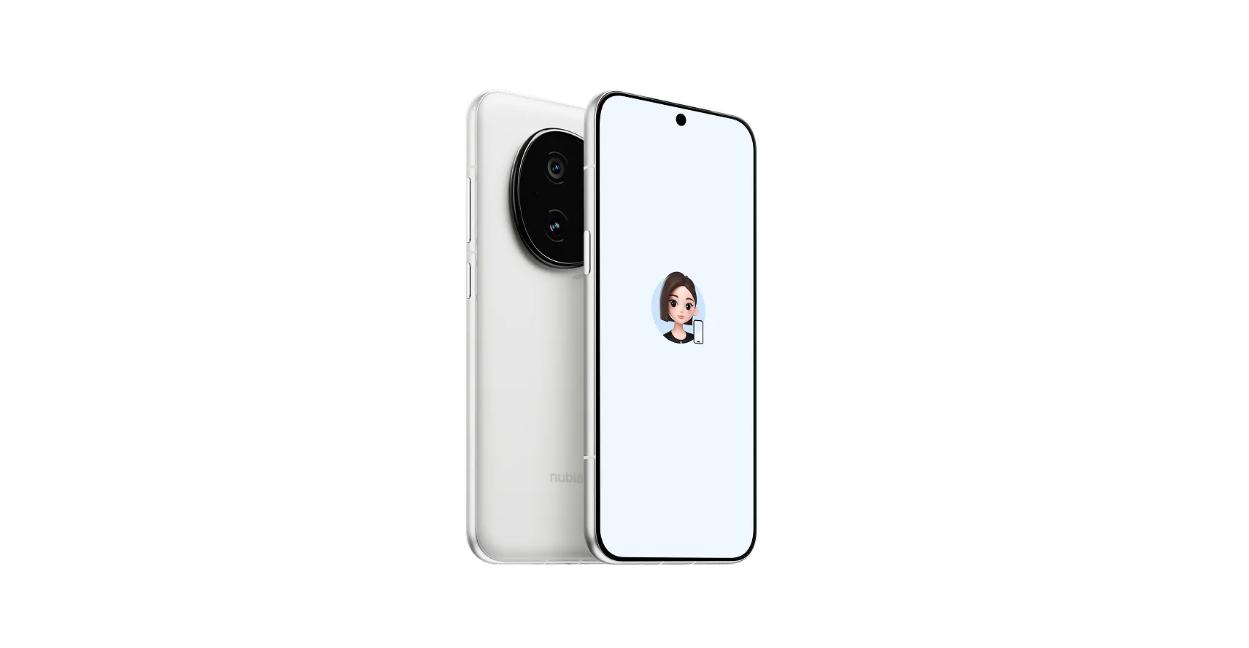
What Doubao launched this time is not a mobile phone, but a mobile assistant installed on nubia M153.
(Image source: Doubao)
Seeing this combination, many readers may wonder: Why doesn't ByteDance make its own mobile phone?
We'll talk about this in detail later.
Back to the point. According to the official demonstration video, the biggest selling point of Doubao Mobile Assistant can be summed up in four words: Full proxy service.
Our current mobile assistants, such as Siri or Xiaoai, can set an alarm or check the weather for you. But if you say: "Send a red envelope to Lao Wang on WeChat and send him the photo I just took."
At this time, most mobile assistants will be at a loss or just open WeChat for you, and you still have to do the rest by yourself.
But Doubao's assistant is different.
In the demonstration, the tester said to the phone: "Compare the prices of this bottle of shampoo on all my shopping apps and place an order at the cheapest one."

(Image source: Doubao)
Then the phone screen started to move on its own. It automatically recognized the image, extracted the product name, then went to Taobao, JD.com, and Pinduoduo for product search and price comparison one by one, and finally stopped at the payment page, asking the user to make a manual payment.
Throughout the process, the tester's hands didn't touch the screen at all, and the whole process took 3 minutes and 12 seconds.
This is a bit incredible.
You know, this involves cross - app operations. Doubao Mobile Assistant not only has to understand what you say but also recognize which button on the screen is for the product and which is for the query, and it has to be able to simulate finger clicks and operate apps in the phone like a human being.
This is called a GUI Agent in the tech circle, which means a graphical interface intelligent agent , like giving AI a pair of eyes and a pair of hands.
Another scenario impressed me deeply.
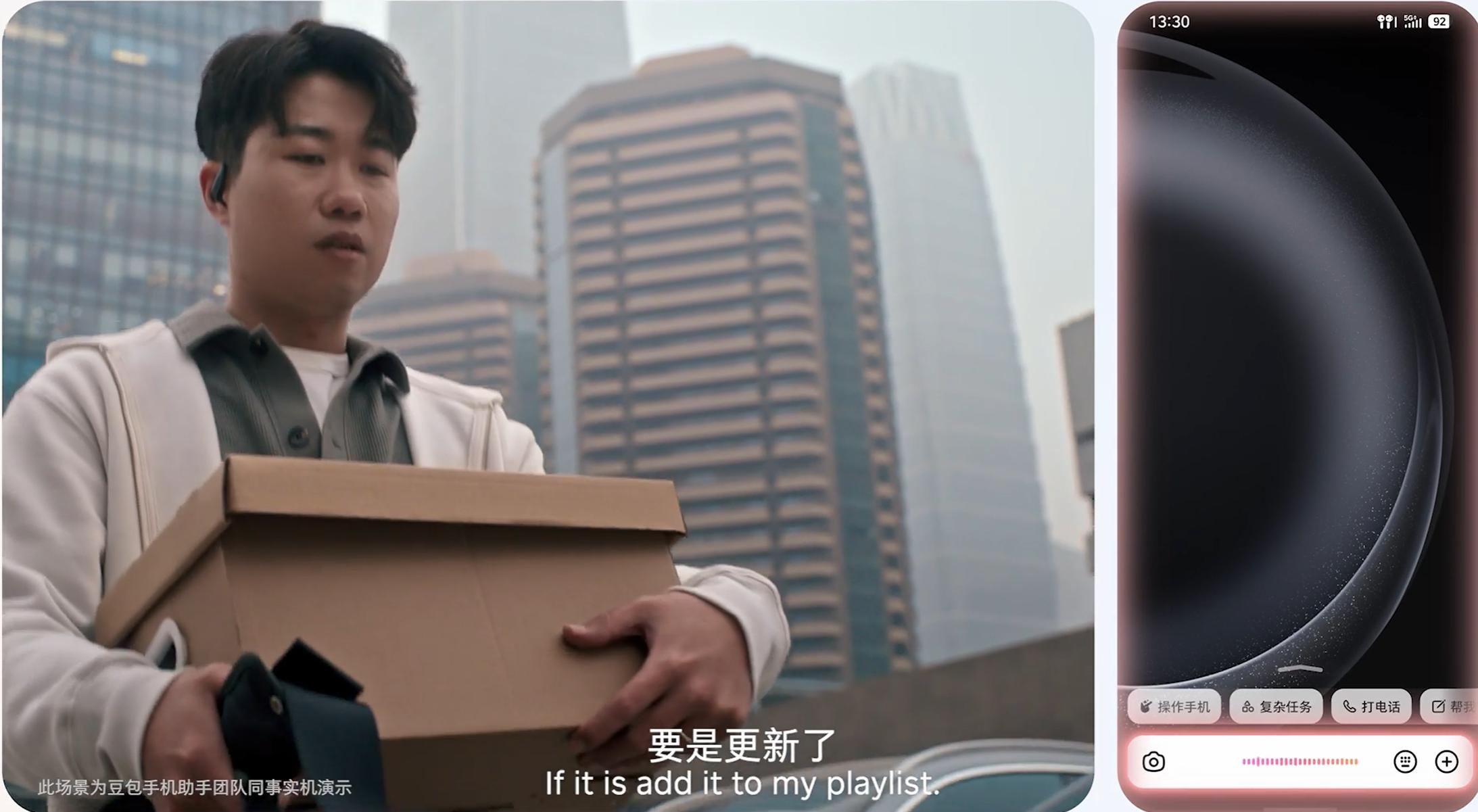
The tester was wearing the smart earphone Ola Friend and was too busy to spare his hands. He directly woke up Doubao with his voice and said: "Check if the weekly column on the blog platform has been updated this week. If it has, add it to the playlist. I'll listen to it on the way later."
(Image source: Doubao)
The phone immediately started to perform the task even when it was locked.
Even when the tester put forward new requests at this time, such as opening the front trunk of the Tesla and making a reservation at a Spanish restaurant in advance, it wouldn't affect the previous task, and multiple tasks could run in parallel directly.
Functions like this are especially useful in those busy moments.
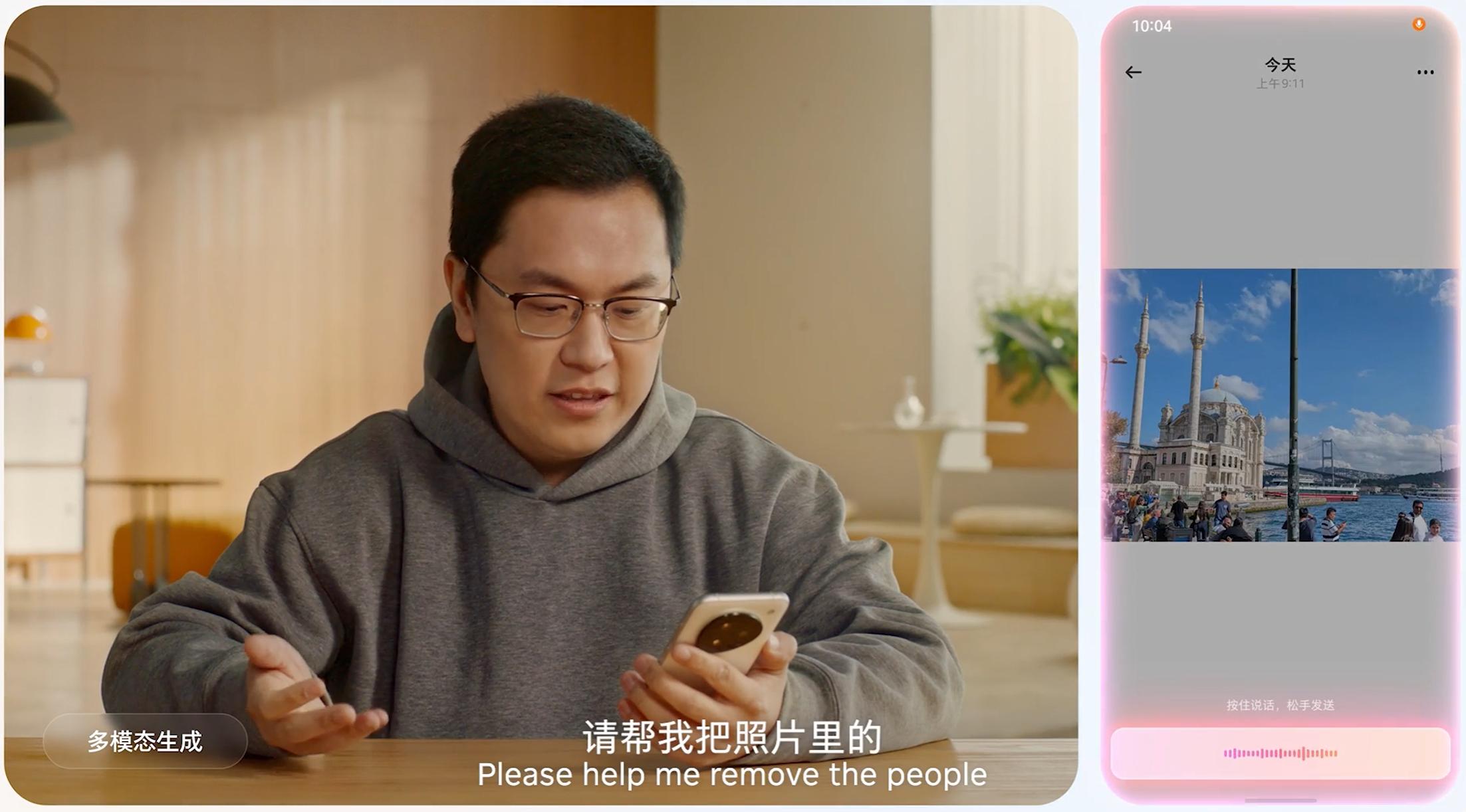
As for basic functions, it has text interaction, voice calls, video calls, and screen sharing functions. It deeply integrates multi - modal generation with the native photo album of the phone, easily removing people and sundries from photos and keeping only the pure scenery.
(Image source: Doubao)
That's not all. The global memory of Doubao Mobile Assistant is what I think will have the greatest impact on mobile phone system interaction in the future.
The tester gave an example. When operating the phone in Pro mode, when the user says "Recommend some gifts for my daughter and add them to the shopping cart", if information such as the daughter's age and interests is stored in the memory, the assistant can directly query for solutions that match the daughter's age and preferences without the user having to explain the details one by one.
It feels like it knows you better than you know yourself.
Of course, the official also emphasized at the end of the video that although the demonstration content was all real - recorded, due to the uncertainty of large - model technology, the relevant scenarios cannot be guaranteed to be reproduced 100%.
As for the price, since it is currently an engineering machine of the technical preview version, the price of this nubia M153 equipped with Doubao Mobile Assistant is set at 3,499 yuan.
This price is not expensive in the flagship phone market in 2025. However, considering that it is mainly for developers and geeks to try out, ordinary users may encounter many bugs after buying it, and the subsequent system updates also need to be observed. So everyone should just take a look and don't make impulsive purchases.
Suitable for small mobile phone manufacturers, Huawei and Xiaomi won't give up their core
After talking about the product, let's talk about the logic behind it.
Many brothers may ask: This function sounds great, but why don't big manufacturers like Xiaomi and Huawei do it directly? Why does it have to be ByteDance?
Actually, this is a matter of specialization.
As we've discussed before, Xiaomi's Xiaoai and Huawei's Xiaoyi are evolving, but in essence, they are like goalkeepers.
When mobile phone manufacturers develop AI, the top priority is stability. They can't let the phone overheat for the sake of intelligence, and they can't let AI randomly click on users' apps. What if you send the wrong message to your boss? That would be so embarrassing!
So the AI of big manufacturers is often more conservative. They mainly control apps through interfaces (APIs), which results in limited supported apps and a very rigid operation experience.
When ByteDance developed Doubao, it is a pure offensive player.
The large model behind Doubao has native multi - modal processing capabilities and is very smart. It doesn't need apps to open backdoors for it. It directly looks at the screen like a human being and then simulates human operations on mobile phone apps. Therefore, there are far fewer restrictions.
You can even see videos of Doubao playing WeChat mini - games on its own from teachers who have tried it in advance.
This technical route is very radical, with a low tolerance for errors but a very high upper limit.
Then the question is, why doesn't ByteDance make its own mobile phone?
This involves an Internet anecdote. After the Smartisan phone was sold to ByteDance, ByteDance actually tried to make hardware, but as we all know, the result was not good. And now the mobile phone market is extremely competitive, and it's very difficult for new players to enter. So there's no need for ByteDance to put itself in a difficult situation.
So, ByteDance chose to "go public through a back - door listing".
It needs a hardware carrier to implement its AI capabilities. For second - tier mobile phone brands like ZTE/Nubia, the hardware is fine, but the system experience has always been a shortcoming that users complain about.
The two hit it off. Nubia provides the hardware and system underlying permissions, and ByteDance provides the super brain. It's a perfect match.
In fact, this also provides a new idea for the industry: Turn around with AI.
Think about it. If brands with small market shares like Meizu and Motorola suddenly install Doubao Mobile Assistant, which is smarter than those of mainstream manufacturers and can automatically order takeout, grab train tickets, and automatically retouch photos and post them on Moments for you, would you be tempted?
I think at least some geeks will buy it.
There is nothing new under the sun, Internet giants have always been eyeing the entry point
After seeing Doubao's operations, I can't help but sigh that the Internet is really a cycle.
Old Internet users should remember that about ten years ago, from 2012 to 2014, it was the era when various mobile phone ROMs were flying everywhere.
At that time, Tencent developed TOS, Alibaba developed YunOS, Baidu developed Baidu YunOS, and even Facebook developed Facebook Home. It can be said that almost all giants wanted to create a mobile phone system to integrate their services and seize the entry point of the mobile Internet.
You know what? At that time, Lei Technology also did a lot of reviews.
What was the result? They all failed.
Because at that time, third - party systems, apart from changing the skin and pre - installing a few app bundles, didn't bring core experience improvements to users. They even made the operation manual complicated because of too many functions, and were finally abandoned due to poor compatibility and lag.
Now, ten years have passed, and the script seems to be repeating itself.
Only this time, the weapon has changed from UI (interface) to AI (intelligence). Apart from Google, ByteDance, OpenAI, and various large - model manufacturers all seem to be trying to seize the mobile phone entry point.
But this time, the probability of success may be greater than ten years ago.
Because AI can really save trouble.
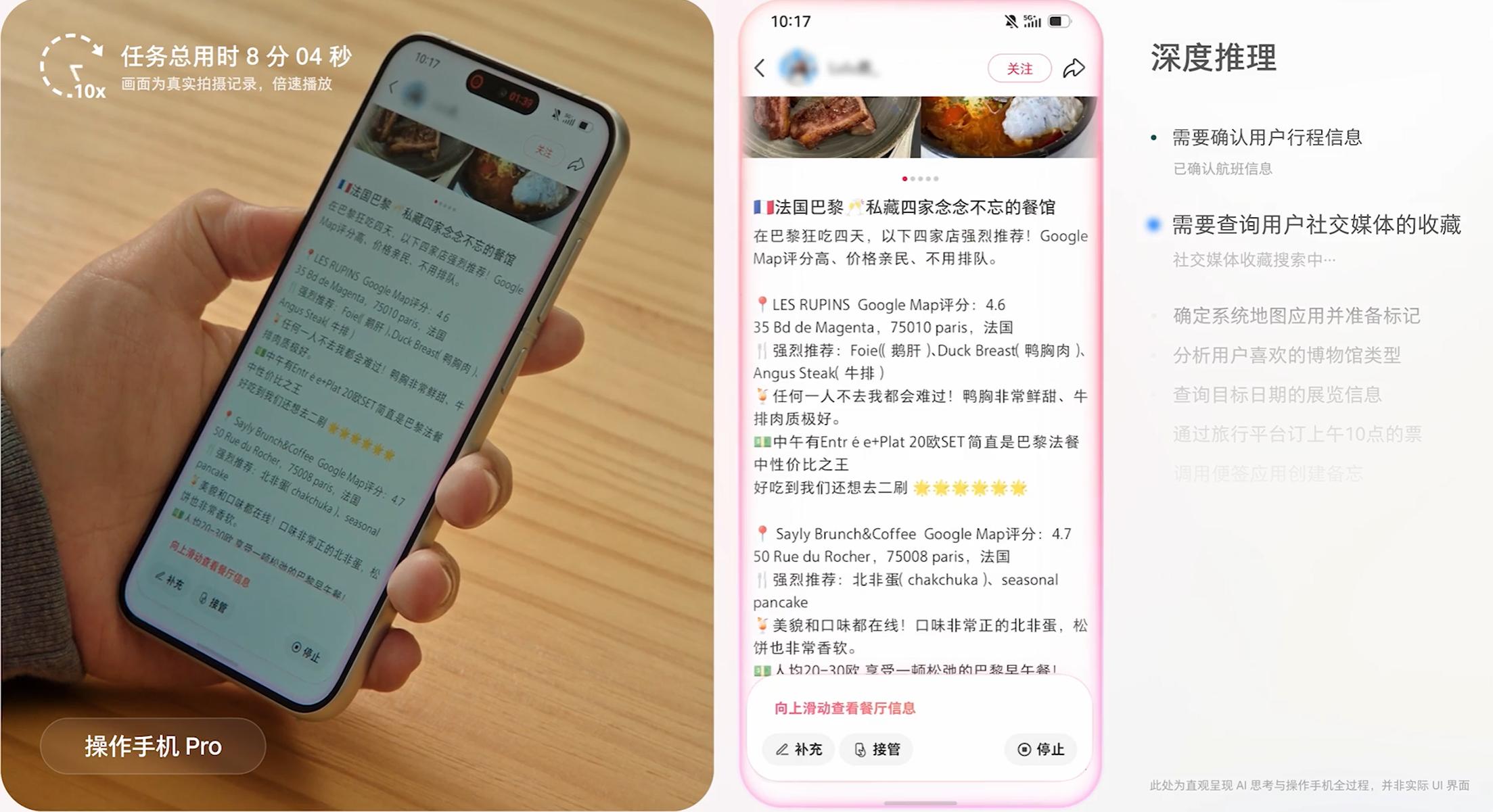
(Image source: Doubao)
If a mobile phone assistant can save me hundreds of screen clicks every day and help me automatically handle those cumbersome tasks such as booking tickets, comparing prices, and filling out forms, I'm willing to tolerate its occasional small bugs.
Most importantly, this may be a dimensionality - reduction strike for the mobile phone industry.
It may not change the pattern immediately. After all, the positions of Xiaomi, Huawei, and Apple are hard to shake. But it has opened a gap, telling us that the future mobile phone should not just be a communication tool with AI functions, but an intelligent assistant that can help you solve problems.
Maybe in 2026, when we talk about mobile phones, we won't ask "How many pixels does your phone's camera have", but "Can your phone help me handle those annoying things".
If that's the case, the world will be so wonderful.
This article is from the WeChat official account "Lei Technology", author: Lei Technology. It is published by 36Kr with authorization.