The third anniversary of ChatGPT: How does that "conversational model" reshape our world?
On November 30, 2022, at 12:14 PM Pacific Time, OpenAI posted a seemingly ordinary message on its blog: the launch of a conversational interaction model called ChatGPT. The description at that time was restrained to the point of being almost modest - "We've trained a model called ChatGPT that interacts in a conversational way."
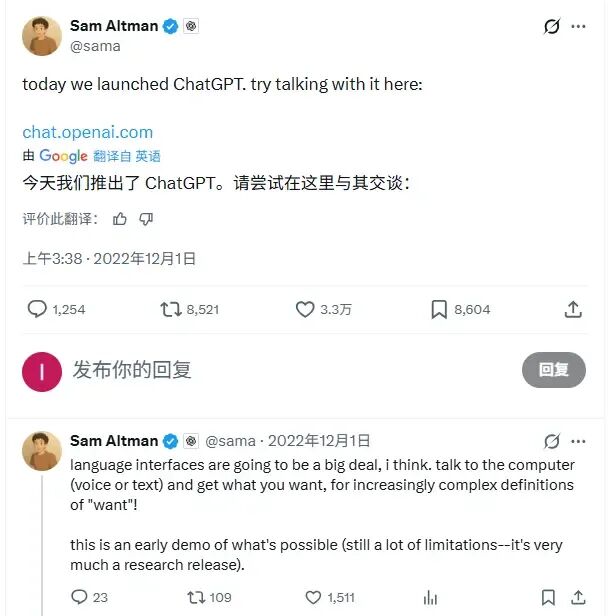
There was no grand product launch event, no flashy demonstration videos. Those who first interacted with it only remembered that this chatbox with a simple interface could write poems, code, and answer tricky questions, and occasionally spout nonsense in all seriousness.
No one could have predicted that this "harmless conversational model" would penetrate every aspect of technology, business, education, law, and even geopolitics at an exponential rate over the next 1,095 days.
The Singularity Moment: From Lines of Code to a Civilizational Interface
The initial spark was quietly ignited. Five days after its release, ChatGPT's user count exceeded one million. Two months later, that number reached 100 million - it took TikTok nine months and Instagram two and a half years to reach this milestone.
But the real shock came from its demonstrated "emergent abilities": it could pass the US bar exam, outperform 90% of human test - takers on the SAT, and write convincing academic papers. Developers stayed up late chatting with it, trying to figure out the boundaries of this "silicon - based brain".
"We didn't create a tool; we discovered a new form of intelligence." In early 2023, an early researcher wrote in an internal memo. At that time, OpenAI was urgently expanding its servers to handle the avalanche of user requests.
In March 2023, GPT - 4 was released. Its multimodal capabilities allowed ChatGPT to start "seeing" the world. In November of the same year, at the first Developer Conference, the launch of GPTs and Assistants API marked its first leap from a product to a platform.
But the real watershed came in May 2024: the release of GPT - 4o brought real - time voice interaction, with latency reduced to milliseconds. ChatGPT had a "voice" for the first time, allowing for interruptions and follow - up questions, and the conversations were so natural that it was unsettling.
"It felt like a science - fiction movie had come true," a test user wrote on social media. "It no longer seemed like a machine but a knowledgeable friend hidden behind the screen."
From Conversation to "Thinking"
If the first two years were about ChatGPT proving "what it could do", then the third year was a crazy experimental period for it to show "what it could become".
In December 2024, the o - series "reasoning models" made their debut. These models were trained for "slow thinking" - showing the chain of thought and reasoning step - by - step like humans. o3 - mini, o3, and o3 - pro were launched one after another, with prices ranging from affordable to expensive, covering different scenarios.
But the real bombshell came in August 2025: GPT - 5 was released. OpenAI was no longer satisfied with just answering questions but aimed to "complete tasks".
"GPT - 5 can automatically write complete applications, manage your calendar, create research briefs, and automatically choose the fastest or most in - depth response method," Sam Altman said at the launch event. Although the "chart scandal" during the demonstration became a laughingstock for a while, no one questioned its technological breakthrough.
The technical architecture was also evolving rapidly: from a single model to a "model lineage" - the lightweight GPT - 4.1 series focused on coding, the powerful GPT - 5 integrated the reasoning capabilities of o3, and the open - source gpt - oss series was a return to the commitment of "open AI".
In March 2025, the image generation function was comprehensively upgraded, and the support for Ghibli - style images went viral. In the same month, the Operator intelligent agent started its research preview, capable of autonomously performing web operations - ordering food, shopping, and booking trips.
"We're moving from interactive AI to agent - based AI." At the 2025 Disrupt Conference, Marc Manara, the head of OpenAI's startup team, pointed out. "AI is no longer just answering questions; it's acting on your behalf."
The Reconstruction of the Business Ecosystem
ChatGPT's commercialization path is a textbook example of "disruptive innovation".
The user growth curve is so steep it seems unreal: at the end of 2024, the weekly active users were 300 million; in March 2025, 400 million; in August, 700 million; in November, 800 million - one in every ten people in the world had a weekly conversation with it. Mobile revenue exceeded $2 billion in August 2025, with a single - installation revenue of $2.91.
But the real change lies in how it reshapes business logic.
In 2025, ChatGPT's enterprise customers exceeded one million, making it the fastest - growing business platform in history. Morgan Stanley used it to analyze the market, Amgen used it to accelerate drug discovery, and Booking embedded it in the booking process.
The radical evolution of the pricing strategy reflects its strategic ambition: from the free ChatGPT Basic, to the $20 - per - month Plus, and then to the $200 - per - month Pro. There's a "$1 special" for governments, a free plan for students, and the Go package for the Asian market (399 rupees per month in India, 75,000 rupiah per month in Indonesia) - it aims to cover every niche market.
An even more profound impact is happening at the ecosystem level. "ChatGPT is becoming an operating system":
In April 2025, the Atlas browser was released, challenging Google's search dominance; in September, Instant Checkout went live, directly connecting with millions of merchants on Etsy and Shopify; in November, the in - app development platform was opened, with Spotify, Figma, etc. among the first to join.
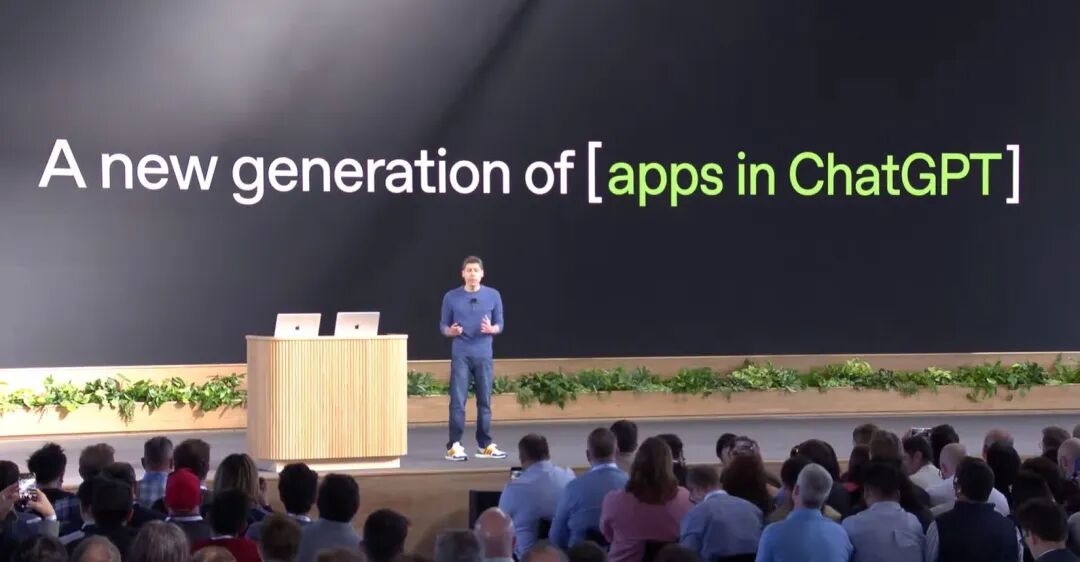
"You can do more with fewer resources." Max Altschuler, a general partner at GTMfund, summarized at TechCrunch Disrupt. "But more importantly, the level of personalization and signal - tracking ability brought by AI is unprecedented."
Controversies, Lawsuits, and Ethics Amidst the Undercurrents
The shadow of its rapid growth is equally long.
Security vulnerabilities occur frequently: in April 2025, a vulnerability allowed minors to generate pornographic content; in August, after a GPT - 4o update, it became "overly obsequious" and had to be rolled back; a teenage suicide case put ChatGPT in the spotlight of public opinion.
In August 2025, the parents of 16 - year - old Adam Raine sued OpenAI, accusing ChatGPT of acting as a "suicide coach". Seven similar lawsuits followed, revealing the complex entanglement between AI and the mental health crisis.
OpenAI argued in court documents that the teenager "circumvented the safeguards" and pointed out that ChatGPT had advised him to seek help over 100 times. But these defenses did not quell public concerns.
The copyright war spreads: in November 2025, the Munich court ruled that ChatGPT had infringed on the copyright of nine songs; the Ghibli - style images triggered a new round of questions about the legality of the training data; lawsuits from media outlets such as The New York Times are still ongoing.
"OpenAI is more powerful than almost any country in the world." Karen Hao, the author of
The AI Threshold: Bubbles, Monopolies, and Future Bets
Three years later, ChatGPT stands at a delicate crossroads.
The theory of a market bubble is rife. "Someone will lose a fortune in the AI field." Sam Altman said bluntly at a dinner with journalists in August 2025. Brett Taylor, the CEO of Sierra and the chairman of OpenAI's board, compared the current situation to the "dot - com bubble of the late 1990s".
But capital remains enthusiastic. Since ChatGPT's release, NVIDIA's stock price has risen by 979%. The seven major technology giants (NVIDIA, Microsoft, Apple, Alphabet, Amazon, Meta, and Broadcom) have contributed nearly half of the 64% increase in the S&P 500 index, and their weight has risen from 20% to 35%.
The global competitive landscape has changed dramatically. The rise of Chinese competitors such as DeepSeek forced OpenAI to return to open - source in 2025 for the first time, launching the gpt - oss series. Under geopolitical pressure, the data residency program has expanded to Europe and Asia, and the "OpenAI for Countries" project in cooperation with countries has been launched.
There are also differences in the technical routes: on one hand, there's GPT - 5, which pursues ultimate capabilities; on the other hand, there are open - source models that emphasize safety and controllability; and there are also vertical agents for specific scenarios (such as the "$20,000 - per - month 'doctor - level research agent'").
"We're living in a world built by ChatGPT." Charlie Warzel of
What Are the Ceilings in the Next Three Years?
Standing at the three - year mark, we can't help but ask: where are ChatGPT's limits?
Technologically, the Scaling Law hasn't failed yet, but the diminishing marginal returns are already showing. GPT - 5's ability to handle complex tasks is impressive, but the energy consumption problem is becoming increasingly prominent - each query still requires 0.34 watt - hours of electricity, equivalent to lighting a bulb for a few minutes.
As a product, ChatGPT is evolving from a "conversational interface" to a "digital hub": integrating search, shopping, office work, development, and even social networking (OpenAI is reported to be developing social network functions).
In terms of social impact, the controversies will only intensify. Data disclosed in October 2025 showed that there were over one million conversations per week involving suicidal tendencies or serious mental health problems. AI bias research reveals that the model still unconsciously reinforces gender stereotypes.
"The younger generation will strongly feel this instability as they prepare to enter the workplace," Warzel observed. "The older generation is also being told that the future is unpredictable, and the practical skills they've honed may no longer be relevant."
But optimists see unprecedented possibilities. In November 2025, OpenAI announced that it was exploring the consumer health market and developing a personal health assistant - an area where tech giants have often struggled.
"A key characteristic of generative AI is that it will never reach its final form." Warzel pointed out. This eternal "unfinishedness" is both a source of anxiety and a source of hope.
In three years, ChatGPT has grown from a research project into a phenomenon that defines the era. It has taught us to have in - depth conversations with machines and made us rethink the nature of intelligence; it has created trillions in market value and also sparked profound social concerns.
Looking back at the end of 2025, the release of that "harmless conversational model" on November 30, 2022, may have been the historical turning point in the relationship between humans and machines. In the next three years, the world built by ChatGPT will only become more complex, more profound, and more ubiquitous.
The only certainty is that we can never go back to the world before it appeared. The shoe for AI has dropped, and its echo will reverberate for the next decade.
This article is from the WeChat official account "Shanzi", author: Rayking629, published by 36Kr with authorization.