World Abstract Robot Awards: China and the US pursue technology, while others become a joke.
A Chinese humanoid robot made its debut, and its every move was so lifelike that it was suspected by netizens across the country of being an actor in a suit.

A Russian humanoid robot made its appearance, looking like a drunken Russian old man. It almost fell after just taking a couple of steps, and its parts scattered all over the place, becoming the butt of jokes across the internet.

01 The Russian Idol's Debut Flop
Yes, following the recycling of old bank - card chips and the 350nm lithography machine, the "Russian science and technology jokes" have been updated.
A few days ago, the first humanoid robot product, AIDdol, of the Russian technology company Idol was launched with great fanfare. Let's just call it Idol for short according to its homophone. This product claims to integrate artificial intelligence, be able to operate offline, and express emotions. To this end, it has a simulated face that can show 12 basic emotions and make nearly a hundred micro - expressions, enabling warm communication between the machine and humans and making it suitable for the service industry.

However, at the press conference, Idol demonstrated the emotion of slacking off. In front of the camera, before it could even demonstrate any of its functions, it just staggered a few steps and then suddenly fell to the ground. Its shell broke into pieces. Even the staff on the stage were startled by this sudden accident. Then several strong men rushed out, pulled a black cloth, and dragged Idol away.

This fall was too much for Russian netizens to bear, and they started making all kinds of dark jokes. They said that Idol was actually very advanced and human - like, and its falling posture was exactly the same as that of a drunkard on the Russian streets. It must have drunk too much the night before the press conference. Some also said that if there were a robot rebellion in Russia in the future, the first thing they would do would be to rush to the store to grab vodka.

After this disastrous debut, the CEO of the company came out to explain that Idol fell because of insufficient light and sensor calibration issues. He also admitted that Idol was still in the testing phase and hoped that this mistake could turn into an experience. He was quite optimistic.
However, optimism cannot bridge the real - world gap. Russia introduced policies as early as 2019, making robots a strategic priority and demanding accelerated R & D. Idol was supposed to carry the hopes of domestic robots. It was developed by a pure Russian team, and 77% of its parts were produced domestically. It was reported that the domestic production ratio of future versions would be increased to 93%. If it had succeeded, it would have solved the problem of having or not having domestic robots for Russia. Instead, it turned out to be such a fiasco.
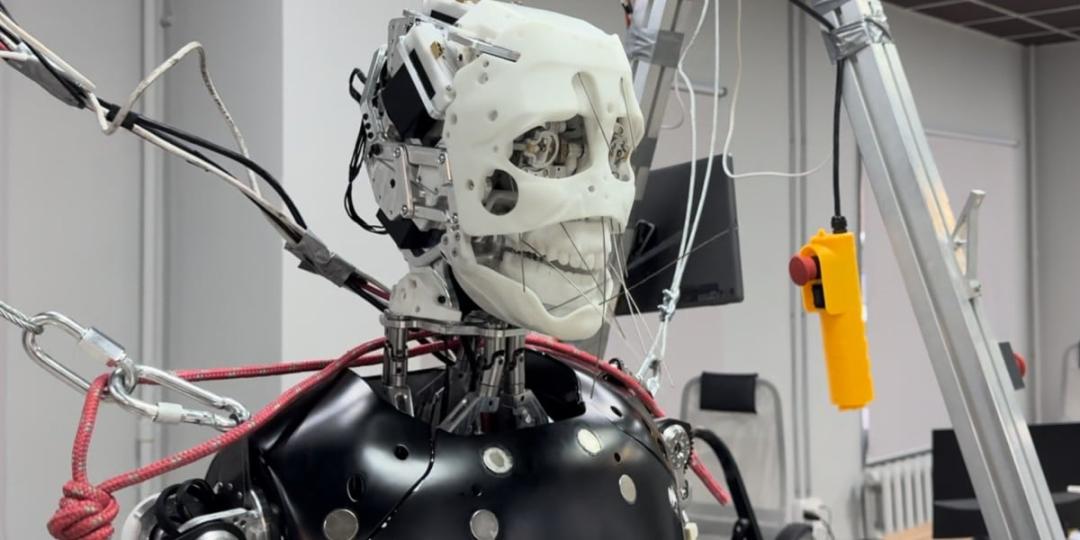
Even if nothing had gone wrong this time, in terms of performance and parameters alone, Idol was significantly behind those of China and the United States. According to Russian media reports, it can only carry items weighing less than 10 kilograms. What does that mean? The Atlas launched by Boston Dynamics in 2016 could carry 11 kilograms, and current Chinese products can carry between 20 and 40 kilograms, which is why they can be used in factories.
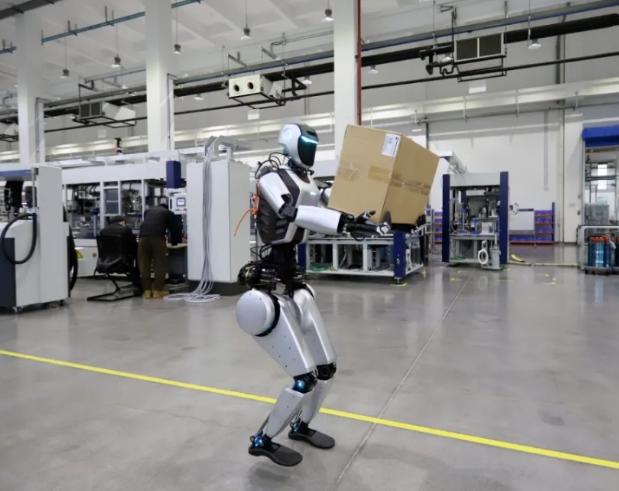
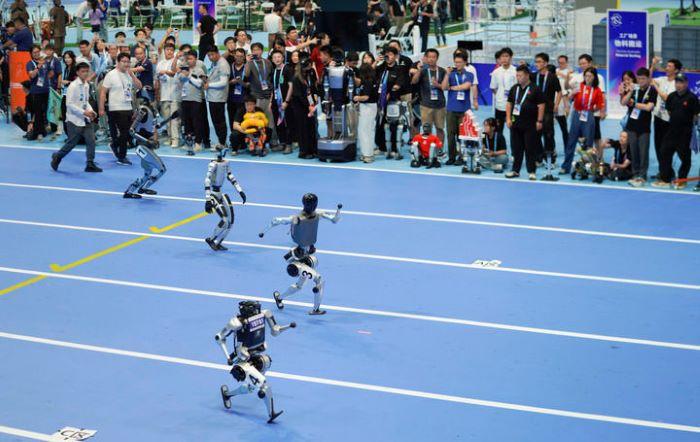
In terms of flexibility, Idol is at the bottom. Let's not even mention its falling at the debut. Its nominal walking speed is only 6 km/h, and it walks in a stuttering way. In contrast, the running speed of the Unitree H1 can reach 11.7 km/h, and it runs very smoothly. Remember, the H1 was launched two years ago.

While Chinese robots are now competing in sprints and marathons, Idol can't even walk steadily. The gap is quite large.
If Idol were to be put on the market at this level, it's hard to say whether it would serve or be served when compared to a strong Russian woman who can carry logs. You'd take Idol out to buy groceries and carry it back home when it malfunctions.
Perhaps finding Idol too embarrassing, a few days after the fiasco, Russian media collectively reported on another robot in an attempt to save face. This product named "Grin" belongs to the State - owned Sberbank and was sent to be exhibited at the "Artificial Intelligence Journey" international conference. When Putin visited the venue, Grin performed for him.

After a simple self - introduction, Grin danced wildly to a popular Russian song. Its dance was smooth, and it completed the performance perfectly, seemingly redeeming a point for Russian robots.
However, industry insiders acutely found that the robot was always performing pre - set programs and did not show any interaction ability. More importantly, Grin did not demonstrate more reliable walking ability than Idol because... it didn't even walk and just stood still while dancing. The funniest part was that when Grin started dancing, the on - site supervisor seemed very worried that it would malfunction or fall and hit Putin. After hesitating for a few seconds, he chose to prioritize safety over face and asked Putin to step back to avoid being involved in an accident.

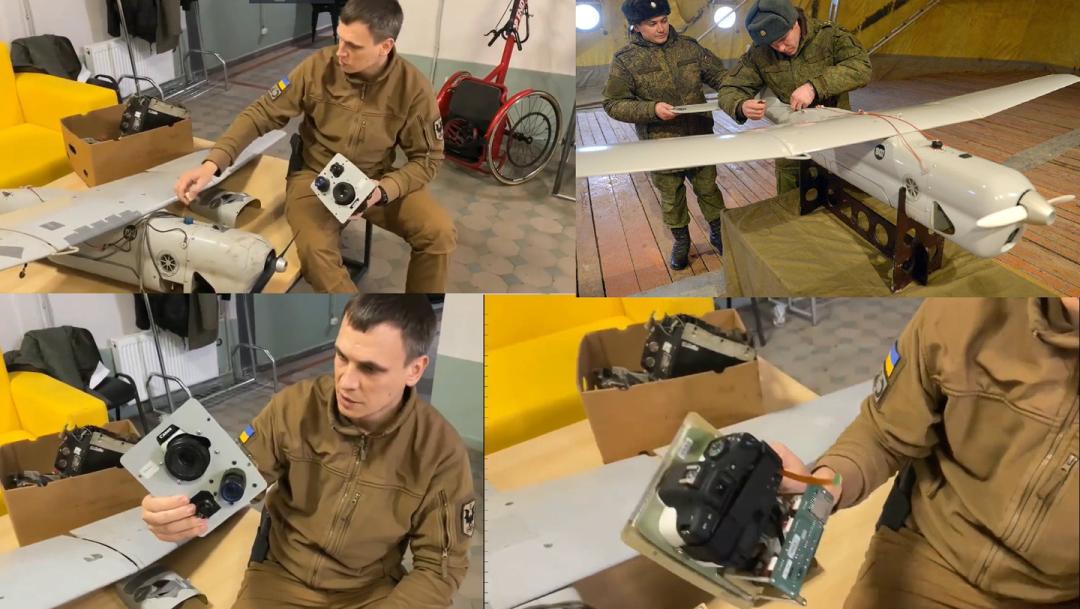
We should have expected the poor performance of Russian robots. Since the war broke out, the country has been under comprehensive sanctions and has difficulty obtaining advanced technologies and spare parts from other countries. It has to do many things on its own. Developing self - research and self - production is extremely difficult. With Russia's extremely unbalanced industry and an electronics technology level full of "vacuum - tube jokes", it can't even make good mobile phones and cameras, yet it wants to develop robots. The fiasco is in line with objective laws.
Interestingly, Russia is not the only one with abstract humanoid robots.
To be precise, except for the products of China and the United States, the rest are quite abstract.
02 The Bizarre Robot Awards
Take a look at the following picture. This thing with an extremely slow pace, like that of an 80 - year - old man, looks like a toy that costs a couple of hundred yuan in a supermarket. In fact, it is the hope of Persian revival and the pride of West Asian technology, the Iranian humanoid robot Surena IV.
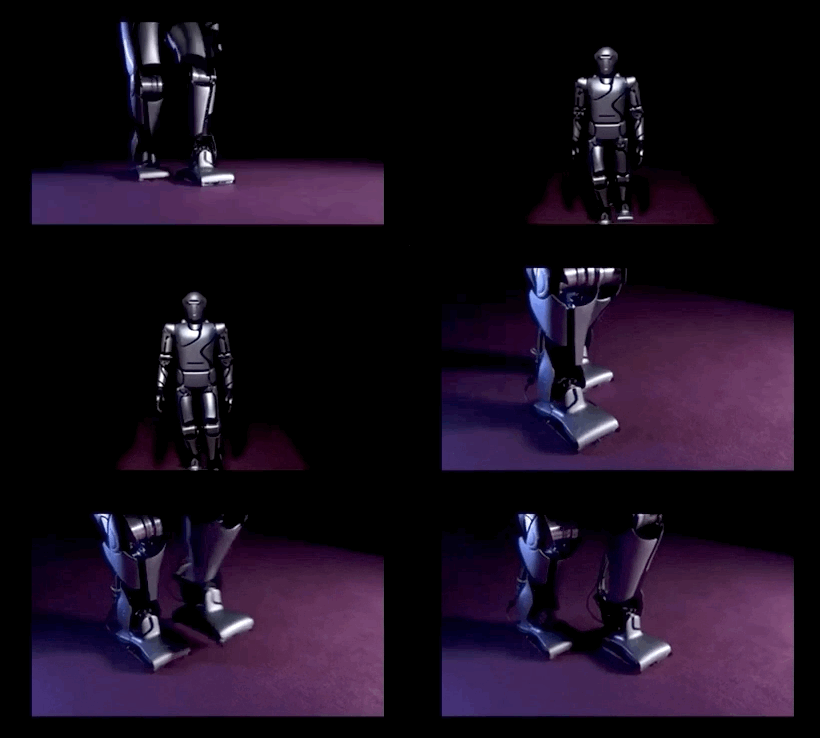
Surena IV, as the name suggests, is already the fourth - generation product. It was initiated in 2008 and jointly developed by more than a dozen departments such as the University of Tehran. It is a national - team product of Iran. However, every scene of Surena IV makes you wonder if you've set the speed to 0.5x. For example, in the official video of it grabbing a water bottle, it took 20 seconds from receiving the command, aligning, to finally grasping it. If you want to shake hands with it or ask it to carry something, it would take an eternity.

Its walking speed is only a pitiful 0.7km/h. Even the Russians would think they're excellent compared to this. And this is the result after iterations. The previous versions had a speed of only 0.3km/h... Don't even mention comparing it with the agile Unitree robots. Even the XPeng IRON walking on the catwalk is faster than it.
Then there's the mysterious Eastern country, India. In the spirit of "if China has it, I must have it too", India has nurtured a large number of robot startups. Among them, Muks Robotics, known as the "Unitree of South Asia", has launched a prototype called Spaceo.
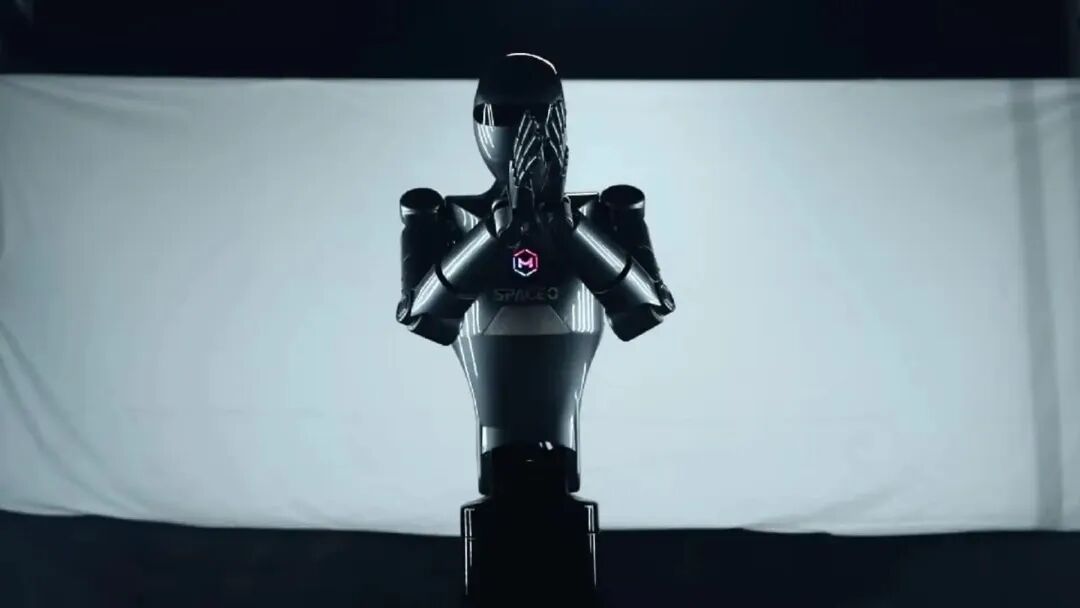
This thing looks more like an industrial robot. It has two disproportionately thick robotic arms with a wingspan of 2.4 meters. Its body can stretch, and the maximum height is 2.13 meters. The theoretical maximum load capacity is 200 kilograms, and the battery life is more than 4 hours. It seems to be born for carrying heavy loads. Except that each action in the demonstration video looks a bit jerky, there's nothing really laughable about it. It seems destined to work in a factory.
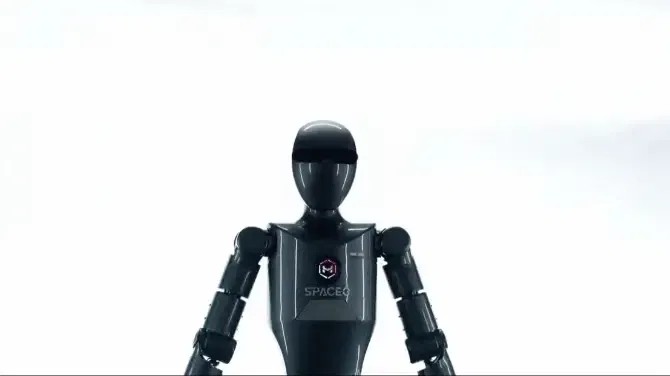
Don't worry; the real show is in the lower part. When you shift your perspective, you'll find that Spaceo uses a wheeled chassis. Yes, without legs, it won't fall, and there's no need to set up complex motion - control logic.
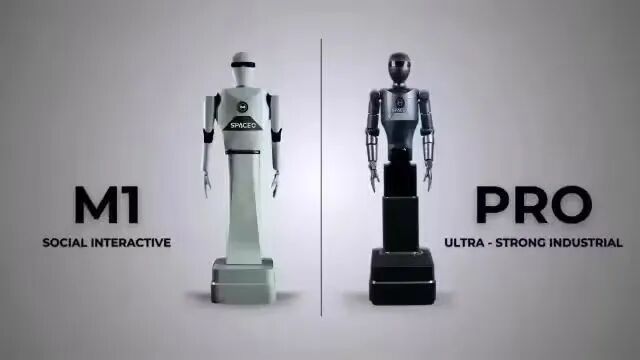
The so - called 200 - kilogram load capacity refers to the chassis. Its two seemingly strong robotic arms can only carry 2 kilograms