Top-level brand design and bottom-level industrial operation for the transformation of ancient towns in the Yangtze River Delta
The ancient towns in the Yangtze River Delta were once the shining pearls of the southern water towns. Now, however, they are facing numerous challenges in the wave of development.
Homogeneous competition has blurred the characteristics of these ancient towns, and market pressure has made their advantages less prominent. Nevertheless, the opportunity of applying for World Heritage status has brought new hope to them.
Against this backdrop, the transformation of these ancient towns is extremely urgent.
As a brand service provider for industrial parks, cities, and enterprises behind more than 400 specialized and sophisticated enterprises with distinctive features, over 300 industry-leading brands, more than 200 listed companies, over 100 city brands, and more than 50 Fortune Global 500 companies, brand experts from Jinkun believe that the key to the transformation of the ancient towns in the Yangtze River Delta lies in the clear top - level brand design and the implementable bottom - level industrial operation.
The top - level brand design needs to find a unique positioning for the ancient towns, consolidate the foundation for transformation, and showcase the charm of the ancient towns through brand presentation.
The bottom - level industrial operation should focus on the combination and linkage, use IP to create explosive points, and inject new vitality.
From daytime tours and night markets to special food streets, from cutting - edge events to traditional festivals, comprehensively create a new image for the ancient towns, enabling them to shine with new glory in inheritance and innovation and continue the legendary story of the southern water towns.
There are “three opportunities” hidden in the development crisis of the ancient towns in the Yangtze River Delta
In the Yangtze River Delta region of China, numerous ancient towns are scattered like stars. They are like bright pearls, carrying profound historical and cultural heritages and witnessing the vicissitudes of time.
These ancient towns, with the unique charm of the southern water towns, have attracted countless tourists and become an important pillar of the regional tourism economy.
However, beneath the surface of prosperity, the development of the ancient towns in the Yangtze River Delta actually conceals opportunities within the crisis.
1. Hidden concerns of homogenization behind prosperity
The prosperity of the ancient towns in the Yangtze River Delta is obvious to all. During holidays, well - known ancient towns such as Zhouzhuang, Wuzhen, and Xitang are always crowded with people. The antique streets, gurgling rivers, and simple and elegant bridges form picturesque sceneries that make tourists linger. The tourism formats in the ancient towns are also increasingly rich, including characteristic homestays, traditional handicraft stores, and various food restaurants, bringing considerable economic benefits to the local area.
But behind this prosperity, the problem of homogenization is becoming increasingly prominent. When visiting different ancient towns, one often has a sense of deja vu. In terms of architectural style, most of them feature white - washed walls, black tiles, small bridges, and flowing water, lacking unique recognition.
In terms of tourism products, the handicrafts sold in the ancient towns, such as silk products, wood carvings, and bamboo weavings, are very similar in style and variety. Even the snacks are quite similar. For example, Gusao Bing in Wuzhen, Qian Shi Gao in Xitang, and Wansan Pig Trotter in Zhouzhuang can be easily found in each ancient town.
This homogenization phenomenon makes tourists easily suffer from aesthetic fatigue after visiting multiple ancient towns, reducing the attractiveness and revisit rate of the ancient towns to tourists.
The homogenization problem arises partly because the ancient towns in the Yangtze River Delta are geographically close, with many similarities in natural environment and historical and cultural backgrounds. There is a lack of in - depth exploration of their own characteristics and differentiated positioning in the development process.
On the other hand, some ancient towns blindly follow the trend during the development process. When they see a certain tourism project or product in other ancient towns is popular, they imitate it without fully considering their own actual situation and characteristic advantages.
2. Challenges under intensified market competition
With the continuous development of the tourism market, the ancient towns in the Yangtze River Delta are facing increasingly fierce market competition.
Within the region, the competition among ancient towns for tourist resources has become more intense. They not only compete in terms of tourism products and service quality but also engage in a certain degree of vicious price competition. Some ancient towns keep lowering ticket prices or launching various preferential activities to attract more tourists, which compresses the profit margin and further affects the investment in the protection and development of tourism resources in the ancient towns.
On a national scale, the ancient towns in the Yangtze River Delta also face competition pressure from ancient towns in other regions. For example, the Ancient City of Lijiang in Yunnan and the Ancient City of Pingyao in Shanxi have each occupied a place in the tourism market with their unique ethnic cultures and regional characteristics, attracting a large number of domestic and foreign tourists. The rise of these ancient towns has diverted the tourists who might have gone to the ancient towns in the Yangtze River Delta, making the ancient towns in the Yangtze River Delta face greater challenges in market competition.
In addition, the demand in the tourism market is constantly changing. Today's tourists pay more and more attention to the personalization and diversification of tourism experiences. They are no longer satisfied with the traditional sightseeing mode but hope to participate in local cultural activities and have a deeper understanding of the local history, culture, and folk customs.
However, some ancient towns in the Yangtze River Delta still have deficiencies in tourism product innovation and service upgrading, failing to meet the increasingly diverse needs of tourists in a timely manner, which also weakens their market competitiveness to a certain extent.
3. Opportunities from the application for World Heritage status of the southern water towns
Although the ancient towns in the Yangtze River Delta are facing many challenges, the application for World Heritage status of the southern water towns has brought new development opportunities. The work of applying for World Heritage status for the southern water towns has a long history. Many ancient towns, including Zhouzhuang, Wuzhen, Xitang, Tongli, Luzhi, and Nanxun, have joined forces to work towards this goal.
The process of applying for World Heritage status is a deep exploration and re - examination of the historical and cultural value of the ancient towns. To meet the various standards of the application, the ancient towns need to strengthen the protection of historical buildings and cultural heritages, improve infrastructure construction, and enhance the quality of tourism services. These measures not only help to protect the authenticity and integrity of the ancient towns but also improve their overall quality. For example, during the application process, some ancient towns have carefully restored damaged ancient buildings, cleaned and renovated rivers, and improved the ecological environment of the ancient towns. At the same time, by improving tourist service centers and adding public rest facilities, the tourist experience has been enhanced.
Once the application for World Heritage status is successful, the southern water towns will gain higher international recognition and reputation, attracting more domestic and foreign tourists. This will bring huge tourism economic benefits to the ancient towns and also help to inherit and promote the excellent traditional culture of the southern water towns. The success of the application will also prompt the ancient towns to find a better balance between protection and development and promote the sustainable development of the ancient town tourism industry.
The development of the ancient towns in the Yangtze River Delta has both hidden concerns of homogenization behind prosperity and challenges brought by intensified market competition, as well as significant opportunities from the application for World Heritage status of the southern water towns.
Only by fully recognizing these problems and opportunities and taking effective measures to address them, such as exploring characteristics, developing in a differentiated way, innovating tourism products, and improving service quality, can the ancient towns stand out in the fierce market competition and achieve the sustainable and prosperous development of the tourism industry in the Yangtze River Delta.
Six trends in the transformation and development of ancient towns
In the Yangtze River Delta region, numerous ancient towns are scattered like pearls. They carry profound historical and cultural heritages and are also the key support for regional tourism.
However, with the evolution of the tourism market, the development of ancient towns is facing challenges such as homogeneous competition. Against this background, some ancient towns have found alternative ways and stood out in the market with their differentiated development strategies. Among them, the night tour in Xitang, the rice cake industry in Cicheng, and the Wuzhen Theatre Festival have shown unique charm and remarkable results in their respective fields.
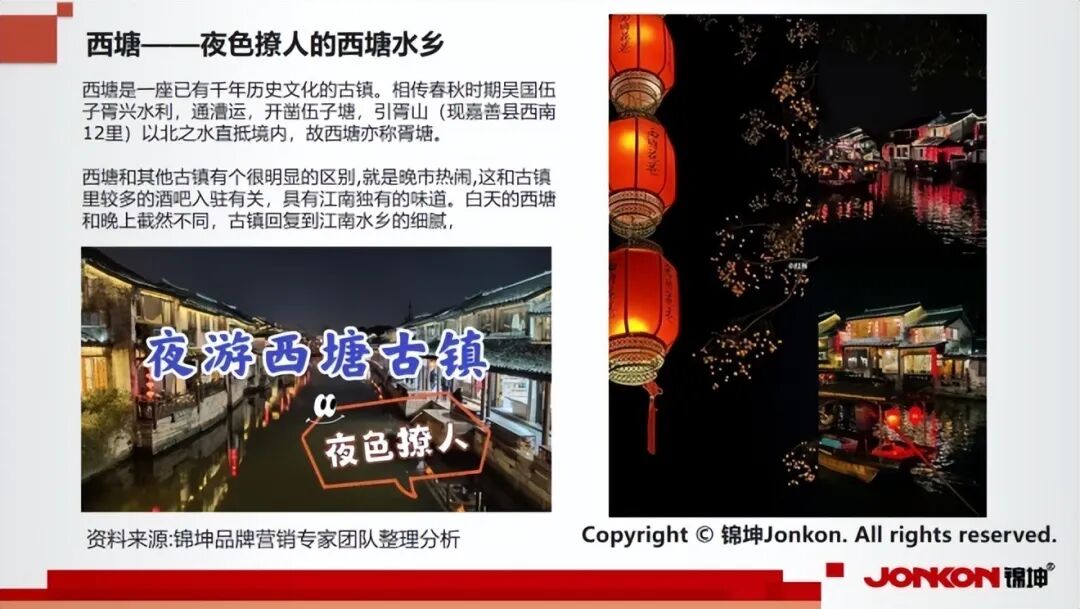
1. Daytime tours and night markets: Night tour in Xitang
Different from the dull night landscapes of most ancient towns, Xitang deeply integrates the night view of the southern water town with folk customs and modern leisure elements, creating a harmonious combination of movement and stillness. When night falls, the warm light emitted by the red lanterns on both sides of the river complements the ancient bridges and pavilions, creating a romantic and historical atmosphere.
Xitang attracts tourists' attention with its unique model of daytime tours and night markets in ancient town tourism.
In terms of special activities, traditional opera performances such as Yue Opera and Hu Opera are regularly staged every week, allowing tourists to appreciate the charm of southern operas. Performances such as singing and acrobatics by street artists inject modern artistic vitality into the ancient town.
In addition, the night tour by rowing boat is a major feature of Xitang. While rowing the boat, the boatman tells the ancient stories of Xitang, enabling tourists to have a deeper understanding of the history and culture of the ancient town while enjoying the beautiful scenery.
The series of measures in Xitang have achieved remarkable results. The rich night - tour projects have greatly extended the tourists' stay time, which not only increases their consumption in catering, accommodation, etc., but also realizes word - of - mouth communication through good tourist experiences, attracting more tourists, especially the young group.
Moreover, the night tour in Xitang has become a unique business card of the ancient town through tourists' sharing on social media, enhancing Xitang's popularity and competitiveness in the tourism market.
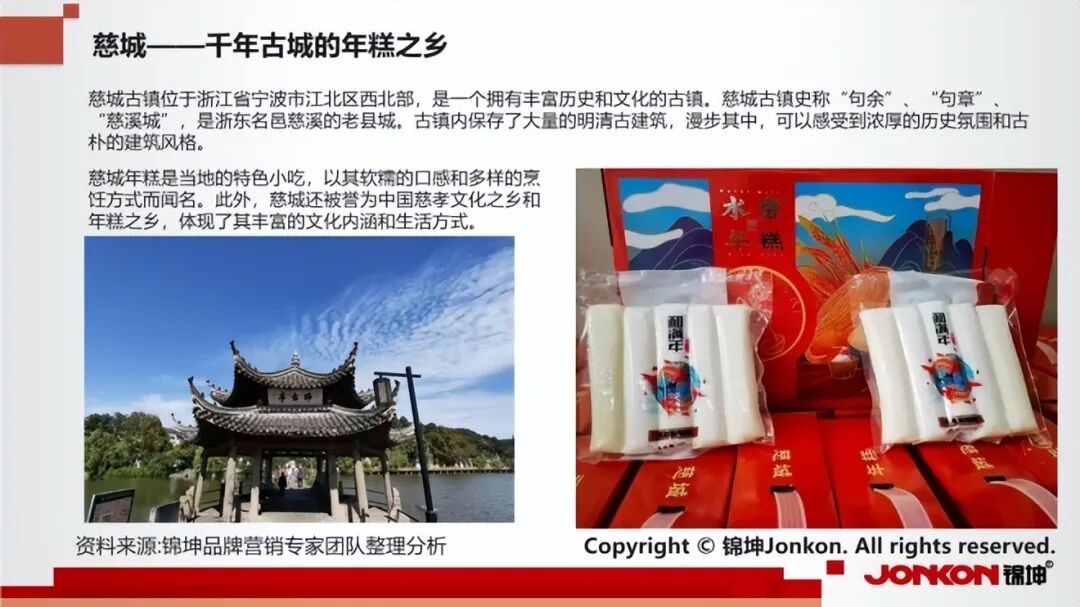
2. Snack industry: Cicheng rice cakes
Different from common snacks, Cicheng rice cakes are unique in both raw materials and production processes. They are made from the local late - season japonica rice and follow traditional procedures such as soaking, grinding, steaming, and pounding, ensuring a unique taste. In terms of food forms, in addition to traditional eating methods, various flavors such as osmanthus - sugar rice cakes and sesame rice cakes have been developed, as well as special dishes like rice cakes stewed with pork ribs and stir - fried rice cakes with seafood.
Cicheng Ancient Town focuses on the snack industry and creates a highly regional - characteristic industrial model with Cicheng rice cakes as the core.
To allow tourists to have a deeper understanding of the rice - cake culture, Cicheng Ancient Town has opened rice - cake workshops for tourists to experience the production process and held rice - cake cultural festivals. During the festivals, production competitions and food exhibitions are held, and experts are invited to tell the history of rice cakes.
This development model not only makes Cicheng rice cakes form a brand effect and become the iconic food of the ancient town but also drives the development of the entire industrial chain including planting, processing, and sales, creating a large number of employment opportunities and promoting local economic growth. At the same time, as a cultural carrier, rice cakes effectively spread the regional culture of Cicheng and enhance the cultural influence of the ancient town.
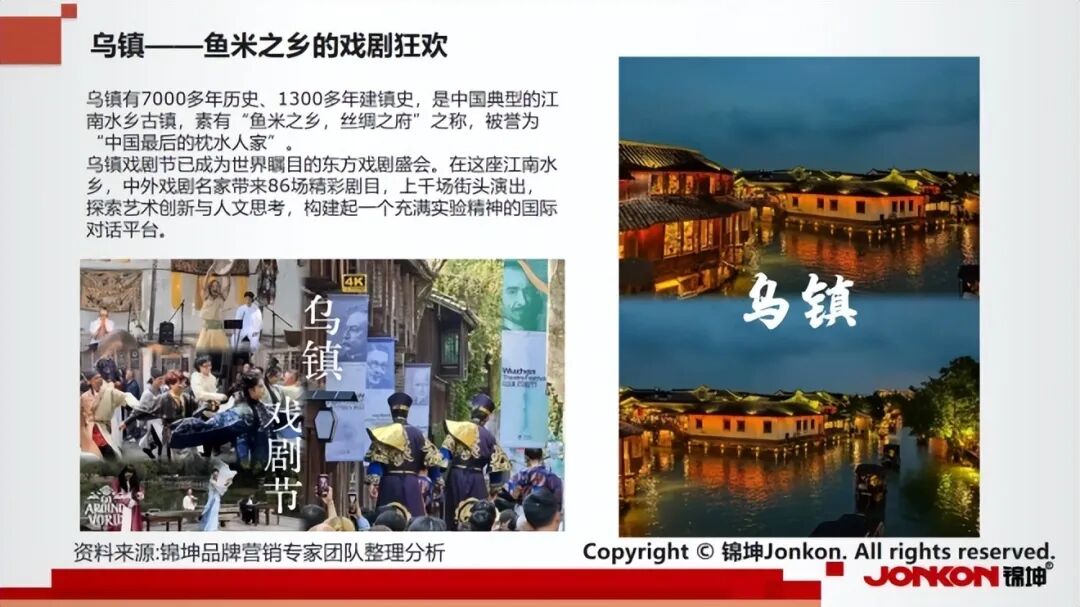
3. Special festivals: Wuzhen Theatre Festival
Different from regular ancient - town festival activities, the Wuzhen Theatre Festival combines professional theatrical art with the water - town culture to create a cultural feast with international influence.
Every year, top theater troupes and artists from all over the world gather in Wuzhen with diverse works such as dramas, operas, and avant - garde experimental plays. The performance venues are not limited to professional theaters. The streets, alleys, and riverside squares in the ancient town all become performance stages, bringing an immersive experience to the audience.
In addition, during the theatre festival, professional activities such as drama master classes, workshops, and forums are held, inviting well - known figures in the theatrical circle to share experiences and discuss development trends.
The Wuzhen Theatre Festival makes Wuzhen stand out among numerous ancient towns.
The holding of the Wuzhen Theatre Festival has greatly enhanced Wuzhen's cultural influence and international popularity. During the festival, the influx of a large number of tourists has driven the prosperity of local tourism, catering, and accommodation industries, bringing considerable economic benefits. At the same time, the professional activities of the theatre festival provide strong support for the cultivation of theatrical talents and the development of the theatrical cause.
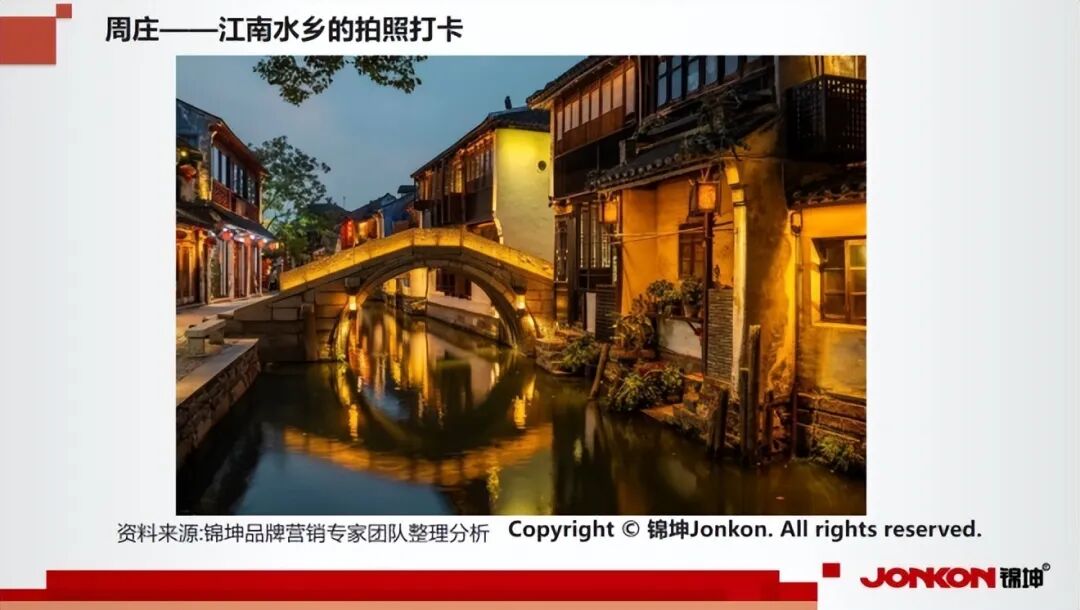
4. Photo - taking spots: Zhouzhuang
Compared with other ancient towns, Zhouzhuang retains the original flavor of the southern water - town architecture. The ancient bridges, flowing water, and houses complement each other perfectly, and every corner can form a beautiful picture.
Among them, the Twin Bridges are the iconic scenic spots in Zhouzhuang. They are well - known because of Chen Yifei's painting "Reminiscences of My Hometown". The unique "key - shaped bridge" structure attracts countless tourists to stop and take pictures.
In addition, the ancient Ming and Qing - dynasty buildings such as Shen's Residence and Zhang's Residence show exquisite wood - carving, brick - carving, and stone - carving techniques, which not only demonstrate the superb skills of southern residential buildings but also provide rich materials for photography enthusiasts.
Zhouzhuang, known as "the No. 1 Water Town in China", has become a popular destination for photo - taking due to its picturesque scenery.
To further enhance the photo - taking experience, Zhouzhuang pays attention to the landscape layout and detail creation in the scenic area. Many photo - friendly scenes are set up in the ancient town, such as the red lanterns beside the ancient bridges, the weeping willows by the river, and the decorations at the entrances of characteristic shops, all of which have become popular backgrounds for tourists to take pictures.
At the same time, Zhouzhuang has also launched some special photography activities, such as holding photography competitions, which have attracted many professional photographers and photography enthusiasts. Through their lenses, the beautiful scenery of Zhouzhuang has been spread to a wider audience.
These measures not only leave a deep impression of Zhouzhuang in tourists' photos but also attract more tourists to come for photo - taking through social - media dissemination, further enhancing Zhouzhuang's popularity and influence.
5. Food street: Youbu Morning Tea Street
Different from other ancient - town food streets, Youbu Morning Tea Street is full of strong fireworks and a sense of life. Every morning, the street is lined with various stalls offering a wide variety of traditional foods. Special breakfast items such as Rou Chen Zi and Ji Zi Guo are the signatures of Youbu Morning Tea. These foods have unique production processes and delicious tastes, and are very popular among tourists.
Youbu Ancient Town shows its unique charm with its special food street - Youbu Morning Tea Street.
Youbu Ancient Town makes full use of this special resource of the morning - tea street. It not only preserves the traditional food - making techniques but also focuses on creating a lively dining atmosphere. Tourists can sit at the small tables on the street, taste the delicious morning tea, and enjoy the daily life of the local residents in the ancient town, feeling the strong fireworks atmosphere.