Gemini has come through! Google AI is great once again. Can Baidu, Alibaba and others copy the answers?
If we only look at the past month, it's hard to imagine that this is the Google that was collectively mocked by the global tech circle in 2023 for Bard's "fiasco".
Last week (November 18th), Google released its new-generation large model, Gemini 3, which crushed larger models with its terrifying capabilities. The Nano Banana Pro based on Gemini 3 Pro further solidified Google's "throne" in AI image generation, making OpenAI even more "anxious".
Moreover, Gemini 3 has completely reversed the "Google is falling behind" theory. Google's self-developed TPU is also regarded as the biggest variable to NVIDIA's computing power hegemony. It's reported that Meta is evaluating large-scale procurement of TPU, which directly caused NVIDIA's stock price to drop by nearly 7%. Subsequently, NVIDIA officially posted on X (formerly Twitter), saying:
"We're happy about Google's success - they've made significant progress in the AI field, and we'll continue to provide products to Google (Cloud)."
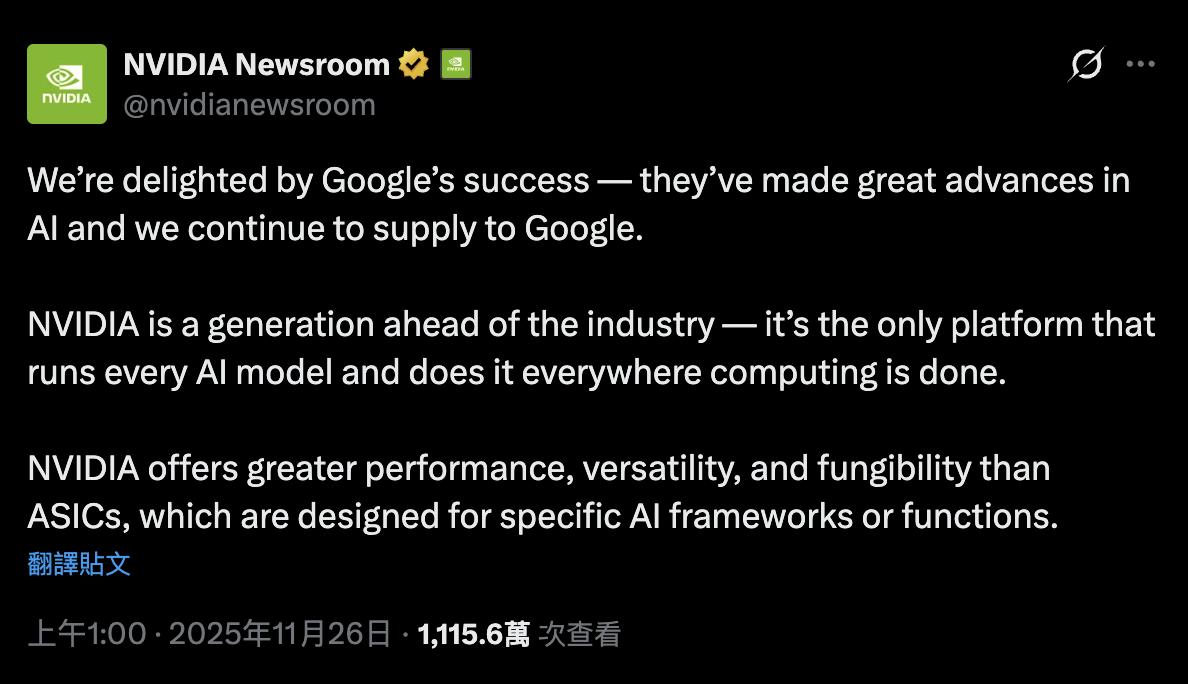
Image source: X
Meanwhile, Anthropic (Claude) also announced a new batch of million-level Google TPU orders last month. SSI, a new company founded by Ilya Sutskever, the co-founder and former chief scientist of OpenAI, also chose Google TPU as its computing power source at the beginning of this year.
Frankly speaking, all this is not only due to the "victory of the model" from Gemini 2.5 to Gemini 3, but also because of another narrative about Google - the victory of the system. The long-term strategy of Google, including Gemini, TPU, Google Cloud, Android, and Google Search, which was long considered "too slow" and "too heavy", suddenly seems to have a sense of oppression.
The change in the industry's attitude is particularly obvious.
Before this year, the popular view was that Google was old and bureaucratic. Now, the sentiment is almost the opposite: Google has a stable rhythm, a unified product line, and its technological foundation has finally shown its power. Some analysts even call Google "the awakened giant", implying that the company may be redefining the technological roadmap of the entire industry.
However, what's truly dramatic is not today's applause, but the contrast with the past. Two years ago, Google publicly apologized for Bard's "fiasco" and was regarded as one of the most typical failure cases in the era of large models. Now, the same company has become the most sought-after one.
How did Google manage to turn from being ridiculed to being sought after?
Woken up by ChatGPT, but the route has never changed
ChatGPT at the end of 2022 was like a thunderbolt. The company most thoroughly awakened by this thunderbolt was Google, which designed and developed the Transformer architecture and was at the peak of its power at that time.
Based on the Transformer architecture and the Scaling Law, the emergence of GPT-3.5 made the world realize the potential of general large models for the first time. Google's internal reaction was much more intense than outsiders guessed. The search team urgently established a "Code Red" emergency response team. DeepMind and Google Brain repeatedly discussed the route internally. The management worked overtime and held meetings for weeks in a row. There was even a sense of pressure and embarrassment in the internal emails:
"If we're any slower, we'll be eliminated by history."
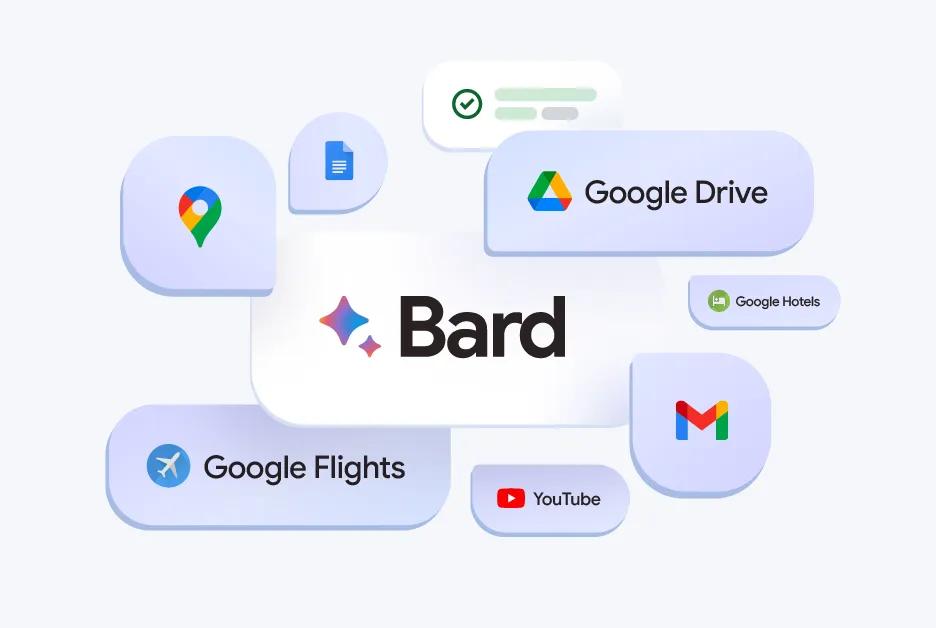
Image source: Google
Against this background, Bard was hastily launched with numerous problems. A single wrong answer even caused Google's market value to plummet by hundreds of billions of dollars. Social media and the tech circle questioned whether Google "still had what it took". At that time, what was more crucial wasn't the product itself, but the industry judgment of many people behind it:
Google had lost its rhythm, rested on its laurels, and was caught off guard by OpenAI.
This was the starting point of the "Google is falling behind" theory. However, what really reversed the situation was that Google didn't change its route during the period when it was most looked down upon. Since 2016, Google has announced "AI-first" and has continuously invested in a "full-stack AI" route that is the most comprehensive and systematic in the industry:
It not only operates data centers around the world as the world's third-largest cloud computing provider, self-develops AI chips (TPU), but also independently trains large models and even develops AI applications (such as Nano Banana and NotebookLM).
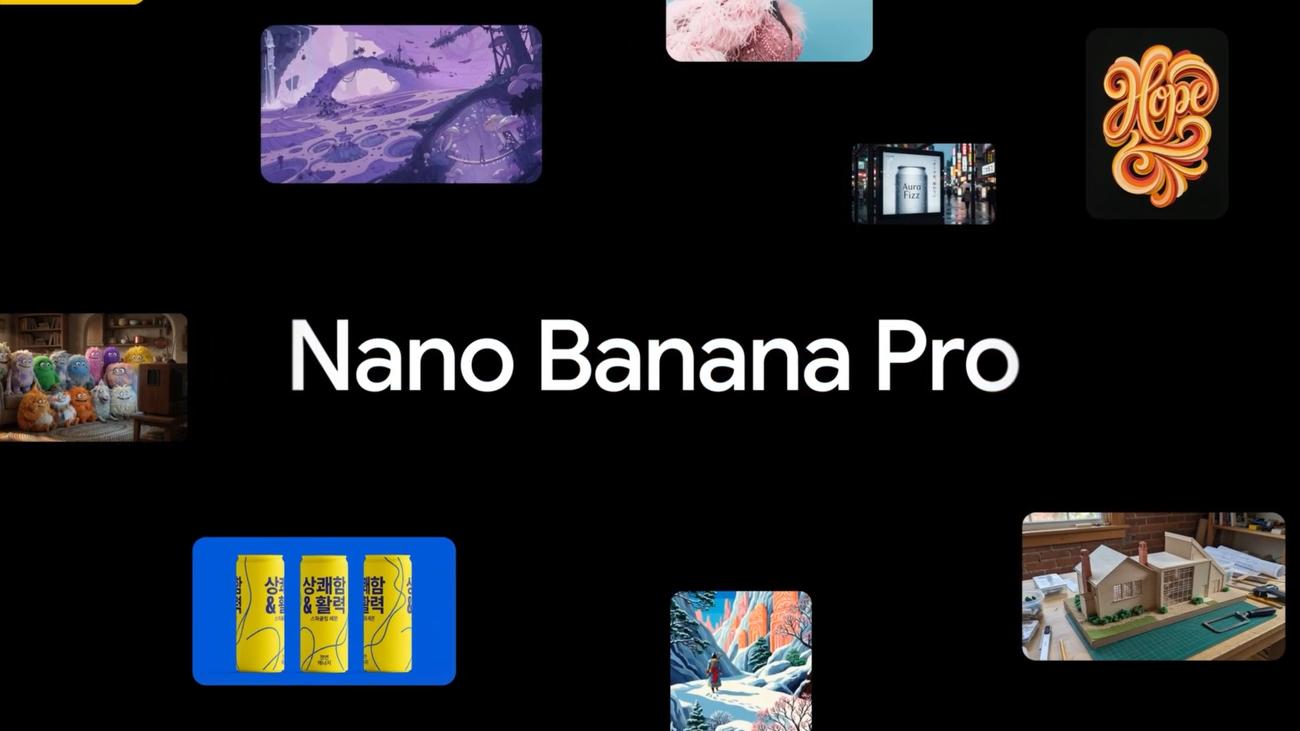
Image source: Google
Not to mention, Google also has the world's largest search scenario, and a vast amount of multi-modal training materials on Google Photos and YouTube. These long-term projects that seem "unattractive" and "non-explosive" weren't abandoned under the huge impact of ChatGPT.
Google's falling behind wasn't due to a wrong direction, but a long route. Since the route was correct, there was no need to change it; instead, more investment was needed. So after the impact of ChatGPT and the failure of Bard, Google went through the most drastic adjustment period.
"Google-style full stack": A decade of investment pays off overnight
First, what was considered "impossible" back then happened. In April 2023, Google Brain and DeepMind merged into a unified team. The two strongest research forces in the world were combined into one, and the route and rhythm were unifiedly commanded by Demis Hassabis, the founder of DeepMind who once led the development of AlphaGo.
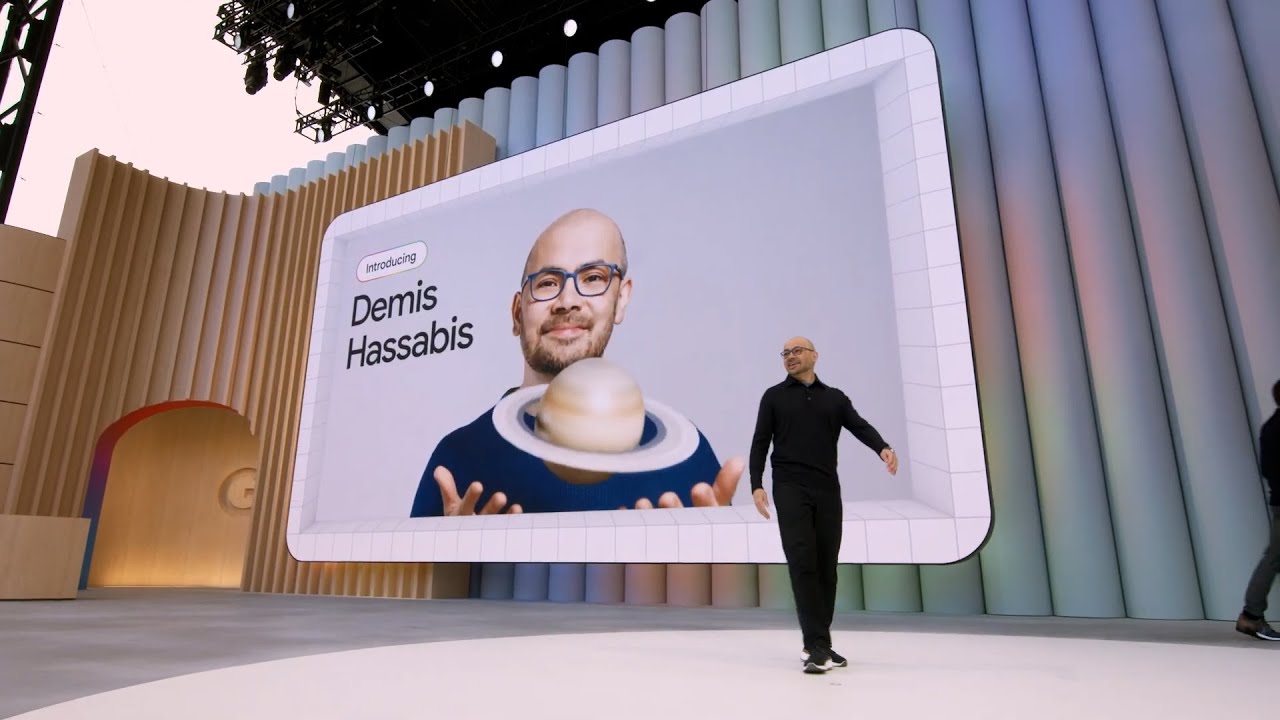
Image source: Google
Officially, it was about "unifying resources", but the industry knows that what was really cleared up behind this was the long-standing and almost irreconcilable route differences and organizational barriers within Google. The AI-first strategy had been advocated for many years, but it was only after this reorganization that it truly "channeled all efforts in one direction".
Meanwhile, the foundation that Google had been building over the past decade began to show its value. TPU was originally a chip designed for Google's own use. It first accelerated inference for search and advertising and then gradually supported the training of internal models. When the era of large models arrived, this advantage became a variable in the industry and one of the core differences between Google and other large model providers.
Especially after ChatGPT, the development rhythm of TPU v5, v6, and v7 (Ironwood) has significantly accelerated. Starting with Anthropic, Google has also started to commercially use its chips externally on a large scale. From local training and cloud deployment to the current dedicated line computing power and TPU@Premises solutions, Google has gradually increased the value of its cloud services.
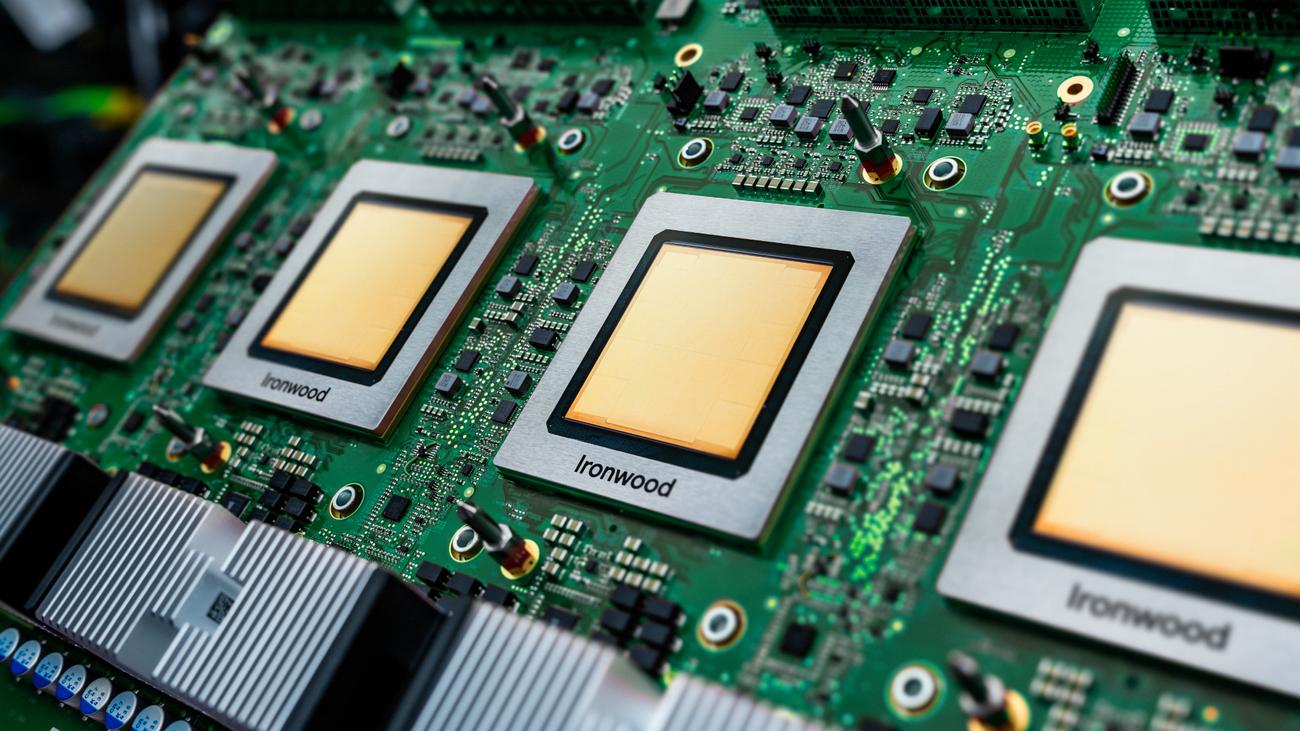
Image source: Google
From Bard to Gemini, there's essentially an "architecture unification project": From Gemini Nano running on Pixel and Chrome to Gemini Flash focusing on throughput and latency, and then to the most powerful Gemini Pro, they all share the same architecture, training methods, and evaluation system.
This unified system has enabled Gemini 2.5 to return to the first echelon in inference and multi-modal capabilities, and has allowed Gemini 3 to comprehensively evolve in vision, voice, text, and code understanding. The "slowness" that Google was once mocked for actually came from laying the foundation for this unified route, not from being directionless.
The formation of the system ultimately needs to be proven through products. After Bard's failure, Google may have realized the core value of models and the problems of blind generative AI. It chose a route with different priorities.
The most radical breakthrough is in search. It not only supports AI previews but also earlier made up its mind to officially launch the AI Mode. The Pixel phone is another major product in Google's AI transformation. Different-sized Gemini models with different design purposes on the cloud and device sides have brought qualitative changes to imaging, translation, information processing, and the voice assistant experience. Magic Cue intelligent information prompt is also one of the key directions for mobile phone AI transformation.
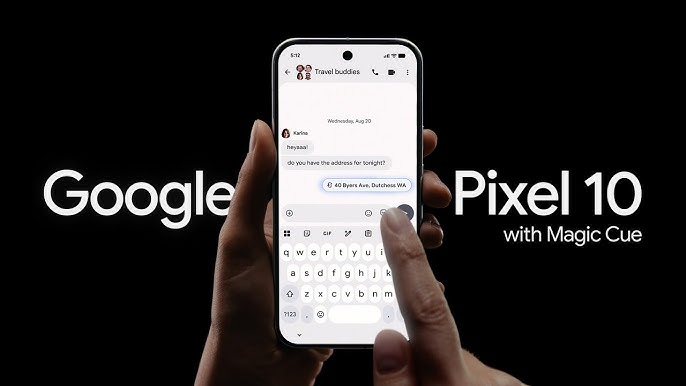
Image source: Google
Different from the AI transformation of existing products and services, NotebookLM and Nano Banana, as representatives of today's native AI applications, represent another path for Google to explore the AI era. One has reconstructed learning and knowledge management, and the other has pushed visual generation towards a lighter, faster, and more flexible direction.
It can be said that in the past decade or so, Google has integrated chips, models, cloud infrastructure, search scale, mobile ecosystem, video, and image data into a system. It may seem cumbersome and slow, but when the model capabilities, computing power foundation, and product matrix converge on the same path, it suddenly has an integrity that's hard for others to replicate.
Can Alibaba and Baidu achieve a "reversal" like Google?
If we place the large model competition in China in the same context, Doubao's lead isn't just "a little faster"; it has completely left all its pursuers behind.
According to QuestMobile data, in the third quarter of this year, the monthly active users of the Doubao App reached 159 million, surpassing DeepSeek and far leading other AI applications. Meanwhile, the share of public cloud large model calls on Volcengine is approaching half, with the daily average token calls exceeding 30 trillion.
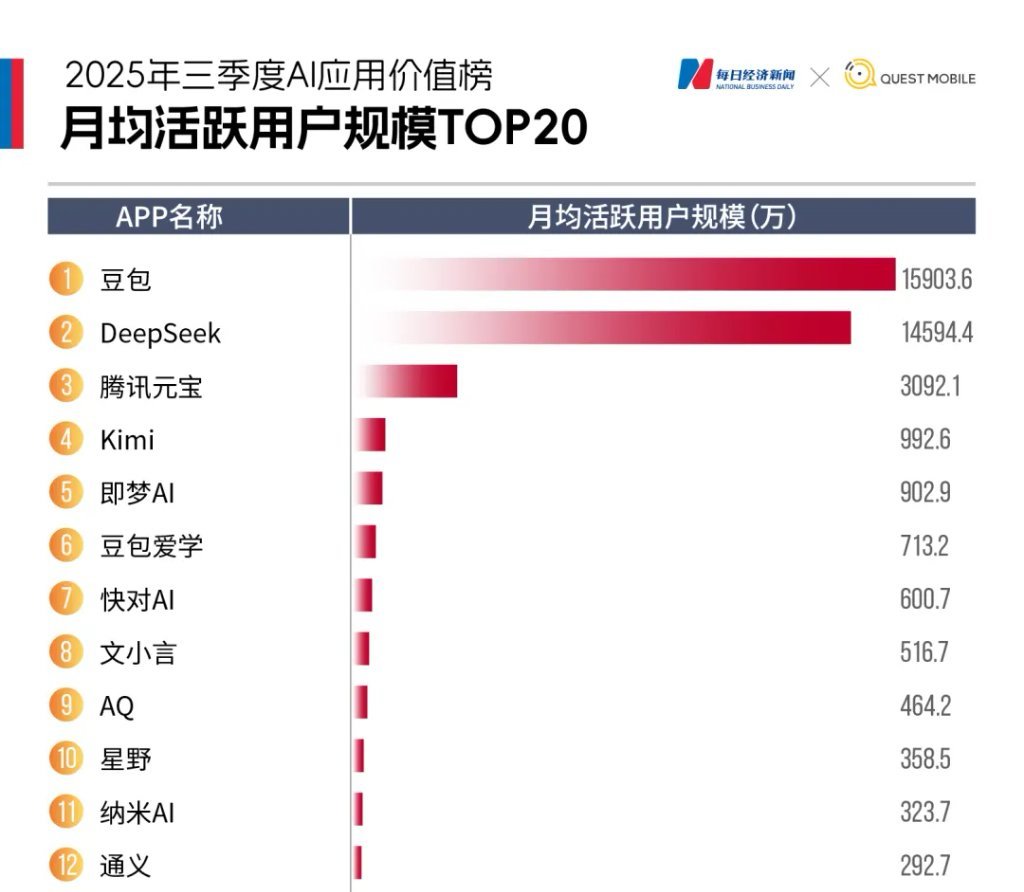
Image source: QuestMobile
This scale has created a snowball effect, forming a positive cycle of "the more it's used, the stronger it becomes" for Doubao in terms of users, application ecosystem, and model calls.
However, if we take a broader view, we'll find that Doubao's lead doesn't mean the competition is over. As we've seen with Google, what really determines the outcome is never one or two bursts, but the system. Alibaba's consecutive moves in models, computing power, open source, and application layers in the past two years are making it the most likely domestic player to achieve a "Google-style reversal".
The popularity of Qianwen App is just the most obvious sign. What really supports it is the influence of the Qwen model that Alibaba has built in the global open-source community over the past two years and the underlying advantages brought by large-scale infrastructure investment.
The route from Qwen2.5 to Qwen3-Max has pushed the model's inference, multi-modal, and code capabilities to the international first line. The cumulative downloads of Qwen on Hugging Face and GitHub are among the top in the world, and it has even ranked among the top on the global open-source list several times.
Alibaba's decision to replace Tongyi with Qianwen this year is also about compressing these underlying capabilities into a C-end entry, enabling its technological system to be scaled up and delivered to the general public for the first time.
Image source: Alibaba
In a sense, Qianwen's current state is similar to Google's previous stage - a strong model, a deep ecosystem, and a just-established entry. The real test has just begun.
Although Baidu is a bit slower in terms of product rhythm, especially in C-end products, it still has a very strong technological foundation. The native full-modal architecture of Wenxin 5.0, its trillion-parameter scale, and its deep integration with Kunlun chips give Baidu a unique position in technological integrity. Its AI cloud, city-level business, and autonomous driving system also give it an in - depth advantage in the To B / To G fields that's hard for others to replicate.
However, this systematic investment doesn't automatically translate into C-end user scale. There's still a long way to go.
By comparing these three domestic companies, we can better understand Google's inspiration. Doubao proves that "scale" is part of the ability and the most practical and direct flywheel; Alibaba proves that in - depth exploration of open source, full stack, and large ecosystems can create a reversal potential at critical moments; Baidu proves that the integrity of the foundation will never go out of date, it just needs a large enough application window to bring the system to the forefront.
The competition in China is far from over. What really determines the future may not be who runs the fastest, but who can integrate models, computing power, and applications into a complete path.
This article is from the WeChat official account "Lei Technology", author: Lei Technology. It is published by 36Kr with permission.