Bistar Coffee Completes Tens of Millions of Yuan in Series B Financing, Aims to Open 1,000 Stores Next Year | Exclusive Report by 36Kr
36Kr has learned that the chain boutique coffee franchise brand "Bistar Coffee" recently completed a Series B financing of tens of millions of yuan. This round was exclusively led by the Suzhou Agricultural Development Industrial Science and Technology Innovation Fund. This fund is a science and technology innovation investment fund established by the Suzhou Municipal Party Committee and the Municipal Government to strengthen agricultural science and technology innovation and develop new - quality consumer productivity. The funds from this round of financing will be mainly used for expanding offline stores and brand promotion.
Bistar Coffee is a company that 36Kr has been continuously tracking and reporting on. It received angel - round financing of tens of millions of yuan from Shunwei Capital in 2022, and in 2024, it obtained Series A financing of tens of millions of yuan led by Zhengxuan Capital, with Shunwei Capital following up.
In 2022, Bistar Coffee opened its first store in Suzhou. As of now, Bistar Coffee has opened 300 stores, mainly distributed in East and South China, achieving the goal set at the beginning of the year.
Since the establishment of the brand, founder Wu Binbin has clearly aimed to pursue the path of "boutique coffee shop franchising". He has rich entrepreneurial experience in chain tea - beverage franchise brands. In 2020, through research, Wu Binbin found that there were only 5 coffee chain brands with more than 100 stores nationwide, while there were more than 200 tea - beverage chain brands with over 100 stores. On the one hand, this is determined by demand, and on the other hand, it is related to the industry model and category characteristics. Milk tea is relatively affordable and relies on scale to succeed, making it more suitable for franchising. Before the wave of affordable coffee, coffee was either mainly single - store operations or mostly high - end brands with large stores.
The founder of Bistar Coffee thus judged that as coffee consumption gradually boomed, there would be significant opportunities in the coffee brand franchising track. Five years have passed. Although the coffee industry has become more competitive, the intensifying competition actually indicates an accelerating rate of chain - store development. The small - store franchising model for boutique coffee still has great development potential, which is similar to the tea - beverage industry back then.
Judging from the development of current leading chain coffee brands, there are indeed still opportunities for chain boutique coffee franchise brands. Currently, there are only Starbucks, Luckin, Cotti, Manner, Xingyun Coffee, and Kenyue Coffee among the coffee brands with more than 1000 stores nationwide. There has not yet emerged a leading brand that meets both the boutique coffee positioning and the franchising model.
The price range of Bistar Coffee's products is around 15 - 25 yuan, which is at a medium level in the chain coffee industry. Currently, in terms of price and brand positioning, it benchmarks against Manner. In terms of the supply chain, Bistar Coffee's coffee beans and milk also benchmark against Manner. It uses high - quality Arabica beans and low - temperature refrigerated milk from Meiji and Yuexianhuo.
Products are the core competitiveness of boutique coffee. The founder of Bistar Coffee once told 36Kr that Bistar Coffee divides its products into four categories. Market products are those that "everyone else has", such as Americano and Latte; Strategic products are those that "no one else has", like special - blend coffees such as Okinawa Camello Latte, White Grape Sparkling Cold Brew, and Corn Milk Latte on Bistar Coffee's menu; Flow products are popular products in the market, such as Tangerine Peel Latte and Coconut Latte; Profit products are those with the lowest cost from the supply - chain level and high gross profit. "Profit products can have price cuts. Enterprises ultimately need to return to profit, and ultimately, it all comes back to the supply chain."
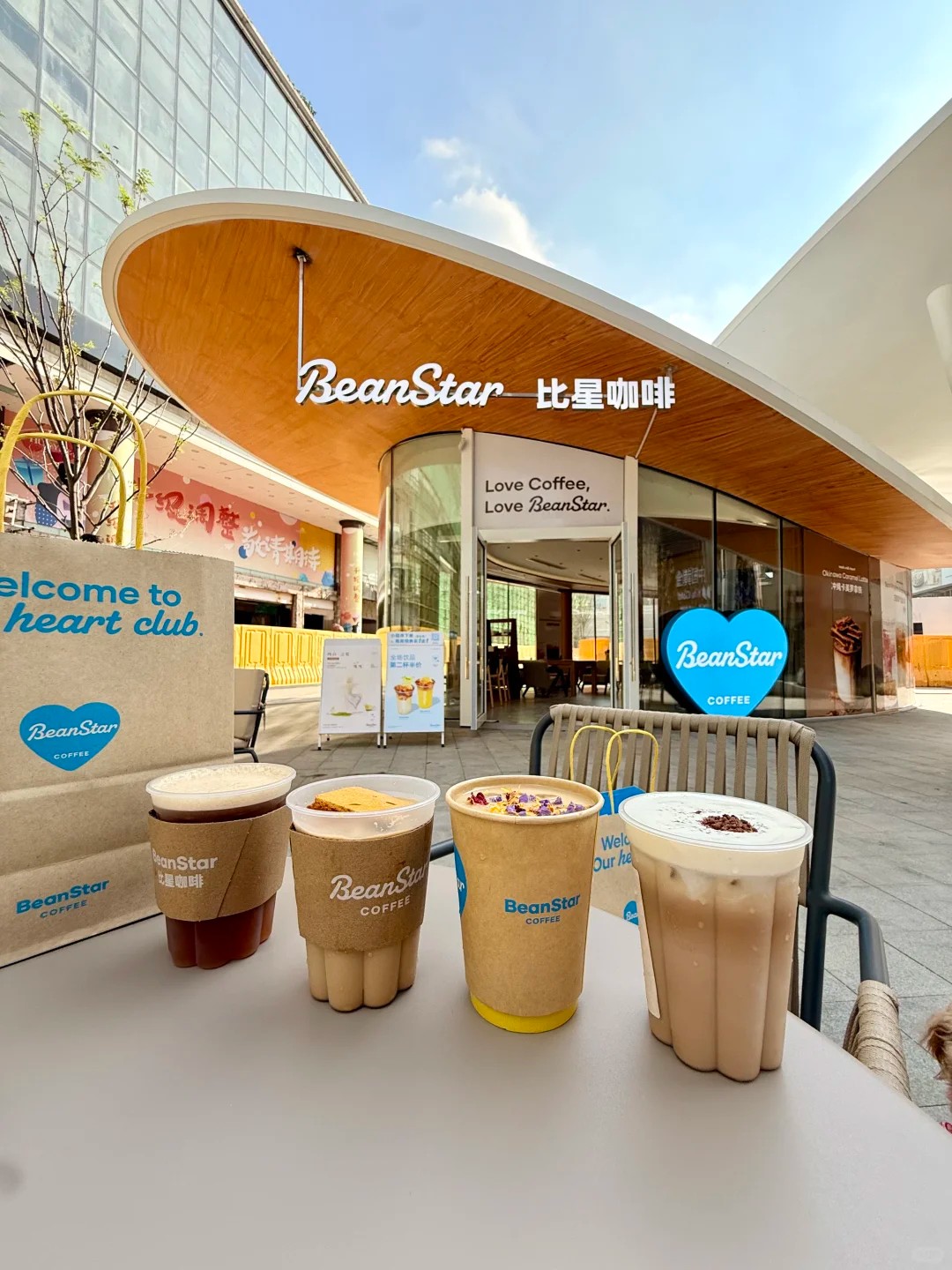
Special - blend products of Bistar Coffee. Picture from the official source.
The founder of Bistar Coffee believes that "the competition in the coffee market is mostly about price, and a market that is not competitive is not a good market." In his view, although price wars such as the takeaway war may attract consumers with low prices in the short term, it is still good products that ultimately retain users. Since the mainstream consumer group is women aged 25 - 35, Bistar Coffee has been working hard on special blends and coffee flavors to meet their tastes.
Currently, Bistar Coffee's store types are still the selected - store type and the light - enjoyment store type, with an area ranging from 30 - 60 square meters, corresponding to investment amounts of 400,000 and 200,000 yuan respectively. In its cost structure, rent and labor are still the largest expenses, accounting for more than 20%. The team is still trying to reduce costs and increase efficiency to save this cost.
In terms of channel selection, Bistar Coffee currently focuses more on office buildings in first - and second - tier cities, universities, street - side stores in third - to fifth - tier cities, and transportation hubs. The founder believes that universities and office buildings are relatively stable models. Universities can also be regarded as office buildings, and university students are like employees in the school. There are more than 6,000 universities in China, and capturing 1,000 of them would be a huge market. Bistar Coffee is considering market penetration and will open larger - scale stores in such markets in the future.
With its current relatively light cost structure and model, the gross profit of a single Bistar Coffee store is around 70%, and more than 80% of the stores are profitable. In terms of the number of cups sold, well - performing stores can sell about 300 cups per day, mainly in Shanghai, while average - performing stores sell about 200 cups per day. For franchisees, Bistar Coffee will negotiate the share according to industry standards, generally charging a 2% authorization fee based on the monthly natural turnover, and providing product and operation standards to ensure the franchisees' profits.
Bistar Coffee said that its business model has been proven successful at this stage, and its goal for next year is to accelerate expansion and open 1000 stores. According to the experience of successful brands in the industry, Luckin, Cotti, and Xingyun Coffee have all rapidly expanded their scale through the franchising model.
To open more stores, since 2024, Bistar Coffee has also joined the trend of catering brands going global, opening stores in countries such as Italy, Japan, and Indonesia. Currently, its overseas market is mainly in Indonesia, which is self - operated by the brand. A partner is currently building a team and supply chain in Indonesia, and the founder often flies to Jakarta to discuss strategies. Bistar Coffee has become somewhat well - known in Indonesia, with several social - media videos getting millions of views, and the highest view count reaching 2 million. In countries like Italy and Japan, the brand mainly focuses on brand promotion and will cooperate with local proxy - operation companies.
The brand values the Indonesian market. On the one hand, there is a strong demand for coffee here, and on the other hand, it is more suitable for the brand to refine its products and operation models. Bistar Coffee revealed that different from the short - term contracts in China, store - opening contracts in Indonesia are generally for 5 - 6 years, which is beneficial for the brand to continuously adjust its strategies and products, deeply cultivate the market, and pursue a long - term approach.
The person - in - charge of the investment - side Suzhou Agricultural Development Industrial Fund said: "We are optimistic about the broad prospects of the Chinese coffee market and value the outstanding capabilities and experience demonstrated by the Bistar Coffee team in chain operation and refined management. Bistar Coffee has precisely targeted the market gap of 'boutique coffee franchising' and verified the replicability of its business model. We hope to inject industrial capital and provide assistance in terms of funds, upstream resources, and supply - chain integration to jointly build a stable and high - quality supply - chain system and create a moat for the brand's future large - scale expansion."