Breaking the Ranging Limit: Gatrland Releases Multi-Millisecond (MMS) UWB Technology
In September 2025, Galtronics officially released the white paper "Multi-Millisecond UWB Joint Ranging under the IEEE 802.15.4ab Standard", which interprets the breakthrough technology - Multi-Millisecond (MMS) UWB - that can significantly improve the ranging performance of Ultra-Wideband (UWB). The white paper delves into the principle, advantages, and application prospects of the Multi-Millisecond UWB ranging mechanism in scenarios such as automotive digital keys and indoor positioning under the framework of the new-generation IEEE 802.15.4ab standard.
Recently, Li Wenzheng, the author of the white paper, was interviewed by the media, further sharing insights into the core viewpoints of the white paper and discussing the challenges and opportunities in the industrial implementation of UWB technology. Li Wenzheng graduated with a master's degree in wireless communication engineering and has long been engaged in the research and development of advanced wireless communication systems, covering technologies such as LTE, 5G, UWB, and satellite communication. Currently, he works at Galtronics, mainly responsible for UWB standardization, UWB system architecture design, and the planning of automotive and Internet of Things chip products.
Pain Points of In-Vehicle UWB: 10-Meter Limit and "Disconnection" in Basements
Due to its high precision and security, UWB technology has become the preferred solution for digital car keys in high-end intelligent vehicles. According to market data from Techno System Research, the global shipment of UWB devices is expected to reach 489.7 million units in 2025 and exceed 1 billion units by 2029. The automotive sector is one of the fastest-growing vertical markets, and it is estimated that by 2035, nearly half of new vehicles will be equipped with UWB technology.
However, under the current IEEE 802.15.4z standard, there are still obvious shortcomings in the practical application of UWB digital car keys. In typical digital car key application scenarios, the reliable ranging distance is usually only about 10 meters, which is difficult to meet the need for earlier detection of the user's approach. When the smart key is placed in a pocket or backpack, or the vehicle is in an area with severe multipath interference such as an underground garage, the ranging signal is easily blocked and interfered with, resulting in a decrease in stability and affecting the user experience. "These pain points limit the expansion of UWB in scenarios such as intelligent parking and automatic car finding," Li Wenzheng, a UWB technology expert at Galtronics, admitted in the interview.
How Does MMS UWB Solve the Problems?
Looking back at the history of UWB, its development context is clearly visible: In 2020, the IEEE 802.15.4z standard was released, applying UWB technology to secure ranging; in 2021, BMW became one of the first car manufacturers to equip UWB digital keys; in 2023, China's Ministry of Industry and Information Technology released a draft for soliciting opinions on UWB usage, promoting the standardization of the technology. "After identifying the core scenario of precise ranging, breaking through the performance boundary has become the next key step," said Li Wenzheng, a product marketing engineer at Galtronics.
The core of MMS UWB technology lies in converting a single instantaneous ranging data packet exchange into a continuous signal transmission and reception process lasting for multiple milliseconds. This method is different from the traditional single handshake, allowing both communication parties to accumulate signal energy and perform joint signal processing within a longer time window.
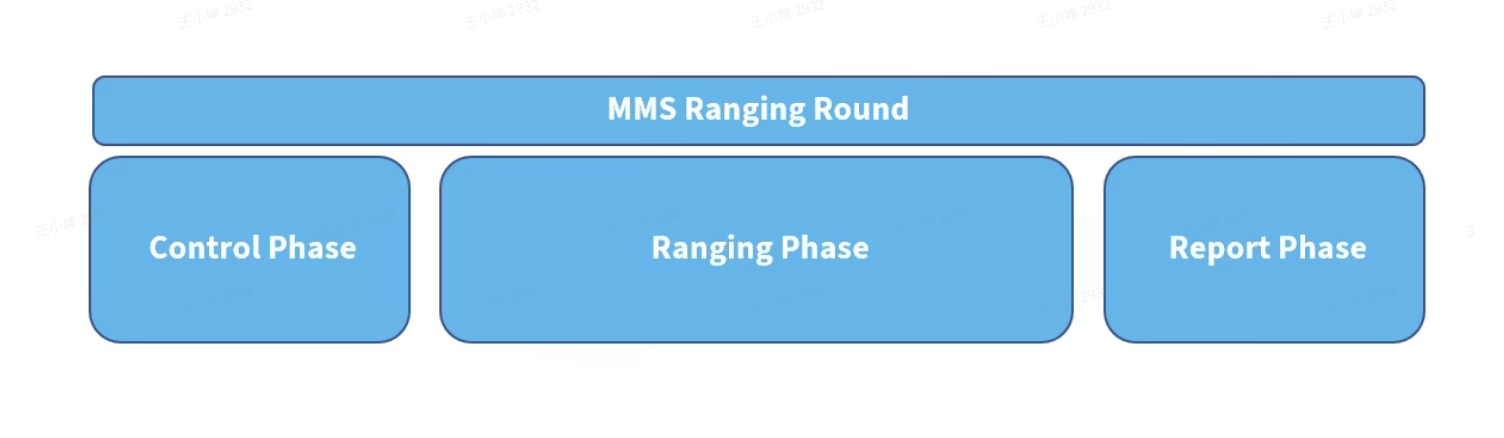
Specifically, MMS UWB decomposes the ranging data packet into multiple segments (such as RSF and RIF) and transmits them in continuous one-millisecond time slots. The receiving end enhances the signal detection ability by accumulating the channel impulse responses (CIR) of these segments. This approach mainly brings performance improvements at two levels:

Schematic Diagram
1. Significantly improve the link budget: Under the premise of complying with the regulatory transmission power limit, accumulating the energy of multiple segments is equivalent to increasing the received signal strength, which can bring a link budget gain of 10 - 20 dB, thereby greatly extending the effective ranging distance.
2. Enhance the multipath resolution ability: Even if some segments are damaged due to reflection or occlusion, by combining and processing the channel impulse responses (CIR) of all segments, the system can more accurately identify the real direct path signal, improving the ranging robustness in complex environments.
From the perspective of standardization evolution, MMS UWB technology is one of the key enhancements of the IEEE 802.15.4ab standard to the IEEE 802.15.4z standard in the evolution direction of UWB ranging ability. Its purpose is to break through the performance limit of traditional UWB ranging without violating regulations.
In - Depth Comparison of Technical Paths: Why BLE - Assisted MMS Becomes the Optimal Solution
Galtronics' BLE - assisted MMS solution has been preliminarily verified based on its self - developed Dubhe UWB chip. In the test, it achieved reliable ranging over 400 meters, demonstrating great application potential. This product has innovated in the MMS system - level architecture, extending from single - signal ranging to multi - signal joint ranging. At the same time, it has achieved a leap - forward breakthrough in ranging performance. Relying on NB or BLE - assisted MMS, it can have a maximum performance gain of 20 dB.
The white paper released by Galtronics details the analysis of three MMS UWB operation modes, providing different commercialization paths for the industrial chain:
1. Narrowband - Assisted MMS UWB (NBA MMS UWB)
• Description: An independent narrowband (O - QPSK) channel is used for session control and reporting, and the UWB channel is dedicated to MMS ranging.
• Advantages: It can achieve the full MMS performance gain, and there is an advantage in clock synchronization between the narrowband and UWB.
• Challenges: It requires additional narrowband radio frequency hardware and may face co - existence regulatory issues in the 5.8/6.2 GHz frequency band.
2. UWB - Driven MMS UWB
• Description: The control, ranging, and reporting phases are all completed through the UWB channel.
• Advantages: The system design is simple, and there is no need to introduce additional hardware costs.
• Challenges: The link budget in the control and reporting phases is limited, which affects the overall gain of MMS UWB.
3. Out - of - Band MMS UWB (Focusing on BLE - Assisted MMS)
• Description: The control and reporting phases are completed through a Bluetooth Low Energy (BLE) connection, and the UWB channel is dedicated to MMS ranging.
• Advantages: It is the most potential practical solution. It can achieve the same full - link budget gain as NBA MMS and fully utilizes the popular BLE ecosystem in smartphones and vehicles without the need for additional hardware costs or facing new spectrum policies.
Schematic Diagram
Li Wenzheng said, "Among the three MMS modes defined by the 4ab standard (UWB - self - driven, NBA MMS, BLE MMS), BLE MMS has the most obvious advantages in implementation. Therefore, Galtronics currently promotes the BLE - assisted MMS solution."
The white paper also prospectively explores the complementary relationship between MMS UWB and the Channel Sounding (CS) technology introduced in Bluetooth 6.0. They are not in competition but form a collaborative "dual - layer ranging" system: BLE CS is responsible for device discovery, distance prediction (with an accuracy of up to tens of centimeters), and UWB time synchronization assistance, enabling low - power pre - wake - up of vehicles; MMS UWB, based on the pre - wake - up from the distance prediction result of BLE CS, can provide long - distance, high - precision, and high - security fine - ranging, and finally complete the decision for secure unlocking. This combination is expected to strike a balance among energy efficiency, response speed, and security.
Application Prospects and Galtronics' Future Practices
The global shipment of UWB devices is expected to exceed 1 billion units by 2029. Among them, the automotive sector is one of the fastest - growing vertical markets. UWB digital car keys are rapidly penetrating from high - end models to the mainstream market.

*Source: 2025 UWB & Bluetooth Direction Finding Market Analysis, Gabriella Szucs from Techno Systems Research
Galtronics' BLE - assisted MMS solution has been preliminarily verified based on its self - developed Dubhe UWB chip. In the test, it achieved reliable ranging over 400 meters, demonstrating great application potential in the fields of intelligent vehicles and the Internet of Things.
Through the innovation of MMS UWB technology, especially the focus on the BLE - assisted solution, Galtronics not only demonstrates its technological competitiveness in the formulation of UWB cutting - edge standards but also provides a clear and feasible technology evolution roadmap for the industry. It is expected to promote the upgrade of the digital car key experience and expand the application in more scenarios such as intelligent parking and vehicle - to - everything (V2X) communication.