Behind the 30% surge in Figma's stock price: The CEO reveals for the first time the "non-negotiated cooperation" with OpenAI
A technological conspiracy among giants.

On October 6th, OpenAI announced an important update at its annual developer conference, Dev Day. The design software Figma will be directly integrated into ChatGPT, allowing users to generate charts, edit images, and collaborate on prototypes during chats. This move has attracted wide attention in the tech and design circles, and Figma's stock price has risen accordingly. As of October 9th, its stock price has increased by over 30%.
As the co-founder and CEO of Figma, Dylan Field shared the story behind this collaboration during an interview with Bloomberg, explained the significance of the partnership between Figma and OpenAI, and how this transformation will affect designers and ordinary users.
Meanwhile, OpenAI also announced the launch of a brand - new application architecture - the "application function" within ChatGPT, enabling users to interact seamlessly with multiple applications during conversations. In addition to Figma, well - known applications such as Booking, Canva, Coursera, Expedia, Spotify, and Zillow have become the first batch of partners. These applications will appear in ChatGPT's conversations and be automatically pushed according to users' needs, improving work and learning efficiency.
The following is the transcript of Dylan Field's interview with Bloomberg, compiled and translated by the Future Human Laboratory -
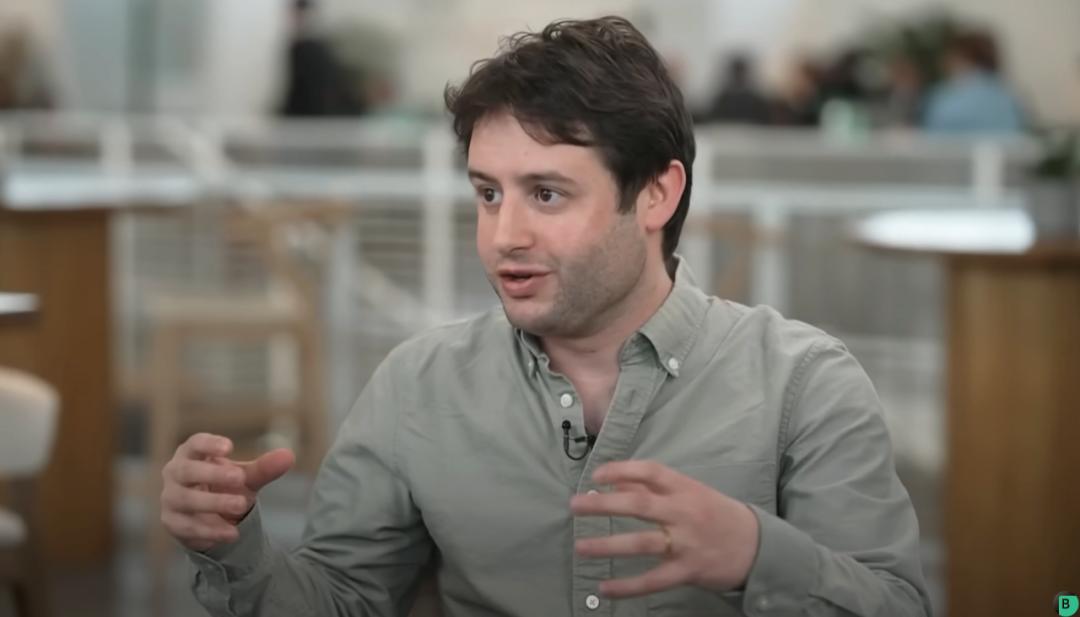
●Dylan Field
First of all, could you briefly introduce what Figma is currently working on? Dylan Field: Figma is a complete platform from "idea to application", providing users with a seamless experience from creativity to implementation. Our FigJam is mainly used for creative thinking, brainstorming, team collaboration, and chart drawing. The chart function is a part we've been paying close attention to recently because it's almost the fundamental part of all team planning, decision - making, and thinking. Recently, you announced a partnership with OpenAI to integrate FigJam into ChatGPT. Why did you do this? Dylan Field: When I was using ChatGPT, I noticed a problem: it can actually understand charts very well, but it's not good at "drawing" them. Sometimes it generates Mermaid code (a tool for generating charts and flowcharts through simple text syntax) or some abstract content, but there's no place to directly visualize these codes. So when we talked to OpenAI about the collaboration, we were really excited - we hope users can directly import the Mermaid charts generated by ChatGPT into FigJam and edit and display them there. Then why not do all the operations directly in FigJam? Dylan Field: We actually don't think it's an "either - or" question. Sometimes you know exactly what you want to draw, so you just start in FigJam. But sometimes you first establish context and repeatedly prompt to generate charts in ChatGPT, and then import them into the Figma platform for saving, sharing, and fine - tuning. Combining the two can make the creation process smoother.
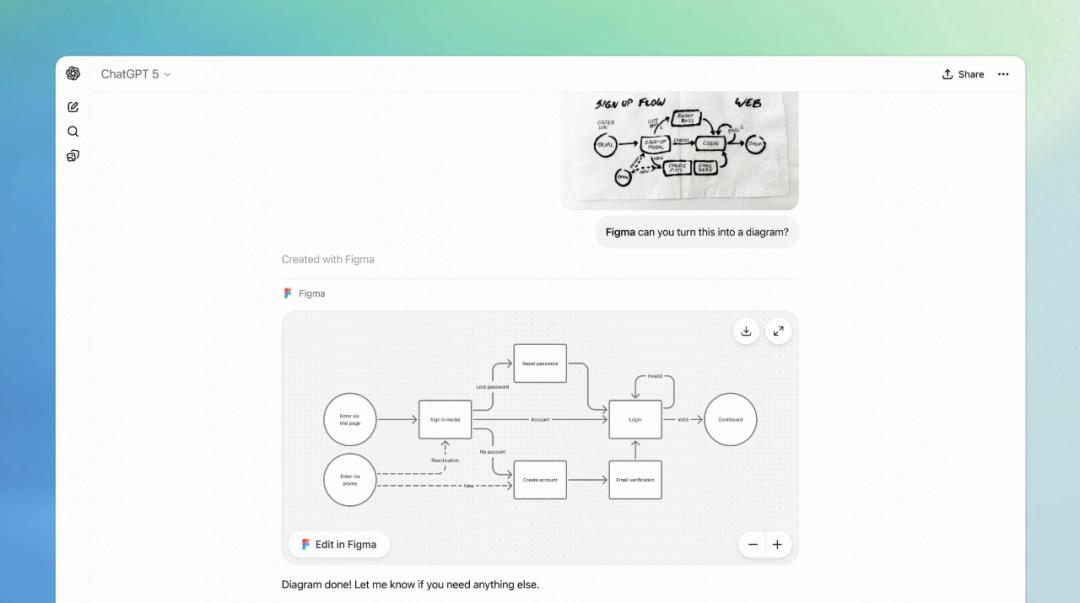
●A demonstration of using Figma on the OpenAI official website
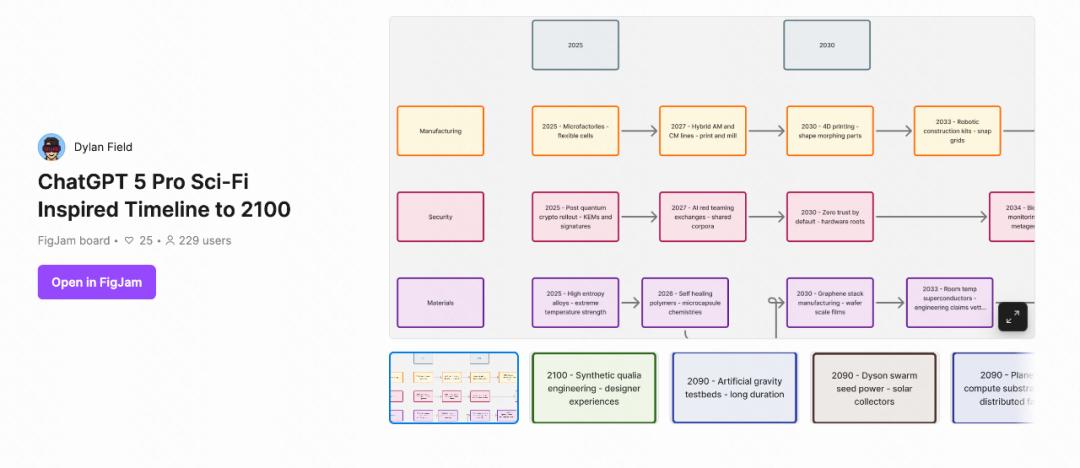
Can you elaborate on "visual expression"? Dylan Field: Nowadays, design literacy and visual communication are more important than ever. If you can't express your ideas with images at work, you'll be at a disadvantage. We want more people to easily express their thoughts visually - generate charts faster, continuously modify and optimize them, and finally form their own way of expression. During the cooperation with OpenAI, did you worry that users would spend more time in ChatGPT rather than in FigJam? Dylan Field: Actually, no. Let me give you an example. On New Year's Eve last year, I gave a speech titled "The Technology Tree Leading to 2100". The first time I used GPT - 4 Pro, it took nearly 24 hours in total - two - thirds of the time was spent on generating content, and one - third was spent on manual typesetting in FigJam. But last night, I tried it again with the new integration function, and it only took half an hour in total. This is the change that a more powerful model and smoother tools can bring: faster, larger - scale, and more free exploration.
●
Now, ChatGPT has reached 800 million weekly active users. Is this a new market channel for Figma? Dylan Field: Maybe. We're still observing. Anyway, our core goal has always been to provide users with the best experience. Sometimes the best experience is in FigJam, and sometimes it's elsewhere. We're expanding the entire ecosystem. For example, through Figma Make, users can "go from prompt to application in one step", and then make secondary edits in Figma Design. How did the cooperation with OpenAI come about? Is there any commercial sharing? Dylan Field: Actually, there was no formal negotiation for this cooperation. It's more like a pure technical collaboration. Our product and engineering teams communicated directly with each other. We even worked together until midnight last night to confirm every detail. The whole process was very pleasant, and we're very grateful to build this new function together. During the press conference, when it was announced that Figma became a ChatGPT API partner, Figma's stock price soared briefly. What do you think of this market reaction? Dylan Field: To be honest, I didn't notice it at all. I always tell the team that no matter whether the stock price goes up or down, the most important thing every day is to continue to improve the product and the experience. If this incident shows anything, it's that people see the potential of our cooperation with OpenAI. Next, it depends on whether we can really prove it.
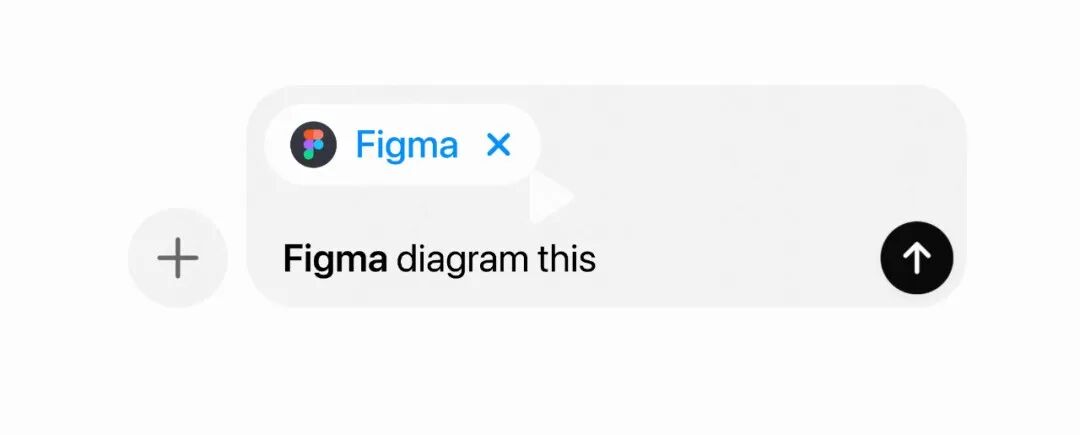
●A demonstration of ChatGPT calling Figma on the OpenAI official website
One last question. The atmosphere at today's Dev Day was very enthusiastic. From your perspective, what does the technological wave of this era mean? Dylan Field: I think this is an exciting moment. Whether you're an engineer, a designer, or a product person, everyone is embracing new tools - almost every one or two weeks, there are new tools emerging, allowing us to use them to create the future and redefine the workflow. No one knows where all this will end up, but for us, this is the most fascinating part of technology. We'll continue to work hard to make Figma a platform that benefits creators in this wave.

Editor | Du Xueying
Cover image source | AI - generated

What are your expectations for the cooperation between Figma and ChatGPT
?
Welcome to share your views in the comment section!

This article is from the WeChat official account "Future Human Laboratory". Author: Du Xueying. 36Kr is published with authorization.