The new national standard for power banks is coming. Is it a powerful measure for the industry to prevent the recurrence of issues like those of Romoss?
Recently, the Ministry of Industry and Information Technology publicly solicited opinions on the mandatory national standard (draft for comments) of "Safety Technical Specifications for Mobile Power Supplies".
Compared with the old national standard, the new national standard (draft for comments) puts forward dozens of strict improvements in three major technical fields: the whole machine, circuit boards, and battery cells, and is hailed as the "strictest ever" safety standard for power banks.
The main changes in the "Safety Technical Specifications for Mobile Power Supplies" (draft for comments) specifically include:
Whole machine: Instead of only marking the manufacturer (brand owner) in the past, it is clearly required that the mobile power supply body should also mark the "suggested safe service life" and the name of the manufacturer (OEM factory);
Circuit board: The mobile power supply should have a battery status monitoring function and display key parameter information such as battery health and usage times in real-time. The ways for users to read this information include but are not limited to mobile phone apps, USB, and displays;
Battery cell: Multiple enhanced safety tests are introduced, including a more stringent needle penetration test. The thermal abuse test conditions are increased from 130°C for 30 minutes to 135°C for 60 minutes, and the overcharge test voltage is increased to 1.4 times the specified voltage.
It should be emphasized that the new national standard for power banks is currently still in the stage of soliciting opinions (closing on December 11, 2025) and has not been finalized yet.
So, based on the current draft for comments, what impact will the "strictest ever" new national standard for power banks have on users, enterprises, and the industry?
Bad news: Price increase; Good news: Extended lifespan
The "combination punch" of the new national standard for power banks in terms of product safety will give users a sense of reassurance.
Adding the "suggested safe service life" and the name of the OEM factory to the power bank shell allows consumers to have a clear and comprehensive understanding of the product's entire life cycle and information about the OEM factory;
Adding key parameter information such as real-time battery health and usage times to the power bank allows consumers to perceive the battery's operating status in real-time, which can further extend to functions such as "active battery health warning";
Focusing on strengthening the safety test requirements for the battery cells of power banks can comprehensively reduce the risk of thermal runaway from the technical source for consumers' products.
On the other hand, the overall improvement of the safety standard for power banks means an increase in the production cost of products, which is finally reflected in the user market as an increase in the overall average price.
For example, there are mainly two ways to add the battery status monitoring and health display functions to a power bank. One is to equip it with a display screen, and the other is to provide a mobile phone app (networked app) that can be paired with it. No matter which method is used, it will significantly increase the production cost of the power bank product, and naturally, it will be sold to users at a higher price. Moreover, the more stringent safety tests will also force power bank manufacturers to adopt battery cell technologies with higher safety performance and better process quality.
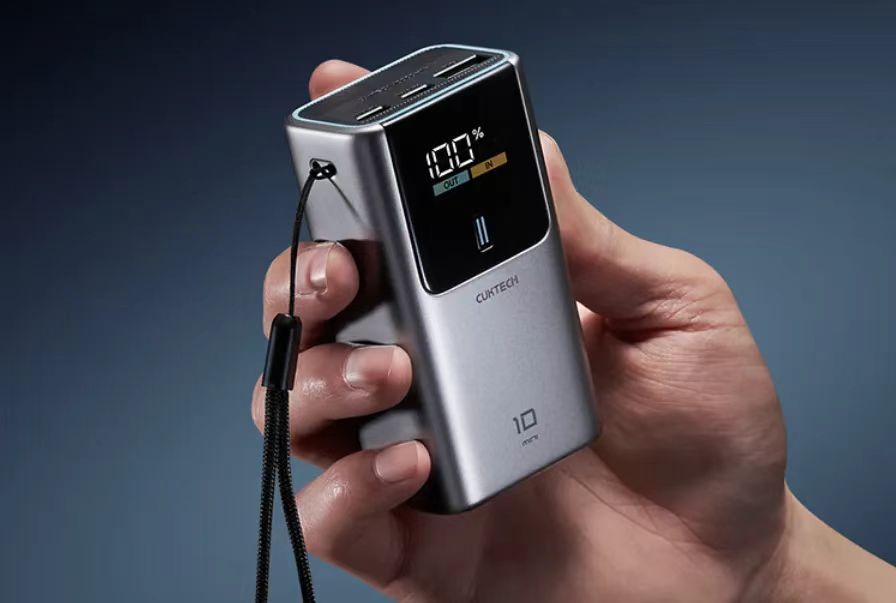
(Image source: CoolTech)
Lanjing Technology quoted industry insiders as saying that to fully meet the requirements of the new standard, the additional investment of enterprises in R & D, production process transformation, and certification testing will lead to an approximately 30% increase in the overall manufacturing cost of power banks.
It is worth noting that while comprehensively improving the safety standard, the service life of power bank products will also be significantly extended. The safety and durability of power banks are essentially determined by the same set of underlying design and material quality. Improving the safety standard actually raises the quality threshold of these underlying technologies.
Under the new standard, how much will the service life of power banks be extended? According to industry insiders, it will be significantly increased from the current average of 300 charge - discharge cycles to more than 600 cycles, and "the unit cost of use actually decreases".
The comprehensively improved safety performance and significantly extended service life come at the cost of an approximately 30% increase in the overall manufacturing cost of power bank products. Theoretically, such a result is relatively acceptable to consumers.
Beneficial to large enterprises in the industrial chain, small enterprises need to transform early
For enterprises in the upstream and downstream industrial chains, the product safety comprehensively improved by the new national standard for power banks will have a profound impact on their future development.
Some participating enterprises told the media: "The standard formulated this time is very strict, and many factories cannot meet it. The attitude of the Ministry of Industry and Information Technology is very clear: 'If you can't meet the standard, don't continue production because there are always some enterprises that can meet it.'"
During the period of soliciting opinions on the new national standard for power banks across the industry, it is reported that nearly 300 enterprises related to the industrial chain participated in the seminar, bringing together representatives of suppliers from all links of the industrial chain, including chips, motherboards, and battery cells.
However, with the "rapid" and even "barbaric" development of the domestic power bank industry over the years, the new national standard for power banks with such strict safety performance requirements will inevitably have a serious or even fatal impact on many upstream and downstream enterprises, especially small and medium - sized enterprises.
Some participating enterprises predict that after the implementation of the new national standard for power banks, nearly 70% of the current production capacity will be forced to withdraw from the mobile power supply market due to the inability to meet the technical requirements of the new standard; currently, only about half of the product models on the market are expected to pass the new standard certification.
With the "strictest ever" new national standard approaching finalization, there is little room for maneuver in the future development trend of the entire power bank industry. After the end of the transition period (usually 6 to 12 months) after the release of the mandatory national standard, all enterprises in the power bank industrial chain will face this "safety bottom - line" improvement battle targeting the entire industry.
In fact, comprehensively improving the safety standard requirements for power banks is a great benefit to leading enterprises and well - known brands in the entire industry and the industrial chain. This is also a major new opportunity period for "redistributing" market share and adjusting enterprise development strategies. Next, the domestic power bank market will also enter a new development stage with a comprehensive increase in both the "concentration of downstream brands and upstream manufacturers".
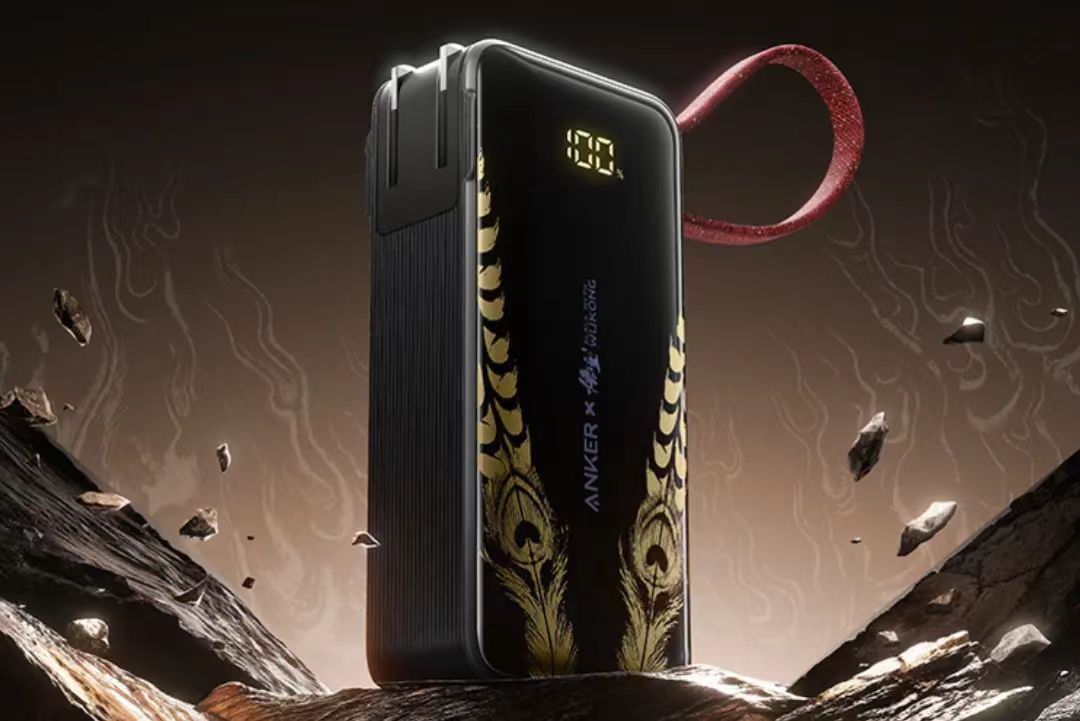
(Image source: Anker Innovations)
It is reported that among downstream brand enterprises, Anker Innovations has cooperated with CATL to jointly develop high - standard battery cells that meet the new national standard. Among upstream well - known manufacturers, some battery cell manufacturers such as ATL, BYD, and Sunwoda have already carried out new safety regulation tests on some products, and some models have passed the new version of the safety regulation tests.
For small and medium - sized brands and upstream manufacturers that currently cannot meet the requirements of the new national standard, there are several options:
1. Make efforts in production line transformation and technological upgrading, including necessary investment, in order to quickly launch products and technologies that meet the new standard;
2. Focus on a certain area of the power bank industrial chain. For example, enterprises that are engaged in both finished products and technologies can focus only on technologies (such as battery cell technology) and no longer involve finished products, concentrating on doing one thing well to smoothly tide over the major industry changes;
3. Introduce power bank products and technologies that meet the existing standards to overseas markets with lower standards, such as Africa and Latin America;
4. Switch to other product categories and technology application markets with lower requirements for battery performance safety and lower entry thresholds, such as the toy and lighting industries.
Fundamentally, whether they are small and medium - sized manufacturers or well - known brands, after years of fierce "price wars" and frequent safety accidents that have attracted public attention in recent years, they should now and in the future pay more attention to the product quality of power banks, especially safety quality, rather than continuing to engage in intense price competition. Whether it is strong supervision or the new national standard, they are all "setting things right" for the development of this industry and related enterprises.
Improving the "safety bottom - line" of the entire industry and reshaping social confidence
Since this year, a series of self - ignition and explosion incidents related to power bank products have attracted wide public attention. In particular, the large - scale recall incidents of some well - known brand power bank products have shaken the public's confidence in the development of the power bank industry.
Data shows that in the past six months, there have been more than 700 safety accidents involving power bank products; last year, there were 37 self - ignition incidents of power banks on domestic flights alone, and 81% of them involved inferior products without 3C certification.
So, why not continue to strengthen the 3C certification but instead focus on comprehensively improving the safety standard of the product category?
The reason is obvious. The 3C certification is a general safety certification standard for all electronic product categories and can be regarded as the "fundamental basis" of safety standards. For a product category like power banks, the safety standard needs to be comprehensively improved. Therefore, only by comprehensively improving the national standard of this category can it be achieved. In other words, it is necessary to have a complete "upgrade" of the standard for this category in terms of safety, rather than "patching up" based on the existing standard system.
However, according to the existing policies and regulations, after the release of the new national standard, consumers' mobile power supply products that have already obtained 3C certification will not be affected, and consumers can continue to hold and use them, including being allowed to carry them on board airplanes.
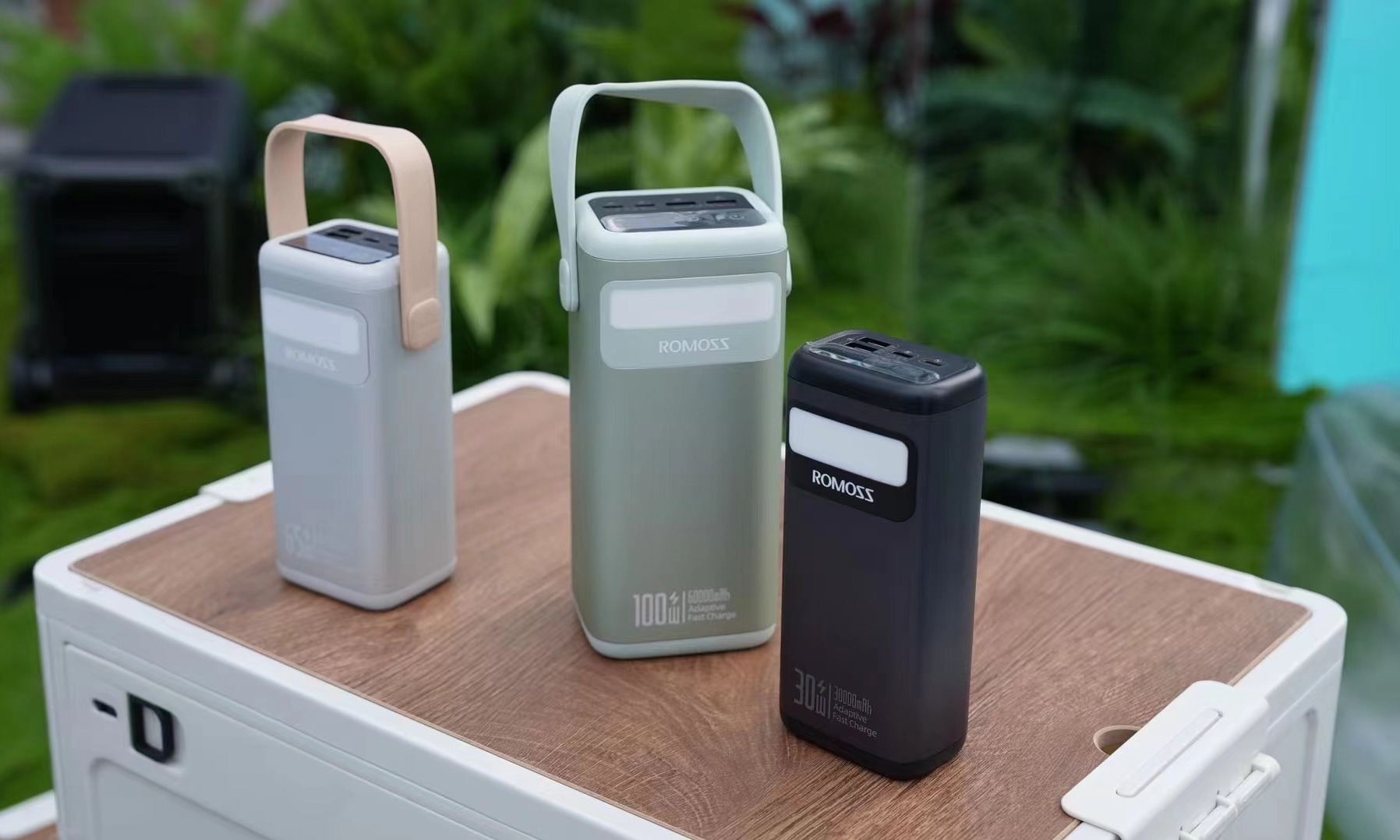
(Photographed by Lei Technology)
With the development wave of the smartphone industry, power banks, as important accessories, have gradually reached hundreds of millions of users. However, the existing national standard for this product category and the 3C mandatory certification can no longer meet the increasingly important battery safety performance that users value in power bank products, especially the "extreme safety" performance in a closed cabin environment.
If the existing standards are more about "providing a safety net" for industry development, then the new standard with comprehensively improved safety performance requirements fundamentally matches the industry development trend and user market concerns that power bank products must have a safety performance "extremely close to 100%".
This "safety bottom - line" improvement battle in the entire industry will also greatly reshape the whole society's confidence in the development of the power bank industry.
Beyond the power bank category, more battery power product categories, especially products such as electric bicycles, also need a systematic "safety bottom - line" improvement battle across the entire industry.
It is hoped that this battle, starting from the power bank category, can quickly cover more product categories, so that consumers of all product categories will no longer worry about the basic safety issues of products.
This article is from the WeChat public account "Lei Technology", author: Lei Technology. It is published by 36Kr with authorization.