The price has dropped by 800 yuan, and it is available for sale starting at 4,699 yuan. Huawei has launched the Mate 80: The Pro+ has been changed to Pro Max, featuring the Kirin 9030 chip. Distributors say the pricing is lower than expected.
As the fourth quarter approaches, the "annual flagship battle" in the smartphone industry is in full swing. On November 25th, with the official launch of the Huawei Mate 80 series and the foldable phone Mate X7, new variables have been injected into an already highly competitive market.
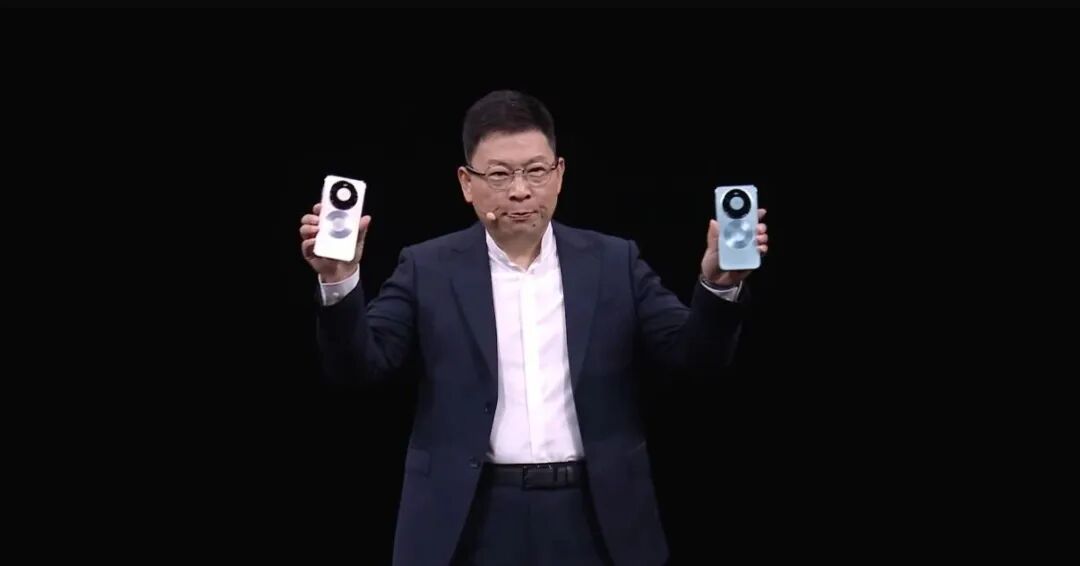
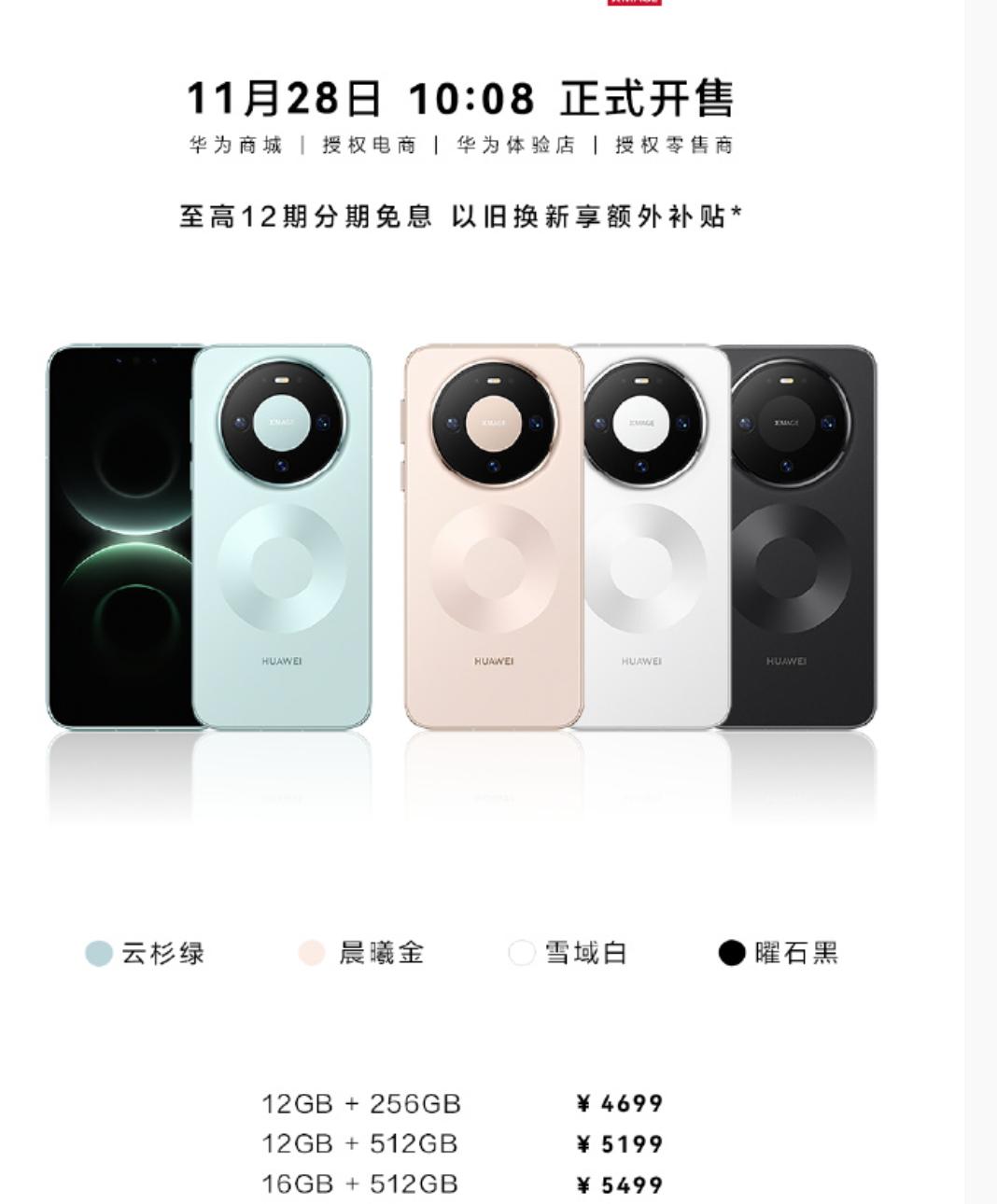
At the November 25th press conference, Yu Chengdong announced the starting prices of the products: the base version of the Mate 80 starts at 4,699 yuan, the Mate 80 Pro series starts at 5,999 yuan, the Mate 80 Pro Max series starts at 7,999 yuan, and the Mate 80 Ultimate Master series starts at 11,999 yuan. The starting price of the Mate 80 is 800 yuan lower than the previous generation, and the Mate 80 Pro and Mate 80 Pro Max series are also 500 yuan cheaper than the same - level models of the previous generation.
Video screenshot
As Huawei's flagship model in the second half of this year, the Huawei Mate 80 series has undergone innovations in both software and hardware systems. In terms of software, the product comes pre - installed with the HarmonyOS 6 operating system. In terms of hardware, according to research reports from institutions such as BOC International and Soochow Securities, the Huawei Mate 80 series is equipped with a new - generation Kirin chip - the 7 - nanometer Kirin 9030 SoC (System - on - a - Chip), which is also an important iteration of the Kirin flagship chip after its full return. Reporters from "National Business Daily" have also confirmed this information from industry experts and channel partners.
Previously, Huawei had publicly released the roadmaps for Ascend and Kunpeng chips. At the press conference of the triple - foldable phone Mate XTs Ultimate Master in September this year, Huawei no longer avoided disclosing the processor model - the Kirin 9020 chip, which made its first appearance at a press conference since 2021, indicating the continuous improvement of Huawei's supply chain.
It is worth mentioning that the Huawei Mate 80 series has adjusted its naming strategy, changing the original Pro+ to Pro Max. Data provided by IDC to reporters shows that in the third quarter of 2025, in the high - end mobile phone market above $600 in China, Huawei's market share was 34.4%, and Apple's was 48%. Throughout 2023, Huawei's market share was 21.4%, and Apple's was 61.8%. Huawei's recovery in the high - end market is accelerating.
Equipped with the Kirin 9030 Chip
As Huawei's high - end flagship series, the Mate series has always made important contributions to Huawei's mobile phone shipments. At its peak, the sales volume of the Huawei Mate 40 series reached 30 million units, accounting for more than 10% of the total market share, and helped Huawei become the number one in the domestic high - end mobile phone market that year.
The Mate 80 series is equipped with a number of cutting - edge technologies, such as the second - generation Kunlun Glass, the second - generation Red Maple imaging technology, and 700MHz network - free emergency communication. Yu Chengdong introduced at the press conference: "After a natural disaster occurs, if there is no signal in the ground network or the base station is paralyzed, we can cover a communication distance of more than 13 kilometers at the farthest and penetrate three walls. Rescue teams can use rescue phones to communicate with Mate 80 series phones for network - free emergency rescue. One more connection means one more hope."
According to reporters' understanding, the Huawei Mate 80 series is also equipped with the new - generation Kirin 9030 chip, which means that Huawei has once again made an important breakthrough in the field of chip technology. "It's exciting that it's equipped with the new chip (Kirin 9030). We look forward to Huawei quickly overcoming the subsequent difficulties," a channel partner told reporters.
Beyond hardware, the Mate 80 series is also the first flagship model to be equipped with the HarmonyOS 6 system. Yu Chengdong announced that there are more than 300,000 applications and meta - services in the Harmony ecosystem. "The Harmony ecosystem has made key progress. Leading applications are fully adapted, and mid - and long - tail applications are accelerating their coverage. At the same time, there are 100,000 new Harmony devices added on a daily basis."
As the ecosystem continues to improve, Harmony has formed a "tripartite confrontation" pattern with Android and iOS in the global mobile operating system market. However, compared with the mature operating system ecosystems in the industry, Harmony still needs further development.
Fierce Market Competition
Currently, the mobile phone industry is in a state of intense competition. Data from research institution Omdia shows that in the third quarter of 2025, the Chinese smartphone market declined by 3% year - on - year, and the market is still in an adjustment phase. At the same time, the ranking gap among leading manufacturers continues to narrow, and the share gap between the first and the fifth is only 3%.
Specifically, vivo returned to the top with shipments of 11.8 million units, accounting for 18% of the market share. Huawei followed closely, with shipments of 10.5 million units and a market share of 16%. Apple continued its upward trend from the previous quarter, with shipments of 10.1 million units, rising two places compared with the same period last year and entering the top three in the market.
For Huawei, the Mate 80 series is a crucial product for it to further regain the high - end mobile phone market. In the past few years, due to supply - chain challenges, Huawei's high - end market share once shrank. Other domestic brands have had difficulty breaking through in the high - end market, and Apple has dominated.
Regarding the market prospects of the Mate 80 series, Omdia analyst Lucas Zhong analyzed to reporters: "As of the third quarter of 2024, the shipments of the Mate 70 series were approximately 8.5 million units. This year, Huawei has accelerated the implementation of the 'pure - blood Harmony' strategy. In the short term, due to the running - in of the new system ecosystem and compatibility, the market performance may fluctuate to some extent. But in the long run, this strategy is expected to further build an ecological barrier and reduce the loss of core users."
However, Huawei still faces strong competition from Apple in its pursuit of the high - end market. Counterpoint data shows that the iPhone 17 series has performed strongly in the Chinese market since its launch in September. "In the first two weeks, the sales volume of the base version of the iPhone 17 was almost twice that of the base version of the iPhone 16 in the same period; in October, the sales of the iPhone 17 Pro were nearly two - thirds higher than those of the iPhone 16 Pro year - on - year. From September 29th to October 12th, Apple's overall sales increased by 40%."
Counterpoint believes that for the recently returned Mate 60 and Mate 70 series, the upward space for the Mate 80 is limited, but it will continue to consolidate Huawei's overall position in the high - end market to a certain extent.
However, the aforementioned channel partner is optimistic. "The prices of new products from some mobile phone manufacturers have increased significantly compared with the previous generation, and the cost - performance ratio doesn't seem as attractive. The pricing of the Huawei Mate 80 series this time is lower than expected."
Reporters noticed that in the context of soaring global memory chip prices and the general price increase of domestic flagship mobile phones, the starting price of the Huawei Mate 80 is 800 yuan lower than the previous generation, and some other models also have a price reduction of about 500 yuan. This pricing strategy may win more opportunities for it in the intense market competition.
This article is from the WeChat official account "National Business Daily". Author: Wang Jing, Editors: He Xiaotao, Wei Guanhong, Du Hengfeng, Proofreader: Cheng Peng. Republished by 36Kr with permission.