M85 core, the new hot spot of MCU
As manufacturers begin to introduce MCUs with extremely high performance, it's becoming increasingly difficult for us to distinguish the boundary between MCUs and MPUs.
As early as 2022, when Arm launched the Cortex - M85, an engineer once said, "Although the M85 belongs to the Cortex - M series, I think its performance has exceeded that of the early Cortex - A. The M85 processor is no longer just a single - chip microcontroller; it can be regarded as a micro - application processor."
Recently, manufacturers have started to ramp up the development of M85 - based MCUs, and these products seem to truly have the ability to rival MPUs. What are the highlights of these products? EEWorld will take stock today.
Understand the Essence of M85
Performance is one of the most straightforward advantages of the M85.
The M85 is the first Cortex - M that supports over 6 CoreMarks/MHz and over 3 DMIPS/MHz. Meanwhile, through Arm Helium technology, the M85 has achieved a four - fold improvement in DSP and ML processing compared to its predecessor, the M7. This level of scalar performance is attributed to many innovative features at the micro - architecture level, including optimized dual - issue and selective triple - issue capabilities, improved branch prediction, and an enhanced memory system including data pre - fetching.
According to Arm, in the face of increasingly demanding computing requirements, developers of Cortex - M microcontroller systems are faced with a choice: should they optimize software to squeeze more clock - cycle processing power from existing microcontrollers, or migrate the codebase to a microprocessor architecture with higher performance? Cortex - M microcontrollers have multiple advantages, including deterministic execution, short interrupt latency, and advanced low - power management modes. Switching to a Cortex - A processor would mean sacrificing some of the inherent advantages of Cortex - M. Therefore, Cortex - M needs to launch a product with such "explosive" performance.
Put simply, it aims to meet people's "want - it - all" expectations, that is, to have high performance comparable to MPUs while retaining the low BOM cost control, low power consumption, and ease of development of MCUs.
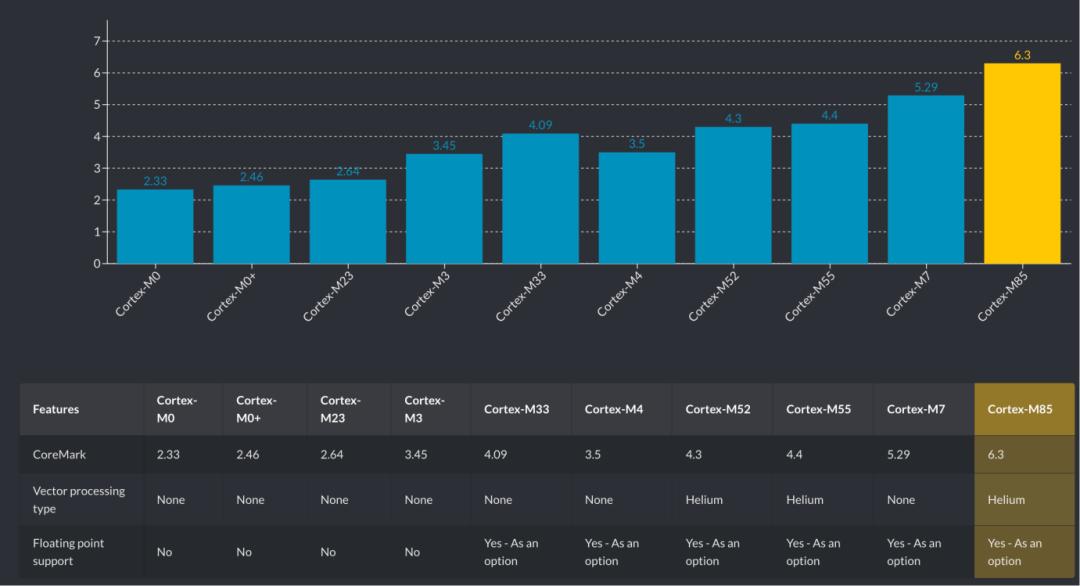
The memory system architecture is another advantage of the M85.
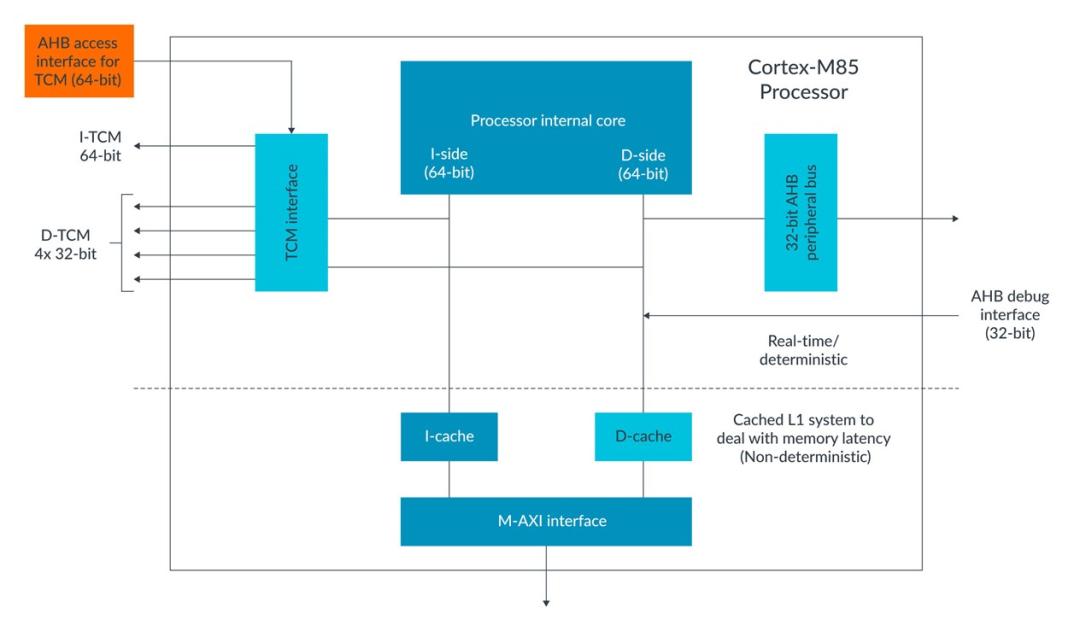
The M85 is equipped with a low - latency memory system with tightly coupled memory (TCM) to ensure deterministic operations. This architecture provides SoC designers with four 32 - bit data TCM interfaces and a 64 - bit instruction TCM interface, all of which integrate error correction code (ECC) functionality. The newly added 32 - bit AHB access interface port allows external DMA controllers to access the TCM concurrently with the M85 processor core, thus supporting a variety of common data - stream processing application scenarios.
The M85 memory system also includes a level - one cache system with ECC, which is connected to external memory through the AMBA 5 AXI master interface and can still maintain optimized performance when facing low - speed, non - deterministic memory access.
Security is another major selling point of the M85.
The M85 introduces the TrustZone technology of the Armv8 - M architecture and becomes the first Cortex - M processor to integrate the Armv8.1 - M Pointer Authentication and Branch Target Identification Extension (PACBTI), significantly lowering the threshold for developers to achieve PSA Security Certification Level 2. PACBTI provides enhanced protection against return - oriented and jump - oriented software attacks by verifying function calls and return addresses.
In short, the unprecedented performance level brought by the M85 has opened up new horizons for MCU developers, and manufacturers also expressed their intention to follow up at that time. However, the update cycle is not that fast, and how to position the M85 is also a problem. Now, perhaps it's time for the M85 to shine.
ST Takes Action
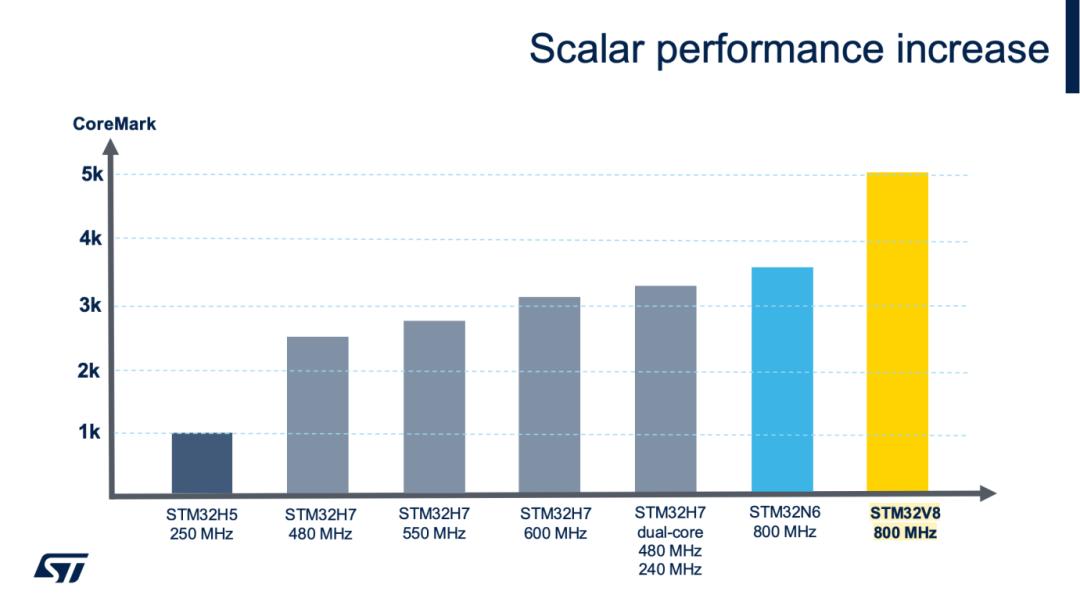
ST recently launched the STM32V8, which has sparked a lot of discussions among netizens on EEWorld. This product is one of the highest - performance microprocessors in the STM32 series, with a terrifying EEMBC CoreMark score of 5072, much higher than that of the STM32N6.
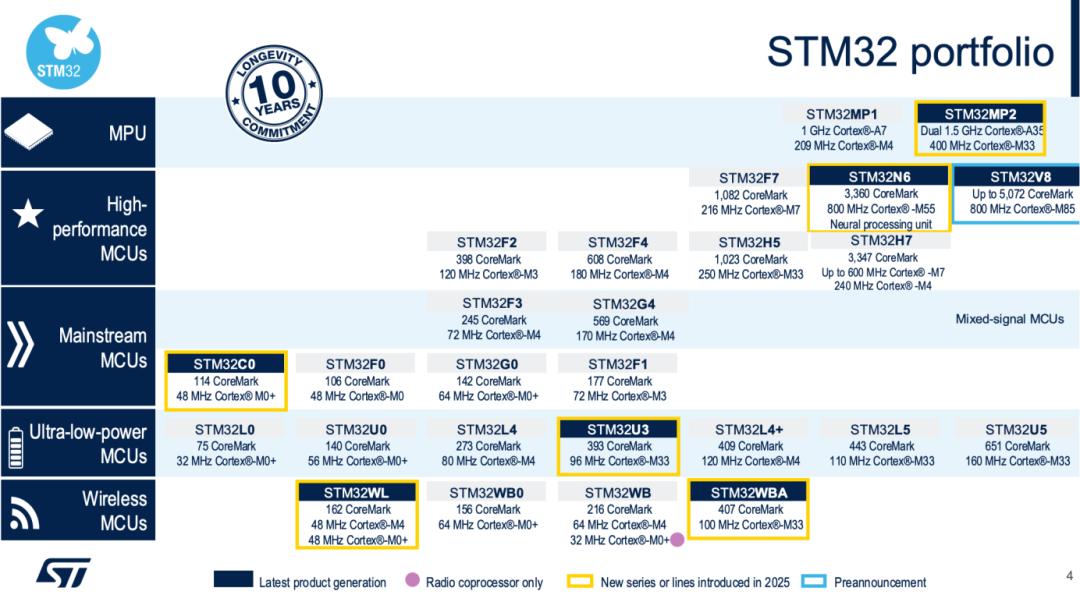
18nm, 800Mhz Cortex - M85, 4MB PCM (Phase - Change Memory), MVE (Arm Helium M - profile Vector Extension) - these keywords are all manifestations of this product's strength.
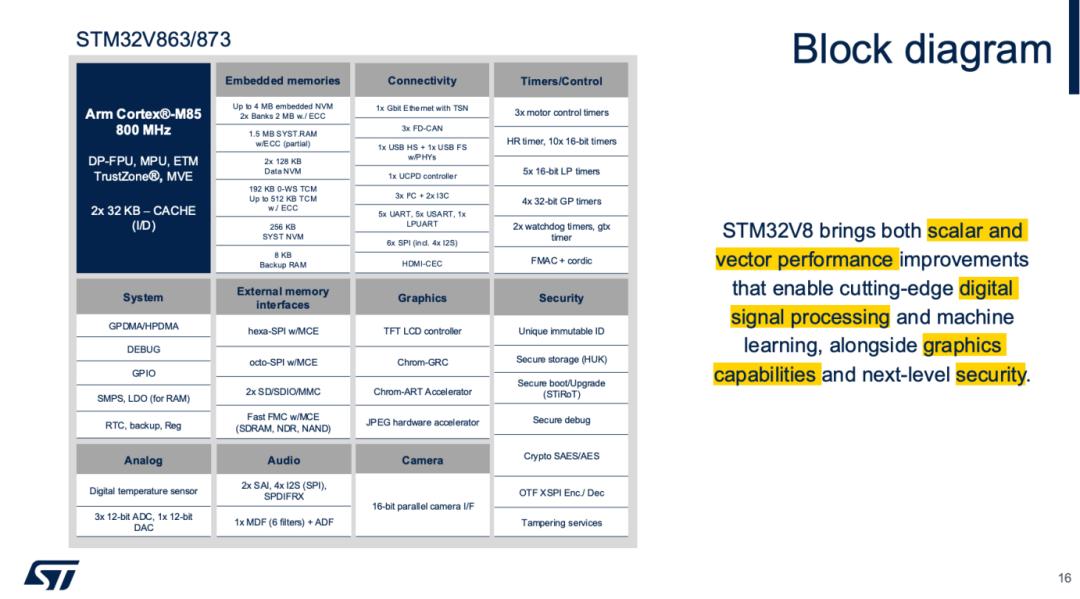
According to ST, simply by upgrading to the M85 core, the new product has a 20% improvement in scalar mathematical operation performance in real - time control applications. Compared with Cortex - M7 products, the performance is increased by 3.5 times at the same clock frequency. For applications relying on DSP functions, the performance increase is as high as 300% - 400%.
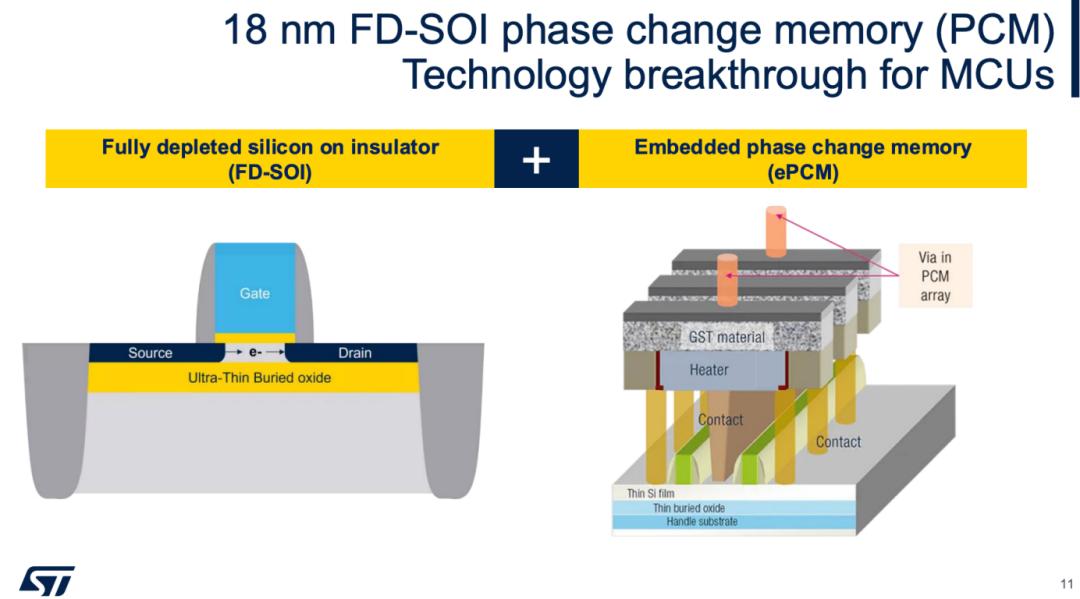
The reason for its powerful performance is closely related to the 18nm FD - SOI PCM process it uses, which is the same as that of the automotive MCU Stellar series. FD - SOI competes with FinFET, which also provides high - performance computing. This technology is a relatively new application in the MCU field, enabling the STM32V8 to achieve higher operating speeds and significantly optimizing power - consumption efficiency.
PCM, as an embedded non - volatile memory (NVM) technology, has developed into various forms, including Intel's discontinued 3D XPoint memory. PCM storage is known for its speed. Due to the difficulty in breaking through the embedded flash (eFlash) technology, MCUs have been stuck at the 40nm process node. To shrink the process, the industry has set its sights on new - type storage.
PCM is a storage technology that competes with MRAM, FRAM, and RRAM. PCM offers the smallest storage unit among its peers, enabling more than double the amount of information storage per unit area compared to the past, further bringing physical advantages and achieving the smallest storage area. It can double the overall storage capacity without increasing the cost, which undoubtedly leads to further cost - effectiveness.
More importantly, compared with MRAM and FRAM, ST's PCM has additional advantages: it supports a maximum operating temperature of 140°C, and its radiation - resistance and other characteristics make it suitable for both the aerospace field and demanding industrial and automotive applications. Therefore, we can see that one of the important applications of the STM32V8 is in aerospace.
This series of chips supports up to 4MB of ePCM and 1.5MB of RAM. The off - chip serial memory interfaces include eight - line SPI (8 - bit) and sixteen - line SPI (16 - bit), which can support serial NOR flash, HyperRAM, PSRAM, and execute - in - place (XIP) operations.
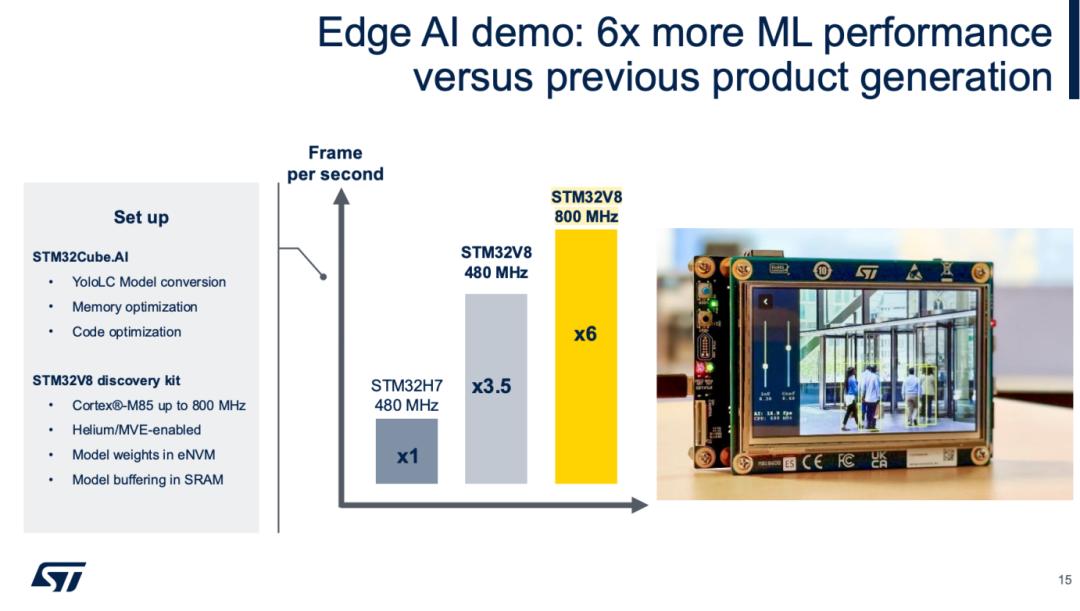
The significant improvement in AI capabilities is another advantage of the STM32V8. The AI capabilities are built on the foundation of the Arm Helium M - profile vector extension (MVE) technology. Helium, as an Arm mathematical architecture based on packed single - instruction multiple - data (SIMD) and single - element scalar instructions, supports integer and floating - point operations, covering 8 - bit to 64 - bit integer operations and 16/32 - bit floating - point operations in 128 - bit vectors. This technology brings enhanced machine - learning (ML) and digital - signal processing (DSP) capabilities to high - performance microcontrollers. Arm has also packaged MVE into function libraries and code - generation tools suitable for C/C++ development.
Along with the release of the new product, ST has also upgraded the AI model library for its edge - AI product line. This model library brings together pre - trained AI models covering a variety of AI application scenarios. These models are optimized for STMicroelectronics' AI microcontroller product portfolio, which can accelerate the development process of edge AI. According to the official introduction, the model library currently has more than 140 models, and their application scope covers the visual, audio, and sensing functions required by wearable devices, smart cameras and sensors, security devices, and robots. The model library supports model development in PyTorch, TensorFlow, RSCI framework, LiteRT, and Onex formats.
The STM32V8 also has some other detailed upgrades, including: integration of the Chrom - ART graphics accelerator, TFT LCD controller, and JPEG accelerator; the Gigabit Ethernet controller supports time - sensitive networks (TSN), and is equipped with interfaces such as FD - CAN, high - speed USB, and HDMI - CEC; it includes 12 - bit ADC and DAC interfaces, as well as two sets of SAI and four sets of I2S audio interfaces; it covers support for secure storage, secure boot, and secure debugging; it is equipped with a unique identity identifier and anti - tampering mechanism, and has passed PSA Level 3 and SESIP 3 security certifications.
Renesas Made an Earlier Layout
Renesas made an earlier layout for the M85 and has been extremely diligent and frequent in updating its products.
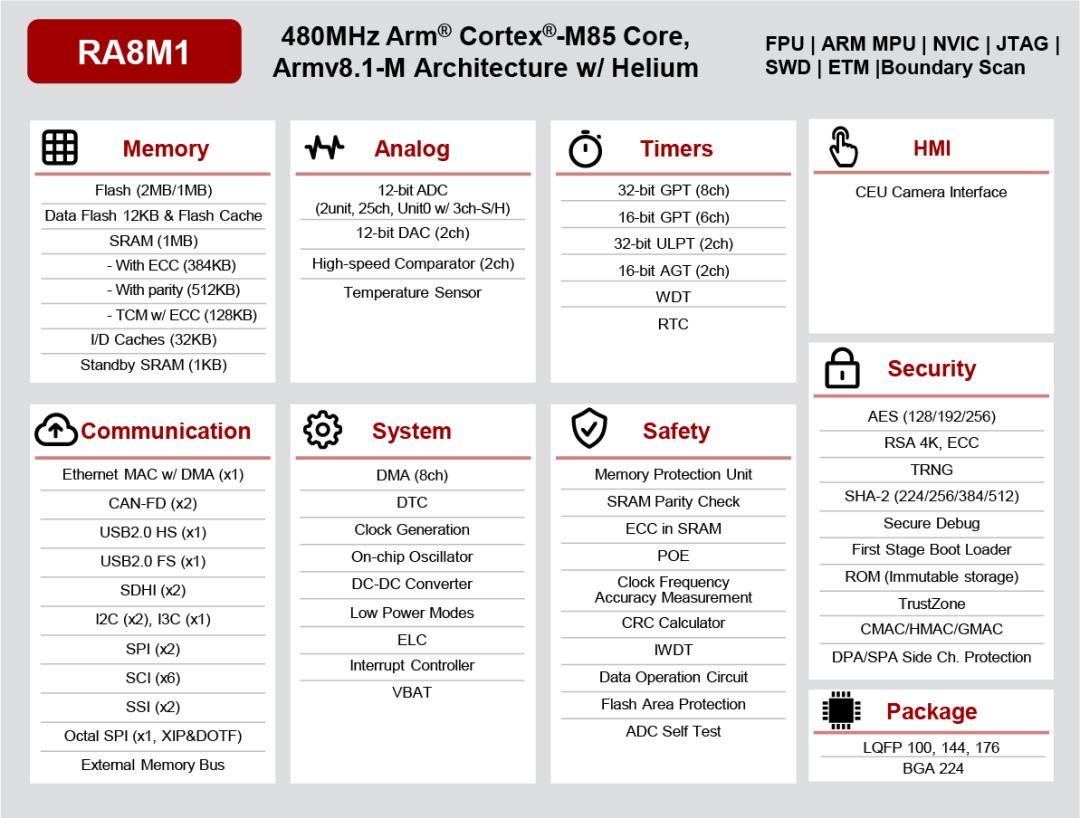
In October 2023, Renesas launched the RA8 series of MCUs - RA8M1, the industry's first MCU based on the Arm Cortex - M85 processor, with a breakthrough 3000 CoreMark score, which can meet the requirements of complete determinism, low latency, and real - time operation for customer applications. According to Renesas, the performance level of 6.39 CoreMark/MHz (Note) will enable system designers to use RA MCUs to replace the MPUs commonly used in applications.
At that time, Renesas' first - generation RA8 mainly expanded the product line around the M85 core. This product used a 480MHz M85 with Helium MVE and did not adopt new - type storage in terms of memory. It was equipped with 1MB - 2MB of flash memory and 1MB of SRAM (including TCM).
In June this year, Renesas quietly launched the "world's most powerful MCU", the RA8P1 series, on its official website.
The second - generation RA8 upgraded the process to the 22nm ULL process, was equipped with 0.5/1MB of MRAM (optional 4/8MB of flash memory) of new - type storage, and the clock frequency of the M85 core reached 1GHz with the improvement of the process. In contrast, the RT1170 uses the 28nm FD - SOI process.
According to Renesas, compared with flash memory, MRAM has a faster write speed, higher durability, and stronger data - retention ability. Moreover, to pursue better AI performance, the second - generation RA8 also integrates an Ethos - U55 NPU and another 250MHz M33.
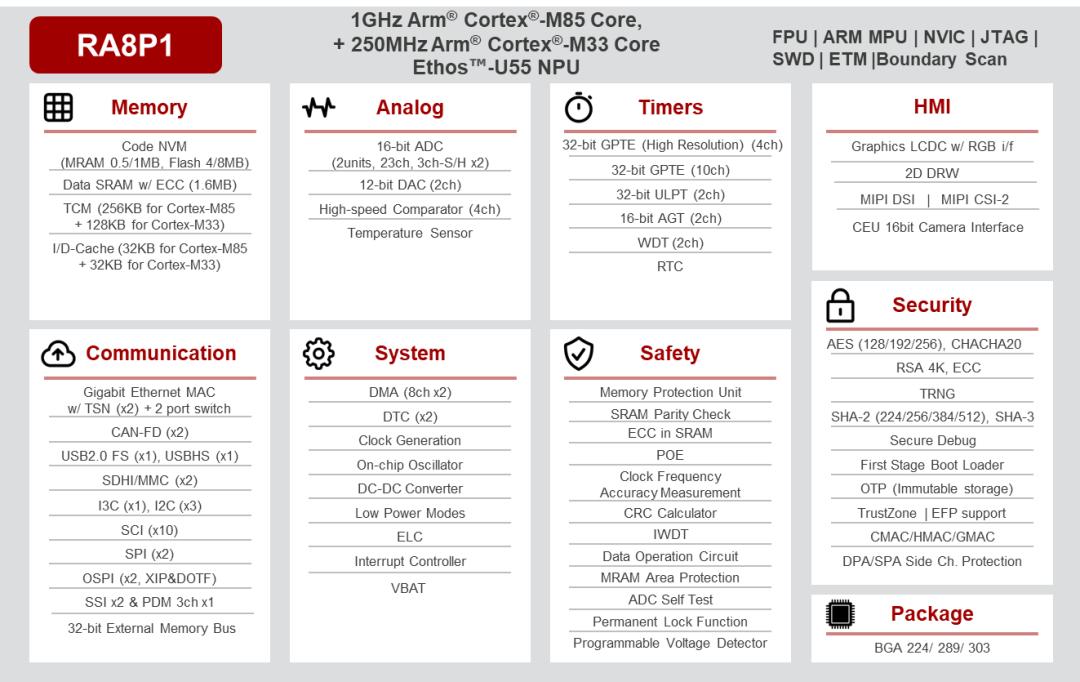
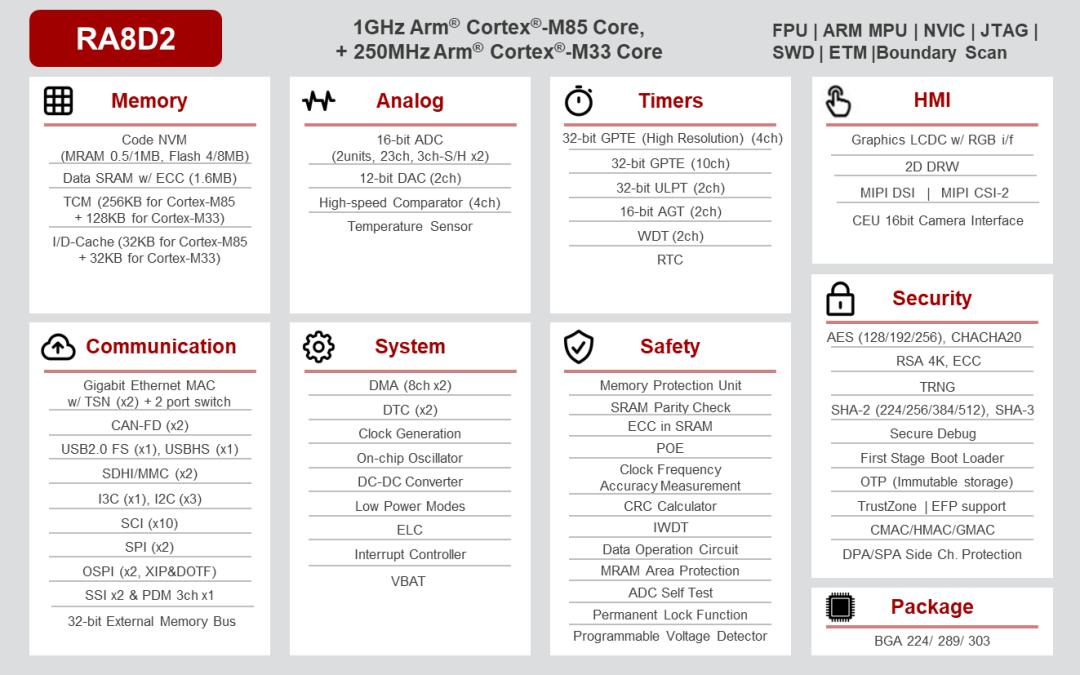
While launching the RA8P1, Renesas also launched the RA8D2, which is also equipped with a 1GHz M85 core and new - type storage MRAM.
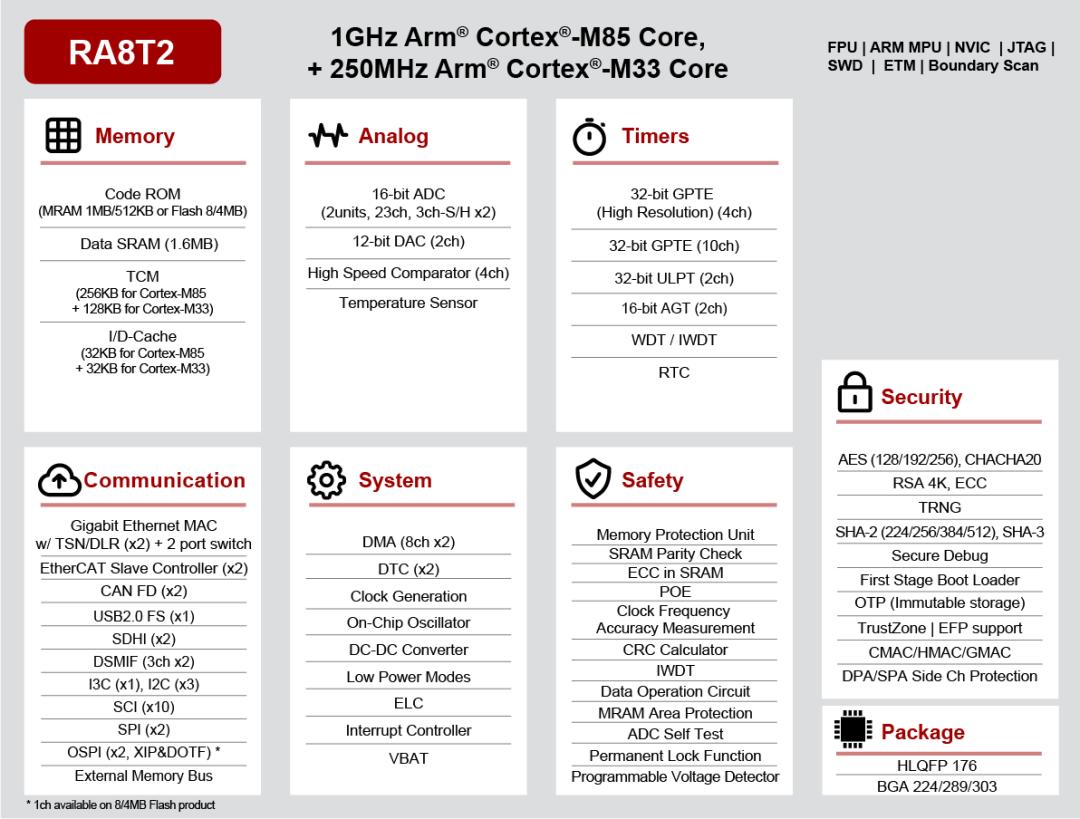
In October this year, Renesas continued to iterate and launched the 1GHz RA8T2 Cortex - M85 microcontroller, integrating MRAM and EtherCAT to empower industrial motor - control microcontrollers. This product integrates 1MB of MRAM, 2MB of SRAM with ECC verification, and is configured with 256KB (M85) and 128KB (M33) of tightly coupled memory (TCM) for the dual cores respectively, and supports SiP packaging to expand to 8MB of external flash memory.
Just a few days later, Renesas added two new products, the RA8M2 and RA8D2, to the RA8 series and refreshed the benchmark score to a terrifying 7300 CoreMark.
