Tencent and DJI are in a head-to-head battle over 3D printing: Each of the "Four Titans of Shenzhen" claims the top spot. Is this the next big thing?
Established just five years ago, it has won the global sales championship for desktop 3D printing devices for three consecutive years recently. It is hailed as one of the fastest-growing enterprises of the 2020 generation in China. This company is called Bambu Lab, and its founding team members, Tao Ye, Gao Xiufeng, Liu Huaiyu, Chen Zihan, and Wu Wei, all come from DJI Innovation.
According to a report by Yingke, Bambu Lab is close to completing a new round of financing, with Tencent participating. The company's valuation may reach $10 billion. When the media verified this information with Bambu Lab and Tencent, both sides said that the news was false.
In 2024, Bambu Lab's revenue was about 6 billion RMB, with a shipment volume of about 1.2 million units. Its market share in the global consumer-grade 3D printer market was about 29%.
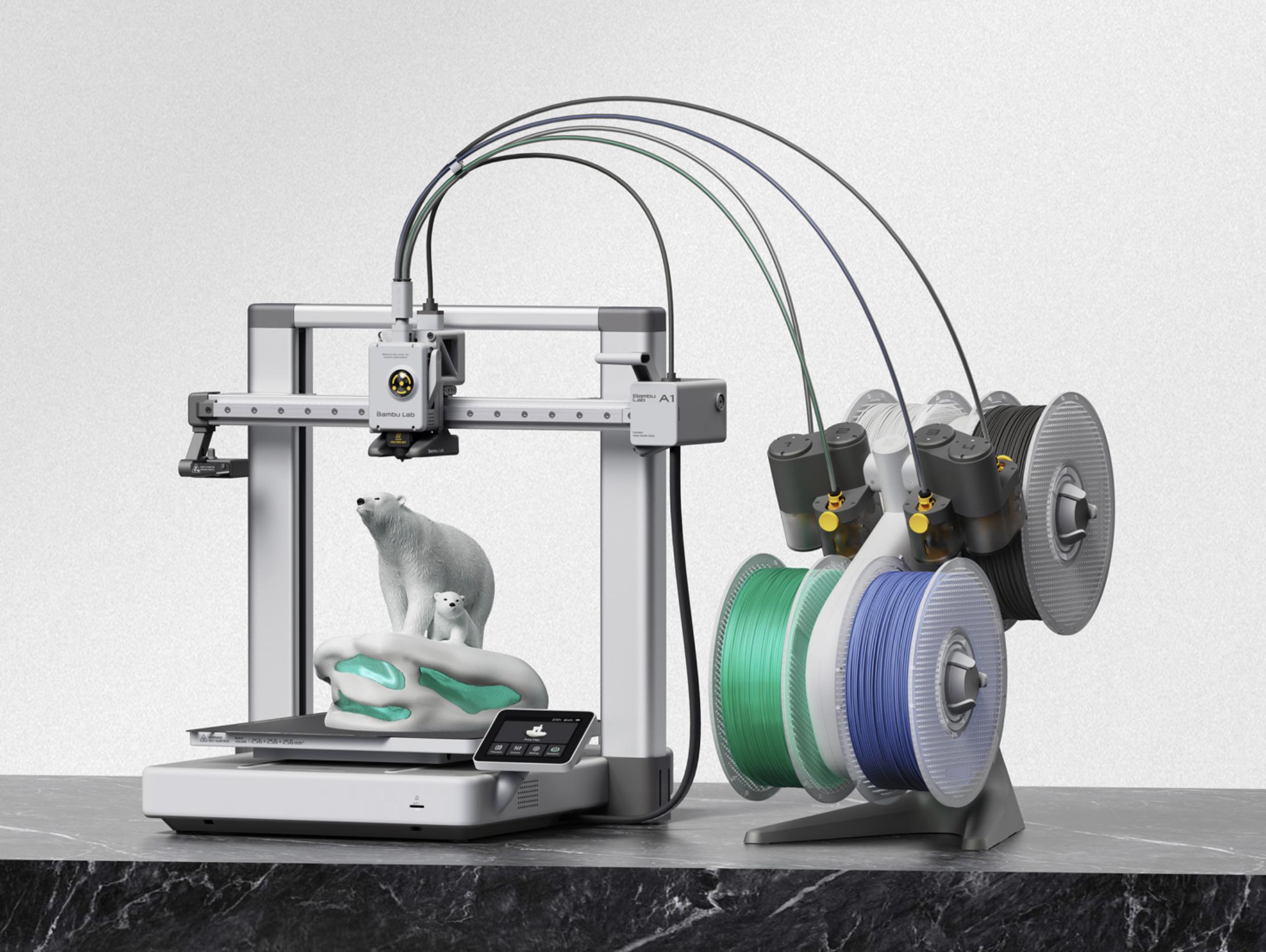
Bambu Lab A1 (Source: Bambu Lab)
Tencent and DJI Set Their Sights on the 3D Printing Track
A report from Precedence Research shows that the global 3D printer market reached $24.61 billion in 2024, and it is expected to have a compound annual growth rate of 18.5% from 2024 to 2034.
More optimistic data predicts that the annual shipment volume of the global consumer-grade 3D printer market will increase from the current more than 4 million units to 20 million units in the next five years, and then to 50 million units in the following five years.
Before the arrival of a larger-scale application wave, the "battle of taking sides" in the consumer-grade 3D printer market has already started.
As the current industry leader, Bambu Lab previously cooperated with Tencent. In July this year, Bambu Lab reached a comprehensive cooperation with Tencent Cloud, and its 3D model platform MakerWorld was fully connected to Tencent's Hunyuan 3D generation model.
The reduction of the threshold for users' 3D modeling brought about by generative AI is considered the key driving force for the explosion of the 3D printer market.
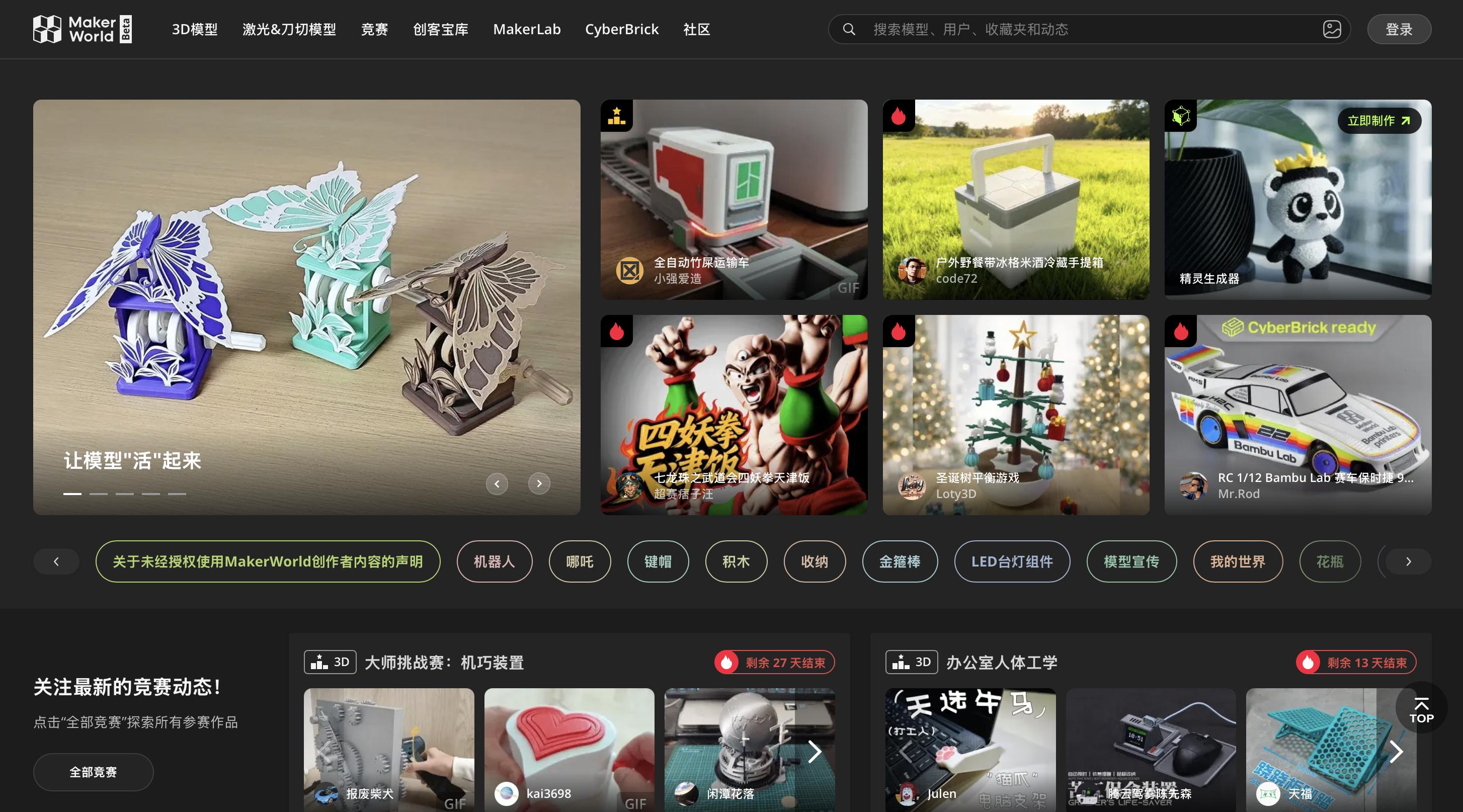
MakerWorld (Source: Bambu Lab)
It is worth mentioning that Tencent is also one of the shareholders of Creality 3D, a 3D printer enterprise. Creality 3D is seeking an IPO on the Hong Kong stock market, aiming to become the "first stock in the consumer-grade 3D printing industry".
Before the news of Tencent's investment in Bambu Lab spread, DJI confirmed its investment in BPI (Series B, with a scale of hundreds of millions of RMB). This is regarded by the outside world as DJI's official entry into the 3D printer market, which also triggered Bambu Lab's "criticism" of DJI.
Recently, Tao Ye, the founder of Bambu Lab, posted a long article of over a thousand words on his WeChat Moments, saying that "the former employer invested in a 3D printing company, and there are special clauses related to Bambu Lab in the agreement". The reason, according to Tao Ye, is that "there is a 99.9% chance that it is because the flow of talents has touched the former boss's sore spot".
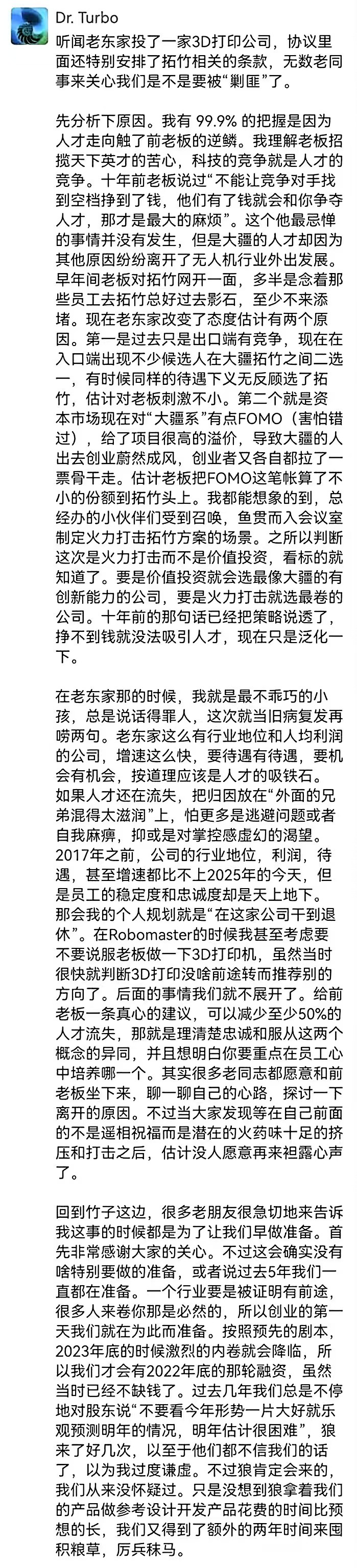
(Screenshot source: Tao Ye's WeChat Moments)
Tao Ye said bluntly that DJI's investment in BPI is not "value investment" but an attempt to "strike at other competitors": Just look at the target. If it were value investment, it would choose a company with innovative capabilities that is most similar to DJI. If it were a strike, it would choose the most cut - throat company.
When being interviewed by the media, Chen Bo, the co - founder of BPI, not only did not refute Tao Ye's view of "the most cut - throat company" but also gave an explanation: "Precise cost control allows us to set this price. People say that BPI is the most cut - throat company in the industry, but we can still make a profit at this price. So why not? Let more people join 3D printing, and the market will grow larger".
When talking about DJI's investment, Chen Bo was also very straightforward: "In the past few years, BPI 'rejected a lot of money'. Compared with simple financial investment, BPI prefers to supplement its technical capabilities with DJI's support. After this round of financing, the company will benchmark against DJI and go all - in on product R & D to improve the ecological construction."
DJI - affiliated Start - up or DJI's Agent?
The founding team members of Bambu Lab come from DJI's core R & D team. In the early days of its establishment, it was called "DJI - affiliated Bambu Lab" in the venture capital circle.
In product R & D, the Bambu Lab team also continued the systematic engineering capabilities formed during their time at DJI. They "transferred" key technologies widely used in consumer - grade drones, such as brushless motors, lidar, multi - camera systems, and resonance control, to consumer - grade 3D printers: This has improved printing accuracy, enhanced the stability of multi - material printing, significantly reduced the overall machine noise, and provided solutions for scenarios such as abnormal perception, resuming printing after power failure, and loss control in case of failure.
Even on Bambu Lab's current recruitment page, the company's self - introduction is "a technology company dedicated to revolutionizing the desktop 3D printing industry with the most advanced robot technology. It was founded by the top - notch team in China's drone industry, and the founder was responsible for operating DJI's most core consumer - grade drone division."
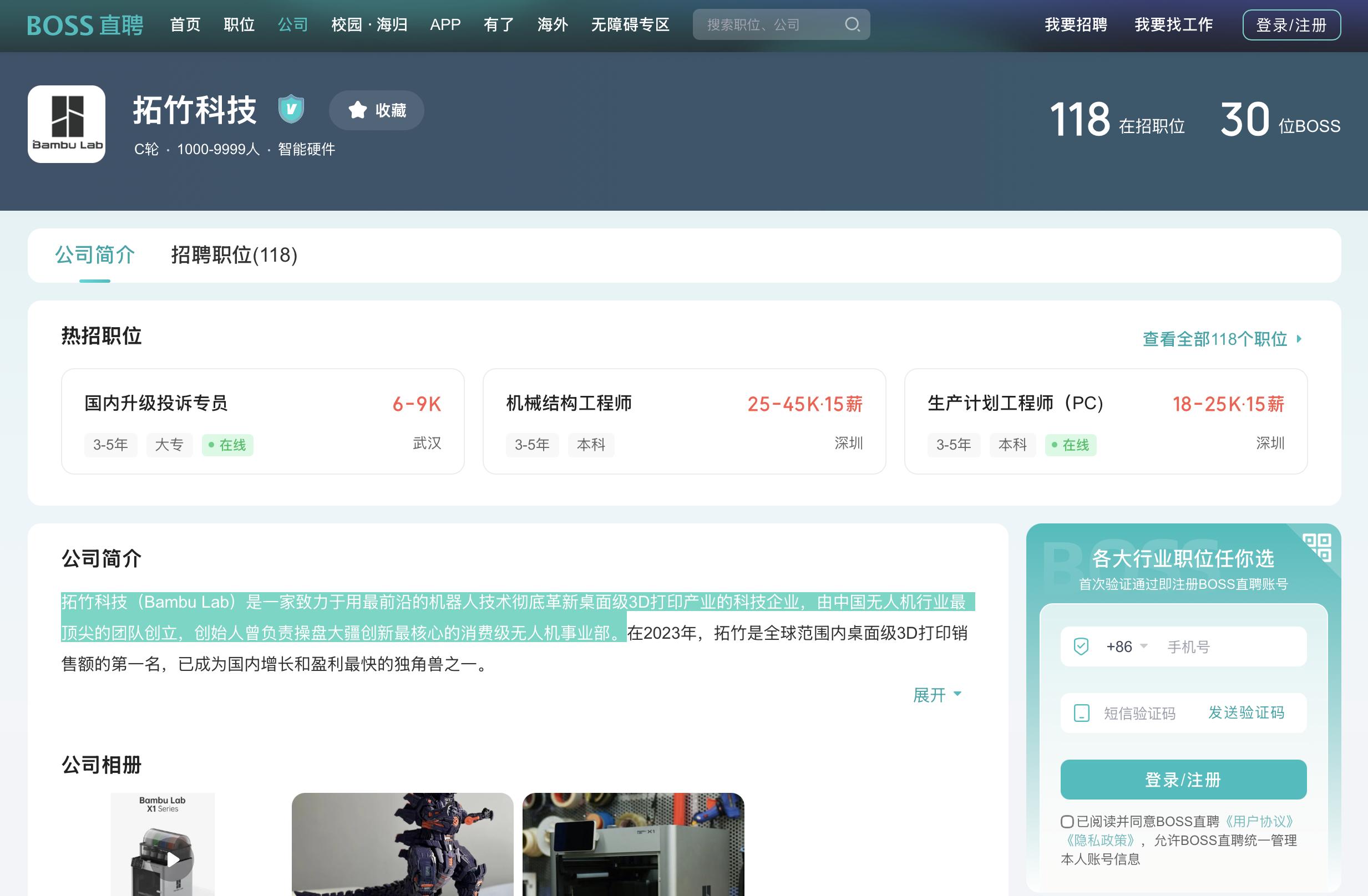
Bambu Lab's recruitment page (Source: BOSS Zhipin)
Therefore, whether from the outside view or self - recognition, Bambu Lab can be regarded as a victory of the "DJI - affiliated start - up team" in the 3D printer market, or even a "dimensionality - reduction strike" victory. However, DJI or Wang Tao's actual perception may be different.
In terms of personnel recruitment, given Bambu Lab's corporate positioning and style, there will inevitably be a fierce competition for talents with DJI. Moreover, there are a large number of underlying "common" technologies and applications in categories such as drones, action cameras (intelligent imaging), sweeping robots, and 3D printers.
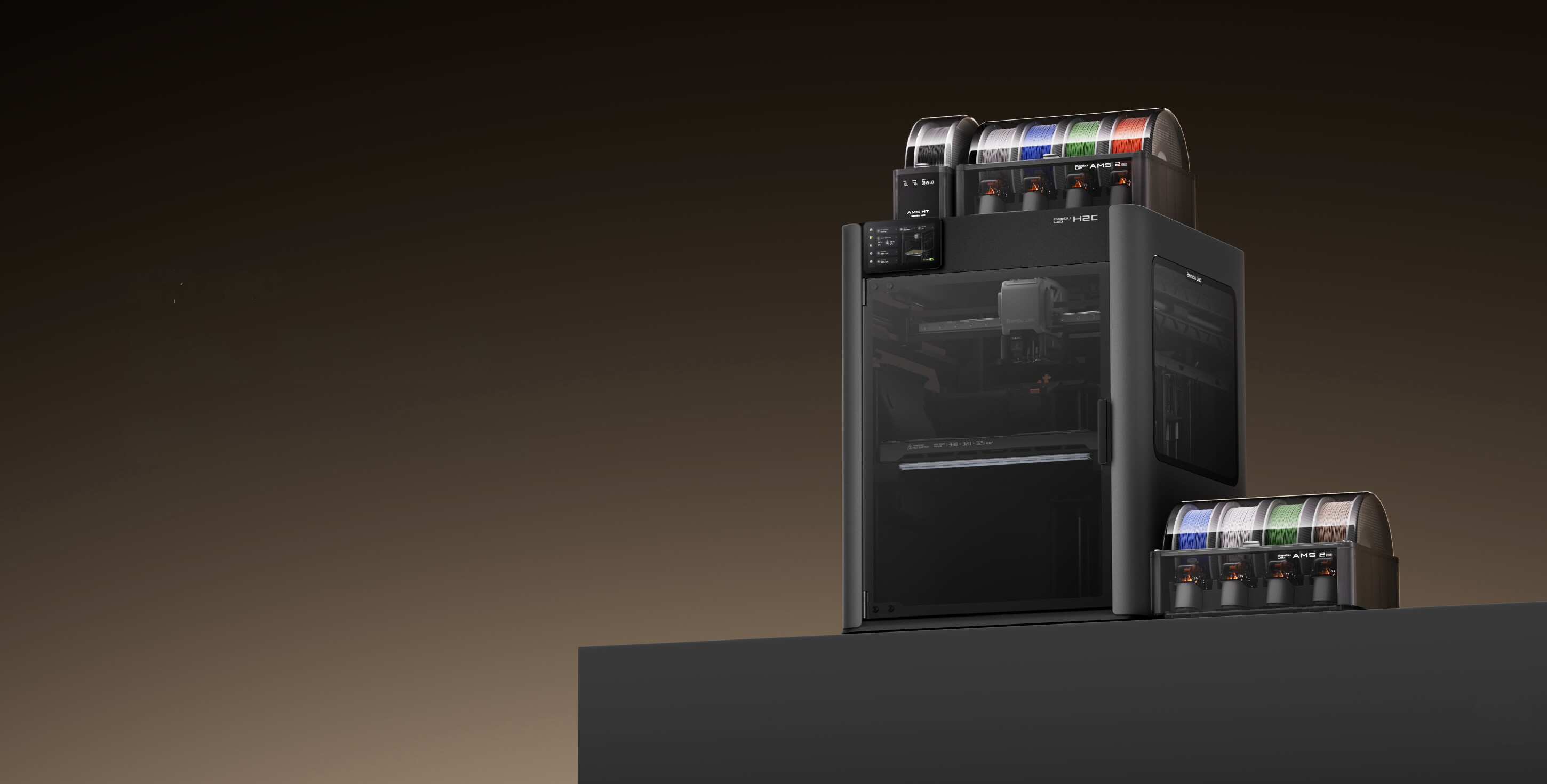
Bambu Lab H2C (Source: Bambu Lab)
The more important question is, if the "DJI - affiliated start - up team" can achieve such "brilliant" results after a few years, can the R & D personnel or small teams with certain technical capabilities within DJI in the 3D printer or intelligent cleaning (such as sweeping robots) fields resist the temptation of the rising "DJI - affiliated start - up" trend outside?
For DJI, this investment in BPI, with "special clauses related to Bambu Lab" in the agreement, including the "goal" of annual revenue exceeding 5 billion RMB in the next three years and the Series B financing of hundreds of millions of RMB, clearly shows that it is to support this enterprise to grow faster in order to compete with the leading Bambu Lab in the future.
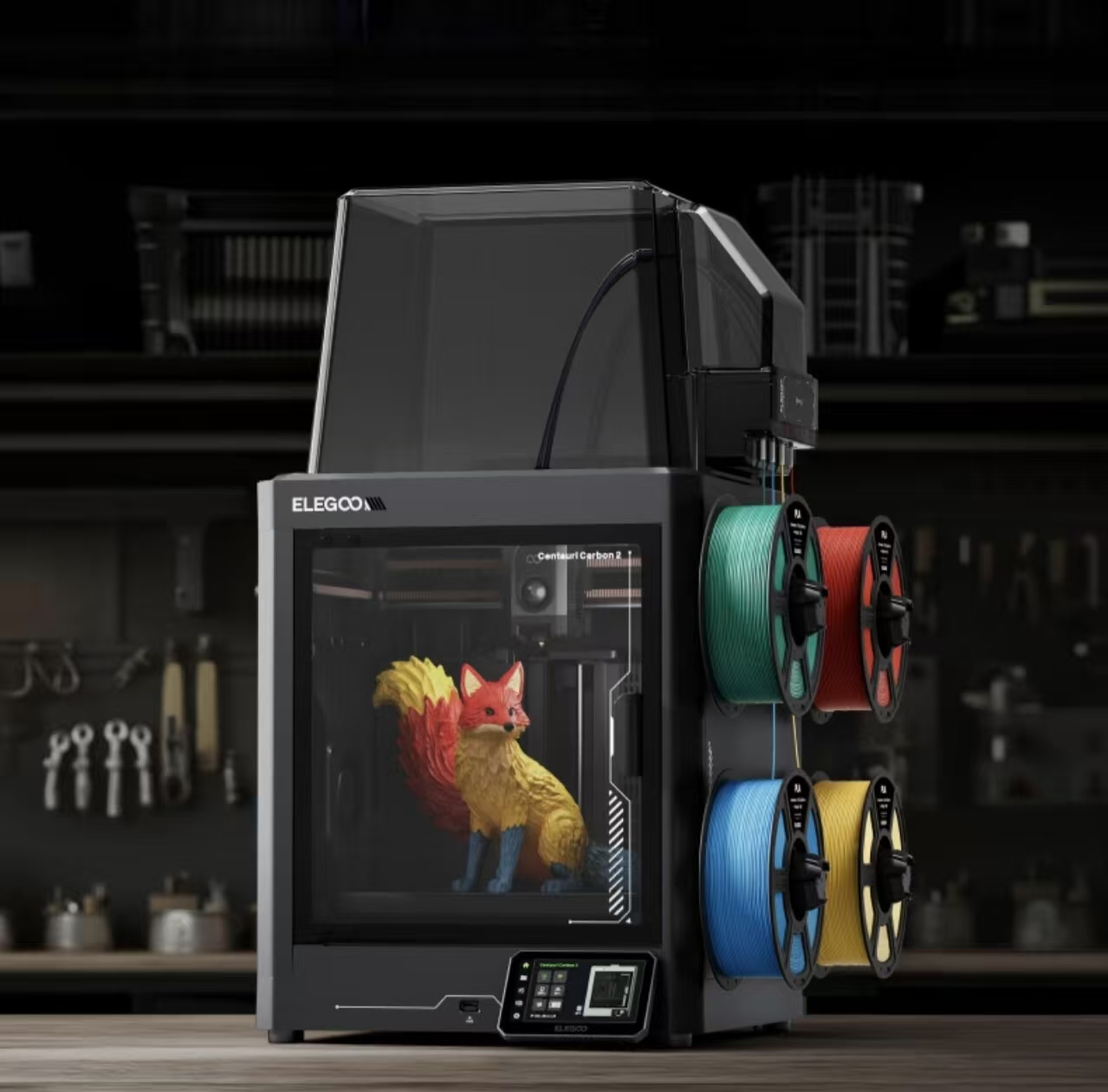
Aileku CC 2 (Source: BPI)
On the other hand, although BPI's revenue scale is also among the top in the industry, it is currently significantly smaller than that of Bambu Lab. Official data shows that BPI's revenue exceeded 1.6 billion RMB in 2024 and is expected to exceed 2.5 billion RMB in 2025. With a revenue scale several times that of BPI, the advantage and initiative still lie with Bambu Lab. Moreover, this enterprise has certain capabilities in technology R & D and market expansion.
It should be noted that the competition between the "DJI - affiliated start - up" and the "DJI's agent" in the 3D printer market may only be a temporary phenomenon. Five years ago, DJI did not enter the sweeping robot market; but this year, it launched its own ROMO series of sweeping robot products, didn't it?

DJI ROMO P sweeping robot (Photographed by Lei Technology)
For a conservative player like DJI, it may only start to consider whether to continue supporting the "agent" or enter the market directly after the consumer - grade 3D printer category truly takes off. By then, more giant enterprises will also get involved and make in - depth layouts.
The "Four Kings" in Shenzhen, Each with a "Number One" Title
Data from market research institutions shows that among the top five global consumer - grade 3D printer enterprises, four are from China and all are based in Shenzhen. They are Bambu Lab, Creality 3D, Anycubic, and BPI, which together account for about 95% of the global market for entry - level 3D printers (priced below $2,500).
The above four enterprises are also known as the "Four Kings" in the consumer - grade 3D printer market.
An interesting phenomenon is that each of the Four Kings in Shenzhen has a "number one" title.
Bambu Lab has the highest shipment volume in the global consumer - grade 3D printer market in the past three years, the new king;
Creality 3D has the highest cumulative shipment volume in the global consumer - grade 3D printer market, the old king;
Anycubic is a globally leading consumer - grade 3D printer brand enterprise;
BPI has the highest shipment volume in the global consumer - grade SLA 3D printer market.
Among them, both Bambu Lab and Creality 3D have Tencent's involvement, the cost - effective BPI has DJI's support, and Anycubic focuses on the overseas and cross - border e - commerce markets.
There is another enterprise in Shenzhen that needs to be mentioned, namely Snapmaker. Known as the "globally leading desktop multi - functional 3D printer company", Snapmaker recently completed its latest round of financing and introduced new shareholders such as Meituan, Meituan Longzhu, and Hillhouse Capital. Previously, Snapmaker's Snapmaker U1 multi - color and multi - material 3D printer set a crowdfunding record for consumer - grade 3D printer products on the Kickstarter platform with a crowdfunding amount of $20.61 million.
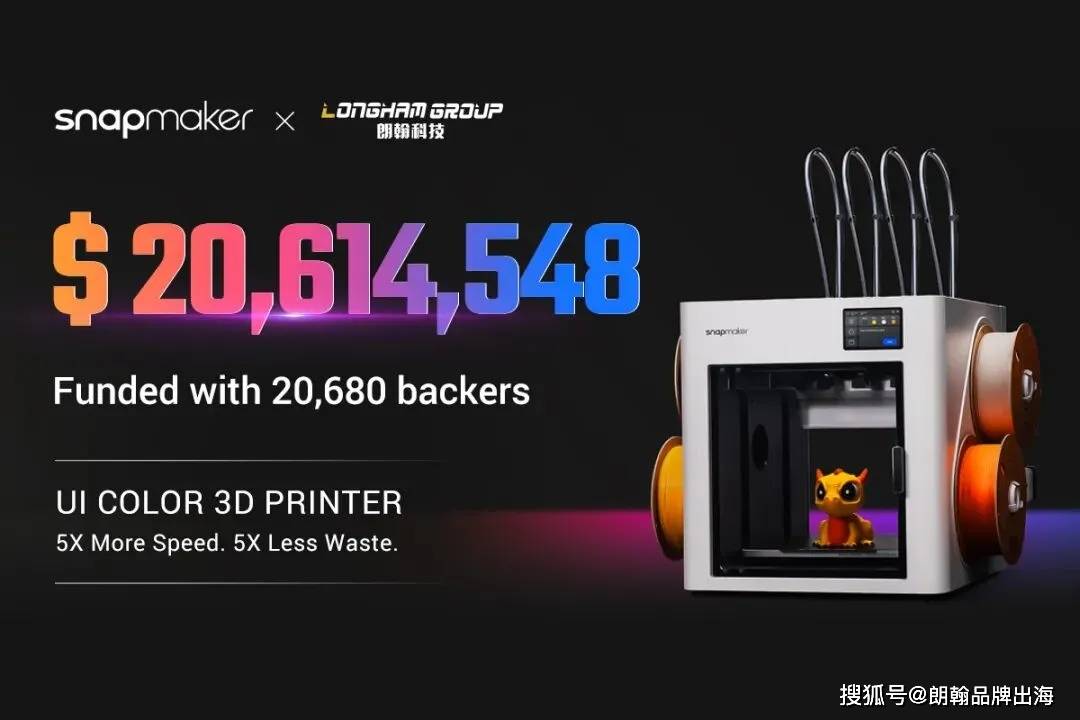
(Image source: Sohu account @ Langhan Brand Going Global)
Behind each of the five Shenzhen enterprises having a "number one" title is that the consumer - grade 3D printer market is still in its early stage of development: Each enterprise does not accept the others, and the industry's development pattern is far from being set. This is still a very new market, so new that among the 3D printer segments, only it is still experiencing "positive growth".
The global 3D printer market is currently divided into the industrial - grade 3D printer (priced above $100,000) market, the mid - range 3D printer (priced between $20,000 and $100,000) market, the professional - grade 3D printer (priced between $2,500 and $20,000) market, and the entry - level 3D printer (priced below $2,500) market.
The latest report released by CONTEXT shows that in the second quarter of 2025, among the four major categories of the global 3D printer market, only the entry - level 3D printer market achieved a year - on - year positive growth of 21%. The professional - grade 3D printer market had a negative growth of 29%, the mid - range 3D printer market had a negative growth of 11%, and the industrial - grade 3D printer market had a negative growth of 14%.