Is the pioneer of AI hardware on the verge of collapse? Rabbit, a star at CES, is reported to have defaulted on salaries. Is it because it overreached?
If you were to select a product that has propelled "AI hardware" into the spotlight, the Rabbit r1 would definitely be on the list.
As early as its release at CES 2024, the reporting team from Lei Technology experienced this product on-site in Las Vegas. This small orange "brick" became a star product at that time, thanks to its retro appearance designed by Teenage Engineering (a well - known Nordic creative company), the "natural language operating system" rabbitOS powered by large - language models, and the slogan of "replacing apps and controlling all services with a single sentence".
However, this company, which was once extremely high - profile and regarded as an industry pioneer, has recently been rumored to have unpaid salaries for several months, with some employees and outsourcing teams going on strike. To be honest, if it weren't for this news, I would have almost forgotten about Rabbit. Compared with its global popularity last year, Rabbit has become rather "unknown" today.
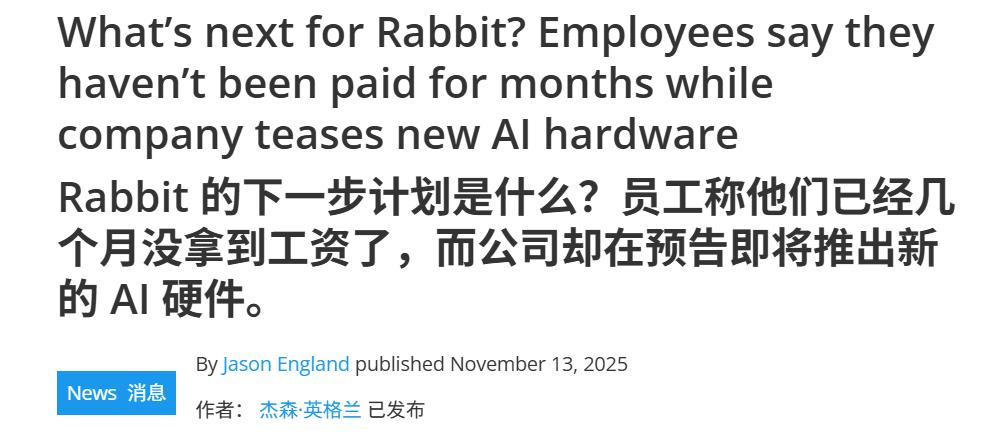
Image source: tomsguide
Although there are rumors of financial difficulties and unpaid salaries, Rabbit's official website shows that the company is still operating normally. In fact, they are even selling the Rabbit r1 at a discount. Now you can place an order for just $159, and it still supports a 30 - day no - questions - asked return policy. All in all, this project at least didn't end up being sold off in one piece like the Humane AI Pin.
Rabbit's CEO, Jesse Lyu, also admitted in an interview that the company is facing severe financial pressure and blamed it on the setbacks in entering the Indian market. To be honest, I was not optimistic about Rabbit's prospects in the Indian market. After all, in a country where the average monthly salary is only $250, not many people can afford to spend $199 on an "AI device".
Rabbit's current situation has made many people pessimistic about the future of AI hardware. However, in my opinion, it's too early to draw conclusions. The rise of large - language models has only been in the past two years, and AI hardware is still in its early stages. The failure of Rabbit doesn't prove much.
Did Rabbit stumble because it took too big of a leap?
In the large - language model market in 2024, the hype was much crazier than it is now. At that time, just a concept could attract countless investments and attention. Rabbit, which was able to produce and sell a physical product, was the focus of the AI track. Many people even directly called Rabbit "the next Apple", and some thought it would be another "iPhone moment".
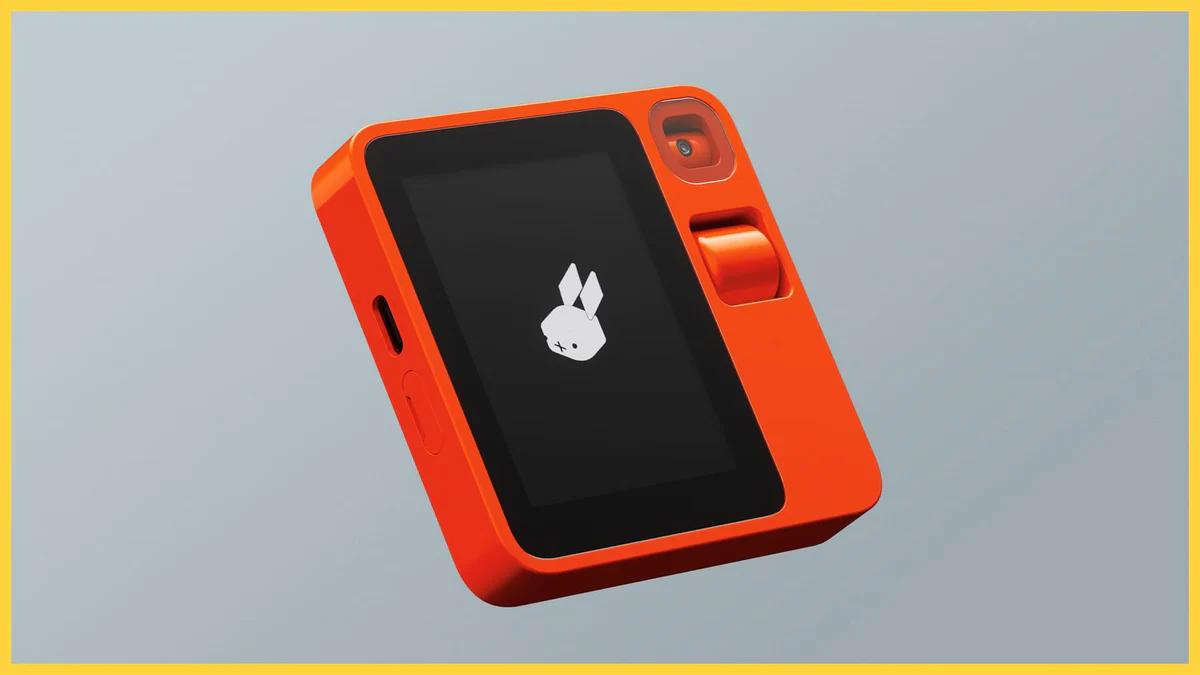
Image source: Rabbit
Rabbit, which was highly anticipated, actually achieved good results in the early stage. In August 2024, they claimed that the sales of their first - generation product had exceeded 100,000 units, making it the best - selling AI hardware at that time (since there were few competitors in the same period). It was even one of the few manufacturers that actually delivered products in bulk.
The popularity of the Rabbit r1 stemmed from their almost all - powerful product demonstrations, which raised people's expectations. However, it was also the root cause of their failure. After the initial hype faded, people quickly found that the actual user experience of the Rabbit r1 was quite different from the promotion. Issues like battery life were secondary. The more critical problem was that many functions demonstrated at the press conference were never launched.
However, simply attributing the problem to "poor product development" is not entirely correct. The real reason for its failure is that it tried to force - build a "mobile phone replacement" in an immature market. In common parlance, it "took too big of a step and ended up in trouble".
Rabbit wanted too much but ignored that its hardware design capabilities and large - language model strength could not meet such high - level requirements. For example, they initially wanted to use the Large Action Mode to complete complex tasks. Booking a flight or ordering takeout could be done with just one sentence. In reality, users often had to go back and forth with the AI for confirmation, spending several minutes to complete a task that could be done in 20 - 30 seconds on a mobile phone.
To put it bluntly, Rabbit can often only provide users with "emotional value" rather than higher efficiency. In many cases, taking out a mobile phone and pressing a few buttons provides a better experience. Moreover, many mobile phones now have AI functions, making Rabbit seem redundant.
From a product design perspective, the Rabbit r1 also has many problems. The screen is too small to handle complex information browsing and can only provide simple feedback. The camera, which is its biggest highlight, lacks truly killer "AI vision" scenarios. Most of the time, it is only used for scanning codes and taking photos.
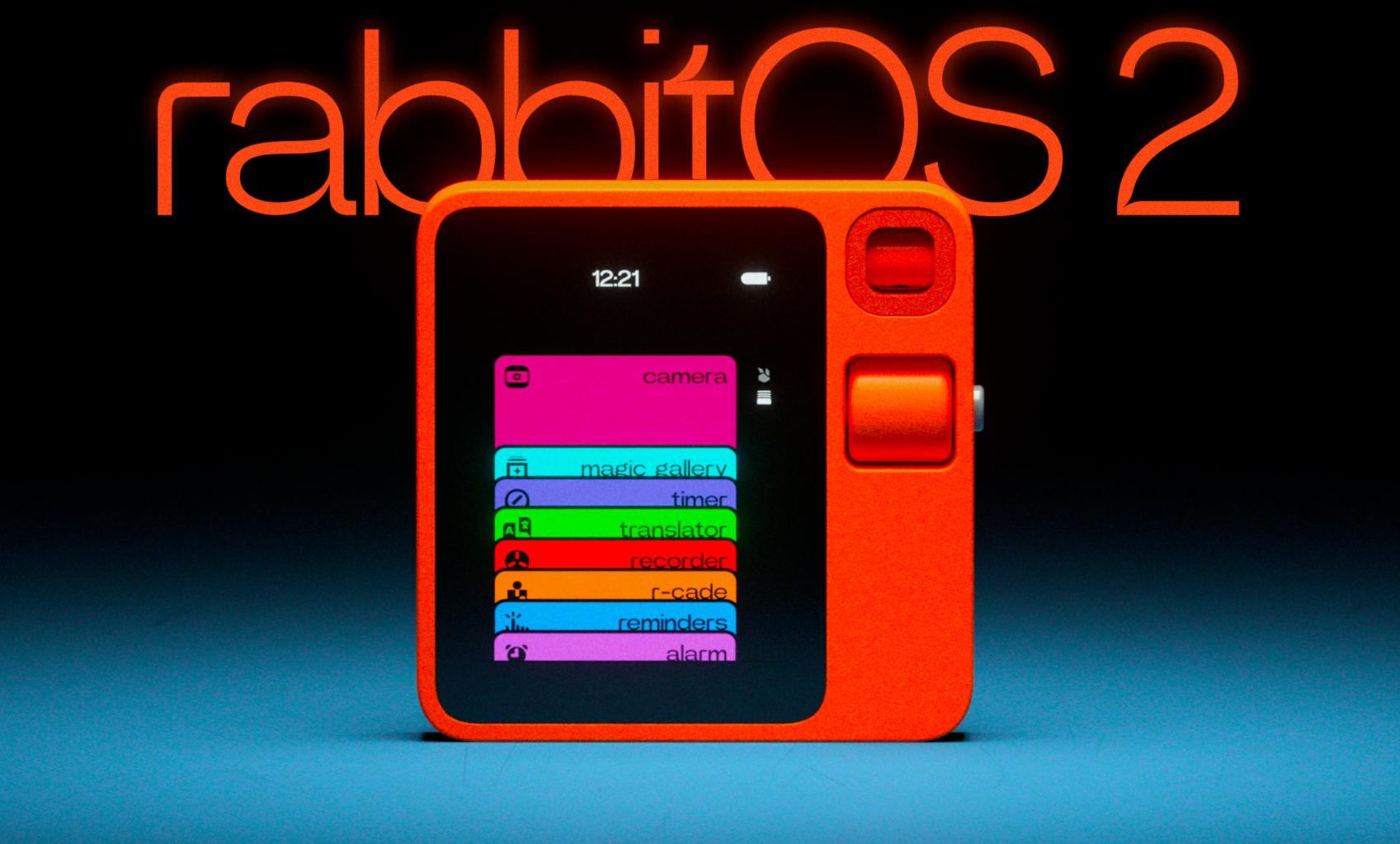
Image source: Rabbit
The presence of hardware such as the screen and camera makes the cost of the Rabbit r1 relatively high, preventing it from being quickly popularized at a low price. At the same time, it has fallen into the embarrassing situation of "touching on many functions but excelling in none". In other words, it doesn't have a significant selling point to make users choose it without hesitation.
On the other hand, the commercial large - language model used by Rabbit also keeps its continuous operation cost high. And they didn't set up a subscription membership for advanced AI functions, which is quite kind - hearted. But kindness can't solve financial problems. If the price of tokens for large - language models hadn't dropped significantly in the past year, Rabbit would probably have run out of funds.
Moreover, Rabbit's initial attempt to build an "Appless" ecosystem was not just "taking too big of a step"; it was more like trying to reach the sky in one leap. Appless, simply put, means an "application - free ecosystem" where users only see the execution results without considering how they are executed.
However, the actual user experience was far from satisfactory. So Rabbit later introduced Creations, which allows users to train their own automation scripts. In the end, it still relies on the existing app ecosystem and is hard to break away from it.
In my opinion, one of the main reasons for the failure of the Rabbit r1 is that they were too focused on the "Appless" design. If they had launched Creations at the same time as the product release, the user reviews might not have deteriorated so quickly. Clearly, Rabbit overestimated the capabilities of AI and underestimated users' dependence on the existing ecosystem.
It can be said that Rabbit's failure is not because "the path of AI hardware is wrong", but because it wanted too much. It wanted to innovate in interaction, restructure the hardware industry, and reshape the software ecosystem all at once. Each of these tasks alone is enough to crush a startup, let alone doing them all simultaneously.
Chinese manufacturers have their own ideas about making AI hardware
After the cooling - off of general - purpose AI devices like Rabbit, does it mean that AI hardware has no future? Obviously not. Just as Nokia's Symbian smartphones' decline didn't prevent the emergence of the iPhone later. What we really need to think about is how AI hardware can integrate into the existing intelligent ecosystem. Should we continue to pursue the "next - generation mobile phone", or should we first improve the experience of a specific group of people or in a specific scenario to the level where "with AI and without AI are two completely different worlds"?
Some domestic manufacturers have already started exploring this path. For example, DingTalk, a well - known office software, launched its first AI hardware, the DingTalk A1, which is not an AI terminal to "replace the mobile phone". Instead, it is a small device designed around two needs: meeting recording and office collaboration.
Although the DingTalk A1 is essentially an ultra - thin voice recorder, it is designed to be "unobtrusive". With a thickness of 3.8mm and a magnetic design, it can be either an independent AI hardware or a mobile phone accessory. It can also interact with the DingTalk ecosystem. For example, it can automatically upload recordings to the cloud for high - precision transcription, generate corresponding project lists, and synchronize them to the enterprise spreadsheet and task system, truly saving users more than half of the operation steps.
Similar hardware includes AI glasses and AI headphones. These products add AI functions to existing mainstream hardware and focus on specific uses. For example, AI glasses mainly focus on functions such as object recognition, photo translation, and quick payment, while AI headphones offer real - time translation, AI sound effects, and AI noise reduction, all aiming to solve users' actual needs.
Compared with the aggressive approach of foreign companies, domestic manufacturers are more conservative in the field of AI hardware. They believe that smart glasses, headphones, etc., will be the mainstream in the early stage. After spending a few years popularizing and cultivating users' AI usage habits, they will then move on to more in - depth and multi - functional AI hardware.
AI hardware should not aim to "replace the mobile phone"
Domestic AI hardware has a characteristic: it doesn't seek to "replace the mobile phone"; instead, it "works in conjunction with the mobile phone". As the most common intelligent device at present, ignoring the existence of smartphones and trying to start from scratch is "putting the cart before the horse". Reasonably leveraging the mobile phone's application ecosystem and edge computing power can actually enhance the experience of AI hardware.
To put it bluntly, Rabbit's biggest mistake was choosing to "go head - to - head" with mobile phones. Trying to challenge a highly mature ecosystem with a device with limited functions and unstable experience is bound to end in failure. However, Rabbit seems to have realized this problem. They claim that the next - generation product is almost completed and will be a more perfect "three - in - one" device. Here, I'll make a prediction: it might be in the form of headphones + a ring + an AI base.
It's quite difficult for AI hardware to make significant breakthroughs or achieve rapid popularization in the short term. Currently, domestic manufacturers are taking a slow and steady approach, focusing on usage scenarios and refining product experience. Maybe in a few years, when you realize it, everything around you will have become "AI hardware", and there will be no need to worry about the hardware ecosystem because - everything will be AI.
This article is from "Lei Technology" and is published by 36Kr with permission.