It skyrocketed by 2 million in 6 days. Why has this AI app gone viral across the internet?
"LingGuang" has completely caught fire.
Last week, LingGuang, the full - modality general AI assistant released by Ant Group, might be one of the biggest surprises in the AI application track by the end of 2025.
The download volume of LingGuang has been showing an accelerating growth trend. On the first day of its launch, the download volume of LingGuang exceeded 200,000. On the fourth day, it exceeded 1 million. The latest data shows that the download volume of LingGuang exceeded 2 million six days after its launch, firmly ranking 6th on the free list in the Chinese region of the App Store and 1st on the free tools list.
This growth rate has surpassed many globally popular AI applications and far exceeded LingGuang's original plan of reaching 200,000 downloads by the end of the year. According to data from the mobile application analysis agency Appfigures, ChatGPT had 606,000 downloads in its first week of launch, and it took Sora2 five days to reach 1 million downloads. LingGuang compressed this process to four days.
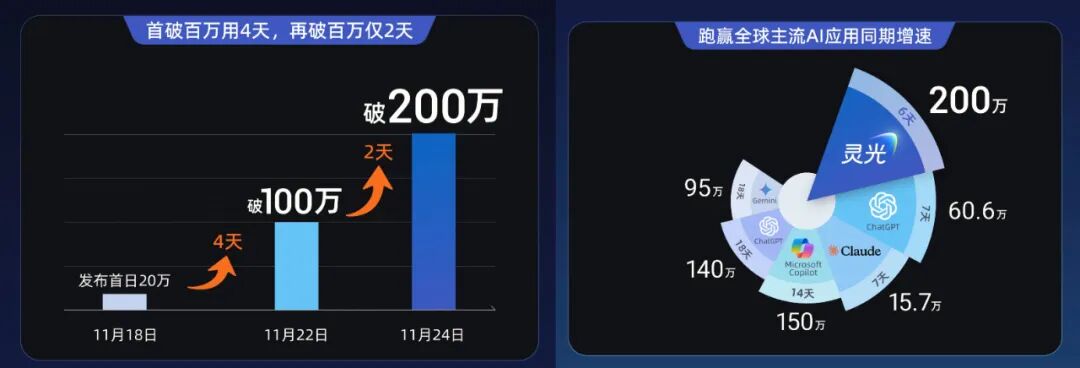
LingGuang App reached 2 million downloads in 6 days
Moreover, LingGuang is not an AI application that is used once and then left unused. The "LingGuang Flash App" function, which allows everyone to create their own applications, has become a hit and was even used to the point of crashing the system. Only four days after its launch, LingGuang had to carry out eight rounds of emergency capacity expansion due to high load, with the "LingGuang Flash App" being the key area to be protected.
Users are no longer just trying it out out of curiosity but using it to solve real - world problems. The average number of modification rounds for flash apps is six. Some people even made more than 100 modifications in two consecutive hours, fully demonstrating the strong demand for "practical AI".
In other words, the achievement of reaching 2 million downloads in six days is not accidental but a vote of approval from users through their real actions.
01. 2 million users "exploded" LingGuang, setting off a boom in creating apps by hand
Since its launch last Tuesday, LingGuang has quickly accumulated a good reputation among users. Many users have shared their first - hand experiences on social platforms, giving a lot of real feedback on aspects such as speed, ease of use, effectiveness, and product concept.
The Flash App might be the most discussed function after the release of LingGuang, setting off a wave of creating apps by hand. Searching for "LingGuang" on social platforms, you can see that many cases shared by users are related to the Flash App. From exclusive training tools to to - do list mini - programs and fuel - electric vehicle cost - saving calculators, LingGuang has created many practical apps for users to improve efficiency in real life.

Some netizens have also used the Flash App to create many interesting apps, such as boss speech translators, cyber merit boxes for tutoring homework, and lottery draw devices for taking kids out. These interesting and very "down - to - earth" usage scenarios make people intuitively feel that LingGuang has really started to integrate into everyone's daily lives. Whether it's improving efficiency or getting creative, it can be helpful.
Liu Fei, a well - known business and technology podcast host, shared that he tried to create a wallpaper generator and a small Japanese learning app using the LingGuang Flash App function, and it only took a few minutes. LingGuang also completed all the underlying support on its own, such as network services, providing a very smooth experience.
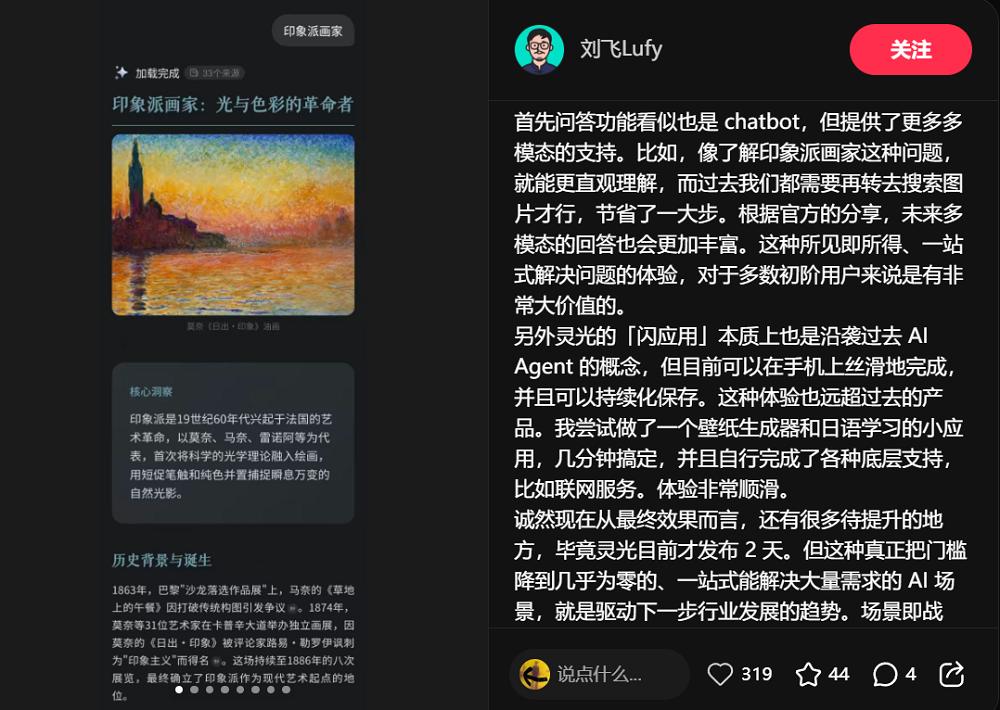
Liu Fei believes that although there is still room for improvement in LingGuang from the final effect, this kind of AI scenario that truly lowers the threshold to almost zero and can solve a large number of needs in one - stop service is the trend driving the next step of industry development.
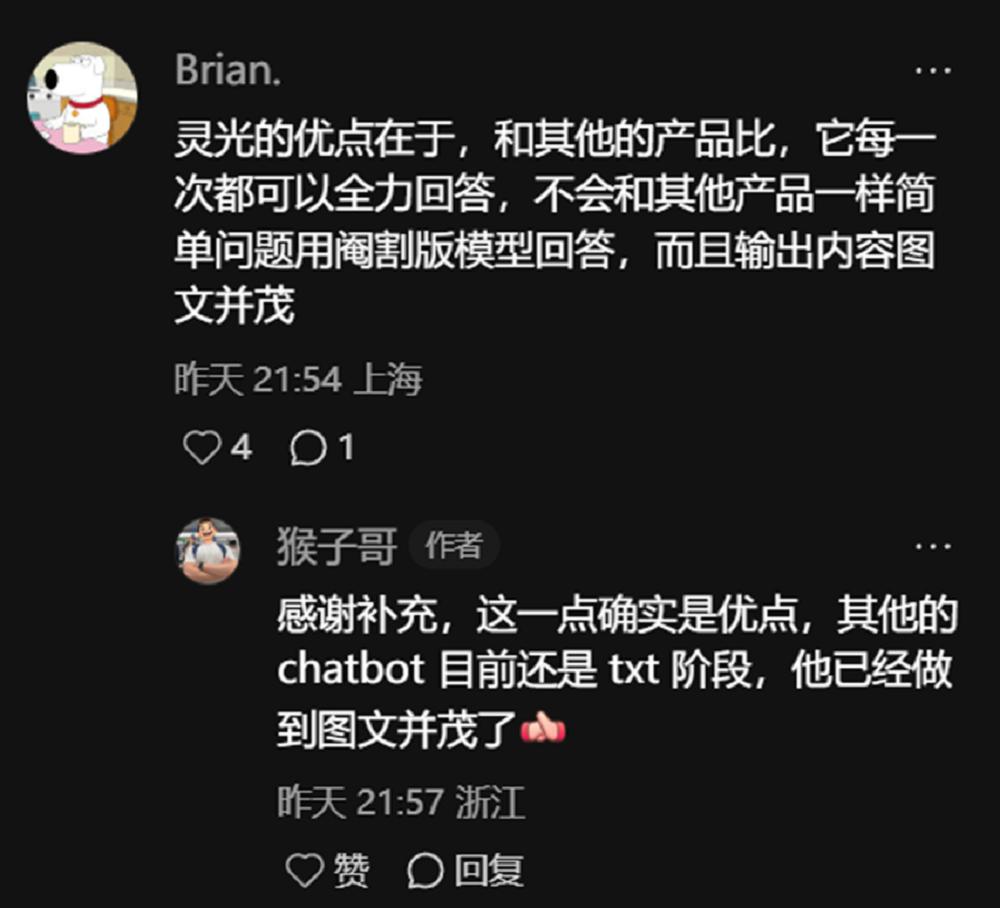
At the same time, LingGuang's multi - modality delivery has been recognized by many netizens. Some netizens vividly described it as other chatbots currently being in the "txt stage", while LingGuang has achieved a combination of pictures and text.
LingGuang supports the output of full - modality information such as 3D, audio - video, charts, animations, and maps. In previous actual tests, we found that its multi - modality responses make the conversations more vivid, with clear key points and a highly aesthetic information presentation form.
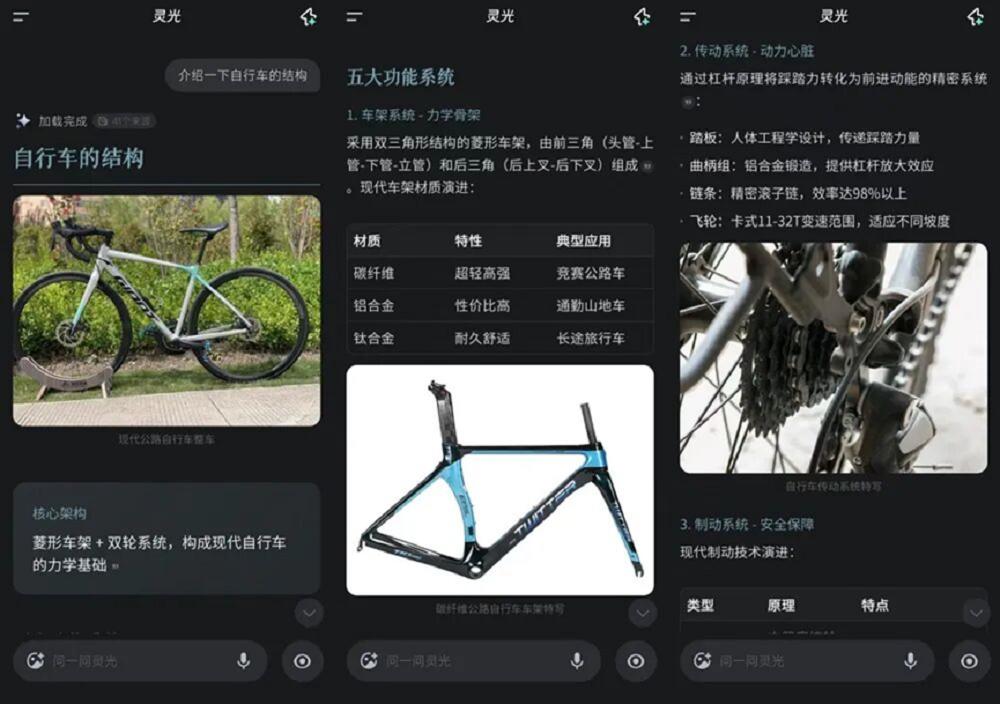
Some users believe that LingGuang has chosen a differentiated development path. The readability and structuring ability of its responses are important parts of the user experience. Not all products need to become extreme productivity tools.

Some netizens have also observed that non - tech people around them can also use LingGuang with ease this time. This might be related to LingGuang's more user - friendly UI design.
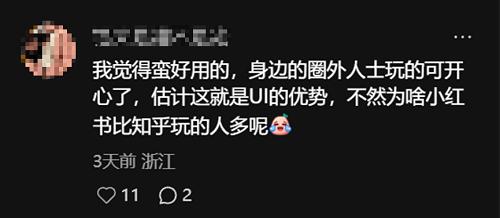
Behind the real feedback and the spontaneous creation boom, a key question has emerged - what exactly did LingGuang do right to quickly win the love of users in the crowded market?
02. From technical show - off to user experience, why did LingGuang become so popular?
Why do users think that "LingGuang is useful" and "LingGuang is different from other AIs"? It's not as simple as adding one more function or one more entrance. LingGuang has addressed the long - standing pain points in the industry's user experience and provided answers in a way that is more accessible to the general public.
In the past, the industry mainly competed in terms of hard - core capabilities such as model parameters and inference speed. However, "LingGuang" has transformed these underlying capabilities into visible, usable, and immediately perceptible improvements in user experience.
AI programming and Vibe Coding have been hot topics in the AI industry in recent years. However, for ordinary people, the tangible benefits are actually very limited: they can generate some code but don't know how to deploy it; they can write a demo but find it difficult to use it in real - life scenarios. There has always been a technological gap between the capabilities of AI and the creativity of users.
The "Flash App" has made many users realize for the first time that this technological gap is not that difficult to cross. Users don't need to write code, understand front - end development, or solve underlying complexities such as network connectivity and interface adjustment by themselves. They don't even need to turn on their computers. As long as they describe their needs, LingGuang can turn them into a directly usable small app.
LingGuang has allowed a large number of users who don't understand development to experience the fun of development for the first time and has also met the long - neglected "marginal needs" - those personalized functions that only belong to small groups or individuals can be created in a few minutes on LingGuang. Therefore, even though these apps are not perfect, they still make users feel the sense of accomplishment of creating something by themselves.
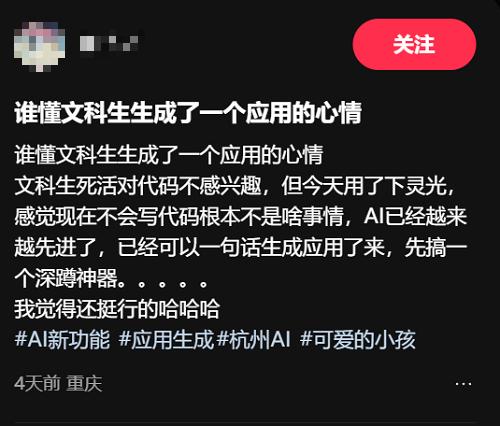
Another aspect that makes users clearly feel that "LingGuang is useful" is that it has taken a less - traveled path in the way of presenting information.
In the past year, with the explosion of inference models and Agents, the content generated by AI has become significantly longer and more complex. Although this has brought an improvement in the depth and breadth of information, it has also, in a sense, become a cognitive burden.
Cai Wei, the product manager of LingGuang, believes that the presentation of information should not be just "cold text" but should optimize the user's information - acquisition experience through diversified displays. LingGuang's multi - modality delivery is a response to this pain point.
What supports this experience is the "full - code generation" path adopted by LingGuang. Although users see a simple and clear graphic interface, there is actually a large amount of code generated by multiple large models behind it. LingGuang uses code to drive forms such as diagrams, structured summaries, and information cards to present complex content clearly at a glance.
Users' descriptions of it as "a combination of pictures and text" and "like a WeChat official account article" are not an exaggeration. It has truly lowered the reading threshold and turned the responses of large models from simple information output into a complete "information product".
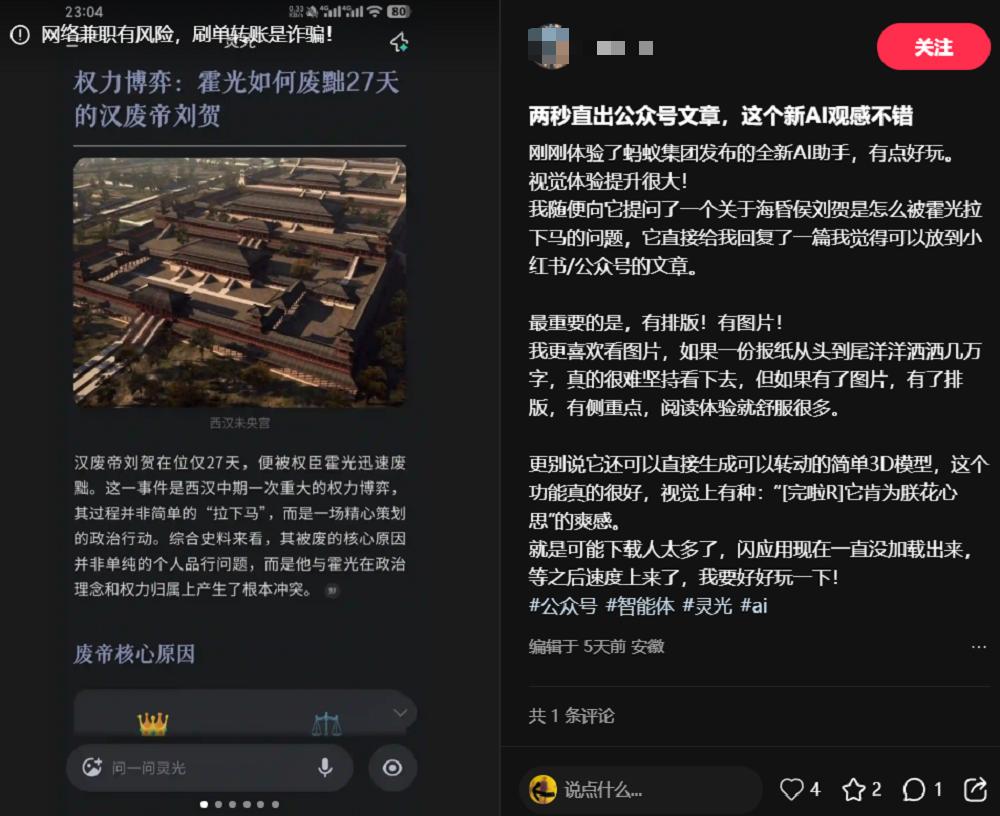
Whether it is the release of creativity brought by the "Flash App" or the reduction of cognitive burden brought by multi - modality presentation, they all point to the same trend: the competition of AI products is shifting from model capabilities to user experience.
The changes in LingGuang have made more non - technical users feel that AI is not just a tool but can truly improve the trivial aspects of life and is easy to use. This is also the key reason why it has won the recognition of a large number of real users in a short period of time.
03. Multi - modality reconstructs the way of information acquisition, and the Flash App promotes the popularization of AI
LingGuang's exploration in multi - modality and user interaction experience is actually in line with the direction of current global leading AI players.
For example, Google's Gemini series of models has always adhered to the positioning of native multi - modality. Demis Hassabis, the Nobel laureate, founder, and CEO of DeepMind, explained that native multi - modality is an important support for Google to achieve its vision of a "general digital assistant". The newly updated Gemini 3 provides the "dynamic view" ability, allowing Gemini to present information in the form of cards, charts, and high - definition pictures.

OpenAI has also recently tried to apply multi - modality to information presentation. Its Pulse function, launched at the end of September, attempts to let AI actively provide users with a customized news card, just like a carefully selected and produced one by a human editor, combining text, charts, and pictures in a structured and intuitive way.
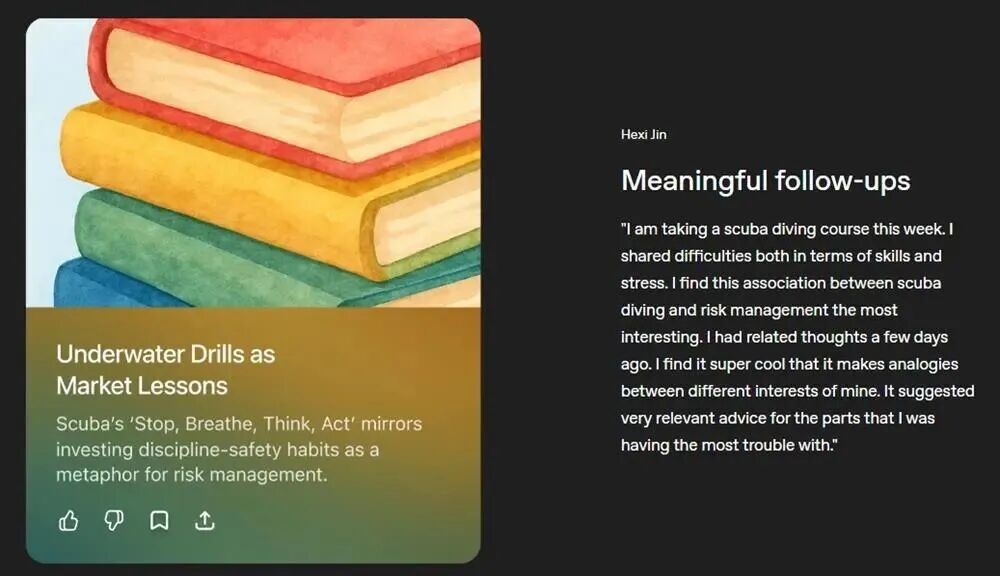
The newly released LingGuang has made corresponding arrangements in both understanding and generating multi - modality content. The multi - modality delivery mentioned earlier is its initial achievement on the generation side.
LingGuang has also created a visual understanding function called "LingGuang Open Eye". Cai Wei revealed that they position "LingGuang Open Eye" as a "visual native entrance" with the aim of providing a more natural and continuous communication mode similar to human - to - human communication.
The popularity of the LingGuang Flash App reflects the general trend of the practical application of AI. Ordinary users can quickly generate usable mini - programs or tools according to their own needs without programming or professional skills, directly turning their ideas into reality. This concept is also echoed in the upgrade of Gemini 3's application development capabilities.
This trend of making creation more inclusive and lowering the threshold also has the potential to transform the production relations in the application development field. In the past, application development has always been "centralized": only a few programmers or teams with professional skills could design, implement, and deliver applications, and ordinary users could only use off - the - shelf tools and could not really participate in the creation process.
The improvement of underlying model capabilities might make "development" become a basic skill like reading and writing, thus promoting the development of the entire software ecosystem towards decentralization, personalization, and instantaneity.
In previous communications with media such as Zhidx, He Zhengyu, the CTO of Ant Group, and Cai Wei, the person in charge of Ant LingGuang, also revealed the future development direction of LingGuang.
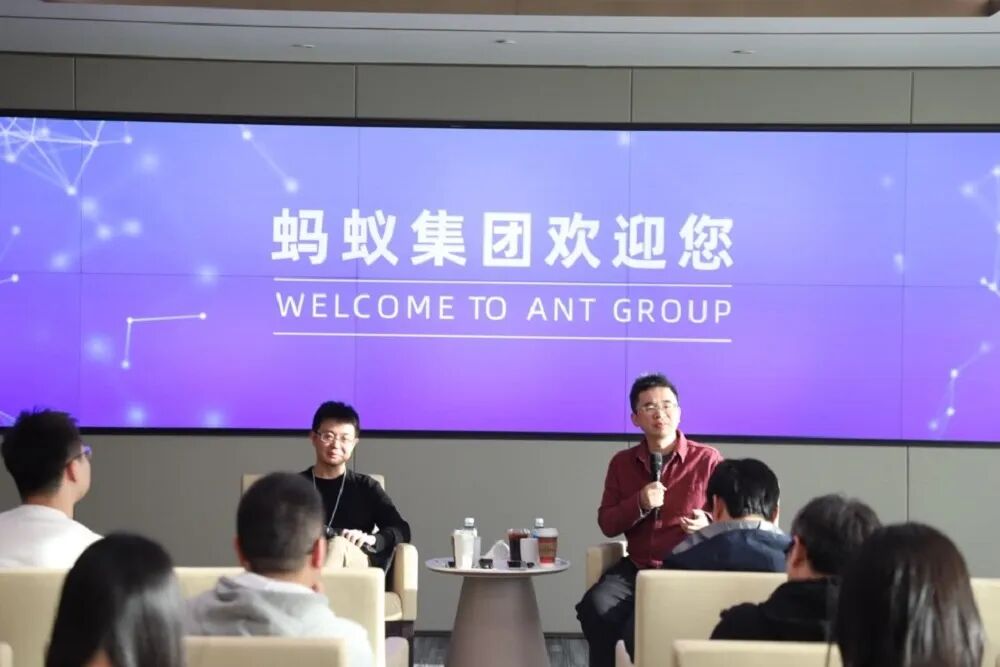
Technically, the Flash App is still in its early stage. However, in the next 6 - 18 months, as the programming ability of the model and the ability of AI to mobilize tools continue to improve, its functions will become more abundant and efficient.
The core