With a 30% premium, Xiaomi's 299-yuan power bank is a huge hit. Will magnetic attraction be the next USB-C?
A power bank priced at 299 yuan has recently become the so - called "financial product" among Xiaomi users.
It all started when Xiaomi launched a 5000 mAh magnetic power bank featuring a thin and magnetic design with Jinshajiang batteries. Thanks to its reputation for being "light, thin, and easy to attach", this Jinshajiang magnetic power bank quickly gained popularity. It was not only out of stock at Xiaomi Home but also remained unavailable for a long time on e - commerce platforms like Tmall and JD.com.
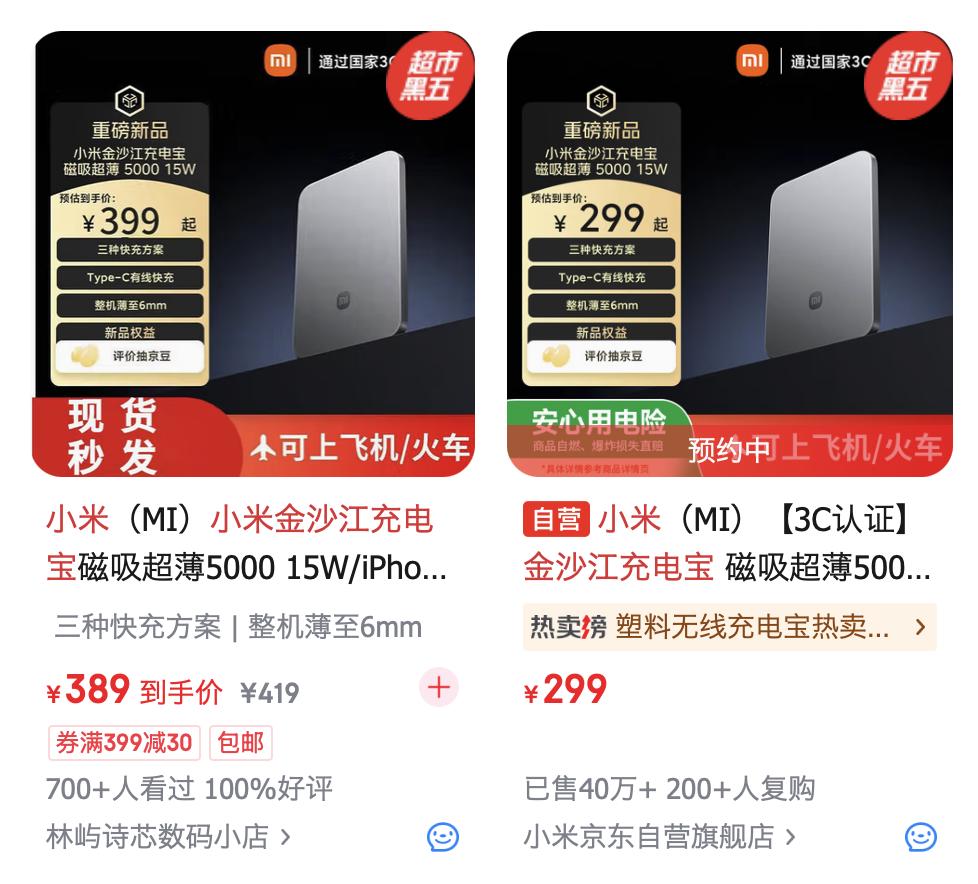
Image source: Lei Technology
With high demand for the product, scalpers naturally took action. On various e - commerce platforms, the power bank, originally priced at 299 yuan, was commonly resold by third - party merchants for 360 yuan. Some stores even marked it at 389 yuan, a premium of up to 30%.
Although I (Xiaolei) really like the magnetic ecosystem, I'm not willing to pay this 30% premium. However, compared with the scalpers, the attitude of the magnetic power bank ecosystem seems more interesting. The once - niche magnetic accessory ecosystem seems to be making a comeback into the public eye with this wave of popularity.
Did magnetic accessories suddenly become popular overnight?
Compared with the long history of mobile phone accessories, the history of magnetic accessories is relatively short. In 2020, with the iPhone 12, Apple introduced the industry's first systematic magnetic accessory ecosystem - MagSafe. It's worth noting that Apple proposed a magnetic charging cable for MacBook computers as early as 2012. From this perspective, the MagSafe ecosystem for iPhones can be seen as a kind of "inheritance" from Apple.
In Apple's vision, the MagSafe ecosystem is a new ecosystem spanning various accessory categories such as phone cases, stands, and power banks. Apple can also use MagSafe certification and MagSafe chips to guide the development of the MagSafe ecosystem. But don't forget, the essence of MagSafe is actually just a magnetic ring for aligning accessories. As long as the magnet arrangement is identified, it's entirely possible to bypass Apple's patent restrictions and create "MagSafe - compatible" products.
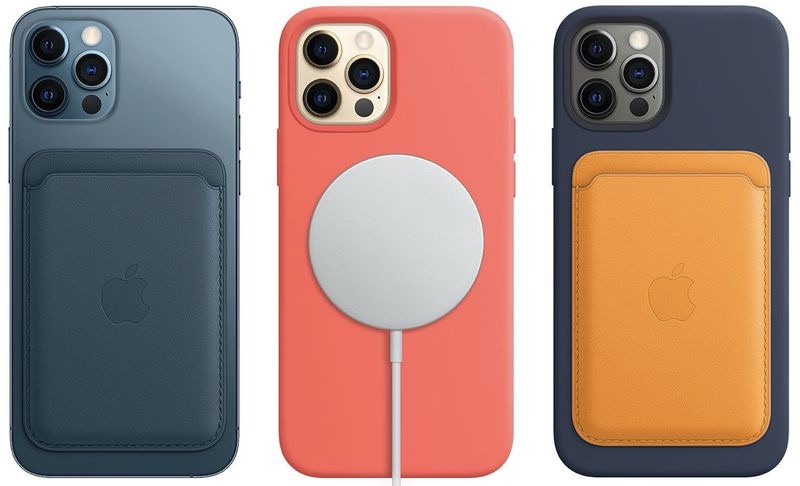
Image source: Apple
After Apple took the lead, domestic Android brands also came up with their own ideas. In August 2021, realme announced the world's first Android magnetic wireless charging technology, MagDart. In February 2022, Nubia released the Z40 Pro, becoming the first Android brand to integrate magnetic wireless charging technology into a commercially available phone.
However, at that time, Android brands were generally more interested in 100W or even higher wired charging power, and magnetic wireless charging didn't make much of a splash. On the other hand, high - energy - density silicon - anode batteries hadn't emerged yet. The magnetic wireless charging module would take up space in the battery, negatively affecting the phone's battery life, so brands were reluctant to install built - in magnets.
As a result, for a long time, domestic mobile phone brands had a rather "ambiguous" attitude towards the magnetic ecosystem. Brands wanted to use accessories like stands, coolers, and power banks developed around magnetism but didn't want to change their designs for the magnetic ecosystem.
Based on this situation, the domestic mobile phone industry came up with a "roundabout" solution. Brands wouldn't install built - in magnetic rings in phones but would disclose the specific positions of charging coils to relevant brands. This would make it easier for accessory brands to design magnetic phone cases, leaving the choice of "magnetism or not" to users.
Domestic brands are building on MagSafe
In hindsight, domestic mobile phone brands' decision not to blindly follow the MagSafe standard was clearly the right one. Considering the support for wireless charging from both domestic and foreign brands, I (Xiaolei) believe that the global wireless charging technology has reached a crucial point where its development direction needs to be redefined. To put it more bluntly, it's time for Chinese brands to decide the future development of the wireless charging industry.
In terms of technical reserves, Chinese brands have long been "far ahead" in the field of wireless charging. Instead of continuing to follow international standards, they should leverage their existing technical accumulations to promote wireless charging standards that better meet market demands. Under relevant regulations, mobile phone brands can no longer engage in a power - race for wireless charging. Therefore, it would be better to unite different mobile phone brands to create a non - proprietary wireless charging system and improve the user experience of wireless charging beyond high - power fast charging.
From the perspective of the industrial chain, Chinese manufacturers already have the ability to establish their own wireless charging standards. Considering the wide application of wireless charging technology in smart home and Internet of Things devices, establishing a wireless charging alliance system centered around Chinese brands can form a technical closed - loop for the technological development of related industries such as smart home.
In this context, the magnetic ecosystem, stripped of its "charging" function, must find a new way forward.
For example, years ago, Black Shark released a phone cooler fixed by magnetism. Different from the "clamp" structure of traditional coolers, the magnetic cooler neither blocks the phone screen nor accidentally triggers phone buttons. It also uses magnets to ensure a firm installation, making sure the cooling pad can closely adhere to the phone's heat - generating area. Brands like Baseus quickly launched car phone stands based on the magnetic ecosystem, making it more convenient to place and remove phones.
Even mobile phone brands themselves have started to create non - charging accessories based on the magnetic ecosystem. At the recent OPPO Find X9 launch event, OPPO released a new magnetic photography fill light. This new fill light can not only provide light for video shooting but also has high - power flash and wireless shutter synchronization functions, which can be used as a flash when taking photos.
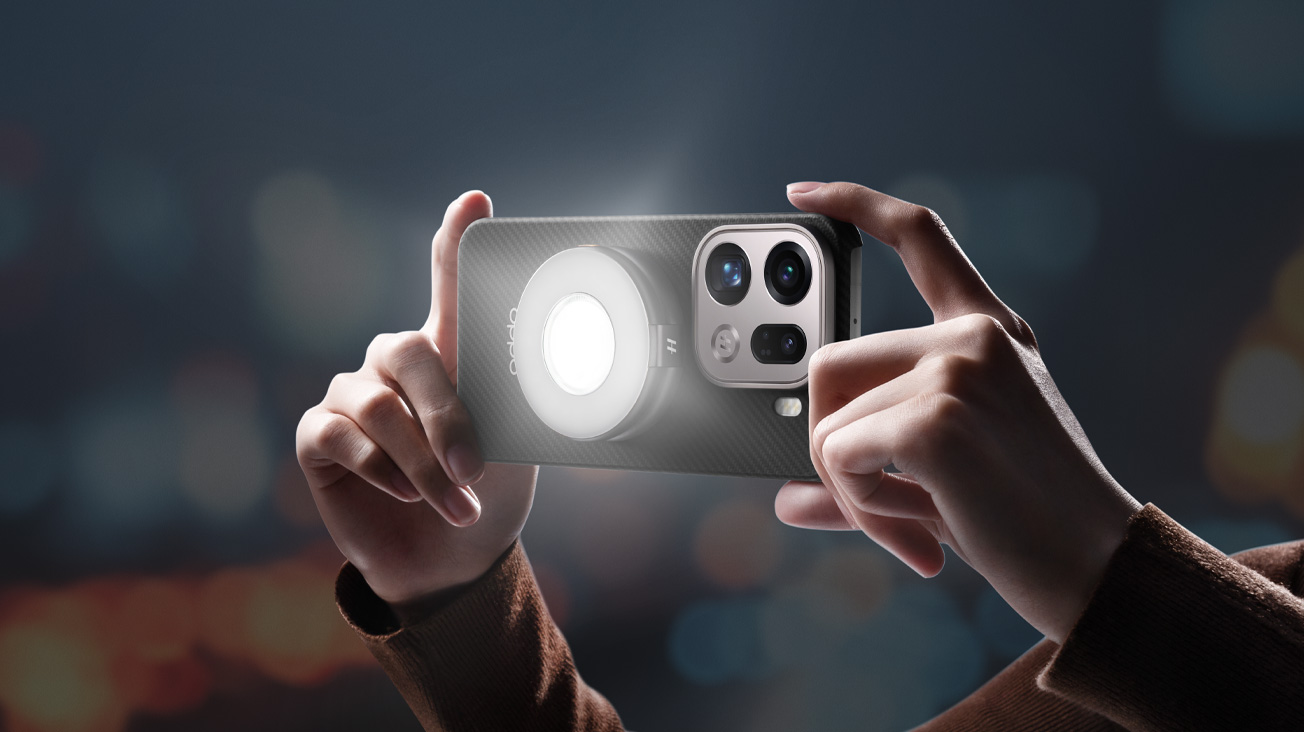
Image source: OPPO
For Apple, removing the charging function from MagSafe is a step backward. But for domestic brands, freeing the magnetic ecosystem from the limitation of charging actually gives it more room for development. Even Huawei's upcoming Mate 80 phone will natively support the magnetic ecosystem.
Seeing the magnetic ecosystem "scattered like stars", I (Xiaolei) have a bold idea. Is there a chance for the future magnetic ecosystem to become the next USB - C?
Can magnetism become the next USB - C?
In Lei Technology's view, in 2025, magnetism (not just MagSafe) has every chance of becoming an industry standard. After years of development, the magnetic ecosystem has met three key conditions for becoming an industry standard: clear user value, a large number of industry participants, and a wide range of practical scenarios.
There's no need to elaborate on the value of the magnetic ecosystem. The core reason why USB - C replaced micro - USB is that its "reversible plug" design brings extremely intuitive and daily - experienced convenience to users. The value of the magnetic ecosystem is obvious to all.
As for the participants in the magnetic ecosystem, there are countless. Different from the MagSafe ecosystem, which has extremely high entry barriers and significant costs, the magnetic ecosystem has almost no entry fee. Even phone case brands with no technology but only good at telling stories about the craftsmanship of contract manufacturers know how to place magnets in the back of phone cases.
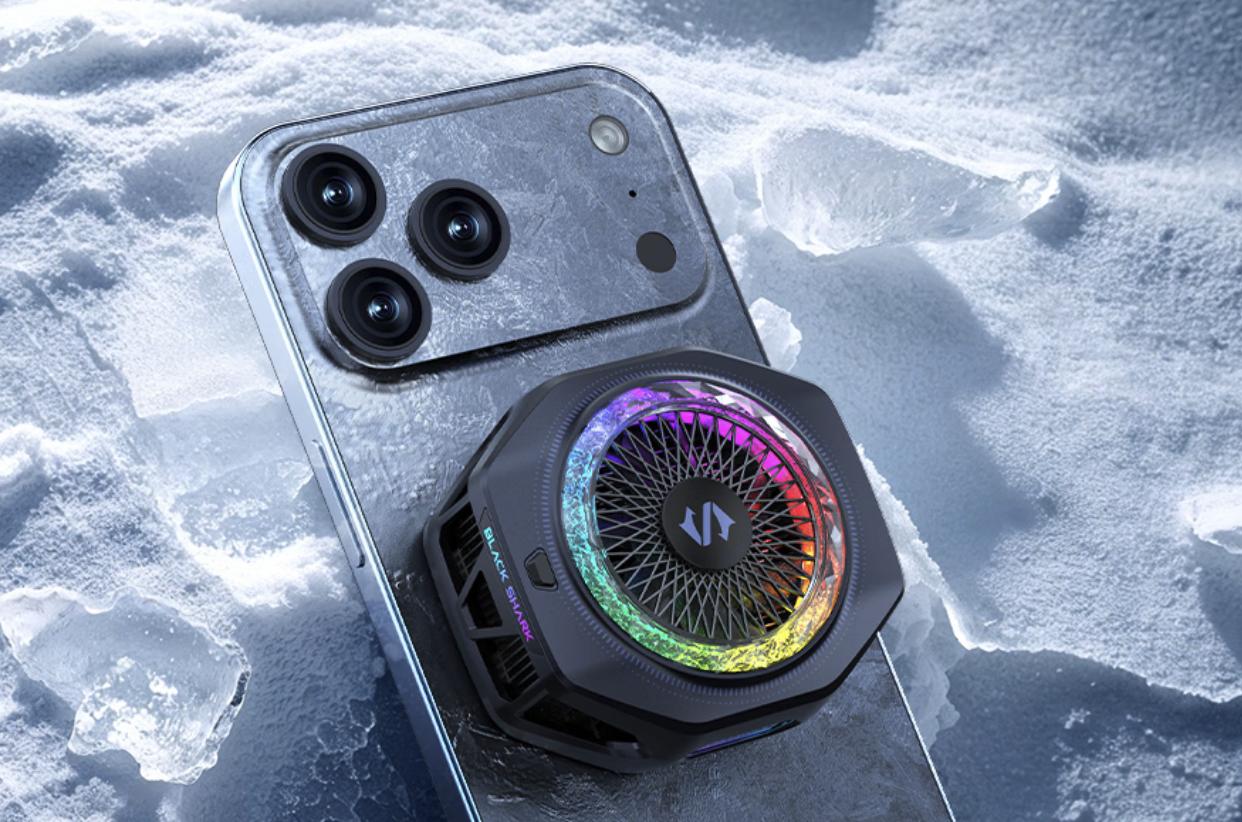
Image source: Black Shark
Finally, let's look at the scenarios of the magnetic ecosystem. The emergence of USB - C brought a truly universal cross - scenario interface to consumer electronics, and the magnetic ecosystem has achieved the same. In five years, the magnetic ecosystem has developed scenarios such as cooling, charging docks, fill light, expansion, and car fixation. Anything that can be attached to the back of a phone could potentially benefit from magnetism.
It's undeniable that there are fundamental differences between the magnetic ecosystem and USB - C. The popularization of USB - C is inseparable from EU laws and regulations, while magnetism is more like a "tacit agreement" among mobile phone brands. Fortunately, this "tacit agreement" has sufficient breadth and will last for a long time in the future.
Lei Technology believes that if we really want to develop the magnetic ecosystem into the next USB - C, it requires the joint efforts of mobile phone brands, accessory brands, and consumers. It's certain that the magnetic ecosystem won't have the same "legal weapon" as USB - C. But with Huawei's entry, at least from this year on, the magnetic ecosystem will no longer be an "optional" feature but a new trend worthy of brands' consideration.
I wonder which accessory will be hyped up as the next "financial product" once the magnetic ecosystem becomes an "industry standard".
This article is from "Lei Technology" and is published by 36Kr with permission.