How far are solid-state batteries from us?
In 2025, solid-state batteries have become the focus of the global new energy industry with unprecedented enthusiasm.
On the one hand, the mainstream liquid lithium-ion battery technology is gradually approaching the theoretical ceiling in terms of energy density and safety. More breakthroughs are concentrated in engineering fields such as material compaction density and cell grouping efficiency. On the other hand, from the laboratory to the industry, there have been continuous news about technological breakthroughs, sample releases, and mass production schedules of solid-state batteries recently, which have raised the expectations of the capital market and the public amidst a plethora of concepts and terms.
The all-solid-state battery is recognized as the next-generation battery technology with disruptive advantages. It is regarded by the industry as the "ultimate solution" to address the range anxiety and safety concerns of electric vehicles.
Its energy density is expected to exceed 600 Wh/kg (watt-hours per kilogram), which is more than twice that of the current mainstream battery technology - the liquid lithium-ion battery (200 Wh/kg - 300 Wh/kg). It also has higher safety and can eliminate the thermal runaway risk of the electrolyte in liquid lithium-ion batteries.
However, the path from scientific theory to commercial mass production is much more difficult than expected. The selection and stability of materials for solid electrolytes, as well as the high development costs and difficult manufacturing processes, form the "valley of death" before industrialization.
In the current global competition of solid-state batteries, Chinese enterprises are almost on the same starting line as their competitors from countries such as Europe, the United States, Japan, and South Korea. They are all in the critical stage of climbing the difficult slope from scientific verification to engineering verification, and no enterprise has reached the threshold of large-scale commercial use. Among Chinese enterprises, from traditional battery enterprises such as Gotion High-Tech and Sunwoda to enterprises focusing on solid-state battery technology such as QingTao Energy and Weilan New Energy, and even automobile enterprises such as Chery and SAIC, are all actively exploring in the field of solid-state batteries and making multi-point layouts in different technical routes such as sulfides, oxides, and polymers.
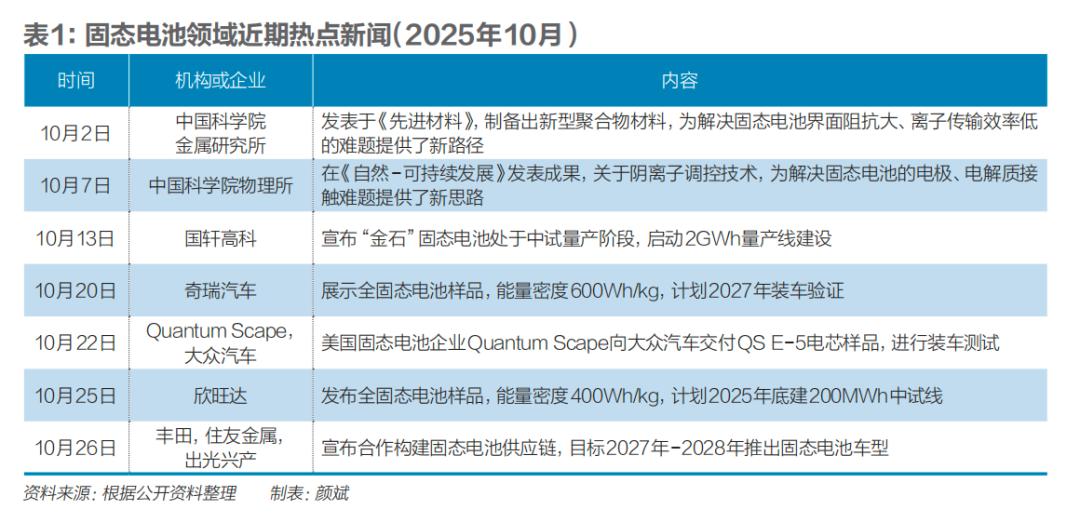
All-solid-state batteries have demonstrated disruptive potential at the laboratory sample stage. For example, the sample released by Sunwoda has an energy density of 400 Wh/kg, and the cell energy density of the "Rhino S" battery module demonstrated by Chery Automobile is as high as 600 Wh/kg. There are also various materials in the experimental stage with an energy density exceeding 700 Wh/kg.
Most of the products that have been applied on a small scale in the market currently belong to the category of "semi-solid batteries" (also known as "solid-liquid batteries" in the industry), with a single-cell energy density of about 350 Wh/kg. For example, the battery installed in the SAIC IM L6 model is from QingTao Energy, with an energy density of 368 Wh/kg, and the cells of the 150 KWh ultra-long-range battery pack of NIO are from Weilan New Energy, with an energy density of 360 Wh/kg.
There are fundamental differences between "all-solid-state" and "semi-solid" in terms of technology. All-solid-state batteries are a disruptive innovation to existing technologies in terms of materials, processes, and performance. Solid-liquid batteries are an improvement based on the existing liquid lithium-ion battery system. They highly inherit the liquid lithium-ion battery industry chain in terms of material systems, manufacturing processes, and equipment, and still essentially belong to the category of liquid lithium-ion batteries, with relatively limited performance improvement.
The technological gap between the two is huge, but some market players often blur the definitions or use them interchangeably in their publicity. Industry associations, technical experts, and relevant departments all intend to clarify the difference between "solid-state" and "semi-solid". The most mainstream voice is to standardize the naming of "semi-solid batteries" as "solid-liquid hybrid electrolyte lithium-ion batteries", abbreviated as "solid-liquid batteries". This move aims to clearly distinguish this type of battery from real solid-state batteries and avoid excessive speculation using the concept of solid-state batteries.
Standardizing the naming is also to cool down the current hot market sentiment. Since the beginning of this year, there have been continuous technological breakthroughs, sample releases, and disclosures of new progress in the field of solid-state batteries, pushing the market enthusiasm to a new height. In October 2025, major news about solid-state batteries frequently appeared in the newspapers.
The intensive progress has increased the market's attention to solid-state batteries. The solid-state battery index (BK0968) released by the Internet financial service institution Orient Fortune rose from a low of 1288 points on April 9, 2025, to a high of 2426 points on October 9, almost doubling in half a year. However, in addition to the fanaticism, the current market generally underestimates the huge gap between experimental results and commercialization.
01
The "Progress Bar" of Solid-State Battery Technology
To evaluate the current development level of solid-state batteries, the industry has introduced the "Technology Readiness Level (TRL)" developed by the National Aeronautics and Space Administration (NASA) in the 1970s. It is a universal tool for multiple global science and technology and industrial organizations to evaluate the maturity of various technologies. It divides the maturity of a technology from the laboratory to mass production into 9 levels, belonging to three major stages: scientific verification, engineering verification, and commercial verification.
According to this classification standard, there is still a significant gap between solid-state battery technology and mature mass production. And recent progress in the scientific research community and the market can also be located in the development stage accordingly.
Two research results (TRL2 - TRL3) published by the research team of the Chinese Academy of Sciences are major breakthroughs at the basic science level. The results were published in top academic journals, proving their scientific principles. However, currently, these breakthroughs are only limited to verified scientific concepts and have not been integrated into the cell product design.
The latest QSE - 5 cell sample (TRL5 - TRL6) of the US company Quantum Scape began to be delivered to its partners for vehicle testing in the third quarter of 2025. At the Munich Auto Show in September, this cell sample was demonstrated on a motorcycle. Completing the prototype cell, testing in relevant environments (motorcycles and cars), designing the manufacturing process, and building a pilot line are the main tasks at the TRL5 - TRL6 stage. However, these are still only at the sample stage, not mass - produced commercial products.
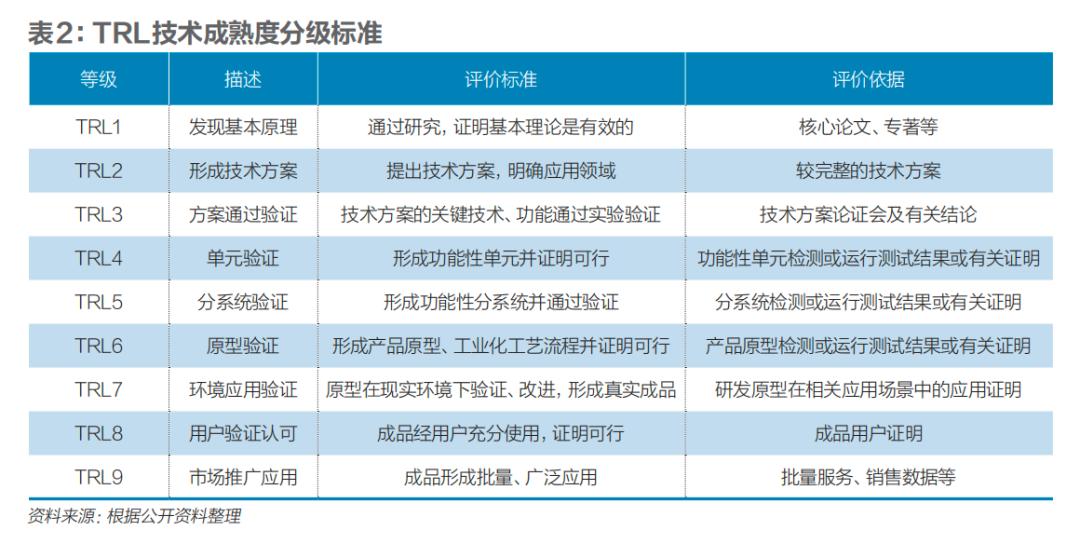
The solid-state battery (TRL5 - TRL6) released by Sunwoda has an energy density of 400 Wh/kg and plans to build a 200 MWh (megawatt - hour) pilot production line by the end of 2025. Similar to Quantum Scape, it is currently in the prototype testing and pilot line verification stage.
The prototype of the solid-state battery module "Rhino S" (TRL4 - TRL5) of Chery Automobile claims to have an energy density of up to 600 Wh/kg and has passed a number of extreme safety tests, including drilling, steel needle puncture, 50% extrusion deformation, and even immersion in water, without any thermal runaway phenomenon. Conducting sample verification in a controlled laboratory environment is a typical stage of TRL4 - TRL5. And Chery's plan to conduct vehicle testing in 2027 is a sign of entering the TRL6 stage.
The 200 MWh pilot line of Gotion High - Tech's "Jinshi" solid-state battery (TRL7) has been connected, and the yield rate is stable at 90%. The test vehicle equipped with the "Jinshi" solid-state battery sample has completed a driving mileage of more than 10,000 kilometers. The connection of the pilot line and long - distance real - vehicle road testing are signs of entering the TRL7 stage, indicating that it has been successfully tested and data has been collected in the actual operating environment, not just a sample on the pilot line.
However, it should be noted that this battery does not choose the metal lithium anode, which has the highest energy density but also greater challenges. Instead, it uses the combination of "sulfide electrolyte + high - nickel cathode + silicon anode", which has lower mass - production challenges at this stage. The final energy density of the cell is 350 Wh/kg. Although it has obvious improvements compared with ternary and lithium iron phosphate batteries, it has no advantage compared with solid - liquid batteries.
Currently, no company's all - solid - state battery has entered the commercial verification stage globally. The schedules proposed by various companies, such as Toyota's 2027 - 2028 and Chery's 2027, refer to the time points of entering the TRL7/TRL8 stage, that is, the time points for prototype testing and system verification in the real environment, not the time to complete TRL9, that is, the time to achieve full commercial deployment. Therefore, leading battery companies such as CATL and BYD are cautious about the high enthusiasm for solid - state batteries. They continue to increase investment in technology research and development. For example, CATL's solid - state battery research and development team has exceeded 1,000 people. But in terms of the schedule for large - scale mass - production sales, they all expect it will not be earlier than 2030.
02
The "Mass - Production Long March" of Liquid Lithium - Ion Batteries
When evaluating the prospects of solid - state batteries, people often compare them with the previous milestone technology and lack the actual perception of the process from "invention to commercialization". Looking back at the development history of liquid lithium - ion batteries, it is often simplified as: the Nobel - Prize - level scientific breakthroughs in the 1970s and 1980s, Sony's successful mass production in 1991, and the wave of electric vehicles starting in 2010.
This narrative ignores the efforts made by scientists and engineers in engineering optimization and manufacturing process innovation in the decades from the laboratory discovery to mass production of liquid lithium - ion batteries, and then from mass production to the present, as well as the cost paid by the entire battery industry chain to reduce costs.
Due to the complex manufacturing process and expensive raw materials of early lithium batteries, the price at the time of mass production in 1991 was once as high as $7,500/kWh (kilowatt - hour). More than 30 years later, the price has dropped to less than $100/kWh. This process was not achieved overnight but was the result of maintaining large - scale investment, expanding production scale, continuously optimizing process control, and continuously improving material utilization and production yield.
Safety has also undergone a long - term evolution. Early lithium batteries had serious safety hazards, especially the problem of thermal runaway. The entire industry spent decades to gradually establish a complete safety system, strict test protocols, and industry standards, enabling large - scale application in consumer electronics, automotive, and energy storage fields. This is a passive evolution process often driven by major safety incidents, behind which there are both the efforts of researchers and painful costs.
At the same time, the global supply chain also needs to build key materials such as battery - grade lithium, cobalt, nickel, graphite, and separators from scratch, and is still facing multiple challenges in resource extraction and geopolitical environment.
The development history of the liquid lithium - ion battery industry shows that the stages that have the most profound impact on cost reduction and reliability improvement often occur after the first commercialization. The real cost and performance of solid - state batteries will only be revealed after the difficult mass - production ramp - up.
Currently, most cost predictions for solid - state batteries are based on laboratory - scale processes and idealized assumptions. However, from the experience of liquid lithium - ion batteries, the real - world manufacturing cost mainly depends on factors such as yield, production efficiency, and equipment depreciation - these are still unknowns for the current stage of solid - state batteries.
03
Known and Unknown Challenges
Whether solid - state batteries can pass engineering verification and commercial verification largely depends on the breakthroughs achieved in the technical route of their core material - solid electrolytes. Currently, the industry generally focuses on three major mainstream technical routes, namely sulfides, oxides, and polymers, each facing severe challenges in different directions.
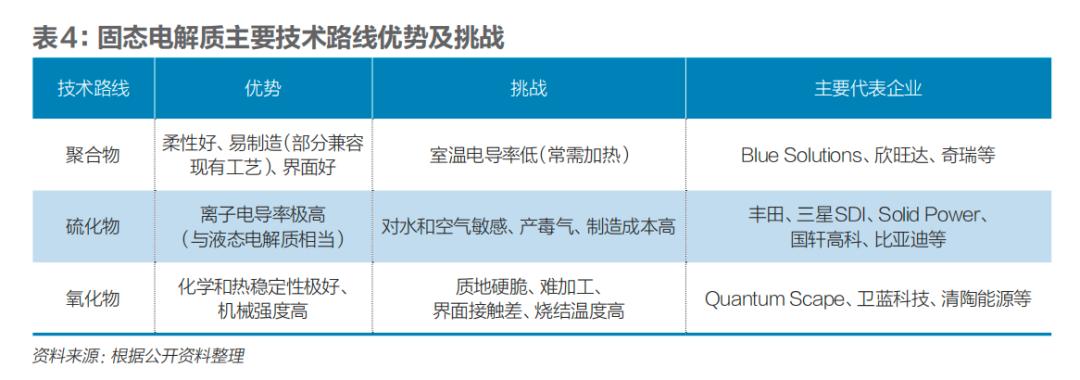
The advantage of the sulfide route is that it has the highest room - temperature ionic conductivity, comparable to that of liquid electrolytes. But the challenges are also huge: it is extremely sensitive to air and moisture and reacts with moisture to generate highly toxic hydrogen sulfide gas. Therefore, a dry environment with extremely low humidity must be provided for the manufacturing process, and the sealing and waterproof requirements for the finished battery are also more stringent, resulting in high costs. The interface reaction with electrode materials is active and requires the development of complex interface technologies to control the reaction process. In addition, the key raw material lithium sulfide (Li2S) is expensive, and the supply chain is not yet complete.
The advantage of the oxide route lies in its excellent thermal and chemical stability. The main challenges are: the material itself is hard and brittle, making it difficult to be processed into ultra - thin, defect - free electrolyte membranes required for large - scale production. It usually requires high - temperature sintering at nearly 1000 degrees Celsius, which is a high - energy - consuming and high - cost process and is difficult to be compatible with cathode materials. The rigid physical properties make it difficult to form close contact with the electrodes, resulting in large interface resistance and poor battery charge - discharge performance.
The most significant advantage of the polymer route is that it is easy to manufacture and can be compatible with some existing production processes. The challenge lies in the low performance ceiling, that is, the low ionic conductivity at room temperature. Usually, the battery needs to be heated to above 60 degrees Celsius to work normally. In addition, the current polymer has poor compatibility with high - voltage cathodes, so the energy density improvement space is limited.
In addition to these known challenges, the decades - long development history of liquid lithium - ion batteries shows that many major engineering challenges cannot be predicted by pre - analysis. Such as the rheological control of electrode slurries, the uniformity of coating, the cracking problem of electrodes, the control of particulate pollution in the production process, and the reliability of welding. These problems will gradually appear only in high - speed, large - scale continuous production. Solving these problems requires huge capital investment and top - notch engineering technology. And beyond science, there are also full of uncertainties in commercial verification - it is not uncommon in the technology industry for a good product to be difficult to sell.
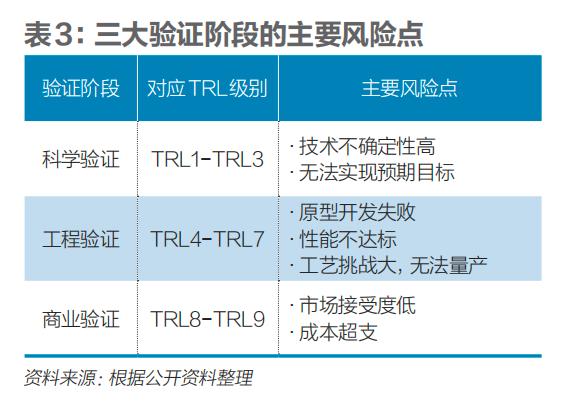
Currently, the enthusiasm for solid - state batteries is mainly concentrated at the scientific verification level (TRL1 - TRL3). A series of key breakthroughs are gradually solving scientific problems such as the contact interface between the positive and negative electrodes and material routes at the laboratory level, and significant results have been achieved.
Engineering verification (TRL4 - TRL7) is just starting. A few leading enterprises have produced prototype samples and planned pilot lines, but this is also the most difficult and longest stage in the commercialization process of a technology, known as the "valley of death" in the technology commercialization process, full of a large number of engineering problems and uncertainties.
As for commercial verification (TRL8 - TRL9), no company's all - solid - state battery has entered this stage yet. The conditions necessary for commercialization, such as cost, yield, reliability, and supply chain, are still far from being met.