Lu Zhengyao's Old Playbook and New Gamble: Will Cotti Follow Luckin's Footsteps?
Recently, Guo Jinyi, the co-founder and CEO of Luckin Coffee, publicly stated that with the full resolution of historical issues and the continuous improvement of the company's business situation, Luckin Coffee is actively promoting the process of returning to the main board of the US stock market.
This has brought back the attention to Lu Zhengyao, the former chairman of Luckin Coffee. He single - handedly took Luckin Coffee to the US stock market, setting a myth of the fastest IPO for a startup. However, it was also his "reckless" capital operation methods that pushed Luckin and other star - enterprises into the scandal of financial fraud, leading to its forced delisting.
"Success and failure both come from the same source." Lu Zhengyao is more like an entrepreneur who turns ideas into reality rather than an entrepreneur who can operate a business in the long run. The contrast formed by this contradiction stems from his disregard for "rules."
[1] Aggressive Advance and Lightning - speed Listing
"I just turned a business model that others dared not think about into reality," Lu Zhengyao said bluntly in an exclusive interview with Caijing magazine. He was able to seize market opportunities, quickly promote them, and commercialize them for profit.
Looking back at the past decade, we can find that Lu Zhengyao was not exaggerating.
In 2015, looking at CAR Inc., which had turned a profit after going public with a net profit of 560 million yuan, Lu Zhengyao felt no joy. Instead, he wrote on a PPT, "The ride - hailing business is ten times bigger than the car - rental business."
At that time, although the number of domestic ride - hailing orders had skyrocketed, reaching 50,000 - 60,000 orders per day by the end of 2014, a ten - fold increase, these soaring orders were divided between two giants, Kuaidi's "Yihao Zhuanche" and Didi Chuxing, both of which had over 100 million users.
Facing the giants, how to break the deadlock? Only by offering more aggressive subsidies than the competitors.
"Whether it's the car - rental or ride - hailing business, what's the most important thing? Actually, it's the same as buying anything. First, product quality; second, price. Price and experience are equally important," Lu Zhengyao believed that price was the key to breaking into the ride - hailing market.
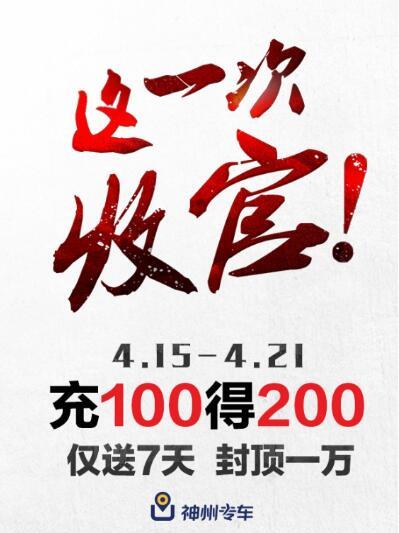
After that, UCAR launched a promotion of "recharge 100 yuan and get 100 yuan free," which was equivalent to a 50% discount. At the same time, new users of Kuaidi's Yihao Zhuanche received a credit - card reward of 60 yuan, and Didi Chuxing's ride - hailing vouchers were about 20 yuan.
It can be said that during the subsidy period, UCAR was not only the ride - hailing platform with the lowest prices but was even cheaper than taxis.
(Source: Internet)
According to the prospectus, in the first quarter of 2015, UCAR had a huge average loss of 123.72 yuan per order.
The large - scale subsidies devoured UCAR's cash, but in return, there was a rapid increase in the number of users. According to Roland Berger's data in 2016, UCAR captured 40% of the ride - hailing market share.
One and a half years after its establishment, UCAR was listed on the New Third Board, and its market value once reached 4.5 billion yuan, second only to Jiuding Group.
This lightning - speed approach of achieving results through brute force was also applied to every subsequent startup project of Lu Zhengyao.
In 2018, Lu Zhengyao and the "UCAR Group" set their sights on the coffee market. They believed that coffee was addictive and thus a "must - have" for white - collar workers. After a trial operation in May, Luckin Coffee officially opened.
At that time, coffee had indeed become a necessity for white - collar workers in first - and second - tier cities. However, Luckin had to face Starbucks, a seemingly insurmountable mountain in terms of reputation, the number of stores, and even the supply chain.
In 2017, Starbucks had 1,540 directly - operated stores in China, accounting for 42% of the freshly - brewed coffee market share in China.
"Every step of Luckin Coffee was carefully thought out and precisely calculated! Therefore, more accurately, this was a well - planned blitzkrieg," Lu Zhengyao believed that the way for Luckin to shake or even surpass Starbucks was through bold and aggressive attacks.
First, attract users with low prices. For example, it launched activities such as "buy two get one free, buy five get five free" and "Compete for the Million - Dollar Prize." Users who consumed seven items per week had the chance to share a 5 - million - yuan prize every weekend.
According to its prospectus, based on the losses in 2018, Luckin's gross profit margin was - 115.5%, with a loss of 17.99 yuan per cup.
Second, expand stores vigorously. In March of 2018, Luckin only had 290 offline stores. However, one year later, it had opened 2,370 stores nationwide, a year - on - year increase of over 700%, and it was expected to surpass Starbucks comprehensively in 2019.
With this rapid and powerful strategy, Luckin became the brightest star in the eyes of the capital market at that time. On the day of its IPO in May 2019, Luckin's stock price soared by 47% at the opening, becoming the fastest company in the world to go from establishment to IPO.
[2] Disregarding Rules and Falling from the Peak
"Since I started my business, I've won every battle against my competitors," Lu Zhengyao considered himself an invincible commander on the business battlefield and indeed had a knack for capital operation.
Both the ride - hailing businesses of Kuaidi and Didi and the coffee giant Starbucks became the backdrops on his path to entrepreneurial success.
However, from the long - term operation of UCAR and Luckin, different from other entrepreneurs, Lu Zhengyao seemed not interested in operating a century - old enterprise. What he wanted was to get a company listed as soon as possible.
"A real entrepreneur only sees opportunities, not rules," Lu Zhengyao wrote in his book My Notes on Entrepreneurship. He believed that to succeed, one shouldn't care too much about so - called rules.
This value system that only focuses on opportunities and disregards rules enabled him to take UCAR and Luckin Coffee to IPOs and fulfilled Lu Zhengyao's wealth dream.
When CAR Inc. went public in 2014, Lu Zhengyao was just the founder of an internet company. However, in 2016, thanks to UCAR's excellent performance, he made it onto the Hurun Rich List for the first time, with a net worth of 7.5 billion yuan. After Luckin went public in 2019, Lu Zhengyao's net worth soared to 18 billion yuan, ranking 195th on the Hurun Rich List.
In contrast to the doubling of his net worth, due to his disregard for rules, Lu Zhengyao brought violations and hardships to Luckin and UCAR during the IPO process.
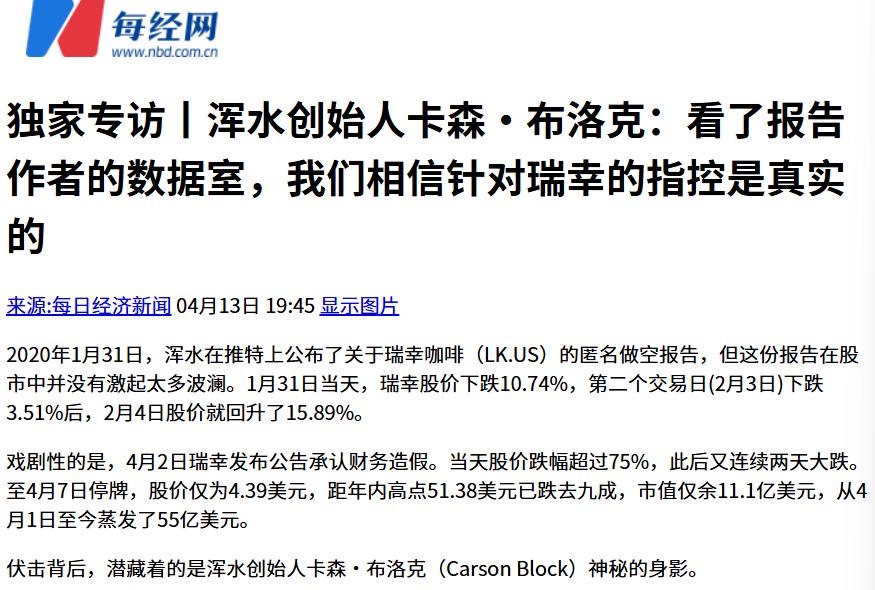
In January 2020, Muddy Waters, a short - selling institution, with 92 full - time and 1,400 part - time investigators, collected more than 25,000 receipts, conducted 10,000 hours of store surveillance, and gathered a large number of internal WeChat chat records to form a short - selling report on Luckin:
In the third quarter of 2019, the store operating profit was inflated by 397 million yuan, the daily sales volume per store was inflated by at least 69%, and in the fourth quarter of 2019, it was inflated to 88%. The advertising expenditure in the third quarter of 2019 was inflated by 158%, and the net income from other products was inflated by 400%.
(Source: National Business Daily)
In April, under public pressure, Luckin's management admitted to fraud: from the second to the fourth quarter of 2019, the forged transaction sales were approximately 2.2 billion yuan.
On that day, the stock triggered six circuit breakers during trading. Luckin's market value evaporated by about 5 billion US dollars, a 90% drop from the annual high of 51.83 US dollars, and its market value was only about 1.1 billion US dollars.
On May 19, NASDAQ notified Luckin Coffee that it must be delisted. On June 29, Luckin Coffee was suspended from trading on NASDAQ, and its stock price was only 1.38 US dollars at the time of delisting.
Luckin, which had already surpassed Starbucks and become a national coffee brand, was pushed to the bottom by the financial fraud incident. The ripples caused by Luckin's financial fraud also affected UCAR.
Due to the wrong decision to acquire Baowo Automobile, UCAR delayed the disclosure of its 2019 annual report, which intensified market panic. The New Third Board issued a "Decision on Terminating the Listing of UCAR Co., Ltd.'s Stocks": as of March 22, 2021, UCAR's stocks were delisted.
It should be noted that only five years had passed between UCAR's delisting and the time when its market value reached 4.5 billion yuan.
Actually, from Luckin to UCAR, Lu Zhengyao was an excellent entrepreneur. However, judging from the ultimate forced - delisting of these two companies, he was not an entrepreneur who could lead a company to operate sustainably.
"It's a capital game of using capital to rapidly expand the scale in a short time, obtain user data and traffic characteristics, then further increase the valuation, and finally enter the secondary market," just as Shen Meng of Chanson & Co. evaluated Luckin, perhaps Lu Zhengyao's methodology and destination were different from other entrepreneurs.
[3] Replicating the Model and the Future of Cotti
"The coffee dream team embarks on a new journey. The rallying call is sounded, reigniting the coffee track," in October 2022, Lu Zhengyao publicly announced his new project, "Cotti Coffee," on his WeChat Moments, marking his return to entrepreneurship.
Cotti is still positioned as an affordable coffee brand and is making a strong entry into the market in an aggressive way, competing with Luckin for the affordable freshly - brewed coffee market.
To break Luckin's established image in consumers' minds, Cotti takes three steps:
First, achieve cross - circle influence through sponsorships. For example, it sponsors events such as the WTT World Table Tennis Contender, the Wuhan Open, the Tour of Guangxi, and the League of Legends World Championship, entering various circles of young people.
Second, engage in price wars and offer high - value subsidies. In addition to setting a pricing strategy of "capped at 9.9 yuan" for all co - branded products, Cotti also offers promotions such as "unlimited 5.9 - yuan Americanos" and "as low as 1.9 yuan after takeaway subsidies."
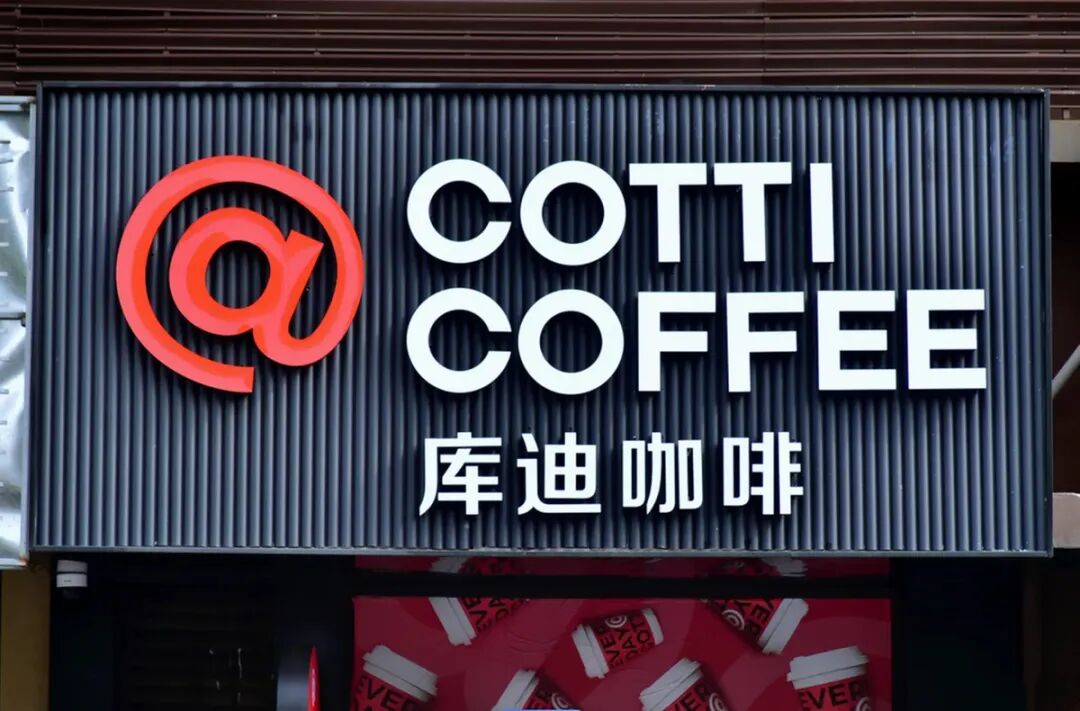
Third, expand franchisees vigorously. Relying on the in - store - within - a - store opening logic, Cotti Coffee's stores have expanded rapidly. According to data from Jihai Brand Monitoring, as of November 13, 2025, Cotti Coffee had a total of 15,791 stores nationwide. It only took Cotti three years to grow from zero to nearly 16,000 stores.
(Source: Internet)
From these three steps, Lu Zhengyao still uses an aggressive approach to seize the market and capture consumers' minds. However, there are still pre - launch losses. According to Economic Herald, against the backdrop of rising global coffee - bean prices and increasing rigid costs, coffee sold for less than 5.9 yuan can hardly cover the costs.
It can be said that currently, Cotti's approach is no different from that of UCAR and Luckin Coffee. It is still a replication of the "capital - driven + lightning - speed expansion" model.
The question is, in Lu Zhengyao's hands, in order to boost performance and attract users, will Cotti follow in Luckin's footsteps in the future? Will it repeat the similar capital - game play? This is perhaps the deepest concern of the market about Lu Zhengyao.
Looking back at Lu Zhengyao's entrepreneurial trajectory, from CAR Inc. to Luckin and then to Cotti, his core approach has always been the same: being aggressive, offering price subsidies, expanding rapidly, and aiming for listing. This model can quickly build scale and seize the market in the short term, but it also lays hidden dangers of unsustainable operation and dependence on capital injection.
After the Luckin incident, the market and regulators have become more strict in examining the authenticity of financial statements and the health of business operations. If Cotti still follows the old path of "burning money - expanding - listing - exiting" without focusing on the long - term construction of product strength, supply chain, and profit model, its future may face another trust crisis and capital backlash.
Whether Cotti can break free from the fate of the "Lu Zhengyao model" depends not only on the market environment and competitive landscape but also on whether Lu Zhengyao himself is willing to break the "infinite game" he has set. He needs to truly turn coffee into a sustainable business rather than another stage for a capital blitzkrieg.
This article is from the WeChat official account "Siku Finance", author: Vincent, editor: Jiajia. Republished by 36Kr with permission.