Self-developed spaceborne SAR payload, the overall cost is expected to be reduced by 50%. "Tuqiang Aerospace" completed its angel round of financing | Exclusive report by 36Kr
Text | Liu Jingqiong
Editor | A Zhi
Cover Source | AI Generated
36Kr learned that Beijing Tuqiang Aerospace Technology Co., Ltd. (hereinafter referred to as "Tuqiang Aerospace"), a manufacturer of spaceborne synthetic aperture radar (SAR) payloads, announced the completion of a tens of millions of yuan angel round of financing. This round of financing was exclusively invested by TusStar Ventures. The funds raised will be used for the R & D of antenna prototypes, the verification of SAR payloads, and the expansion of the team and facilities.
Tuqiang Aerospace was established in March 2025 and focuses on the R & D and manufacturing of spaceborne synthetic aperture radar (SAR) payloads and large spaceborne phased array antennas. It provides hardware products and remote sensing data services to customers in fields such as satellite remote sensing, satellite communication, and UAV remote sensing.
The founder, Yang Wensen, graduated from Beijing University of Posts and Telecommunications with a bachelor's and master's degree and is currently a doctoral candidate at Beijing Institute of Technology. After graduating with a master's degree, he worked at the 503rd Institute of the Fifth Academy of Aerospace and three commercial satellite companies successively. He has more than 10 years of industry experience in satellite systems and SAR payload systems and holds more than 10 invention patents related to spaceborne phased array antenna systems and structures. During his tenure at commercial satellite companies, Yang Wensen served as the deputy chief designer of SAR satellites and the chief designer of spaceborne SAR payloads. He led the R & D of the first spaceborne X - band multi - channel, dual - polarized SAR payload in the domestic commercial space industry.
Yang Wensen introduced that at present, Tuqiang Aerospace has four products in its layout, namely, an X - band single - polarized SAR payload for an orbital altitude of 500 kilometers, an X - band fully - polarized SAR payload, an X - band single - polarized two - dimensional large - angle scanning SAR payload, and an X - band single - polarized SAR payload for an orbital altitude of 300 kilometers. Currently, Tuqiang Aerospace is conducting the development and verification of the first product (an X - band single - polarized SAR payload for an orbital altitude of 500 kilometers).
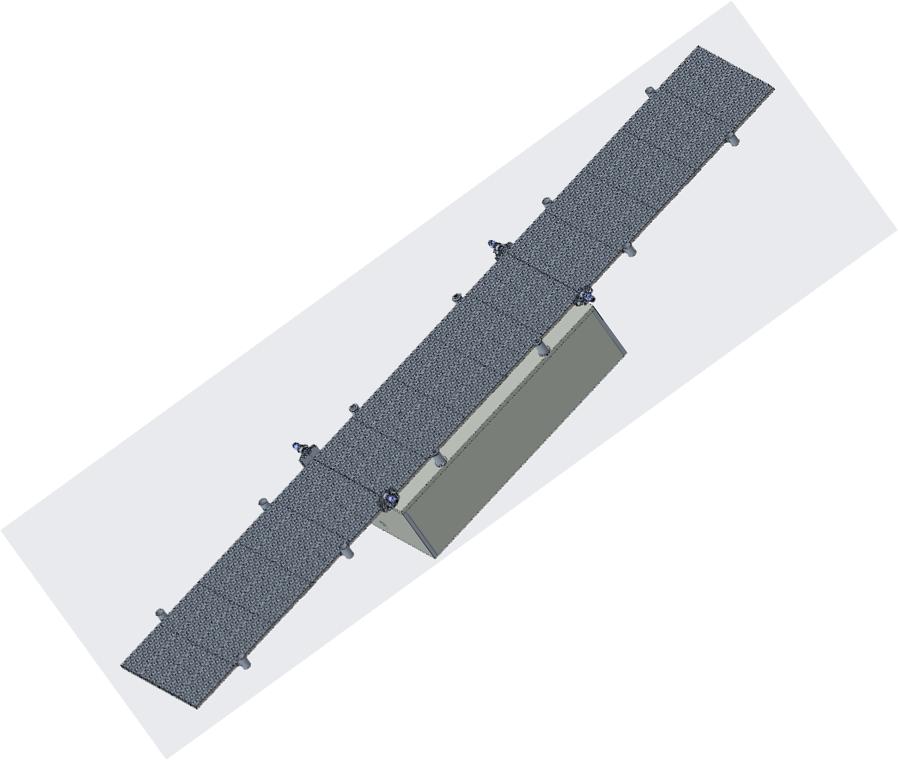
The large phased array antenna independently developed by Tuqiang Aerospace (deployed state)
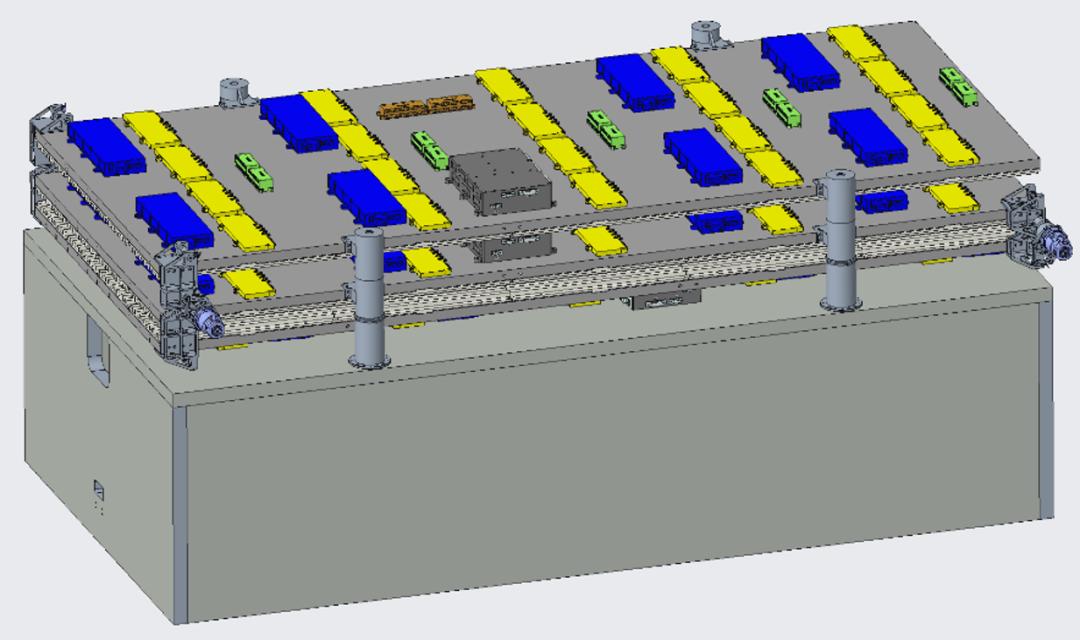
The large phased array antenna independently developed by Tuqiang Aerospace (folded state)

Reduce the overall cost of spaceborne SAR payloads through full - process self - R & D
Spaceborne synthetic aperture radar (SAR) is an advanced remote sensing device carried on satellites. It generates images by actively transmitting microwave signals and receiving echoes. It has three characteristics: First, SAR is not restricted by lighting and weather conditions and can achieve all - day and all - weather earth observation; Second, the microwaves emitted by SAR can penetrate a certain thickness of barriers and quickly identify hidden and camouflaged targets; Third, using technologies such as InSAR, SAR can detect millimeter - level tiny deformations.
Compared with optical imaging, SAR imaging has a higher response speed and imaging efficiency, but its use threshold and cost are relatively high. Currently, it is mostly used in scenarios that are not sensitive to price, such as national defense security, disaster and environmental monitoring, and special terrain mapping.
Due to the long R & D cycle and high entry threshold, most of the domestic market share of spaceborne SAR payloads is currently occupied by research institutes, and commercial space companies are still in their infancy. Affected by various factors, such as the rapid increase in the production of civilian SAR payload constellations in European and American countries, the continuous decline in the hardware costs of rockets and satellite platforms, and the expansion of terminal application scenarios, the market demand for low - cost and short - cycle SAR payloads is exploding, while the existing production capacity is far from meeting the incremental demand. Tuqiang Aerospace was born in such a context.
In Yang Wensen's view, the main reason for the high cost of current spaceborne SAR payloads is the lack of fully self - R & D manufacturers in the market. "Most of them are integrators now, and many components need to be purchased externally, so the overall cost naturally cannot be reduced."
"In a spaceborne SAR payload, the phased array antenna accounts for about 85% of the cost. If you want to reduce the overall cost of the SAR payload, you must self - develop the phased array antenna." It is understood that during his tenure at a commercial satellite company, Yang Wensen, as the chief designer of the SAR payload and the person in charge of the phased array antenna, led the team to develop the spaceborne SAR payload phased array antenna at that time, which was led by a domestic commercial space company. This also laid the foundation for Tuqiang Aerospace to independently develop large phased array antennas.
In order to reduce the overall cost of spaceborne SAR payloads, Tuqiang Aerospace adopts a full - process self - R & D strategy. "90% of the single - machines of Tuqiang Aerospace's spaceborne SAR payloads are self - developed. We should also be the first commercial space company to complete the full - process R & D system, including imaging mode simulation analysis, overall design, single - machine index issuance, hardware implementation, FPGA implementation, software implementation, anechoic chamber testing, environmental test verification, and delivery testing with a very small team. Therefore, the cost of our several spaceborne SAR payloads can be reduced to half or less of the original cost, and the delivery cycle can be shortened to about 10 months."

Accelerate the development of the first product's single - machines and plan to complete the on - orbit verification and mass production of the SAR payload next year
In terms of R & D progress, Tuqiang Aerospace is accelerating the development of the single - machines of its first product, an X - band single - polarized SAR payload. This product consists of 12 single - machines with a resolution of 0.3m. It can help low - orbit remote sensing satellites achieve all - day and all - weather earth imaging at an altitude of 500 kilometers, covering mainstream civilian scenarios such as environmental monitoring, resource exploration, and disaster prevention and mitigation.
Subsequently, Tuqiang Aerospace will also launch three other products, namely an X - band single - polarized SAR payload with a resolution of 0.3m at an altitude of 300 kilometers, an X - band fully - polarized SAR payload with a resolution of 0.5m at an altitude of 500 kilometers, and an X - band single - polarized two - dimensional large - angle scanning SAR payload with a resolution of 0.3m. Compared with ordinary X - band single - polarized SAR payloads, the fully - polarized SAR payload has higher imaging quality, and because the antenna end has a backup function, it can avoid data loss problems caused by single - stage failures. At the same time, the third X - band single - polarized SAR payload has a larger scanning range. Compared with conventional SAR payloads, its azimuth scanning angle can be increased from ±1° to ±15° or even higher, which will play an important role in national defense security scenarios and special commercial application scenarios.
Yang Wensen expects that by the first half of next year, the team will complete the development of all single - machines of the first spaceborne SAR payload. In addition, Tuqiang Aerospace also plans to complete the on - orbit verification of the first SAR payload next year, start the mass - production line of the first SAR payload, and begin the development of the second SAR payload.
In terms of commercialization, according to Yang Wensen's plan, Tuqiang Aerospace will focus on the R & D and manufacturing of spaceborne SAR payloads and large phased array antenna hardware products at this stage. In the future, it may expand into remote sensing data services and SAR satellite constellation operation services at an appropriate time. It is reported that Tuqiang Aerospace has signed strategic cooperation agreements with several satellite terminal manufacturers based on its spaceborne SAR payload hardware products.
Yang Wensen told 36Kr that currently, Tuqiang Aerospace is selecting a location for the mass - production line of SAR payloads and will also start a new round of financing.
Evaluation from the Investor
TusStar Ventures said: We have long been concerned about the entire commercial space industry chain, including rocket, satellite, payload R & D, and ground applications, and have invested in relevant companies in each link. The core founding team of Tuqiang Aerospace has rich engineering experience and on - orbit verification experience in the R & D of spaceborne SAR payloads. The team has solid technical accumulation, full - chain and full - process R & D capabilities, and leading - edge innovation capabilities in the industry. While ensuring high - quality R & D, it can also reduce costs and improve efficiency. We are very optimistic about the Tuqiang Aerospace team and hope that the company can become a leader in the field of "payload R & D, a key part of the three major puzzles of commercial space hard technology" and contribute to the continuous development of China's commercial space industry.