Cai Chongxin's family office has launched external fundraising with a target of $750 million.
It is reported that Blue Pool Capital, supported by Joseph Tsai, co-founder and Chairman of the Board of Alibaba Group, has launched its first private equity fund open to external investors, with a target size of $750 million.
In this article, Foinsight will systematically review Blue Pool's latest fundraising trends, strategic adjustments, and key figures.
Fundraising $750 million
As global capital reevaluates the Chinese market, Blue Pool is initiating the fundraising process for its first fund, officially entering the external asset management field.
According to informed sources, the fund is named Riverside, with a target size of $750 million. The Riverside fund will seek to make controlling or minority equity investments in mid-sized enterprises with enterprise values between $100 million and $1 billion.
It is reported that the three major investment directions of Riverside include:
High-end retail and lifestyle brands;
Fintech, digital banking, and payment solutions;
Technological fields such as artificial intelligence (AI) and software as a service (SaaS).
The target limited partners (LPs) for this round of Riverside include family offices, sovereign wealth funds, and pension funds. It is reported that the fund is expected to complete the first round of fundraising in early 2026.
In communication with potential LPs, Blue Pool emphasizes its unique advantages: First, Joseph Tsai's deep network of connections in China through the Alibaba ecosystem; Second, the extensive network resources of its CEO, Oliver Weisberg, in the US capital and hedge fund circles.

Notably, this marks a significant strategic transformation for Blue Pool: from managing internal capital to becoming an "external capital management platform" to seek new growth paths and larger-scale transaction opportunities.
It is reported that this is not Blue Pool's only fundraising project. Two years ago, it began fundraising for the Harborside fund to invest in hedge funds and private credit funds. According to informed sources, Blue Pool is currently also raising an additional $500 million for this "fund of funds" (FOF) strategy.
This fundraising comes at a time when global investors are reevaluating their allocations in the Chinese market. Affected by the macro environment and external uncertainties in the past two years, some funds flowed out in the short term, but there were signs of a return in the first half of 2025, with a net inflow of foreign capital exceeding $50 billion, indicating that investors' risk appetite for Chinese assets has recovered.
"I'm bullish on the Chinese market," Jean Eric Salata, Chairman of EQT Asia, said at an event recently. "Clients are seeking diversified investments, and Asia will be one of the main beneficiaries of this trend, especially Hong Kong, China, and the Chinese mainland."
About Blue Pool
Based on multiple sources of information, Blue Pool was established in 2014, the year of Alibaba's listing, and was initiated by Joseph Tsai in Hong Kong. At that time, Jack Ma and several other executives were also involved, mainly managing the billions of dollars in wealth brought by Alibaba's IPO, but relevant information has never been confirmed.
Blue Pool holds a Type 9 license (asset management) issued by the Hong Kong Securities and Futures Commission. It is committed to long-term investments in diversified asset classes, including listed companies, private equity, and hedge funds, covering many fields such as healthcare, finance, and sports. Data shows that Blue Pool's asset size exceeded $50 billion (about 360 billion RMB) in 2022.
In the private equity investment field, Blue Pool made 10 consecutive investments between 2016 and 2018, including investments in companies such as Hua Medicine, Tenbiopharm, and FogPharma, a developer of innovative drugs. More than half of these investments were in the healthcare sector.
Since then, Blue Pool has gradually faded out of the US stock market. A regulatory filing shows that since 2021, it has liquidated its holdings in more than 30 US-listed companies. It is reported that most of these companies are technology companies, including Microsoft and Alphabet, the parent company of Google. It has also reduced its stake in Blue Owl Capital, the only alternative asset management company it held.
In recent years, Blue Pool has significantly increased its investments in the technology field. In 2023, Tabby, a Middle Eastern online consumer credit platform known as the "Huabei of the Middle East," completed its Series D financing, raising $2 billion and reaching a total valuation of $15 billion, becoming one of the first fintech unicorns in the Gulf region. Blue Pool participated in this financing.

Blue Pool has also increased its investments in luxury hotels and real estate, sparing no expense to purchase mansions and entire floors of apartments. In January 2022, Blue Pool purchased a duplex unit on the 73rd floor and a servant's room on a lower floor at 220 Central Park South in New York, USA, for $188 million (about 1.2 billion RMB).
In addition, Blue Pool has also bet on the blockchain field. In July 2021, Animoca Brands, a blockchain game and NFT developer, received a $50 million financing. In addition to cryptocurrency industry giants such as Coinbase, Blue Pool was also among the investors, marking its first foray into the blockchain field.
Since then, Blue Pool has successively invested in the cryptocurrency derivatives exchange FTX EU, the online travel activity booking platform GetYourGuide, and the Web3 technology service provider Artifact Labs.
At the beginning of this year, Golden Goose, an Italian high-end clothing brand, announced that it had received a 12% strategic equity investment from Blue Pool.
"Blue Pool has in - depth expertise in the sports and music industries and a profound understanding of the Asia - Pacific market. This will help the group further expand its influence and strengthen the connection between Golden Goose and its growing customer base," Golden Goose also announced that Oliver Weisberg, CEO of Blue Pool, will join the company's board of directors.
Transformation Led by the CEO
Currently, Blue Pool is shifting from traditional asset management and "FOF" strategies to more active equity investments and has started raising funds from external investors. This transformation of Blue Pool is led by its CEO, Oliver Weisberg.
It is reported that Weisberg graduated from Harvard University. He lived and did business in the Chinese mainland for many years, is proficient in Mandarin, and once worked in the Special Situations and Principal Investments department of Goldman Sachs Asia. During his tenure, he was responsible for Goldman Sachs' investment in Alibaba and served as a member of Alibaba's board of directors. Oliver Weisberg is also a former partner of Citadel.
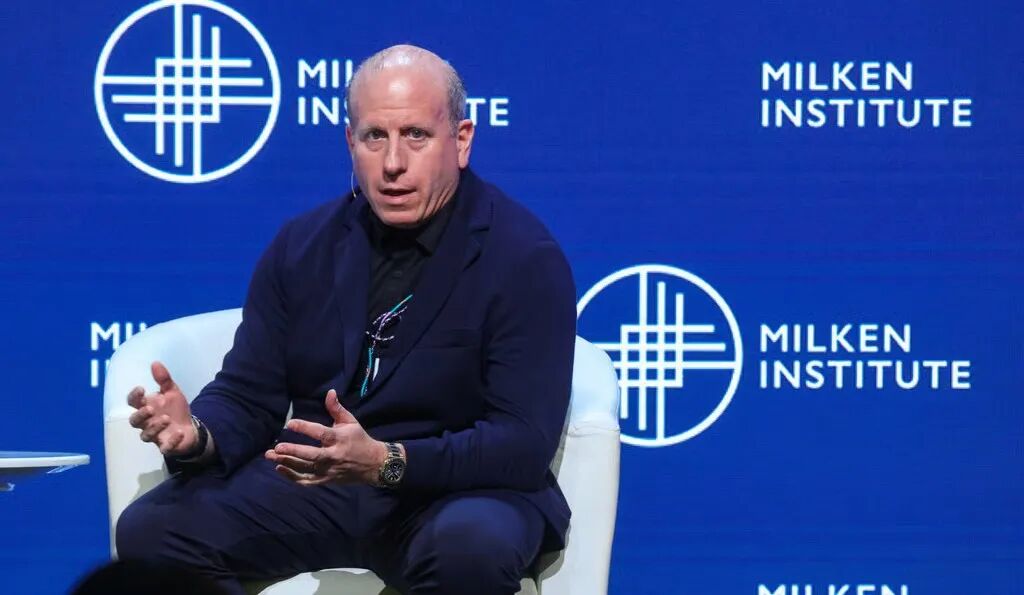
"It makes sense for Oliver Weisberg to open up fundraising because he is highly competitive and wants to compete with the top funds," said Joe Dowling, the global head of multi - asset investing at Blackstone Group.
Joe Dowling once served as the chief investment officer of the Brown University endowment fund. During his tenure, he and Oliver Weisberg jointly invested in today's Blue Owl Capital. "Blue Pool's advantage lies in both Oliver Weisberg's network and the network of Alibaba," he said.
"Oliver Weisberg played an important role in helping us expand our Asian business. Since then, he has developed Blue Pool into one of the leading investment companies in Asia," said Gerald Beeson, the chief operating officer of Citadel.
Joseph Tsai and His Sports Investment Portfolio
Joseph Tsai was born in Taiwan, China, and moved to New Jersey, USA, at the age of 13. He holds a bachelor's degree in East Asian studies, a bachelor's degree in economics, and a Juris Doctor degree from Yale University.
In 1999, Joseph Tsai met Jack Ma and eventually gave up a job with an annual salary of $700,000 to join Alibaba with a monthly salary of $50. He was responsible for financing, strategic investments, and building the capital structure. He is known as the "chief strategist" of Alibaba.
It was Joseph Tsai, who came from a venture capital institution, who led Alibaba onto the path of professional financing. He led Alibaba's cooperation with Yahoo and the introduction of top investors such as SoftBank. In addition, he was responsible for integrating businesses such as cloud computing and logistics and increasing investments in AI technology. In May 2013, Joseph Tsai switched to leading the group's strategic investments, leading investments in companies such as AutoNavi, UC, Intime, Momo, and Ele.me. In 2019, Joseph Tsai stepped down from his position as the head of Alibaba's strategic investment department.
In June 2023, Daniel Zhang, then Chairman and CEO of Alibaba Group Holding Limited, announced his resignation, and Joseph Tsai became the Chairman of the group's board of directors. As one of the 18 founders of Alibaba and one of the only two permanent partners (the other is Jack Ma), Joseph Tsai, known as the "god of wealth" of Alibaba, has once again returned to the public eye.
According to Forbes, Joseph Tsai's current net worth exceeds $12 billion. It is worth mentioning that Joseph Tsai has a passion for a series of sports and has invested in multiple sports assets, including the Brooklyn Nets of the NBA, the NY Liberty of the WNBA, the Barclays Center in New York, and a stake in the Miami Dolphins of the NFL. It is reported that this series of transactions were also completed through Blue Pool.
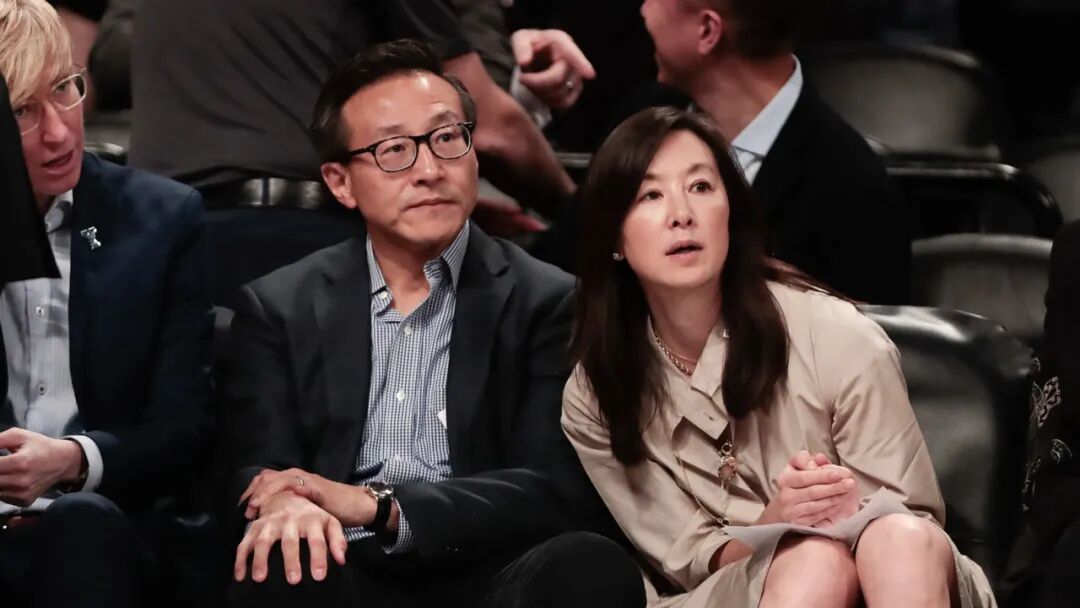
According to a report by The Athletic in the United States, this year, the NY Liberty of the Women's National Basketball Association (WNBA) sold a stake at a valuation of $450 million (over 3.2 billion RMB), setting a record for the highest valuation of a women's professional sports club.
In 2019, Joseph Tsai and his wife, Wu Minghua, bought the Liberty for $10 million - $14 million, and Wu Minghua became the management decision - maker. Based on the latest valuation, the value of this team has increased 30 - fold since its acquisition. Information shows that the NY Liberty sold 20% of its equity to a group of individual investors, but there is no clear report on the buyers.
Previously, Joseph Tsai and his wife purchased the Brooklyn Nets in batches, with a total transaction value exceeding $3 billion, which caused a sensation: In April 2018, Joseph Tsai personally invested to buy 49% of the Nets' shares, with the final transaction price exceeding $1 billion; then in August 2019, he acquired the remaining 51% of the shares and the Barclays Center for a record - breaking $2.35 billion, becoming the first truly Chinese owner in the NBA.
In June 2024, Joseph Tsai and his wife sold part of their stake in BSE Global (the parent company of the Nets) to the Koch family, with a total transaction valuation of $6 billion (about 43 billion RMB). This figure is not only much higher than the Nets' acquisition valuation of $3.5 billion in 2019 but is also one of the highest valuations in the history of American professional sports.
When asked about the reason for acquiring the Nets back then, Joseph Tsai attributed it to a "emotional decision." As a super basketball fan, Joseph Tsai even played for the Yale University basketball team when he was studying at Yale.
At a sports industry forum in early 2024, Joseph Tsai said that the acquisition of the Nets was an accidental event. "If I could sit by the court and watch 40 basketball games in New York each year, it would be very enjoyable."
In May this year, the Asian University Basketball League announced the completion of its seed - round financing, led by Blue Pool.
In an interview, Joseph Tsai once talked about the relationship between sports and business. "I think sports not only teach you discipline and hard work but also teach you how to face failure. If you fall down or lose a game, you must pick yourself up. Many principles apply to business."
In summary, Blue Pool's external fundraising marks a key step for large Asian family offices towards becoming a "professional asset management platform." Relying on Joseph Tsai's global resources, the Alibaba network, and Oliver Weisberg's international capital capabilities, Blue Pool is transitioning from a traditional family office model to a regional and even global investment institution.
(Foinsight reminds: The content and views are for reference only and do not constitute any investment advice.)
This article is from the WeChat official account "Foinsight" (ID: foinsight), written by Foinsight and published by 36Kr with authorization.