Top professors are flocking to a "non-mainstream" city.
In the 1930s, globally renowned scientists such as Einstein, von Neumann, and Fermi chose to leave war - torn Europe and take positions at the Institute for Advanced Study in Princeton, USA.
The migration of these scientists was not accidental. They needed an environment that could tolerate their research freedom and provide academic asylum.
It was also the arrival of these scientists that enabled the United States to embark on an era of a major scientific and technological explosion.
Einstein's choice represents a typical pattern of the flow of top - tier talents:
They always flow to the environment most conducive to the realization of innovation value.
A similar story is being replayed in China's new urban landscape.
Recently, Zhengjieju noticed a phenomenon: a group of research teams and professors from top - tier universities have settled in Wuxi, a prefecture - level city in Jiangsu.
These include but are not limited to: the Smart Industry Innovation Center of the Tsinghua Wuxi Research Institute, the Wuxi Institute of Photonic Chips of Shanghai Jiao Tong University, the Wuxi Research Institute of Huazhong University of Science and Technology, the Wuxi Institute of Special Food and Nutritional Health...
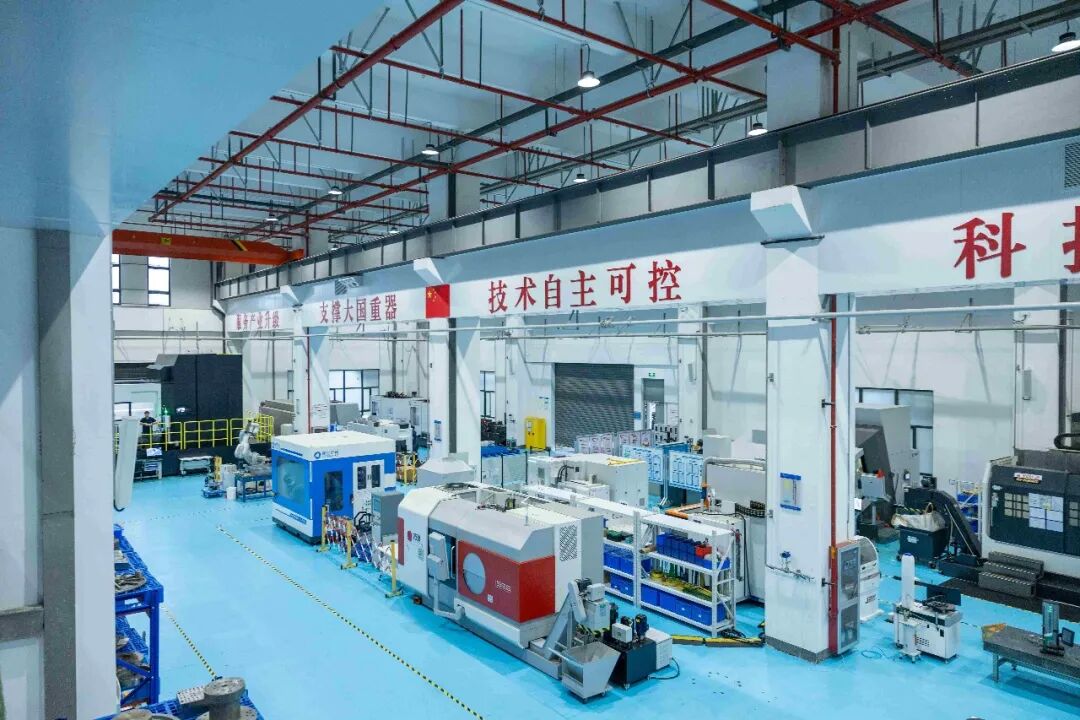
Equipment at the Wuxi Research Institute of Huazhong University of Science and Technology
Why do these top domestic scientific research forces all choose Wuxi? In today's highly competitive environment for university resources, what enables a prefecture - level city to win so much favor?
01 Breaking Through the "First Mile"
For a long time, many university professors in China have faced a bottleneck:
They have technologies in hand but find it difficult to start a business.
This is because for many intellectuals, there is a sense of shame in starting a business. They are afraid that making money will make their peers uncomfortable.
On the other hand, universities also have assessment pressures. Starting a business rashly without industrialization experience may lead to setbacks on both fronts.
However, the temptation of successful professor - led entrepreneurship is very attractive.
For example, Fan Daidi, the vice - president of Northwest University and the richest person in Shaanxi, founded her own company, Giant Biogene, based on her scientific research achievements in recombinant collagen technology and topped the wealth list with a family fortune of 45.7 billion yuan.
Different from Einstein's era, the core dilemma faced by contemporary professors is no longer national security but how to transform laboratory research results into real productive forces.
Actually, many places have "industry - university - research cooperation" or the construction of "new - type R & D institutions", but there are flaws in practice:
Although they have abundant funds, they have a strong administrative management style and a rigid assessment mechanism, which cannot adapt to the uncertainty and rapid iteration requirements of technological innovation and are difficult to stimulate the original innovation motivation of scientific researchers.
The "model of scientist teams holding controlling stakes and local state - owned assets taking minority stakes" explored by Wuxi has successfully solved this problem.

Cityscape of Wuxi. Please view in landscape mode.
They make scientist teams the actual controllers of the enterprise, dominate the board of directors, and hold the core power of R & D direction and business decision - making. This gives scientists a real sense of "ownership". They are no longer working for the "client" but for their own cause.
This fundamentally reconstructs the relationship between ownership, decision - making power, and income distribution, thus solving the pain points of entrepreneurship.
The role of local state - owned assets has changed from the traditional "manager" and "subsidy distributor" to "strategic partner" and "empowerer". Its purpose is not to hold controlling stakes and interfere in business operations but to convey confidence to scientists (the government's investment is the most powerful endorsement of the project's prospects) and accompany them in the long term.
In terms of resource connection: as a shareholder, the government can more smoothly connect the institution with local industrial resources, policy resources, and application scenarios.
In short, the advantage of this model is to "let professionals do professional things". At the same time, through the capital link, it deeply binds the innovation momentum of scientist teams with local strategic resources, forming a "community of interests" and a "community of destiny".
The breakthrough of the model brings tangible benefits.
Take the Wuxi Institute of Special Food and Nutritional Health as an example. It was established in 2021.
Wuxi Institute of Special Food
Relying on the probiotic germplasm resource library (20,000 strains) and core patents of Jiangnan University, it has systematically overcome the technical bottleneck of transforming laboratory results into industrialization.
Through platform services and technology output, in just three years, the institute has incubated six technology - based enterprises, developed nearly 30 listed products for more than 20 well - known enterprises such as Infinitus and Fu Energy, and successfully promoted the cooperation enterprises to achieve sales of over 300 million yuan.
This shows that its technological achievements have been directly recognized by the market.
What's even more surprising is that more than 50% of the R & D personnel in the institute are postgraduate and doctoral students, including many national outstanding young scholars and experts on the National Ten - Thousand - Talent Program. This concentration of high - end talents even exceeds that of many provincial scientific research institutions.
02 Solving the "Last Mile"
After breaking through the first mile of professors' entrepreneurship, Wuxi has also designed another mechanism to solve the "last mile" of scientific and technological achievement transformation - the pilot - scale testing platform.
In the process of scientific and technological achievement transformation, pilot - scale testing is a necessary stage to turn the "samples" in the laboratory into "products" that can be mass - produced in the market.
This stage is known as the "Valley of Death" because building a pilot - scale testing line requires purchasing expensive special equipment and forming a professional pilot - scale testing team, which often requires tens of millions or even hundreds of millions of yuan in investment.
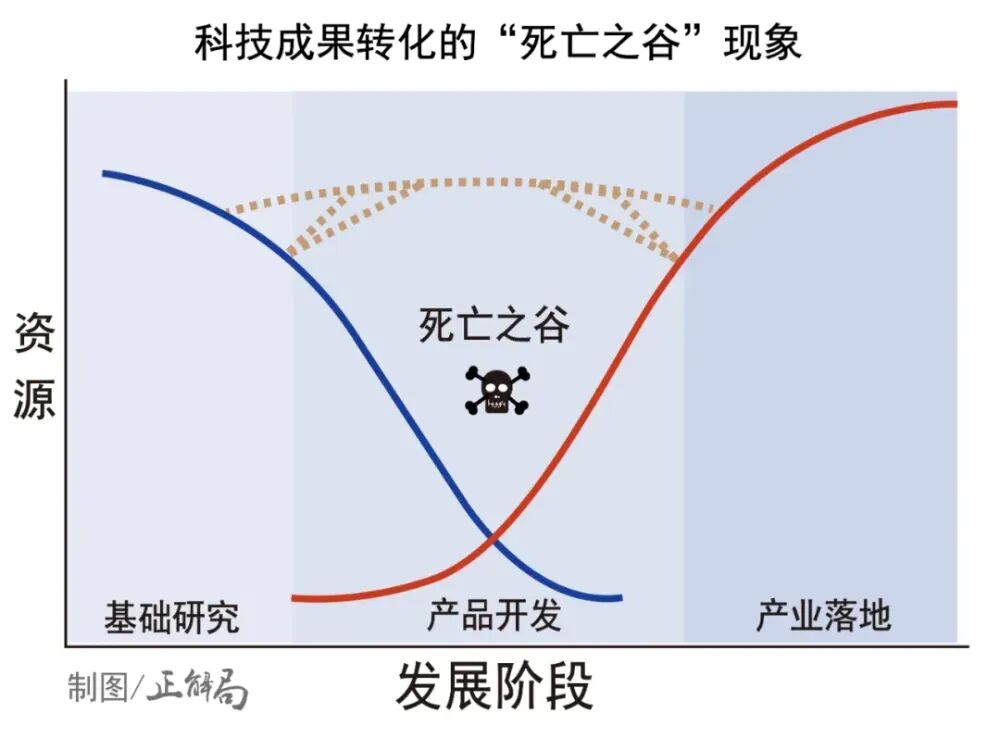
The "Valley of Death" phenomenon in scientific and technological achievement transformation. Chart by Zhengjieju
This is an unbearable heavy burden for a single university team or a start - up enterprise.
Moreover, the pilot - scale testing process is full of uncertainties. After process scaling up, problems that were not expected in the laboratory stage may occur, resulting in a very high failure rate. Once the project is completed, the expensive equipment and venues will be idle, causing a huge waste of resources.
For this reason, Wuxi came up with the idea of establishing a shared pilot - scale testing platform, which is open to universities, scientific research institutions, and upstream and downstream enterprises across the country and even the world.
This platform has attracted Shanghai Jiao Tong University, a top - tier university from Shanghai.
In September last year, the photon chip pilot - scale testing line of the Wuxi Institute of Photonic Chips of Shanghai Jiao Tong University was officially launched in Wuxi. By June this year, the production line had been successfully connected, making Wuxi the first city in the world to connect the photon chip pilot - scale testing line.
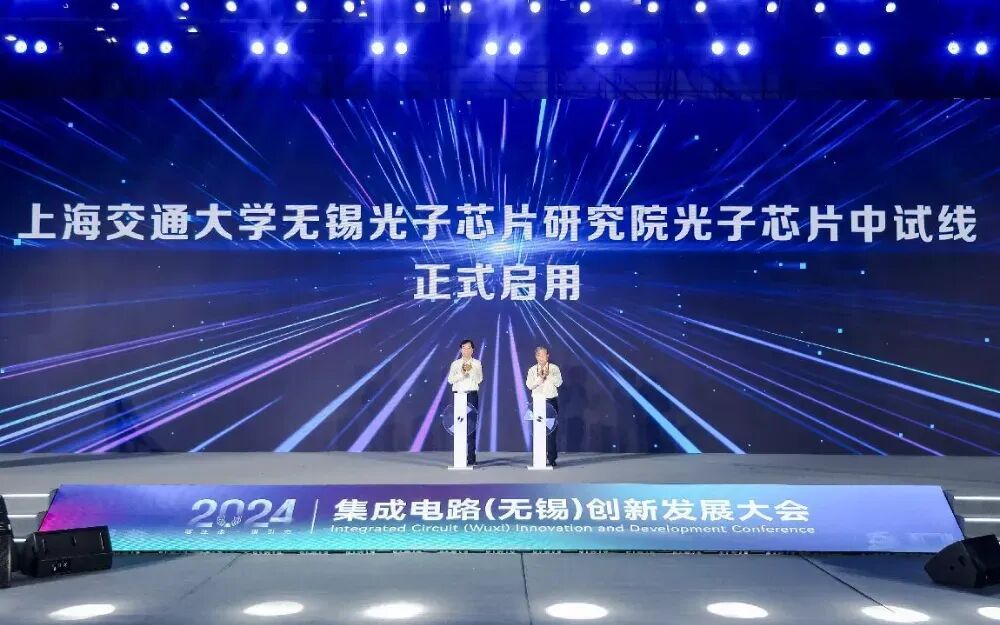
The official launch of the photon chip pilot - scale testing line of the Wuxi Institute of Photonic Chips of Shanghai Jiao Tong University in Wuxi. Image source: the official website of Shanghai Jiao Tong University
Currently, only three institutions in the world have achieved this breakthrough, and the other two are in the United States.
In Wuxi, the SJTU team can enjoy full - chain pilot - scale testing services from design, tape - out to packaging and testing.
Other start - up enterprises or academic teams can use this world - class production line on a "pay - as - you - go" basis, just like using cloud computing resources, without having to build their own.
This not only solves the dilemma of domestic photon chip enterprises having "nowhere to conduct pilot - scale testing". More importantly, it quickly aggregates industrial resources through sharing, forms an industrial cluster, accelerates the iteration speed of the entire country in this field, and shortens the gap with the international leading level.
Similarly, the Institute of Special Food has also built two pilot - scale demonstration lines. Currently, it has opened the pilot - scale testing platform to 17 enterprises and promoted the industrialization of more than 30 functional strains.
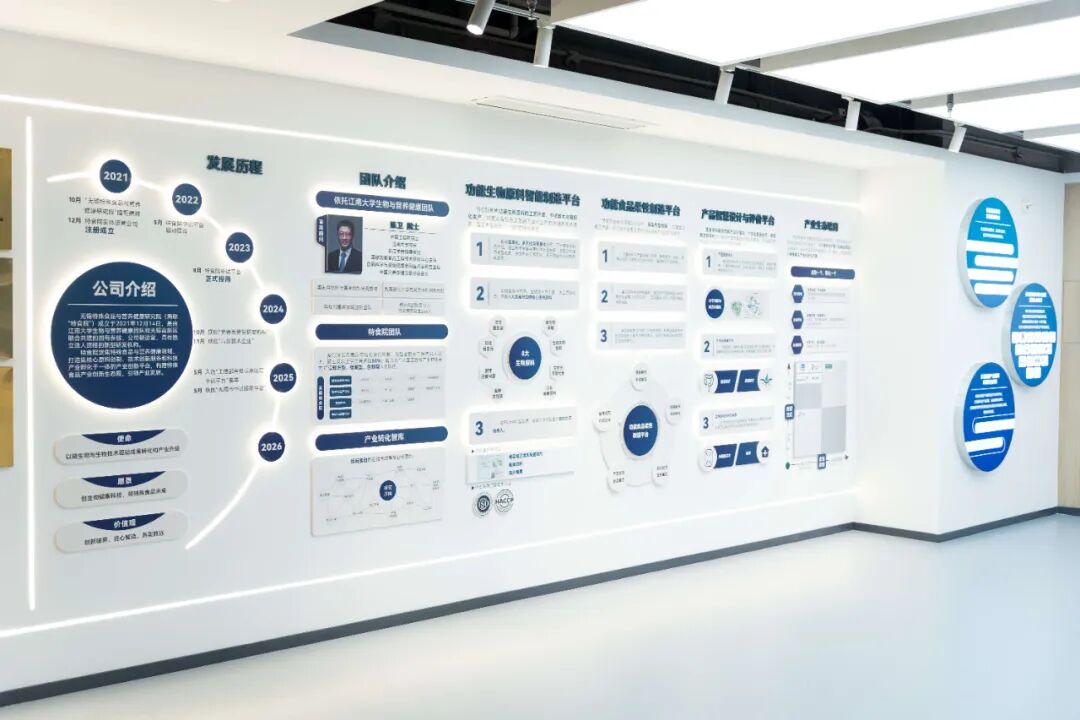
Company introduction of the Wuxi Institute of Special Food
This shared platform greatly reduces the equipment investment threshold for start - up enterprises, enables them to operate with light assets, focus on technology R & D and market development, and successfully fills the "Valley of Death" in the industrialization of scientific and technological achievements.
This model reminds people of the Huizhou merchants in the Ming and Qing dynasties. Their success in the business world for hundreds of years was not only due to capital but also their keen market sense and business model of resource sharing.
Today's new Wuxi model is, to some extent, a modern interpretation of this wisdom.
03 Precise Talent Recruitment, Avoiding a Scattershot Approach
Another difference in Wuxi's industrial introduction is that it doesn't "take everything that comes its way" but has a clear strategic layout.
From the scientific research teams that have settled in Wuxi, such as those in photon chips, autonomous driving and robotics, the Internet of Things and green computing, new drug R & D and life sciences, we can see that these enterprises are all targeting fields that are expected to experience explosive growth in the next decade.
Among them, photon chips are regarded by the industry as a key track for "changing lanes to overtake" electronic chips.
Jin Xianmin, the dean of the Wuxi Institute of Photonic Chips of Shanghai Jiao Tong University, pointed out that current electronic chips are approaching the physical limit, with the gate size shrinking to 0.54 nanometers, close to the atomic scale.
Photon chips have irreplaceable advantages in high - bandwidth and high - speed computing fields.
The Smart Industry Innovation Center of the Tsinghua Wuxi Research Institute focuses on "forward - looking and difficult" directions, especially promoting three fields with significant technological breakthroughs and broad industrial prospects: autonomous driving and robotics, the Internet of Things and green computing, and new drug R & D and life sciences.
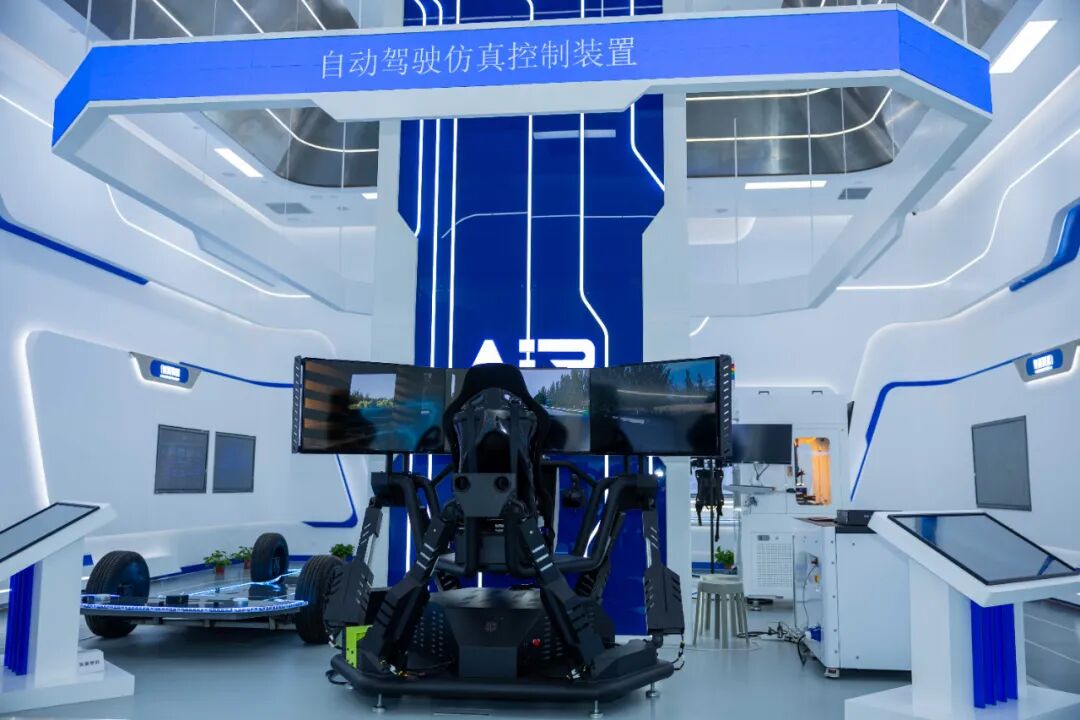
Autonomous driving steering control equipment at the Smart Industry Innovation Center of the Tsinghua Wuxi Research Institute
The incubated enterprises such as Qiuzhi Technology (embodied intelligence), semiconductor wafer inspection projects, and Huashen Zhiyao (AI - based drug R & D) are all hard - technology enterprises with trillion - level markets.
Although these projects have high technical thresholds and long R & D cycles, once a breakthrough is made, they will form strong technological barriers.
So, the question is, why can Wuxi find these enterprises?
This is related to the Wuxi Industrial Innovation Research Institute, which was established in 2023.
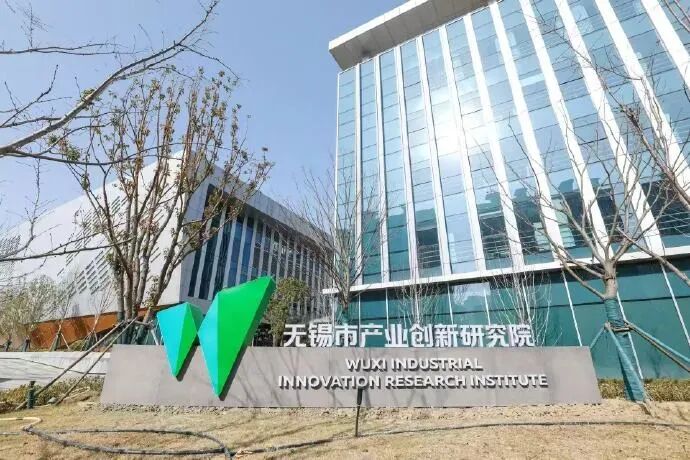
Wuxi Industrial Innovation Research Institute
In Wuxi's model of cultivating high - tech enterprises, the Wuxi Industrial Innovation Research Institute plays the role of a "platform of platforms" at a higher level.
It is responsible for evaluating and assessing 40 new - type R & D institutions in the city to understand the capabilities and resources of each platform.
When an enterprise puts forward a technological demand, the research institute can quickly match it with the most suitable pilot - scale testing platform and organize "new - type R & D institutions to meet the technological and market demands of enterprises".
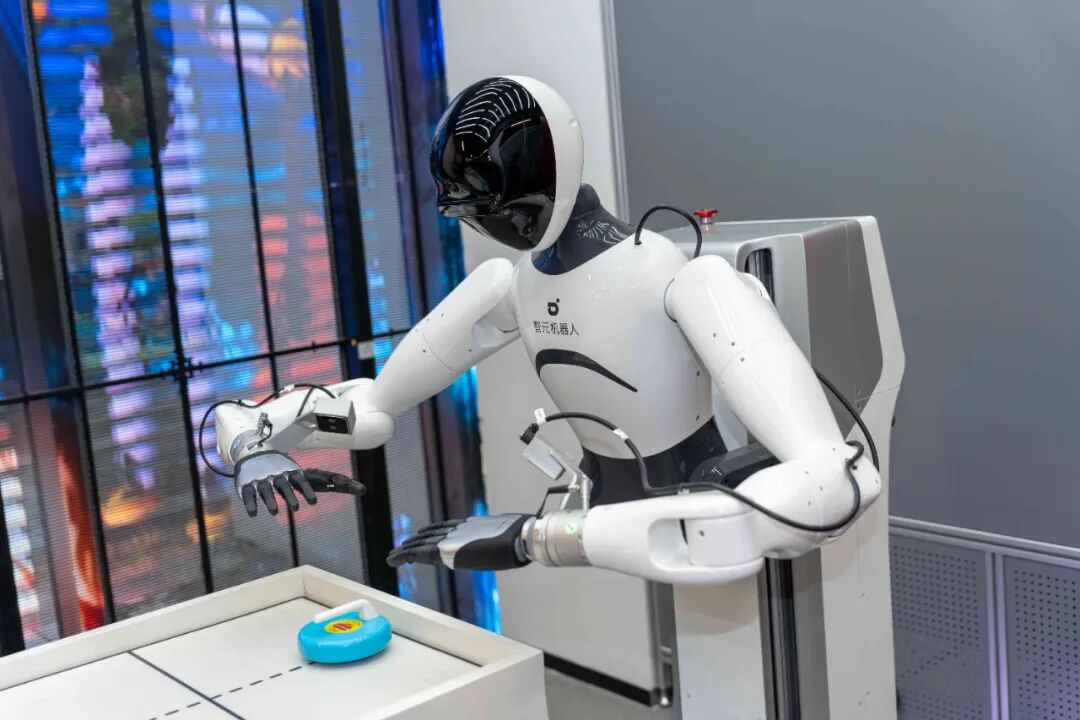
Robots produced by Zhiyuan Company in Wuxi High - tech Zone
This forms an "innovation service network", avoiding redundant construction and vicious competition among platforms, giving more "smart brains" the opportunity to turn ideas into reality, and greatly stimulating regional innovation vitality.
Currently, the Wuxi Industrial Innovation Research Institute has launched 60 concept verification projects and 78 pre - research projects, and has incubated 17 technology - based enterprises through methods such as combining grants and investments.
This kind of innovation guided by the real needs of enterprises ensures that scientific research results are "useful from the start", solving the problem of the "disconnect" between scientific research and industry, rather than simply providing financial support.
This ecological thinking is the core reason why it can attract top - tier teams.