Impulse, Reason, and Dopamine: Has Your Brain Already Predetermined Every Decision You Make?
Are you someone who is good at making the right decisions?
Don't rush to make a judgment. Instead, let's look at a classic logic problem: Linda is a woman who pursues social justice, majored in philosophy, and participated in anti - nuclear weapon demonstrations. Then, which of the following is more likely?
a. Linda is a bank teller;
b. Linda is a bank teller who is active in the feminist movement.
In an experiment, 80% of college students chose (b). However, the correct answer is actually (a) - after all, the probability of a single condition being met is always greater than the probability of that condition and another condition being met simultaneously. But many people made the wrong choice due to mental set such as stereotypes and the conjunction fallacy.
Many times, even after careful consideration, we may make mistakes when making choices. However, sometimes our subconscious decisions turn out to be correct. Why does this strange phenomenon occur? How exactly does the brain make decisions?
Actually, decision - making research is an emerging interdisciplinary science that brings together resources from many different fields such as neuroscience, psychology, mathematics, economics, and engineering. In the past, when facing life's crossroads, we could only choose a direction based on experience or luck. Now, science may be able to help.
We often say that the difference between humans and animals lies in the fact that humans have wisdom and can use complex and advanced cognitive abilities to make decisions. Many scientists are very interested in the human decision - making mechanism.
In his 2011 book Thinking, Fast and Slow, the famous psychologist Daniel Kahneman described the human mind as two closely related thinking systems: System 1 operates quickly and automatically. It includes innate skills shared by humans and animals such as instincts and emotions, as well as acquired associations and skills. While System 2 is slow but cautious and can help us correct the mistakes made by System 1.
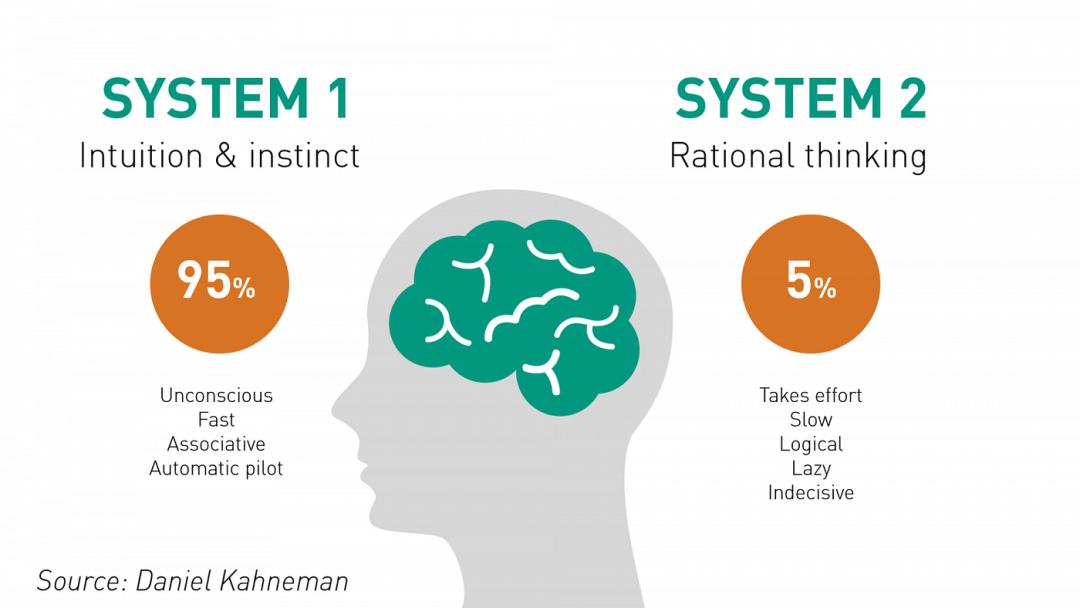
Neuroscientists have also studied the activities of brain neurons when animals and humans make choices. They found that there are multiple levels of neural circuits in the brain. These circuits evaluate each option in a choice from various perspectives to help us make reasonable choices as much as possible. These different neural circuits not only cooperate with each other but also sometimes compete with each other. The balance between them reflects the complexity of decision - making: since we often can't have both fish and bear's paw, the brain also needs to make trade - offs when making decisions.
Recent progress in the field of neuroscience shows that there are indeed some neurons in the brain that can specifically reflect the thinking process. Recording these neurons can help us understand the process of the brain making choices. Scientists' experiments are very interesting - training macaques to solve some "puzzles".
In a test where macaques were rewarded for observing patterns, a specific combination of patterns on the computer screen would tell the monkeys that if they fixed their eyes on a specific target on the screen, they were likely to get a reward, but sometimes they wouldn't.
The researchers recorded the positions where the macaques' eyes were fixed, and then used mathematical and statistical methods to analyze the relationship between these patterns and the fixation positions. Finally, they used electrophysiological recording techniques to obtain the activity status of neurons in certain areas of the macaque's brain and compared it with the macaque's behavior.
Through the different response patterns of neurons in each brain region during the decision - making process, the researchers can connect the different brain regions to find the neural circuits involved in the brain's decision - making, and discover what calculations the brain makes during the decision - making process, how the brain makes trade - offs, and why the brain sometimes gives wrong answers.
A recent study published in the journal Nature also found that even the smallest choices can light up almost the entire brain. The researchers recorded the activities of more than 620,000 neurons in the brains of 139 mice, covering 279 brain regions. From the cortex to the thalamus, cerebellum, and brainstem, they constructed the most complete whole - brain decision - making map to date.
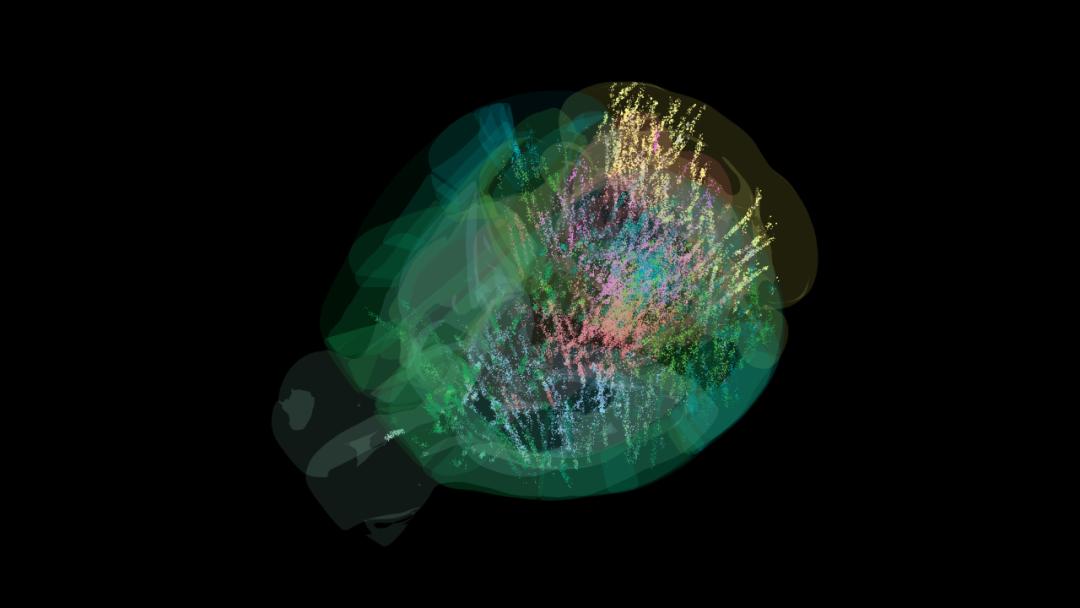
The whole - brain decision - making map of mice shows that decision - making activities are widely distributed throughout the brain
The experimental design seems simple: mice face randomly appearing black - and - white striped circles on the screen and need to use their front paws to turn a small wheel to center the circle. When correct, they get a sip of water; when wrong, they hear a noise and have a short pause. Although the task is small, it includes complete decision - making links such as visual input, choice, action, and reward - punishment feedback. The researchers also set probability conditions, for example, the circle was more likely to appear on one side within a certain period. As the training progressed, the mice gradually learned to use this probability information to improve their performance. Even in trials without any visual cues, they could still make nearly 60% correct choices based on experience.
The data results are shocking. As expected, visual stimuli initially appeared in the thalamus and primary visual cortex, but soon spread to areas such as the midbrain and medulla oblongata. Signals related to choice not only existed in the cerebral cortex but also appeared on a large scale in the cerebellum and brainstem, with an intensity even higher than that in the cortex. More than 80% of the brain regions contained signals that could predict the mouse's movement speed, and reward feedback could be decoded almost throughout the entire brain. The research team also found that prior information was not only integrated by the higher - level cortex at the end but was already reflected in 20% - 30% of the brain regions, including the early sensory processing stage. This means that the brain starts to use experience to shape choices at each stage of decision - making rather than waiting until the final stage to intervene.
These findings subvert the traditional "linear pathway model". The brain's decision - making process is not a single path from sensation to the prefrontal lobe and then to action, but more like a distributed network where signals appear simultaneously in the cortex and subcortical regions, intertwining with each other to form an ensemble across the whole brain.
These experiments on the brain's decision - making mechanism open a new window for us to study the brain's higher cognitive functions.
This article is from the WeChat public account "Neural Reality" (ID: neureality), author: NR. Republished by 36Kr with permission.