From regression to offense: What enables Nike to embark on a new journey of recovery?
In 1962, at the age of 24, Phil Knight didn't look for a stable job after graduating from college. Instead, he chose to explore the world. In an era when airplanes were just entering the civilian aviation field, he decided to take a flight for a round - the - world trip.
It was this trip that laid the foundation for Knight's lifelong career. In Greece, he saw the Temple of Athena Nike, which is also the origin of the NIKE brand.
More than sixty years later, this connection related to "victory" has received a brand - new interpretation on the stage of the China International Import Expo in Shanghai.
As visitors step into the consumer goods exhibition area of this year's Import Expo, their eyes will immediately be firmly attracted by a highly visually impactful art installation, which is the "Winged Victory of Samothrace" created by Nike for this exhibition.
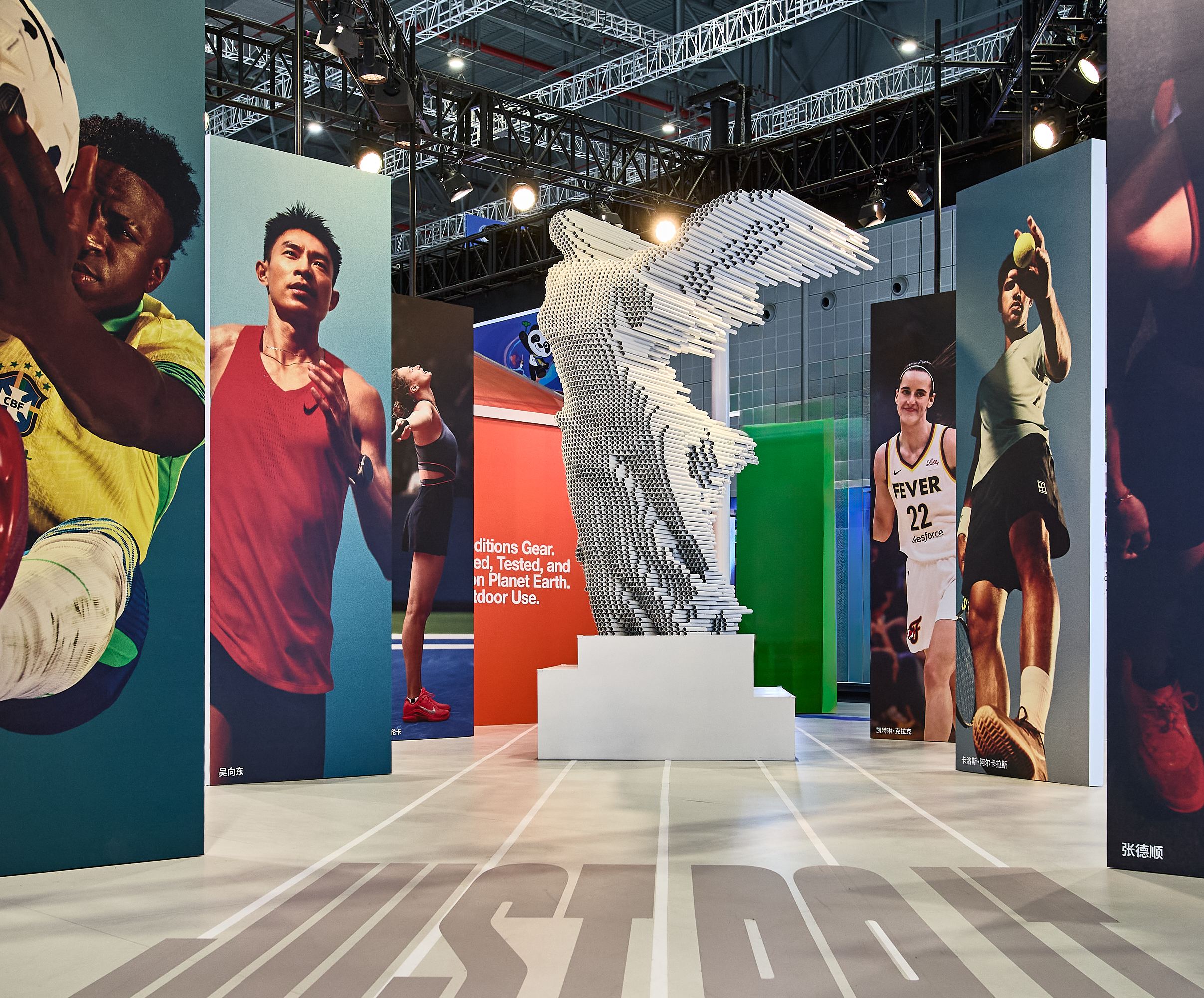
Different from the classic gentle postures in ancient Greek sculptures, this set of installations is based on an industrial style. It uses staggered metal steel pipes to build the dynamic outline of the Winged Victory of Samothrace about to take off, with the tough lines showing the power of modern sports.
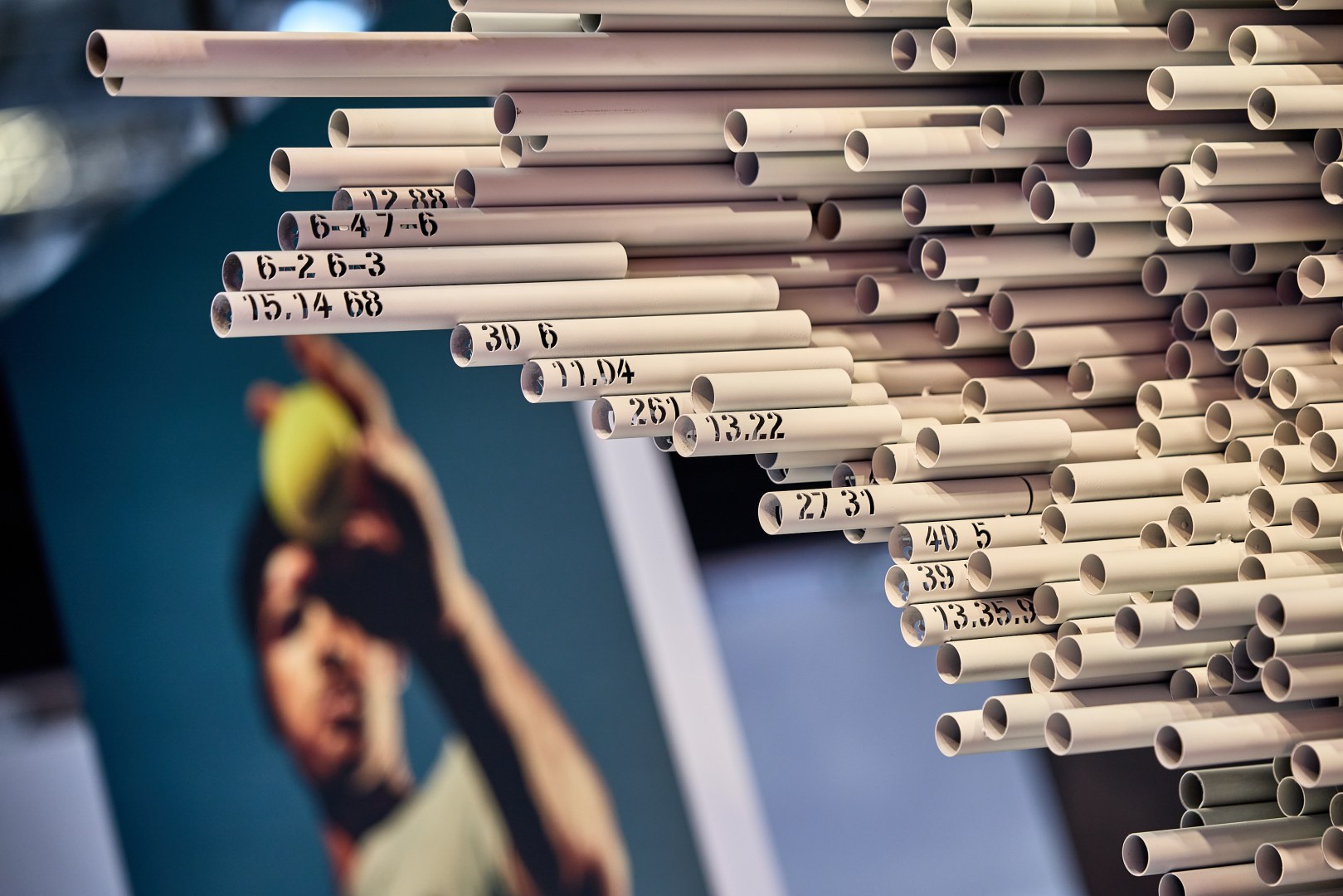
It's worth mentioning that elements of numbers such as "12.88" and "6 - 4 7 - 6", which are closely related to Chinese sports, are ingeniously incorporated into the installation. The former is Liu Xiang's amazing result when he broke the world record in the 110 - meter hurdles, and the latter reproduces the classic score when Li Na became the first Asian player to win a Grand Slam singles championship at the 2011 French Open.
On - site, Nike also displayed a series of highlight moments of outstanding Chinese athletes on the field. Like the familiar numbers on the statue of the Winged Victory of Samothrace, these images not only evoke the glorious memories of Chinese sports but also intuitively show the in - depth resonance between Nike, the Chinese market, and Chinese athletes.
Meanwhile, at this year's Import Expo, Nike also showcased a series of innovations and officially announced the opening of the Greater China Creative Production Center ICON. Shanghai.
From cutting - edge technologies in the laboratory to the daily experiences of street runners, from the limit breakthroughs of elite athletes to the cultural resonance in the Chinese local context, Nike is using an innovation storm to open up a brand - new realm of imagination for the industry.
A R & D Marathon Spanning a Decade
Walking through the rows of images of athletes and moving forward towards the statue of the Winged Victory of Samothrace, visitors will enter Nike's product exhibition area.
Many people stopped in front of a pair of grey shoes. The shoe body is made of matte grey fabric, with a delicate touch and excellent breathability. The metal Swoosh logo on the side of the shoe glows softly under the light, showing a sense of refinement in its simplicity.
What's most eye - catching is the sole. Twenty - two foam nodes of the same size are arranged on a layer of flexible water - repellent material. When athletes move, each node can move independently in all directions like a piston, accurately transmitting the tactile sensation of the ground under their feet.
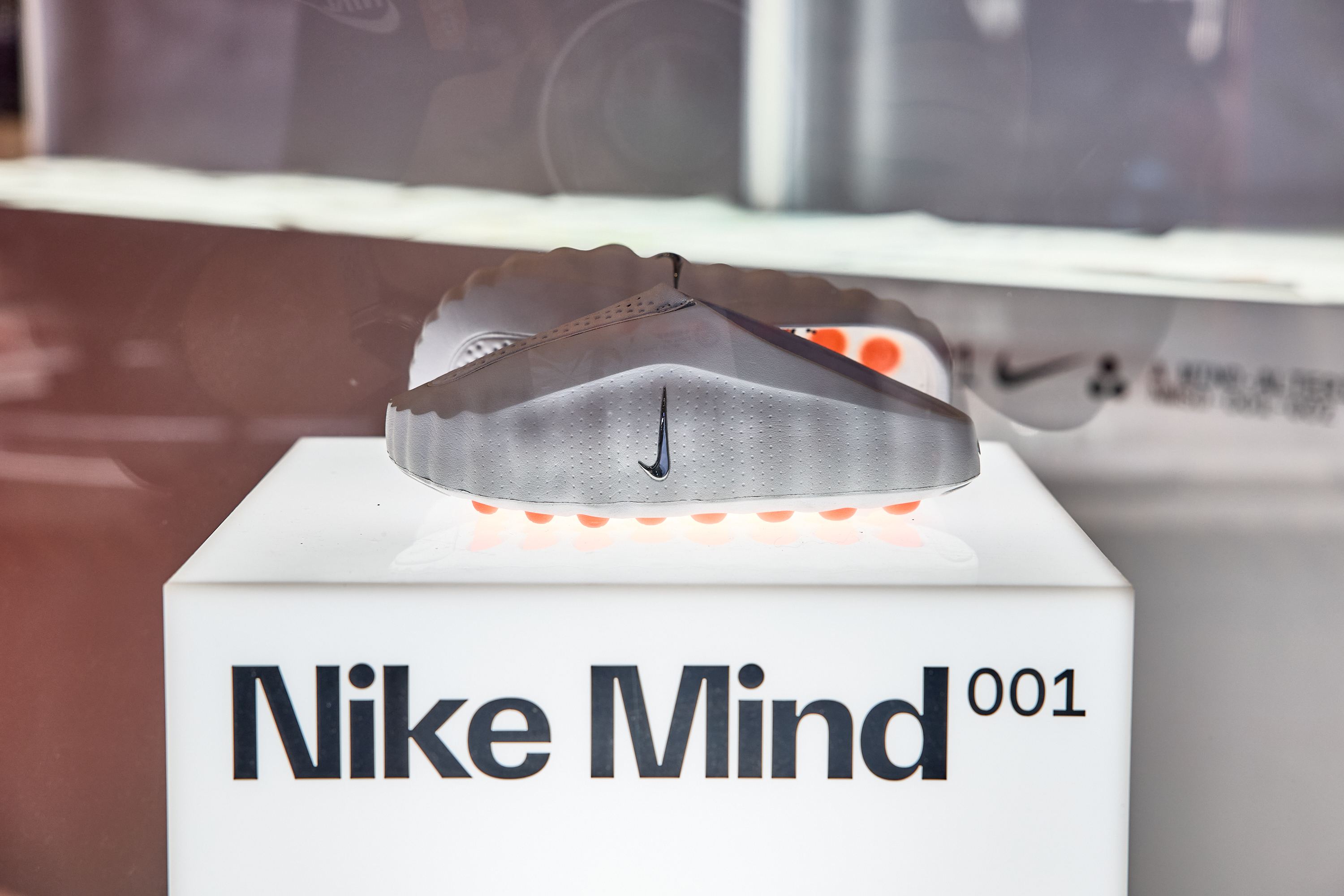
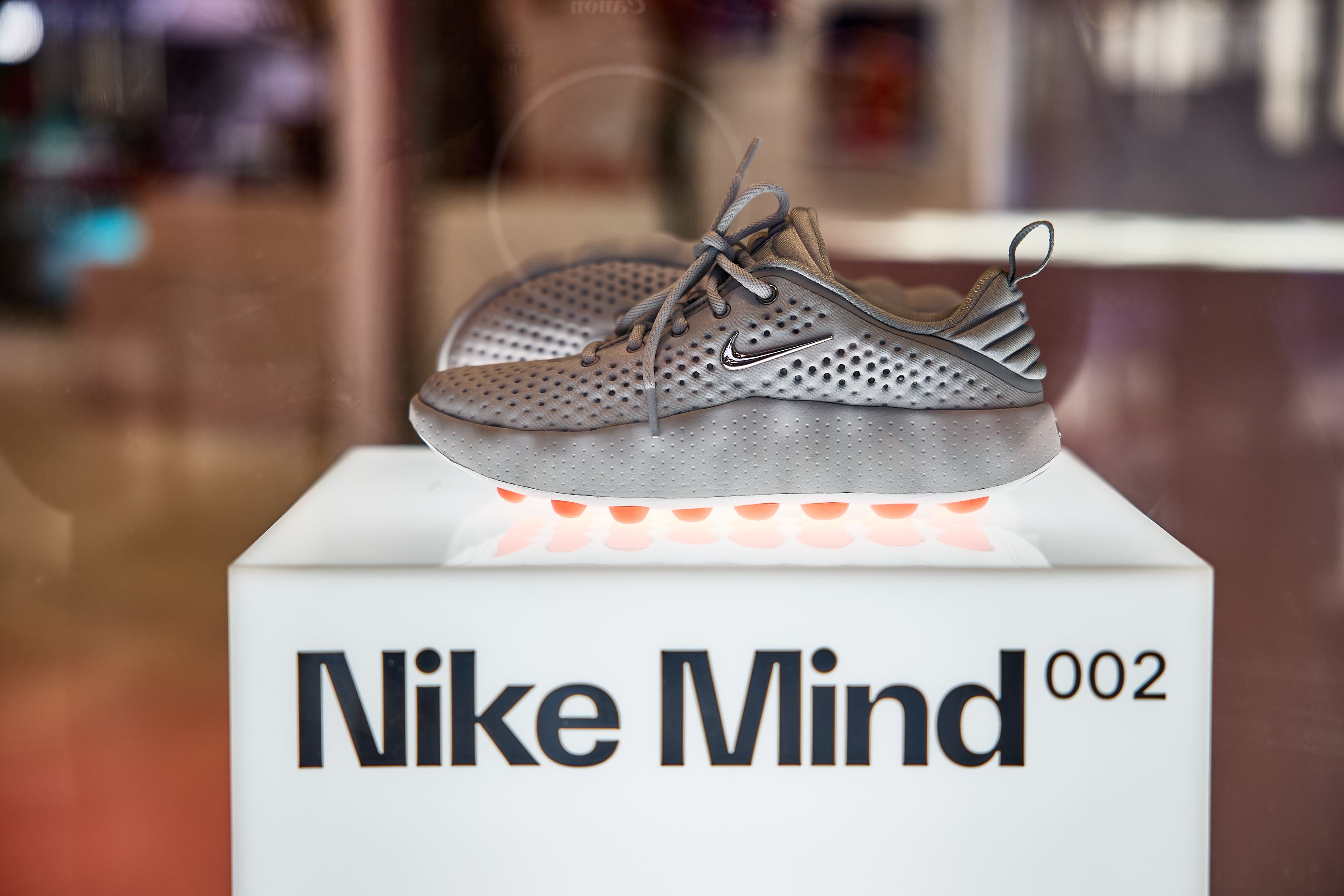
This is the Nike Mind series of shoes, which Nike publicly showcases for the first time. It is an innovative work that "can awaken the connection between the brain and the body".
When Dr. Matthew Nurse, Nike's Chief Science Officer, picked up this simply - designed shoe on - site and ran his fingertips across the densely - packed foam nodes, few people knew that behind this shoe, there was a R & D journey spanning more than a decade.
According to Matthew Nurse, the concept of Nike Mind emerged twenty years ago, and the technological development took at least a decade. "Sometimes, breakthroughs in innovation really do take time. This requires us to have perseverance, faith, and sufficient patience."
During this long R & D cycle, the biggest challenge the team faced was how to produce and assemble the 22 independent nodes in a stable and reliable way.
Ordinary shoe models usually have only five or six main components, and the assembly process is relatively mature. However, the 22 independent nodes of Nike Mind not only need to be precisely manufactured individually but also need to be perfectly bonded and work in synergy inside the shoe. Any deviation in one node may affect the overall sensory feedback effect. This means that Nike had to break out of the framework of traditional shoemaking processes and create a brand - new production logic.
"Later, we developed a new method that can cut and implant all the nodes at once while keeping them independent." Matthew Nurse told 36Kr.
Meanwhile, Nike invited thousands of athletes to participate in the testing, with a cumulative feedback time of tens of thousands of hours, to ensure that the shoes remain comfortable after long - term wearing.
It is reported that in the early stage of R & D, the team designed 23 plantar sensing nodes. Laboratory data showed that they could enhance the brain's sensory feedback. However, in the actual tests by athletes, it was found that the nodes at the toes would cause excessive interference. Finally, based on the athletes' feedback, Nike streamlined the nodes to 22. This dual verification of "objective data + subjective experience", as Nike emphasizes, makes athletes the ultimate decision - makers.
At a critical stage of the brand's revival, Nike is reconstructing its innovation logic with "athletes' needs" at the core. The Nike Mind series, the world's first footwear product based on neuroscience, is the most vivid footnote to this transformation.
In addition, the Nike Mind series is also Nike's first shoe model aiming to "change the brain" rather than just changing the body.
According to Matthew Nurse, usually when they develop products, the starting point is to improve athletes' sports performance, and the way to achieve this is by influencing athletes' movement patterns, such as running efficiency, movement mechanism, load, or grip. However, at the beginning of the R & D of Nike Mind, the team focused on influencing sensory nerve feedback to reshape the connection between the feet and the brain.
"Scientific research has proven that sensory nerve feedback is crucial for human movement, training guidance, and brain state. But we have never really and consciously explored this field in - depth before."
After decades of in - depth exploration in the field of sports technology, Nike, once again in the role of a pioneer, has entered a brand - new territory at the intersection of neuroscience and sports performance.
As is well - known, Nike has long been famous for its in - depth research on sports. It has advanced motion capture technology, camera technology, physiology technology, and environmental laboratories, and its understanding of limb movements has reached the top level in the industry.
However, when the research object shifts from the "body" to the "brain", even experienced Nike has to admit that it is a "newcomer".
"I think one of the biggest differences is that we have been studying sports for a long time, so we have a very clear understanding of how to evaluate body movements and feedback." Dr. Matthew Nurse admitted frankly. "But when studying the brain, we have to invest in new teams, new members, new capabilities, and new technologies to truly quantify its impact on athletes."
To tackle this problem, Nike specifically established a Mind Science Department, which is affiliated with the Nike Sports Research Laboratory (NSRL), and recruited cross - field talents such as neuroscientists, cognitive psychologists, and brain - computer interface engineers.
The significance of this decade - long R & D marathon is not only about a pair of shoes but also about Nike's re - definition of "sports innovation".
The launch of Nike Mind not only proves Nike's technological strength but also re - defines the innovation boundaries of the sports equipment industry. Before this, the industry's exploration of "sports improvement" mainly focused on "enhancing physical functions". However, Nike Mind is the first to incorporate "regulating the brain state" into the function scope of equipment, proving that sports equipment can be a "bridge for the synergy between the body and the mind".
While traditional sports shoes are still competing in the rebound coefficient of the sole material, Nike has opened a new track from "empowering the body" to "activating the mind" through neuroscience. The story of Nike Mind proves that industry leaders are never satisfied with leading on existing tracks but are good at opening up new fields that no one has ever explored. With the in - depth integration of neuroscience and sports technology, more possibilities for future sports innovation are waiting for Nike and the industry to unlock.
A New Era of the Innovation System
In 1972, Phil Knight officially launched the Nike brand. At that time, the US sports shoe market was already a highly competitive one.
How to stand out in the fierce competition? The only answer was innovation. Thus, one of the greatest innovations in the history of human sports shoes was born.
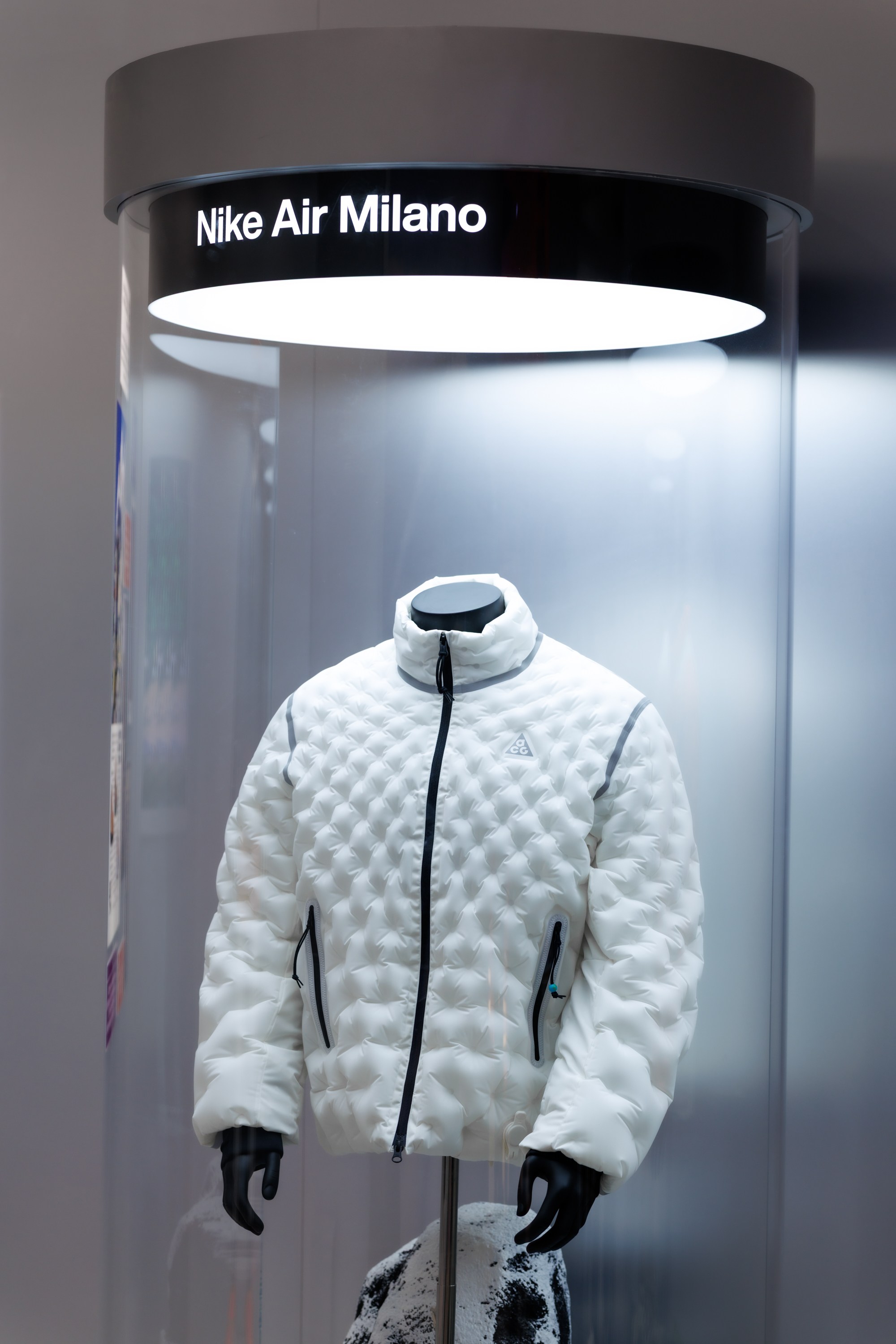
This is Nike's Air sports shoes. The AIR technology, which was born in 1979 and was originally the "ace" for shoe cushioning, has now been "moved" to clothing by Nike's designers. At the Nike booth, the Air Milano jacket, which made its debut in China, also attracted countless eyes. This is a "cross - border breakthrough" of Nike's classic technology. Danielle Kayembe, an expert in Nike's clothing product innovation management, said: "The Air Milano marks an exciting new era in the inheritance of Nike's Air technology. It brings unique innovation to provide all athletes with responsive and intelligently - adapted warming solutions, while demonstrating Nike's top - notch strength - integrating sports science and data - driven design to create sensitive and responsive performance clothing that can improve sports performance."
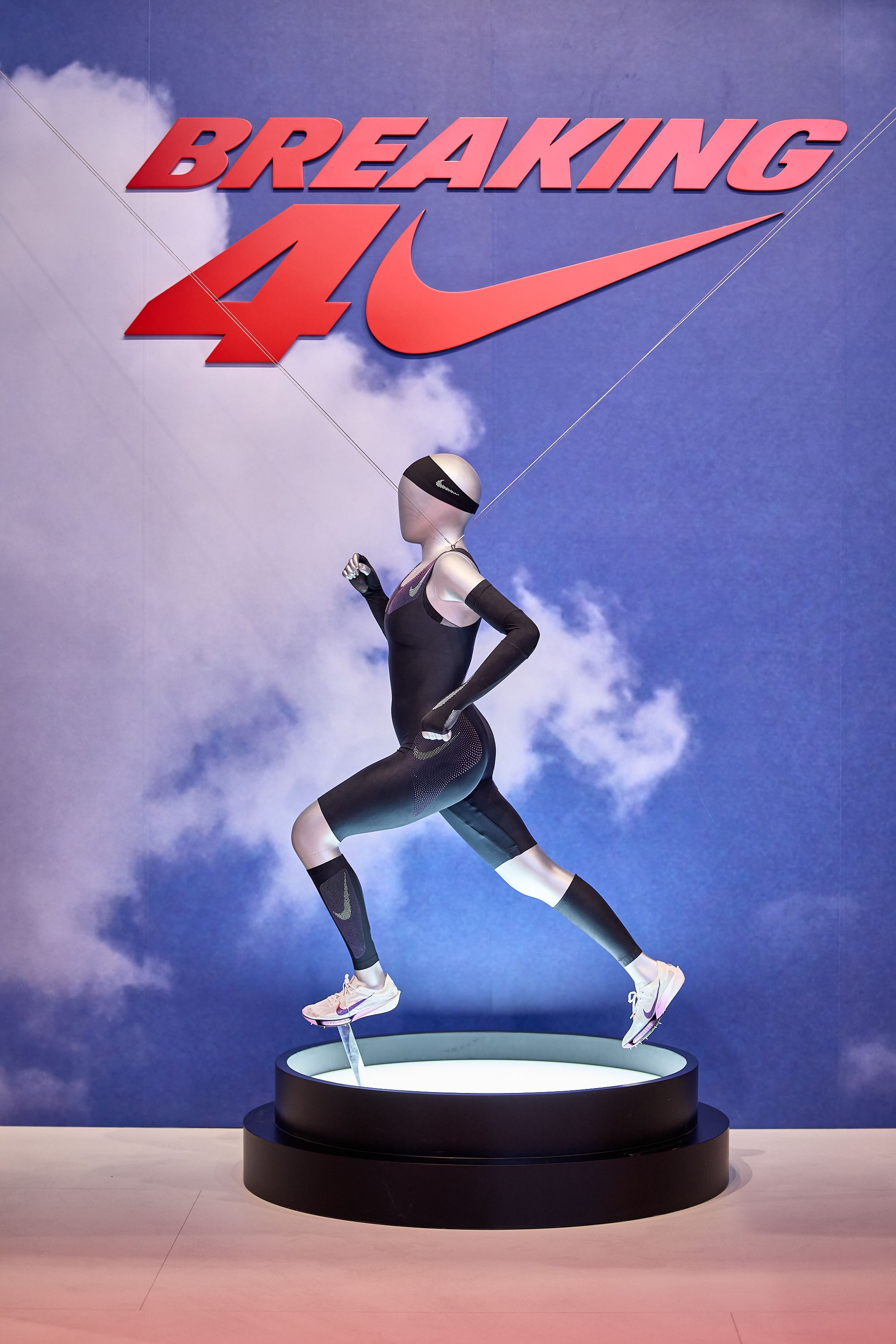
Also eye - catching is the "Sub - 4" equipment set created for Faith Kipyegon, the world record holder for the women's one - mile run. This set includes a one - piece racing suit, a 3D - printed sports bra, and racing spikes. The equipment that once helped her make an attempt to run a mile in under 4 minutes in Paris made its public debut in China this time. Every detail of the set hides Nike's ultimate pursuit of "limit breakthrough", with optimizations even accurate to the millimeter level.
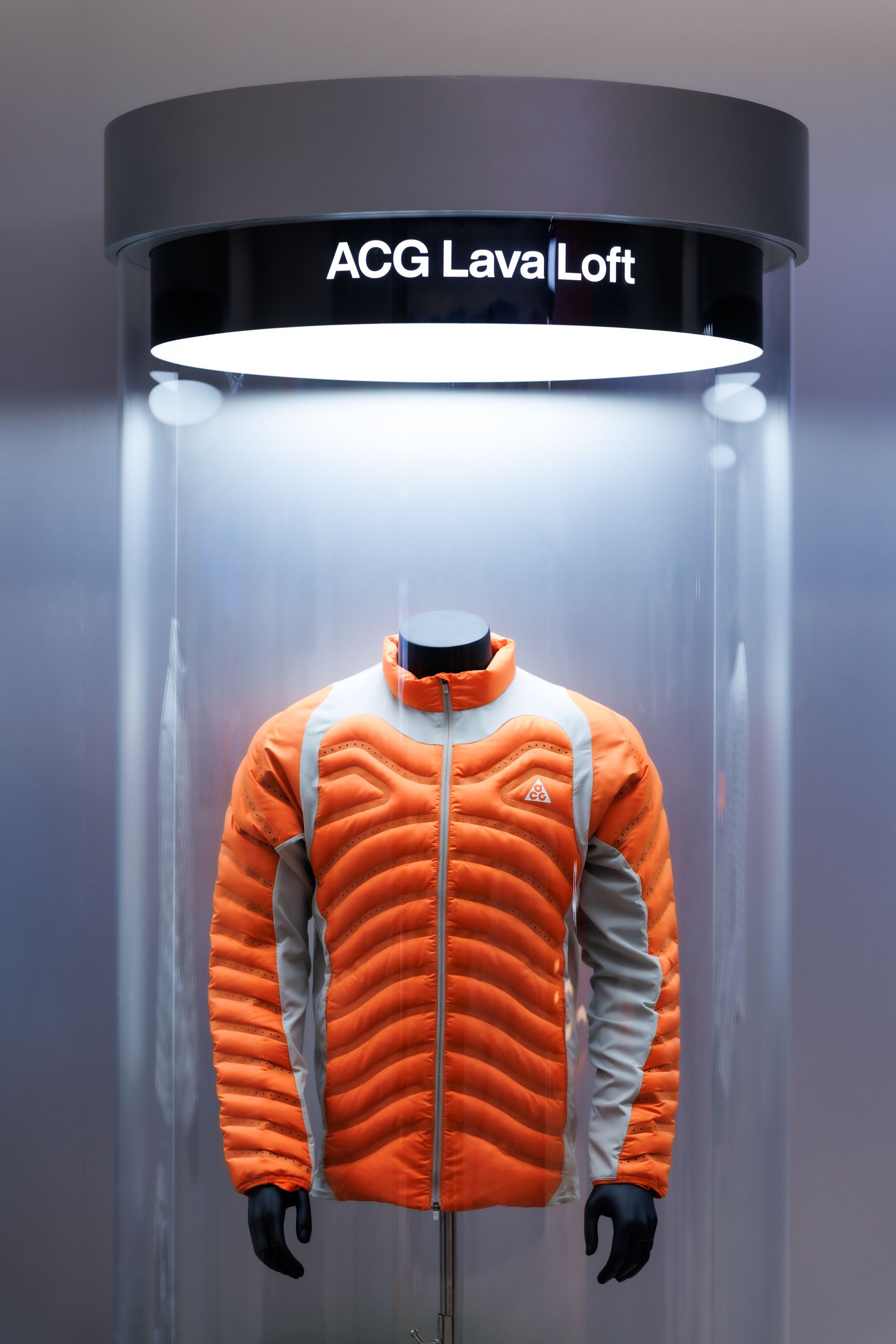
The ACG Lava Loft down jacket and the G.T. Cut 4 basketball shoes, which were also unveiled at the same time, also follow the logic of "driving innovation with athletes at the core". The former integrates the lightweight technology of running shoes into outdoor clothing, paired with waterproof fabric and a heat - reflective lining, to protect trail runners in rainy and snowy weather, continuing the 40 - year tradition of the ACG series of "following the call of nature".
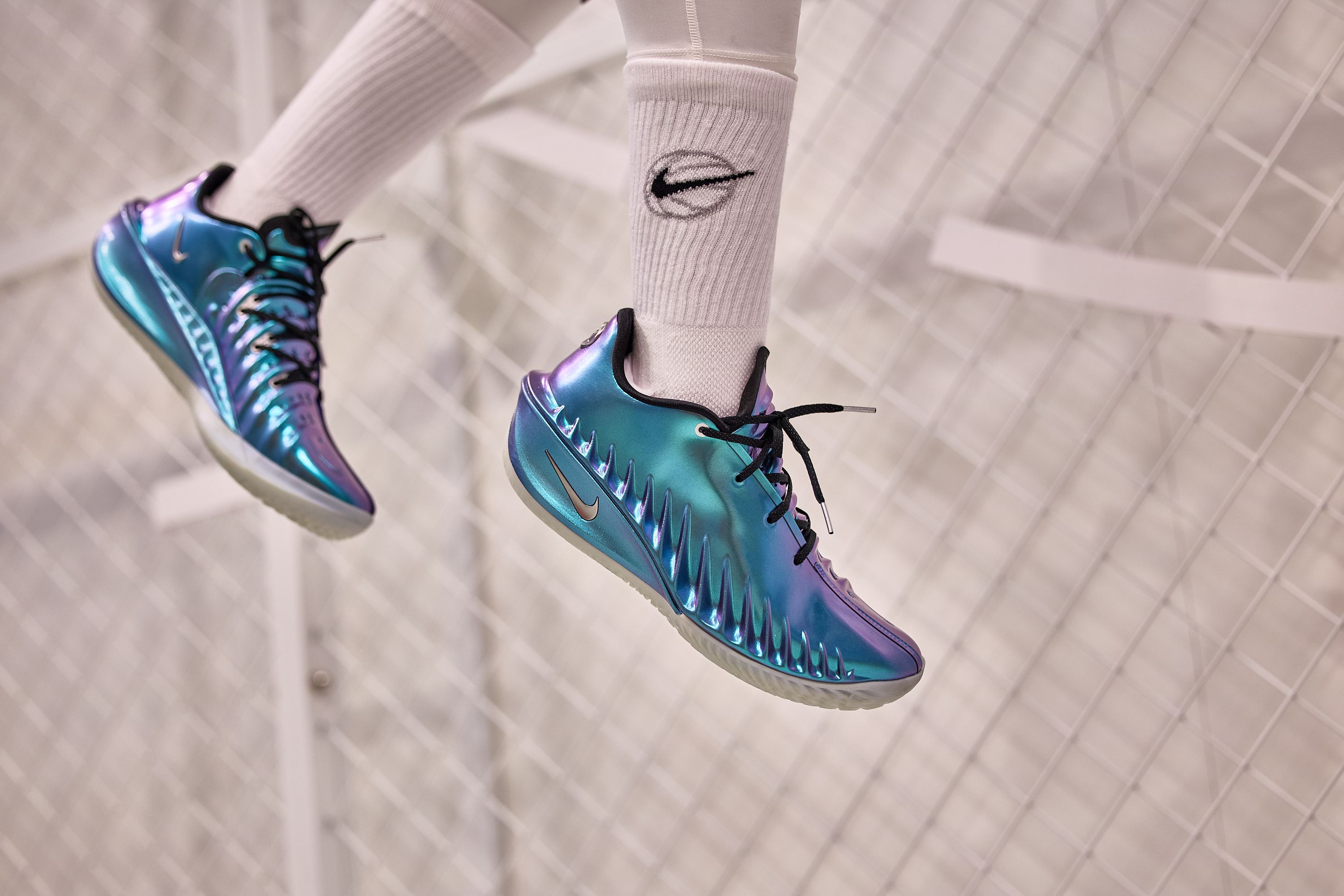
The latter is tailored to the court needs of basketball players. It re - tunes the ZoomX 3.0 foam and the full - length Zoom Strobel rebound system to adapt to the elastic feedback of wooden courts. The newly - added RBR - X foam structure and Cushlon foam frame not only ensure cushioning performance but also enhance stability during sudden stops and direction changes, allowing players to be more aggressive on the court.
The unveiling of these products is not only Nike's precise response to "athletes' needs" but also outlines the brand's evolutionary path from single - point technological breakthroughs to systematic innovation.
Driving innovation with athletes at the core is an important engine for Nike during its revival stage. Recently, Nike announced the integration of the innovation, design, and product teams of Nike, Jordan, and Converse to form a new, athlete - centered innovation engine. This is not simply a "department merger" but a break - through of the resource barriers between brands, enabling the "cross - category flow" of technology, data, and creativity, marking that Nike's innovation system has officially entered a new era.
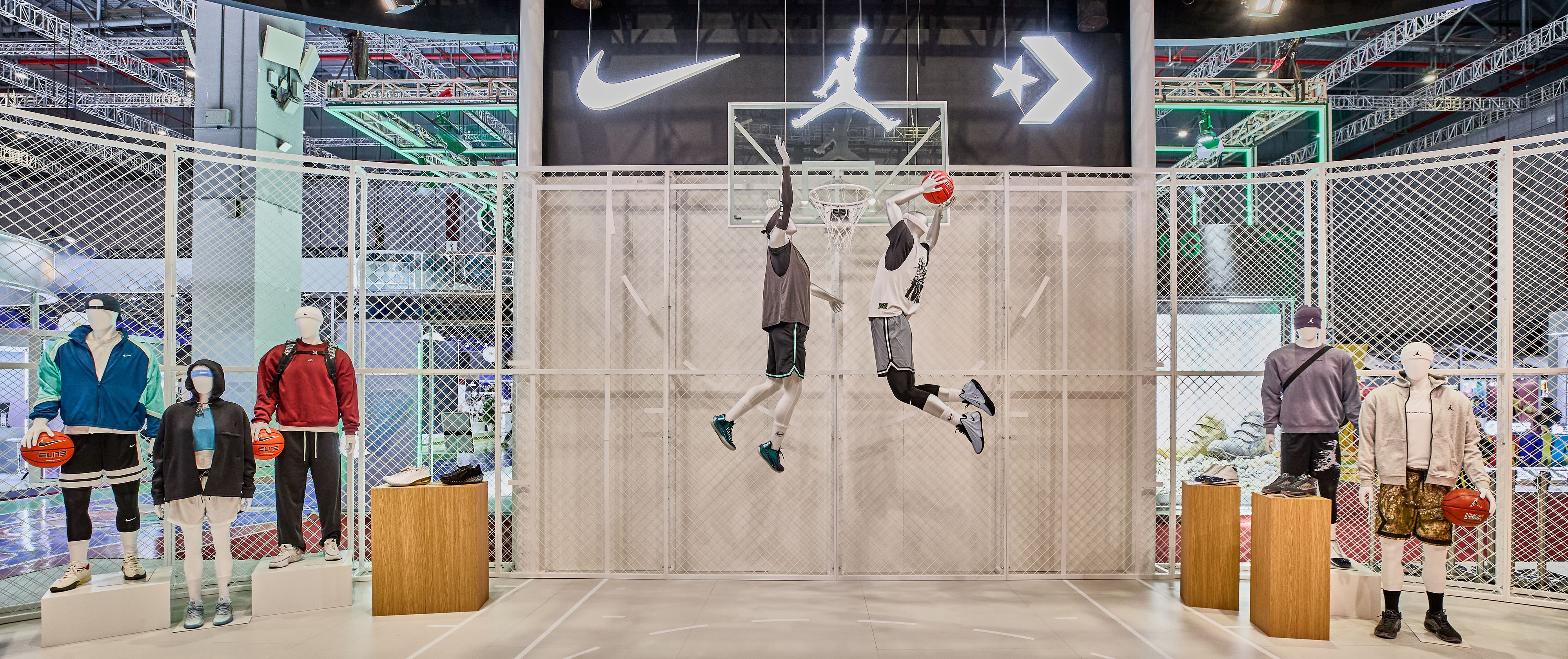
In the past, the innovation paths of the three brands were relatively independent: Nike focused on the R & D of professional sports technology, Jordan delved into basketball culture and performance equipment, and Converse concentrated on the trendy and casual field. After the integration, this "separate - combat" model has been completely broken.
The experience of the Jordan team in basketball shoe cushioning technology may inject a professional - sports - level foot - feel into Converse's vintage canvas shoes in the future, making the classic styles combine trendy attributes with comfort. Converse's experience in canvas material craftsmanship may bring new inspiration to Nike's outdoor clothing, creating single items that combine vintage style and functionality. And the top - notch resources such as the biomechanical equipment and dynamic capture system in Nike's Sports Research Laboratory will be open to the three brands. Whether it's Jordan's basketball players, Converse's trendy enthusiasts, or Nike's runners, they can all enjoy the same accurate data analysis and testing support.
From the technological cross - border