How can a large western province take the lead?
See the digital and intelligent future in Wuzhen.
From November 6th to 9th, the annual World Internet Conference Wuzhen Summit was held. At this "digital and intelligent feast", Sichuan elements frequently made their appearances -
The "Zero - Carbon Space Computing Center" of Guoxing Aerospace became a hot topic. The medical large models and AI agents of West China Hospital of Sichuan University were collectively presented. The "Sichuan experience" in the digital protection and inheritance of cultural heritage was also introduced to the world through vivid cases...
As the largest - scale and highest - level Internet conference held in China, since its first edition in 2014, the Wuzhen Summit has become an important window to observe the Internet ecosystem and the development of new technologies in China and even the world.
Ten years ago, it was at the second Wuzhen Summit that the concept of "Digital China" was first proposed;
In the past decade, China's digital economy scale is expected to soar from 18.6 trillion yuan in 2015 to over 60 trillion yuan in 2025, and its share in GDP will climb from 27% to over 45%.
Now, the digital economy has reached the turning point from the "Internet +" era to the "Artificial Intelligence +" era. In this new technological wave, Sichuan, a large western province, has already stood at the forefront.
As one of the seven national digital economy innovation and development pilot zones in China, Sichuan has outlined the blueprint for building a leading province in digital economy innovation and development, and is accelerating to seize the commanding heights of future development.
01 The Landscape of Intelligent Transformation
In 1969, the Internet was born, kicking off the modern information society;
Twenty - five years later, China connected to the Internet for the first time, catching up with the express train of the third scientific and technological revolution;
As Wang Jian, an academician of the Chinese Academy of Engineering, the director of Zhijiang Laboratory, and the founder of Alibaba Cloud, said, "The past decade has been the fastest - growing decade for China's Internet technology development." The speed, scope, and depth of the digital economy's development are unprecedented.
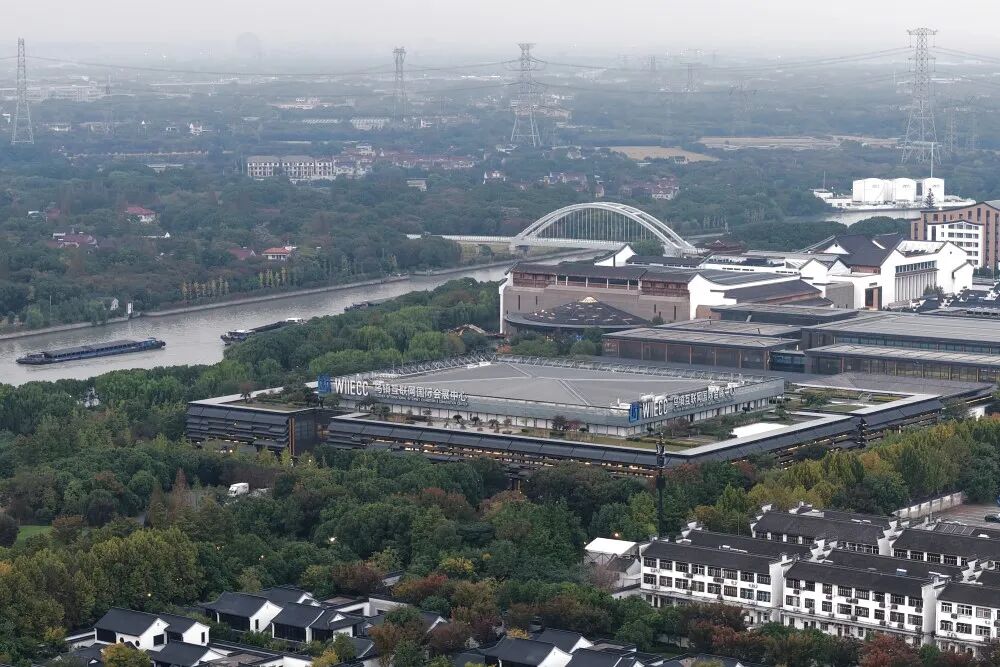
Image source: Xinhua News Agency
On November 8th, at the "Digital and Intelligent Health Forum" newly established at the Wuzhen Summit, Luo Fengming, the dean of West China Hospital of Sichuan University, introduced that the hospital's Internet outpatient service exceeded 2 million person - times last year, enabling high - quality medical resources to overcome spatial barriers.
In November last year, the "Huaxi Hongyi" large model was officially released, focusing on "AI +" in medical care, services, and management to support the innovative application scenarios of artificial intelligence. "Using artificial intelligence to identify CT pulmonary nodules has greatly improved the accuracy and efficiency," Luo Fengming gave an example.
Just one week ago, two intelligent agent applications for patient accompaniment and medical documentation, developed based on the "Huaxi Hongyi" large model, were newly presented. In Luo Fengming's view, the transformation from digital transformation to intelligent evolution may bring about subversive changes.
This is just the tip of the iceberg of the digital economy's transformation landscape.
In Sichuan, a total of 464 Internet hospitals have been built, promoting the full coverage of 5G remote private networks and primary medical and health information networks; the "Sichuan Cloud Education" platform covers 2,370 schools, benefiting more than 700,000 teachers and students; the government affairs data between Sichuan and Chongqing are updated in real - time, achieving two - way sharing of 41,000 items of government affairs data...
As a province rich in cultural resources, Sichuan is also at the forefront of the country in the activation of cultural heritage.
At the Forum on Digital Protection and Inheritance of Cultural Heritage on November 9th, Tang Fei, the director of the Sichuan Provincial Cultural Relics Bureau, shared Sichuan's experience around the "digital path for the protection and utilization of cultural heritage".

Image source: Cover News
From the early exploration of digital mapping and archiving of grotto temples, to the pilot projects of 3D scanning and digital museums, and then to the full - chain transformation driven by AI and big data, Tang Fei pointed out that "in the face of the globalization and digitalization wave and the wide application of artificial intelligence AI, we use digital technology as the engine to promote the protection, restoration, and utilization of cultural heritage, enabling the millennium - old civilization to regain new vitality in the digital age."
Now, in the Sanxingdui and Jinsha Site Museums, the immersive VR experience allows the public to travel back to the ancient Shu Kingdom in an instant; the online grotto exhibitions use technologies such as digital twin and 3D modeling, enabling viewers to have an "immersive" experience without leaving home...
To prevent cultural heritage from "lying in display cabinets or hiding in ancient books", Sichuan has independently built one of the most complete and systematic cultural big data service platforms at the provincial level in China, and was the first in the country to complete the construction of the cultural big data "high - speed road" foundation, attracting more than 10 provinces and municipalities such as Shanghai and Guangdong to learn from its experience.
02 Industrial Leap
The development history of the digital economy is a history of scientific and technological innovation and a history of global pattern changes.
Currently, China's digital economy development is moving from the extensive connection stage of "Internet +" to the innovation - leading stage of "Artificial Intelligence +". "Internet +" has built a digital foundation for the interconnection of all things, while "Artificial Intelligence +" is a systematic transformation from factor optimization to productivity leap.
At the "Internet Light" Expo of the 2025 World Internet Conference, the "Zero - Carbon Space Computing Center" independently developed by Guoxing Aerospace stood out and was rated as one of the top ten high - quality first - released achievements of the year.
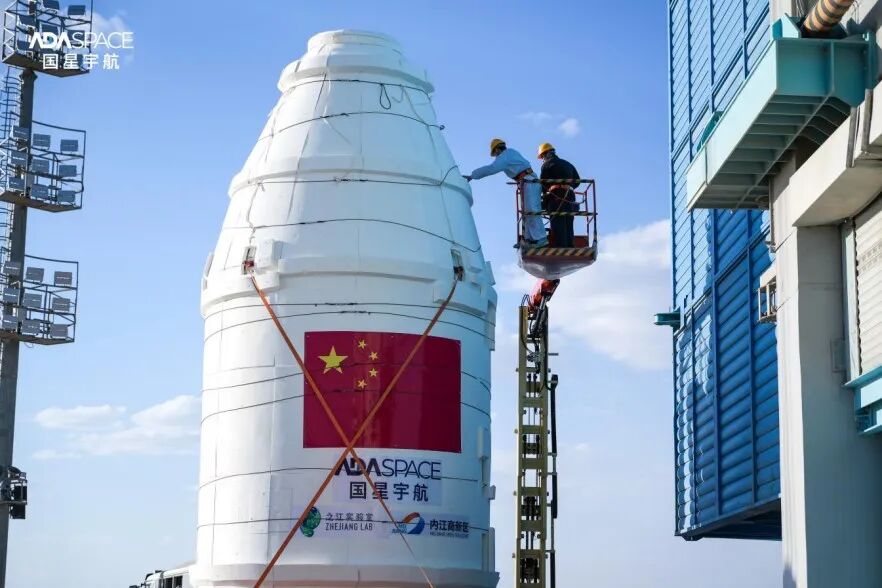
Image source: Guoxing Aerospace
Guoxing Aerospace is a typical representative of Sichuan in the field of "Artificial Intelligence + Commercial Aerospace".
In 2018, when the domestic commercial aerospace industry was entering the fast lane, Guoxing Aerospace was founded in Chengdu.
At last year's Wuzhen Summit, Guoxing Aerospace and its partners jointly launched the "Star Computing" plan: to launch 2,800 computing satellites and build a space - based intelligent computing infrastructure - a space computing constellation, achieving "computing power in space, on - orbit networking, and synergy between heaven and earth".
According to calculations, after its full completion, its total computing power will reach up to 100,000 Petaflops per second, comparable to a "supercomputer" roaming in the universe. In just one year, this plan has gradually been implemented.
According to Zhao Hongjie, the executive vice - president of Guoxing Aerospace, the first - launched constellation of the "Zero - Carbon Space Computing Center" already has the world's strongest space computing power of 5 POPS, and the inter - satellite laser communication rate can reach up to 100 Gbps. The 02 constellation is planned to be launched in the first half of next year to further achieve multi - dimensional perception, higher computing power, cross - orbit interconnection, and large - scale commercial use.
With the accelerating integration and innovation of technologies such as commercial aerospace and artificial intelligence, the aerospace industry is becoming a must - fight area for global technological competition and industrial competition.
In the view of Wang Jianyu, a researcher at the Shanghai Institute of Technical Physics of the Chinese Academy of Sciences and the dean of the Hangzhou Institute for Advanced Study, UCAS, Sichuan's commercial aerospace industry is already at the forefront in China. In the future, more investment can be made in aspects such as computing, earth observation, and the combination of commercial aerospace and AI to find its own characteristics.
Previously, Sichuan had clearly listed commercial aerospace, artificial intelligence, etc. as new tracks to enhance the province's development level. In April this year, the "Action Plan for the High - Quality Development of Sichuan's Commercial Aerospace Industry (2025 - 2030)" proposed to strive to exceed 50 billion yuan in the aerospace industry scale in 2025 and reach 100 billion yuan in 2030, and build a commercial aerospace innovation and development high - ground with national influence.
It's not just the commercial aerospace industry. Driven by the "No. 1 Innovation Project" of artificial intelligence, the spill - over effect of Sichuan's digital economy is penetrating into the fabric of all industries.
In 2024, Sichuan's artificial intelligence industry exceeded the 100 - billion - yuan mark for the first time - with revenues exceeding 130 billion yuan, a year - on - year increase of over 25%, and more than 1,300 artificial intelligence enterprises, becoming the core engine for the development of artificial intelligence in the western region. Driven by digital technology, the digital coverage rate of above - designated - size industrial enterprises in Sichuan has increased to 45.5%, and more than 800 intelligent factories have been built.
03 The "Leading" Goal
On the national digital economy map, Sichuan has long been an important "pole".
In the past few years, the added value of Sichuan's core digital economy industries has increased from 401.22 billion yuan in 2021 to 535.17 billion yuan in 2024, accounting for 8.3% of GDP, and the revenue of the electronic information industry has remained the first in the central and western regions.
Since the "14th Five - Year Plan", Sichuan has accelerated the cultivation of emerging industries such as robots and integrated circuits, as well as future industries such as sixth - generation mobile communication (6G), quantum technology, and the metaverse. Key areas such as artificial intelligence, satellite networks, and drones have maintained double - digit growth, and the digital industry matrix has risen strongly.
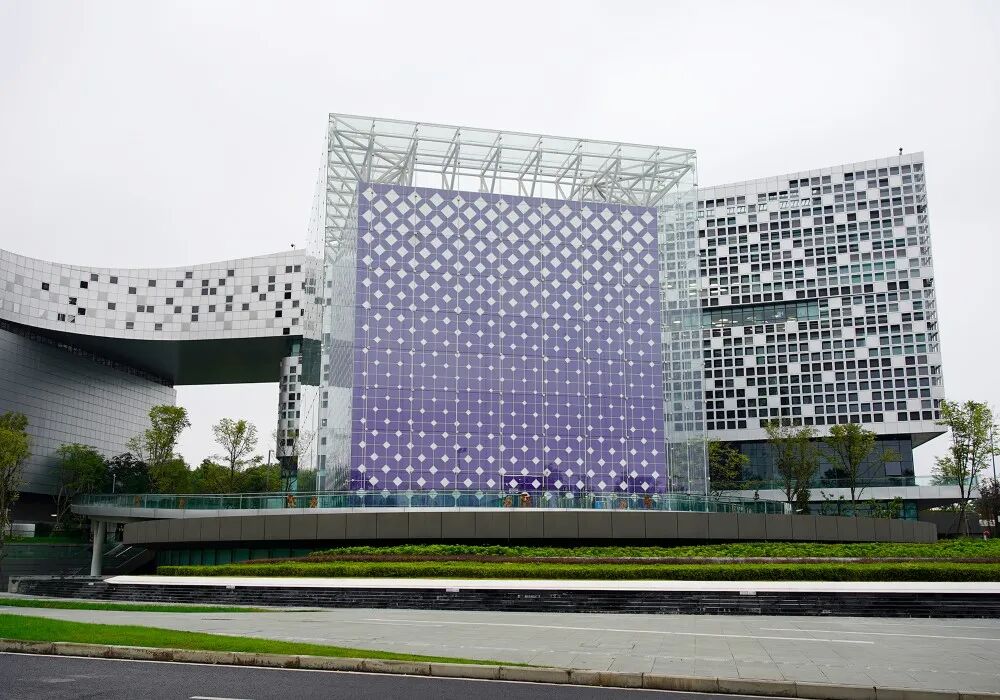
Image source: Photo by Chen Zhengyang (File photo)
Now, Sichuan has set its sights on building a leading province in digital economy innovation and development.
According to the latest plan, by 2027, both the total digital economy volume and the added value of core industries in Sichuan will exceed the national average, the data factor market system will be basically established, and a globally competitive digital industry cluster will be formed.
By 2030, the province - wide integrated data market will be fully established, the added value of core digital economy industries will double, and Sichuan will be built into a leading province in digital economy innovation and development.
This means that this large western province will strive for another trillion - level goal in the next few years.
Where will the increment come from?
Data is the core element for the development of the digital economy, and its value can only be realized through circulation and utilization.
Since the "14th Five - Year Plan", Sichuan has accelerated the construction of the data resource system. The province's catalog of shareable data resources has reached 389,500 items, and the open - able data resources have reached 264,300 items. Especially in terms of data development and utilization, Sichuan has publicly released 14 high - quality artificial intelligence data sets in two batches around fields such as industrial manufacturing, medical and pharmaceutical, and emergency management, continuously expanding the development space and growth potential of the digital economy.
Behind the wide application of "Artificial Intelligence +" is the iterative upgrade of digital infrastructure.
As a national hub for the "East - to - West Computing" project, by 2024, Sichuan had built a total of 207,000 5G base stations, ranking sixth in the country; the total intelligent computing scale of the province reached 16.8 EFLOPS, and the proportion of intelligent computing increased from less than 10% at the beginning of the "14th Five - Year Plan" to nearly 60% currently, with the comprehensive computing power level ranking among the top in the country.
According to the plan, by 2027, Sichuan's provincial computing power will be basically uniformly scheduled and efficiently used, with the total scale reaching 40 EFLOPS, equivalent to doubling the current computing power scale.
The increasingly solid new digital infrastructure continuously injects impetus into the breakthrough of cutting - edge technologies -
In the field of embodied intelligence, a series of humanoid robot products such as "Skywalker 2", "Gongga 2", "Kua Fu - MY", and "Tianlian T - series" have emerged one after another;
In the field of brain - computer interface, Sichuan's non - invasive brain - computer interface technology is in the first echelon in China and has reached the international advanced level;
In the field of quantum technology, the world's first gallium nitride quantum light source chip was born, providing a new material and device solution for quantum information transmission...
As the sound of oars and the glow of lights in Wuzhen reflect the future of digital civilization, Sichuan's digital wave is surging forward.
This article is from the WeChat public account "Urban Evolution Theory", author: Liu Yanmei, published by 36Kr with authorization.