XPeng cut open the skin on the spot to prove that there was no real person hidden inside. But after the robot grows breasts, what can it actually do for workers?
Unexpectedly, it's already the day when "robots need to prove they're not human."
After XPeng's humanoid bionic robot IRON was released, it unexpectedly became a hot topic due to suspicions of "human performance." Many people claimed after IRON took the stage, "It feels like a human is trying hard to play a robot."
At the press conference the next day, He Xiaopeng publicly cut open the fiber "skin" on the robot's leg, revealing the internal support structure and electronic components, to prove that this creation with obvious female human characteristics and a gentle gait is indeed a robot made of metal and wires.
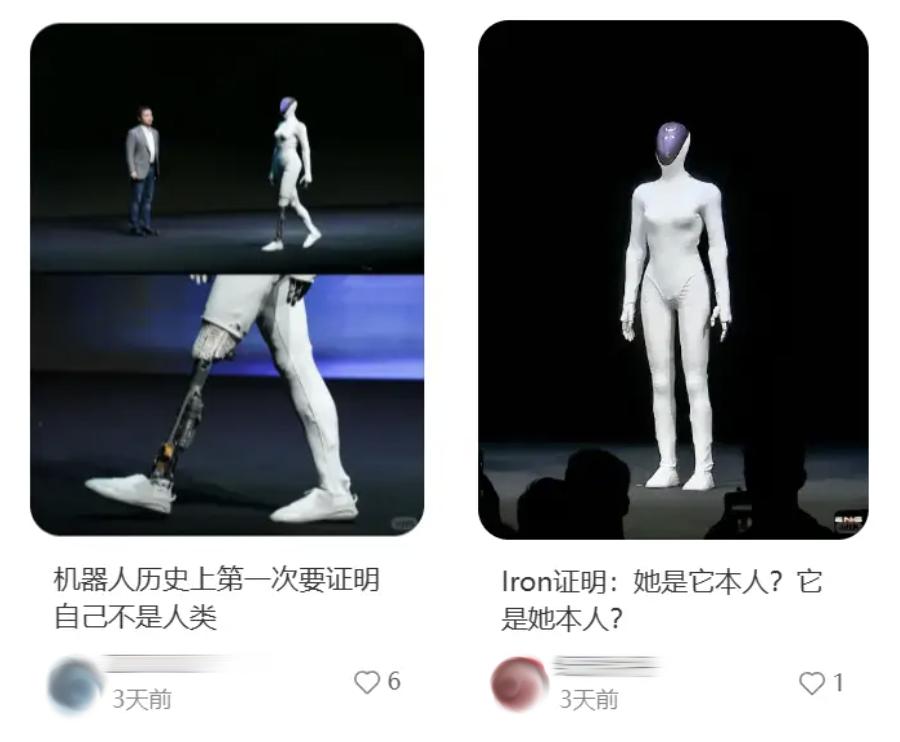
Besides seeing the advanced motion control technology of XPeng's robot, netizens are more excited about the "incredible" development speed of the robot industry implied by the need to "disassemble the robot to prove it's not human," as well as the future mass - production plan:
"Why do I feel both scared and excited when robots are becoming more and more human - like?"
Humanoid robots are on sale, but still in the "ornamental" stage
At XPeng's Technology Day on November 5th, XPeng released its new product, the humanoid bionic robot IRON. When IRON took the stage, its steps were slow and graceful, similar to a woman's "catwalk."
IRON really doesn't resemble traditional robots: it doesn't have an exposed metal shell. Its whole body is covered with flexible fibers, and its interior is composed of a human - like spine and bionic muscles, following a three - layer structure of "bone - muscle - skin." It has a female chest, and even its height and weight are similar to those of a real human. According to the data released by XPeng, IRON is 178 cm tall and weighs 70 kg.
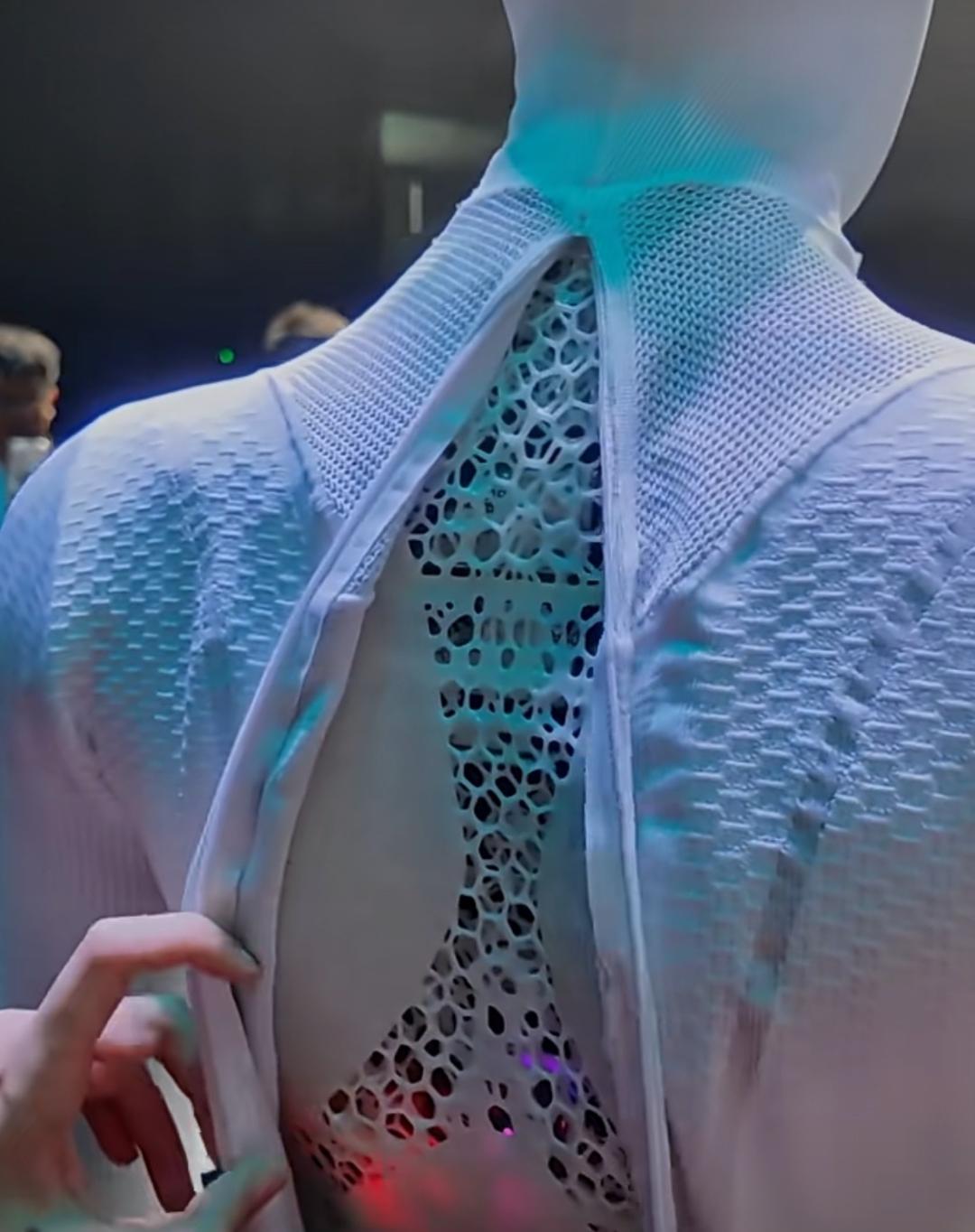
What's most striking about IRON is that its walking posture is very different from the rigid and clumsy "mechanical legs" of previous robots. "Walking" has always been an important topic in the field of humanoid robots. Counter - intuitively, it's much more difficult for a robot to walk like a human than to move forward on wheels or fly in the air, because every time a foot is lifted and lowered, there is contact, and the material and friction of the ground are uncertain, which affects the robot's balance and judgment.
However, an engineer involved in the R & D of IRON told Hydro Business that gait control is not IRON's innovation point. It's not difficult at the current industry development level. The reasons why IRON is "more human - like" are still the 1:1 human - like body, the flexibility of joints, and "wearing clothes."
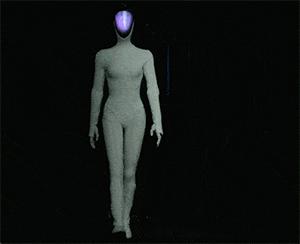
After all, when it comes to humanoid robots, you'll only find it humorous when you see Unitree's robots lively dancing yangko on the Spring Festival Gala. But when you see IRON, you'll more or less have the psychology of "doubting it's a real person and worrying it's not a real person."
To be "more human - like," IRON has movable joints on its shoulders and waist, which is rare in robots. Previously, robots didn't have movable joints on their shoulders because the only function of shoulder joints is to do the "shrugging" action, which is considered "useless." The extra joint in the waist helps IRON's walking gait be closer to the human force - exerting process. These seemingly "useless" joints may be the key to making the robot more human - like, said Zhao Zhongxia, an embodied researcher at the Zhiyuan Research Institute of Artificial Intelligence.
Many industry insiders believe that in terms of hardware, XPeng's IRON has reached the top level in China. "It's the only humanoid robot that can compete with Tesla," said Ken, an investment practitioner who has invested in Unitree Robotics.
But when you think such a delicate "humanoid silicon - based creature" will have some revolutionary application prospects, He Xiaopeng said that the plan for the IRON robot is to first work as a car salesperson in 4S stores, explaining products to customers. Although the most basic digital devices can currently do the same thing, a robot that can do a catwalk is obviously more likely to become a 'check - in spot.'
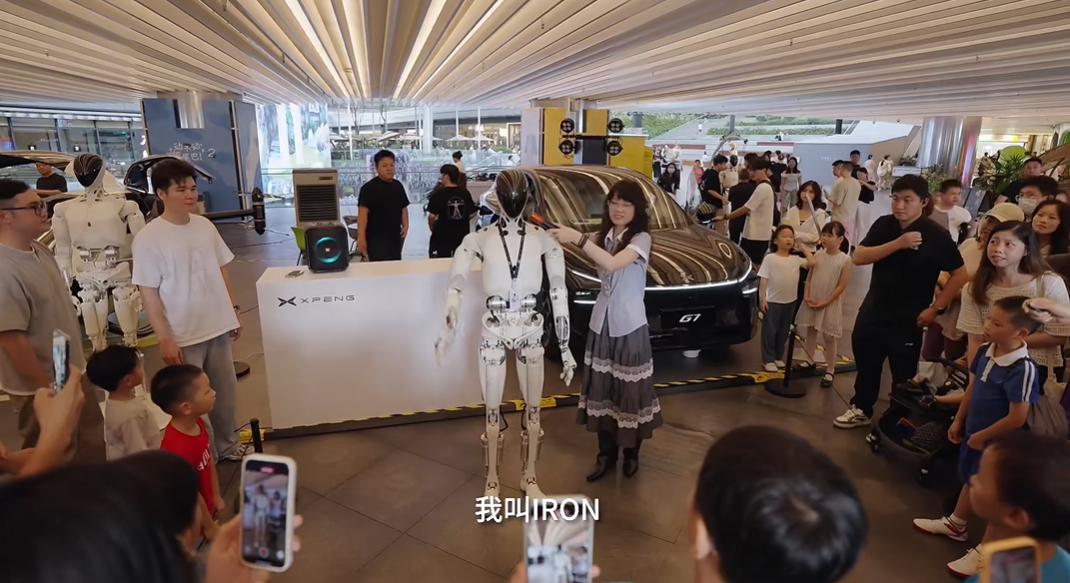
Source: Xiaohongshu @ XPeng Robot
The main reason for not considering letting IRON "screw bolts in the factory" is cost. He Xiaopeng explained, "When a robot enters the factory, its hands will break after being used for more than a month. One hand's cost can hire a worker for several years, and a robot has two hands." Currently, IRON can't do housework either, because "it's difficult to build the service ability of robots, and they may also introduce new safety problems."
You'll find that since this year, humanoid robots have become "very relevant to life" in Internet discussions: which robot fell while running and needed someone to help; which robot danced a dance; which robot did housework well; which robot walked too much like a human... With the popularity of various short - video clips, the distance between humanoid robots and the mass market has rapidly shortened within a year.
But it seems to have shortened too quickly.
With the increase in robot production capacity, the daily rental price of Unitree's humanoid robots has dropped from more than 20,000 yuan to about 3,000 - 4,000 yuan, and a robotic dog can even be rented for four or five hundred yuan. A rental merchant said that the number of rentable robots in the market has increased exponentially, and with the official price cuts, "the entire price system has collapsed."
Science - fiction movies often use "humans and robots sharing living space" as a symbol of the future world. In 2008, Bill Gates published an article titled "A Robot in Every Home." Now, humanoid robots are still far from being in every home, but they have already started to have an "oversupply."
After being in the market for nearly a year, humanoid robots are still dancing, greeting guests, and shaking hands with children. The expectations of the working class for robots to "do work" have not been quickly realized.
Dancing to add to the fun at weddings, mall events, and various expos is the most popular application scenario for Unitree robots at present. For rented robots, you can ask engineers to customize dances. With the help of algorithm iteration, they can not only do the yangko dance neatly but also dance "Achieving Great Ambitions," "Youth Training Manual," or imitate the actions of football stars Neymar and Kylian Mbappé.

Unitree robots have recently been focusing on practicing martial arts. They learned the "carp flip" at the beginning of the year and recently learned a set of Bruce Lee's Jeet Kune Do. Even the founder, Wang Xingxing, specially recorded a video to "show off."
Besides dancing, common applications of humanoid robots also include being professional customer service in exhibition halls or tour guides in scenic areas. Because robots with face - recognition functions can correctly call each guest by name. The voices of some other robots can be customized, "available in cheerful children, sunny youth, experts, and humorous styles." Or they are rented to be placed in the company lobby to highlight the company's "technological attribute" when someone comes to visit.
But besides being rented for events and companies to show off, what can To C (consumer - oriented) robots do? A rental merchant was silent for a while after being asked by The Paper , "Influencers rent them to shoot short videos."
At present, besides being like "street performers," the most useful scenario for robots is to come to your home to do housework. However, robots are still far from taking care of you in your old age, and it's even doubtful whether they can scoop the cat litter for you.
The world's first house - cleaning robot, NEO, started accepting pre - orders in the United States in October. It's priced at $20,000, or you can pay a monthly rent of $499. It will be shipped as early as next year.
But having a robot come home to do housework is far from as intelligent as expected, and it also faces privacy issues: most complex instructions need to be remotely controlled by a real person, which means that the operators of the robot company need to observe the situation in your home and your every move through the robot's camera to complete the housework.
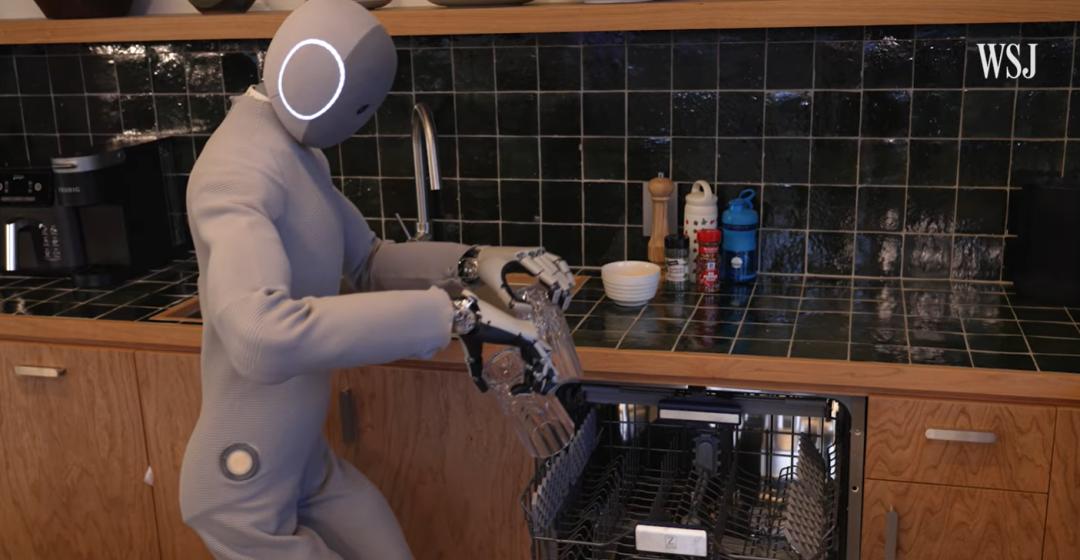
In The Wall Street Journal's review, every action of NEO shows the caution of a beginner: it takes 1 minute to open the fridge, take out a bottle of water, and put it on the table next to it; it takes 2 minutes to fold a piece of clothing. It almost fell when closing the dishwasher. "It feels like my grandpa doing housework. Those without an elderly person at home can buy one to take care of things."
People who have pre - ordered NEO only expect the robot to wash the dishes and feed the pets: $20,000 is about the same as the cost of hiring a nanny for a year. It's not a bad deal to save yourself the trouble of washing dishes every day. "Not to mention, the ability to feed pets when you're on a business trip is a real necessity."
Why can't a robot that can "gently pick up an egg" do housework smoothly yet? Zhao Zhongxia explained that the home environment is the most complex scenario a robot can encounter, because it involves a lot of interaction with people and objects, and the "safety redundancy" needs to reach the highest level - for example, house - cleaning robots are prohibited from using kitchen knives. Previously, even the most agile robots were only beautiful on the stage alone.
Training a robot to do housework can't be achieved through large - language models. Instead, it has to learn planning, action, and physical laws in the real environment to build the robot's "world model." So robots have to enter the home environment first to collect a large amount of data before they can learn and iterate.
As everyone is worried, the purpose of putting NEO, a "seemingly not very good at housework" house - cleaning robot, into the market is indeed to collect data. NEO's cameras (its two "eyes") will record videos of it doing housework every time and then input them into its "world model."
Currently, "doing housework" is still the most promising scenario for humanoid robots to be implemented in the consumer market, Ken said. Ideally, in the future, any work in the family that needs to be outsourced can be done by robots.

"Discussing what humanoid robots can do now is like discussing DJI drones in 2015," Ken said. At that time, the application of drones was just to form luminous shapes on the concert stage. No one could have expected that drones would become one of the most popular photo - taking devices a few years later.
Even though humanoid robots are currently facing the practical problem of "who will buy them," the manufacturers are full of ambition for the commercial prospects of humanoid robots. After the official release of IRON, XPeng posted more than 60 robot - related job positions and marked them as "urgently needed."
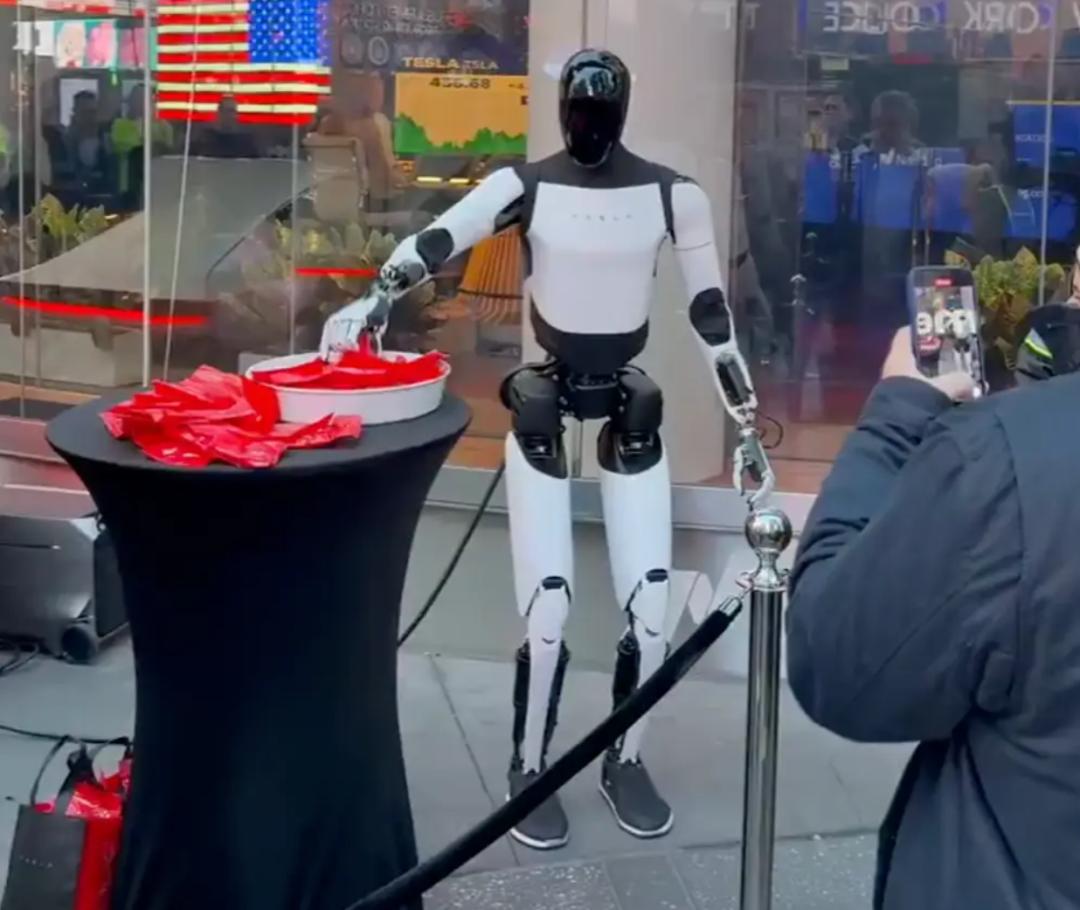
Tesla's robot Optimus (code - named "Optimus Prime") is called the core of Tesla's future strategy by Elon Musk. "It's expected to be the product with the largest market scale in the history of robots." But the most eye - catching public demonstration it can do now is handing out candies. On the eve of Halloween this year, Optimus appeared in New York's Times Square to hand out candies to passers - by. When the candies fell to the ground twice, it bent down to pick them up. Tesla didn't publicly state whether this action was independently completed by the robot or remotely controlled by a human.
Automobile companies are vigorously investing in the R & D of humanoid robots. Part of the reason is that the parts of robots and cars have a high reuse rate. For example, 70% of the perception, domain controllers, and AI software are the same, He Xiaopeng mentioned. Humanoid robots have also started to be used on automobile production lines for algorithm tuning and data collection.
But another reason is that automobile companies need to manufacture robots for market - value management, Ken admitted. In Musk's new "trillion - dollar compensation package," the Tesla board of directors requires Musk to meet a series of conditions within 10 years to get the potentially trillion - dollar compensation, including pushing Tesla's market value to $8.5 trillion, which is the scale of two NVIDIA. And one of the controversial requirements is:
"Deliver a cumulative total of 1 million humanoid robots Optimus."
Why do robots have to be human - like?
The ambitions of technology companies have made humanoid robots rapidly evolve from scientific - research tools made of "wires and iron blocks" to market - oriented products with complete product designs. But there is still a long way to go before robots become "useful."
A pair of dexterous and durable hands is still a difficult problem to overcome in the production of humanoid robots. The R & D of robot hands is even more difficult than that of the whole robot. It's equivalent to putting 5 mechanical arms in a 1