Just now, Baidu's AI glasses went on sale for 2,199 yuan. If you place an order today, you'll receive them tomorrow.
After 364 days, Baidu's AI glasses, a remarkable innovation, are finally officially on sale. You can get your hands on them tomorrow!
According to a report by ZDXX on November 10th, just now, the Xiaodu AI Glasses Pro under Baidu was officially launched for sale. The price is 2,299 yuan. With the Double Eleven discount, the price is 2,199 yuan. The JD page shows that users can receive the Xiaodu AI Glasses Pro the next day.
Following Alibaba's Quark AI Glasses S1, this is the second major domestic Internet company to officially sell AI glasses. However, the Quark AI Glasses S1 will be officially delivered in December. The S1 is priced at 4,699 yuan, and with the Double Eleven discount, the price is 3,329 yuan.
In terms of basic capabilities, the Xiaodu AI Glasses Pro is an AI shooting glasses, similar to Xiaomi's AI glasses. It is not the more "complete" version of AI + AR glasses currently available. Brands such as Thunderbird, Rokid, Alibaba, Lenovo, and Meizu all have AI + AR glasses products. In terms of the Double Eleven promotion, the Xiaomi AI glasses can be as low as 1,691.11 yuan with the Double Eleven discount, and the original price is 1,999 yuan.
Compared with the world's first concept version of the native AI glasses equipped with a Chinese large model released by Xiaodu at the Baidu World Conference last November, the newly released glasses have slightly different hardware configurations and AI functions. The product details page shows that the Xiaodu AI Glasses Pro will come in two styles: Boston and Cat's Eye. The currently available style is the Boston style.

From left to right: Xiaodu AI Glasses Pro, Xiaomi AI Glasses, Quark AI Glasses S1
The glasses are available in sunglasses or photochromic options, allowing users to replace the lenses independently and customize the prescription.
The Xiaodu AI Glasses weigh 39 grams and are equipped with a 12-megapixel wide-angle camera, capable of shooting 1440p/30fps high-definition videos. It is paired with a flagship ISP and EIS anti-shake technology, and is equipped with a five-microphone array for accurate voice recognition and an open anti-leakage speaker unit. The self-developed ENC algorithm ensures clear calls.
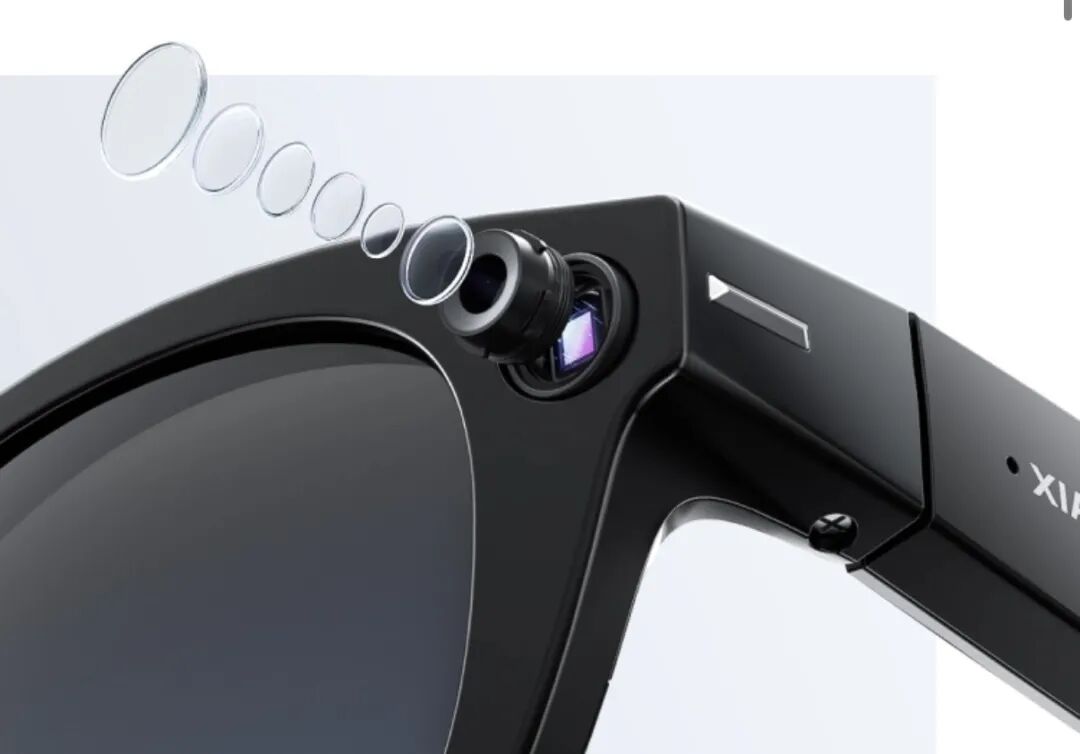
The hardware configuration of last year's concept version of the AI glasses was as follows: it weighed 49 grams and was equipped with a 16-megapixel ultra-wide-angle camera, a four-array microphone, and a customized open anti-leakage speaker unit. Combined with Xiaodu's self-developed AI anti-shake algorithm, users can use the glasses to shoot daily life or sports scenes.
In terms of battery life, last year's concept version mentioned that based on its low-power circuit architecture design, the Xiaodu AI glasses can achieve a standby time of 56 hours, support continuous listening for more than 5 hours, and can be fully charged in 30 minutes. However, the details page of the new product release does not mention the battery life. The battery capacity is 173 mAh, and a smart glasses case for charging is included as standard.
In terms of software functions, the Xiaodu AI glasses integrate a multi-modal AI large model. The product functions include taking photos, identifying songs by listening, intelligently matching songlists, AI translation, AI object recognition, AI memo, and AI recording.
In terms of shooting, the glasses have a variety of built-in filters and are equipped with an EIS anti-shake algorithm to compensate for the picture jitter caused by movement.

When listening to music, it can visually recognize the scene and automatically match an atmosphere songlist for the user. At the same time, users can wear the glasses to wake up Xiaodu for song recognition, and then based on the built-in NetEase Cloud Music, they can wake up Xiaodu to order songs online.

In terms of AI capabilities, when users wear these glasses, they can ask questions while traveling. The AI object recognition function covers more than 2,000 categories such as plants, commodities, and artworks through visual AI and an encyclopedia visual library.

In work and study, these glasses also integrate AI capabilities, which are reflected in the two scenarios of translation and memo.
In cross-language communication scenarios, the Xiaodu AI glasses can perform real-time translation. Subtitles will appear in the app within 3 seconds. At the same time, through the AI voice cloning technology, the voice tone can be restored. Currently, it only supports Chinese and English.

The AI memo function allows users to add important content to the memo with just a tap of the finger without using other devices when they need to take notes during meetings or reading.
In addition, in a meeting scenario, the AI recording function of the Xiaodu AI glasses can automatically recognize the speaker's voiceprint for recording and then generate meeting minutes. This function will be supported through OTA updates later.
In the entire AI glasses industry, the prices of products on the market currently vary widely, ranging from 900 yuan to 9,000 yuan. It happens to be the Double Eleven promotion period, and the discounts on AI glasses from various brands are quite significant. The pricing of the Xiaodu AI glasses is in the middle range.
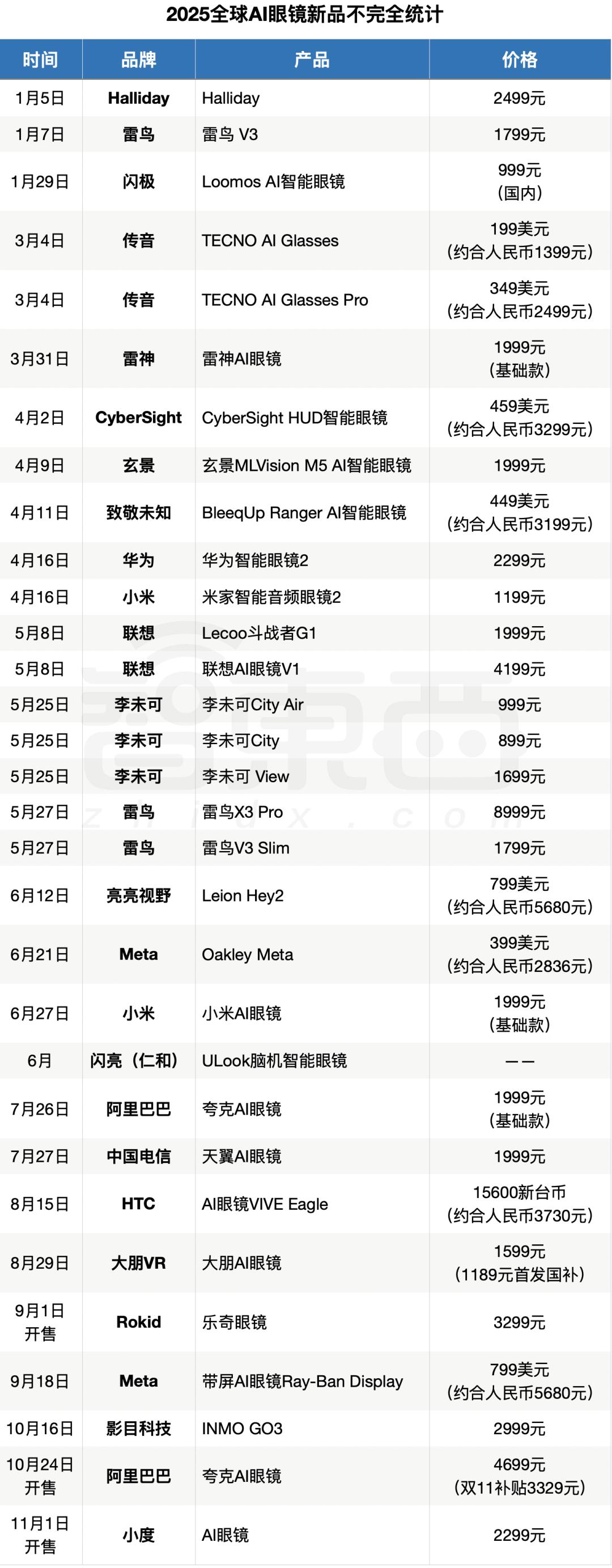
Incomplete statistics of new global AI glasses products in 2025. Please feel free to supplement if there are any omissions.
Conclusion: The competition in the AI glasses market is intensifying, and major domestic companies are rushing to enter the arena
Currently, the development of the AI glasses market is still in its early stage. New players and products in the AI glasses field are emerging like mushrooms after rain. Many leading players such as Baidu, Xiaomi, Alibaba, and Huawei have entered the market, and vertical players such as Rokid and Yingmu Technology continue to delve deeper, indicating that the competition in this field is becoming increasingly fierce.
However, for consumer electronic products, the real user experience is the key. Whether the technological accumulation in hardware, AI, and other fields can be truly implemented and transformed into blockbuster products that detonate the market ultimately needs to be tested by the market.
This article is from the WeChat public account "ZDXX" (ID: zhidxcom). The author is Cheng Qian, and the editor is Yun Peng. It is published by 36Kr with authorization.