Dialogue with He Xiaopeng: Reinforcement learning is outdated, and embodied intelligence should not be hardware-centric.
The first Turing Test moment in the history of embodied intelligent robots belongs to XPeng:
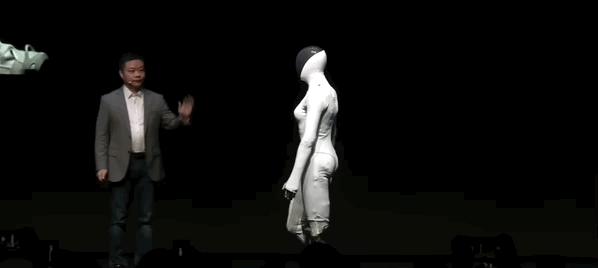
Just as He Xiaopeng himself replied "Thank you for your recognition", the doubt of "a person in a costume" is actually an affirmation of XPeng's technology. It's just that the way of response was unexpectedly "cruel": during the live broadcast, it was dissected layer by layer, exposing the skin, muscles, skeleton... in turn.
Right after the test, we had a chat with He Xiaopeng: Why did you prove yourself in such a tragic way? Does the robot itself know that it is being hurt? Why must it be so anthropomorphic? How can robots and autonomous driving be integrated and connected...?
Of course, there are also XPeng's new cars and new technologies, the profit promise at the beginning of the year, and the high "coincidental" similarity with Tesla, etc.
(The interview content has been edited for readability without changing the original meaning)
On robots: The team was quite sad about proving itself in this way
Question: Why did you prove yourself in such a "tragic" way?
He Xiaopeng: It has been a volatile 24 hours from last night till now. It was very difficult for me to persuade our robot team. They originally disagreed with this, because they think IRON is their child.
But we want not only 1% of industry users, but also 99% of non-industry users to have more confidence and more understanding, to believe that XPeng can make something different, and to believe that Chinese technology companies can make something different.
Even after cutting open the skin and muscles, IRON still walked gracefully. I think that's enough.
If we can promote the faster popularization of robots, we are victorious.
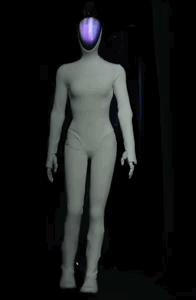
Question: In how far a future can the robot itself perceive that what we did to it today is a kind of harm?
He Xiaopeng: To put it bluntly, I don't know. If the robot knew what we were doing to it, it wouldn't have let us cut it open today. I think it won't reach such a high - level situation for many years. I don't think it can be done.
Question: IRON's catwalk became popular, but there is a large amount of materials on the Internet of robots doing hip - hop dancing and boxing, and their movements are much more complex than the "catwalk". Are their capabilities stronger than XPeng's? What is the standard for judging the value of embodied intelligent players?
He Xiaopeng: I think it still depends on the scenario and purpose. For example, what XPeng wants to make is high - level humanoid robots, not quadruped robots or small - scale ones.
Secondly, I believe that the embodied intelligent software should be in a 1:1 relationship with the hardware, rather than being hardware - centric. It's not only about full - stack self - research, but more importantly, it's about cross - integration, so that the balance and posture of the whole body, including the brain, cerebellum, and face, can be integrated.
The logic of reinforcement learning can make some joints perform well, but it can't make all 82 joints of the whole body coordinate closely.
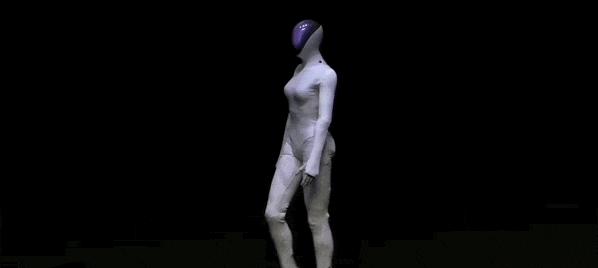
So we chose a different path. It's more difficult, and I still don't know if this path can lead to the end.
Question: Why does XPeng insist on making highly anthropomorphic robots when high anthropomorphism corresponds to very high investment costs? How does XPeng Motors make trade - offs?
He Xiaopeng: I think there will be different forms of high - level robots in the future, but anthropomorphic robots have three major advantages. First, if a robot wants to be smart, it can't rely on rules but should be AI - driven, and only from the human world can it learn the most data.
Second, most scenarios in the world, such as families and factories, are designed, built, and operated for human use. The more anthropomorphic a robot is, the easier it is to adapt to this world.
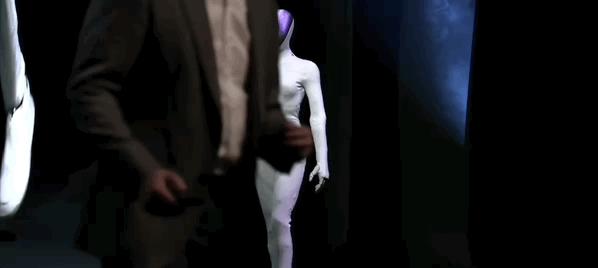
Third, from the perspective of purchase, anthropomorphic robots are more likely to make people feel a sense of affinity, so they may sell well. More sales can more easily achieve scale, and with scale, the cost will be lower, forming a positive cycle.
Question: What is the reuse ratio of parts between XPeng's new - generation robots and cars?
He Xiaopeng: I don't have an exact answer, but many processes are the same. For example, perception, domain controllers, and 70% of the AI software are the same. However, the joints and skin of robots are not found in car parts.
On physical AI: The sales volume of robots will exceed that of cars
Question: Two leading Robotaxi companies were listed on the Hong Kong Stock Exchange at the same time, which was very lively. They still emphasize that there is an essential difference between assisted driving and autonomous driving, and they think it's meaningless for L4 models to have a driver. How can XPeng prove that its path is correct?
He Xiaopeng: I think I won't try to disprove others first. Maybe they are right, maybe they are wrong. It's just a different choice of direction.
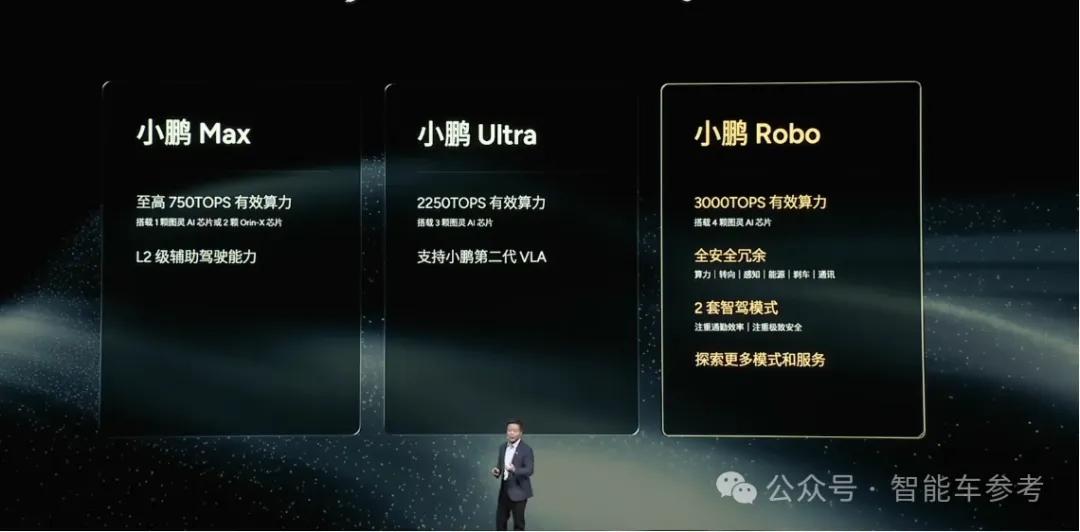
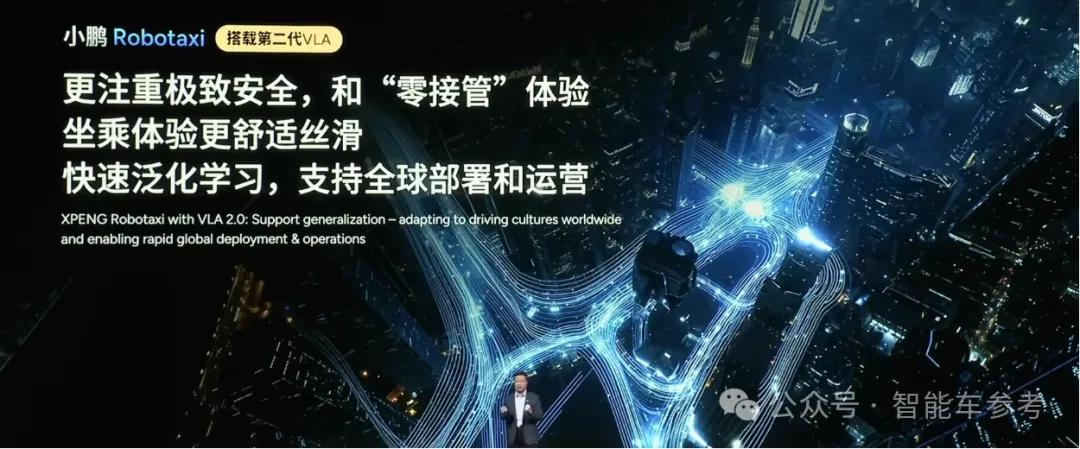
Next year, we will launch three Robotaxis and truly achieve autonomous driving with one takeover per month, one takeover per three months, or even one takeover per six months. The demand for ROBO models will be very high.
The subversion of technology brings the subversion of experience, which will create brand - new scenarios and demands.
There is no right or wrong. Different companies make different choices towards different beautiful visions.
Question: With the second - generation VLA open - sourced, what role does XPeng want to play in the formulation of industry standards?
He Xiaopeng: We have done so much in the second - generation VA, spent a lot of money, and taken many detours. We shared it at the Technology Day to show the industry that the path we explored may be a successful one. You can borrow it freely. Of course, we also hope to be appreciated.
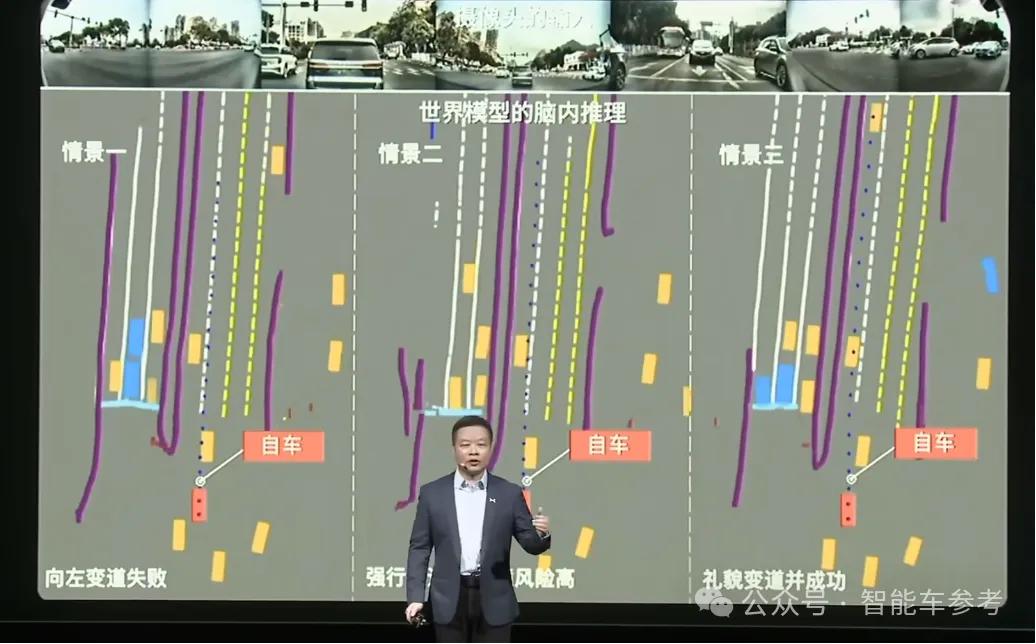
XPeng is definitely one of the companies with relatively strong software capabilities at present. Many companies are worried that I understand hardware but not software, and they wonder what I'll do in the future. XPeng's open - sourcing of the VLAd model can make them more at ease. You have to achieve this yourself first before you can make others willing to open up new capabilities.
Question: What proportion does XPeng hope the physical AI business will account for in the total revenue compared with the car business?
He Xiaopeng: The global car market is a market worth trillions of US dollars, with 90 million cars produced annually. Personally, I think the robot market is a 20 - trillion - US - dollar market, but it may take 10 to 20 years, not that fast. The development of the car industry is often on a low - growth linear curve because it is closely related to strict safety regulations and policies. However, once robots pass the inflection point of technology and products, they will experience very rapid growth. I haven't thought about how many robots we can sell in a year ten years later, but I think it should definitely exceed the number of cars.
Question: How does XPeng Motors ensure profitability when promoting the Robotaxi plan? What is different about its business model compared with other Robotaxi companies?
He Xiaopeng: XPeng may be a different Robotaxi company. We have mass - produced cars with pre - installed systems. Our thinking is not technology - first. Instead, we consider whether what we do has commercial value, user value, and can form a technological inflection point, and whether the government and society will accept it.
XPeng will also launch Robo intelligent driving version models for consumer sales, which can significantly share the BOM cost (a key cost component in the product design, procurement, manufacturing, and assembly processes of automobile manufacturers) and R & D expenses. In addition, XPeng's Robotaxis and XPeng cars can also share the BOM and R & D expenses, giving us a natural advantage of dozens of percent or even several times over other companies in these two aspects.
Moreover, we don't need high - definition maps, street - scanning, or lidar. We think more like a person in the physical world, so we have broader applicability and generalization ability and don't need deployment costs. I firmly believe that in the future, four - wheeled vehicles will definitely be a combination of shared and private ones. I don't think all cars will become Robotaxis.
In this case, XPeng chooses to provide a "toolbox" for the Robotaxi project, including cars, software, and SDK interfaces. We open up our capabilities and let partners in different countries and regions buy our Robotaxis for operation.
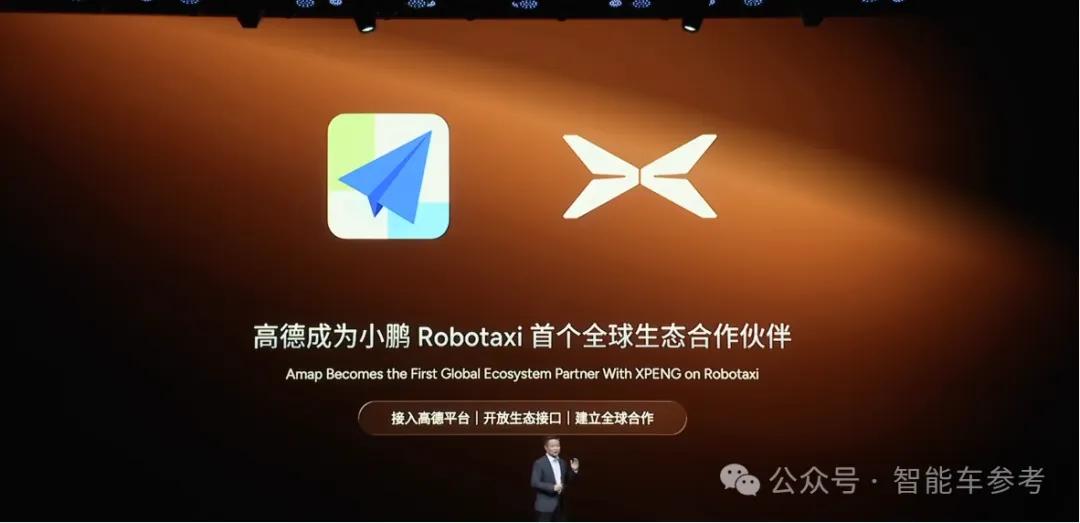
Question: Why did XPeng's Robotaxi cooperate with AutoNavi in a global ecological partnership first?
He Xiaopeng: Because AutoNavi was previously under my management. It's my former employer. Second, AutoNavi is a very large travel ecological platform in China. So it operates, and we provide the toolbox. I think this meets the strategic positioning of both sides.
Question: Why didn't you mention L3 and directly aim at L4?
He Xiaopeng: I think in the future, there will be only L2 and L4, no L3, because L3 is neither L2 nor L4.
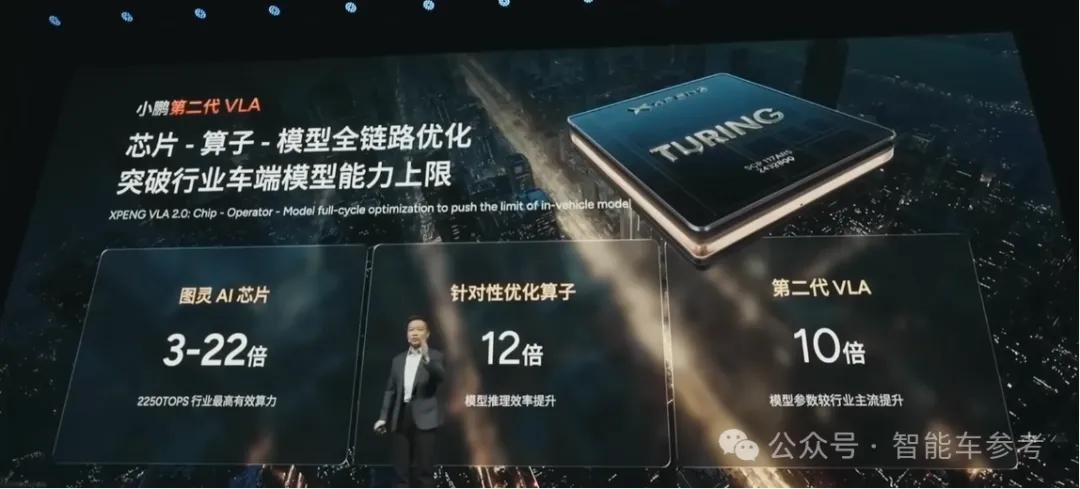
Question: Did XPeng's second - generation VLA (Vision - Language - Action) really completely remove the "L", or did it convert it into other forms of tokens?
He Xiaopeng: We have V + L. We didn't convert it into human language and format, but into a new language in the physical world. It's not a language that humans can see and recognize. It's very efficient and more diverse. Second, it can be decoded in the middle. We can completely deduce the intermediate process, for example, why it should have turned left but didn't. We have achieved all these in the evaluation of the physical world model.
Question: At the XPeng Motors Technology Day press conference, Physical AI was applied to different carriers. What other ideas do you have for the application scenarios and carriers of Physical AI in the future?
He Xiaopeng: Companies that develop earlier will have a greater advantage. An important aspect of today's Physical AI is the First - mover advantage, which was not seen in the past physical world or on Earth.
In the future, data will be the most important guarantee. We've seen that the progress of many large - model companies in the digital world has slowed down in recent months. I think the root cause lies not in algorithms, models, computing power, or electricity, but in data.
In Physical AI, I think everyone has a chance. The core is who can do it well first and who has good engineering capabilities and is a good representative of implementation engineering. After engineering, good experience and better service are needed, which forms a huge cycle. This is also why XPeng has never really believed that just making a car bigger, more beautiful, cheaper, and of higher quality can lead to victory. These are only necessary conditions, not sufficient ones.

It's very important to do a good job in hardware, which is the foundation, but software also needs to be well - developed. That's why I talked about Physical AI for nearly 2 hours at the Technology Day. How to organically combine the physical world and the digital world to meet customer experience? I think the emergence of Physical AI has just begun.
Question: Tesla has also been exploring flying cars recently. Tesla and XPeng may be the two companies in the world with the highest business overlap. So, what's the biggest difference between XPeng and Tesla?
He Xiaopeng: Both Tesla and we have found a cross - dimensional approach in cross - domain integration.
For example, when we put VLA into