The Blue Ocean of Industries Empowered by HarmonyOS: How to Transform Promising Sectors into the "New Main Course"?
The boundaries of industries are being redefined by system ecosystems.
In the past, the mission of an operating system was to ensure the stable operation of software and hardware. As the "invisible foundation" of the digital world, it was responsible for resource allocation, process scheduling, and interface management, maintaining the stable operation order of devices.
However, in today's era when AI is reshaping everything, the operating system is no longer just a connecting role like a gatekeeper. Instead, it is becoming new industrial infrastructure. This is precisely the unique feature of HarmonyOS, which breaks the device boundaries with distributed technology, distinguishing it from traditional operating systems - enabling the operating system to have the ability to cross devices and industries, and becoming the key variable with the most multiplier effect in the intelligent wave of all industries.
Why can HarmonyOS achieve this?
An undeniable fact is that currently, it is the development dividend period of the HarmonyOS ecosystem - the number of devices has exceeded 23 million, and more than 9 million developers have joined the innovation queue. From the in - depth adaptation of leading applications to the acceleration of the HarmonyOS - based transformation of long - tail applications, the HarmonyOS ecosystem is forming an innovation blue ocean with huge imagination space.
As the system capabilities mature and the industry gradually reaches a consensus, developers and "smart" capital are also moving towards each other. Recently, the Analysys report officially released "Analysis of the Market Development of the HarmonyOS Application Ecosystem 2025", revealing ten high - potential tracks in the HarmonyOS ecosystem: social communication, financial payment, audio entertainment, news information, application management, medical and health, sports and culture, mother and child, e - commerce shopping, and tourism and travel.
From reshaping the life scenarios in the social communication field, to providing a secure and controllable system base, and then to breaking information silos and providing opportunities for personalized and intelligent information portals, through this report, we can see that HarmonyOS is providing the possibility of overtaking on the curve for potential tracks through distributed technology and system - level AI capabilities.
Every historical industrial explosion stems from the continuous positive cycle created between developers and users. In today's AI - driven innovation ecosystem, the value of the HarmonyOS ecosystem is not limited to technical interfaces or experience innovation. More importantly, it lies in reconstructing the innovation chain, allowing every developer to participate in the intelligent wave with a lower threshold.
This is exactly the case with Huawei's 6 - billion - yuan "HarmonyOS Application Developer Incentive Program 2025". Through the triple mechanisms of financial support, traffic distribution, and resource support, it helps developers complete the full - link growth from creativity to commercialization within the HarmonyOS ecosystem.

Meanwhile, the 1 - billion - yuan "Tian Gong Plan" focuses on the ecological infrastructure construction at the technical and intelligent levels, strongly supporting AI ecological innovation. Centered on the opening of AI and distributed capabilities, HarmonyOS provides system - level intelligent interfaces, computing resources, and intelligent agent development frameworks to developers and industry partners.
When HarmonyOS becomes the new foundation for industrial intelligent transformation, who can be the first to find their "growth curve" in this system - level innovation? The answer is emerging in these high - potential tracks.
Medical and Health Track: From "Data Recorder" to "Digital Health Partner"
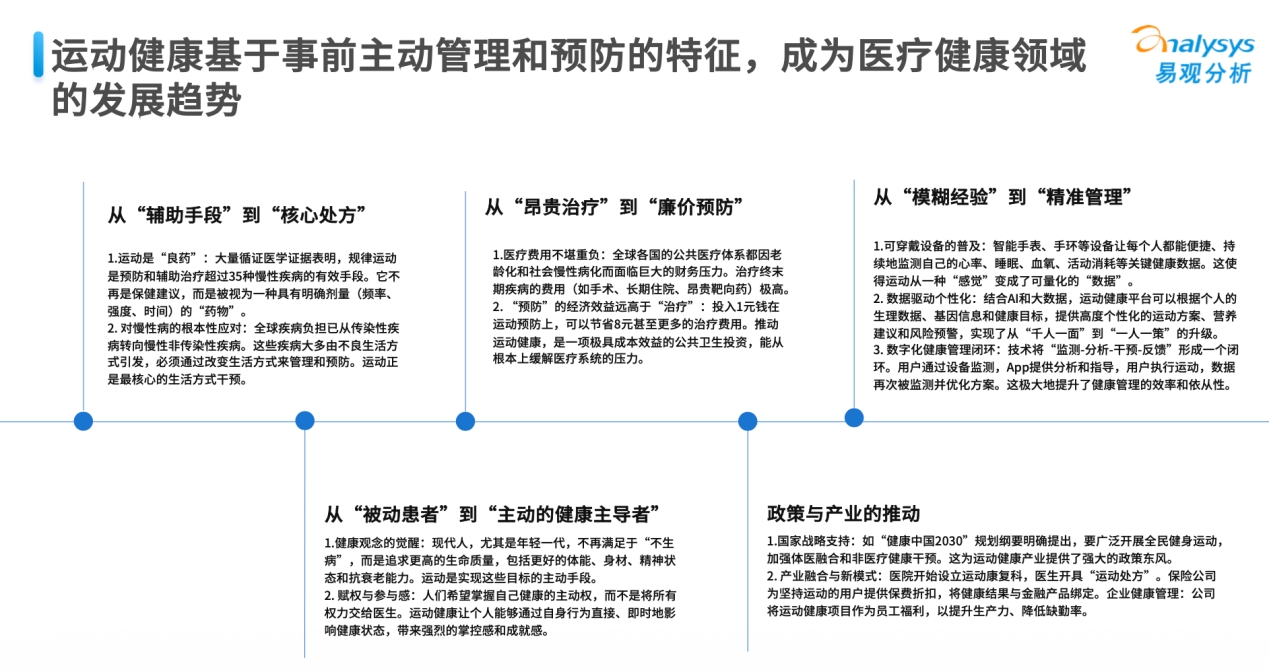
Why can HarmonyOS stimulate the innovation potential in the sports and health track? The core lies in the fact that HarmonyOS has reconstructed the logic of "health management" from the system level.
Traditional operating systems are only responsible for data recording and algorithm operation of single devices. Health applications are often restricted to the single link of "watch monitoring - mobile phone presentation". However, with the distributed architecture and AI design of HarmonyOS, the collection, calculation, and feedback of health data have achieved system collaboration across multiple terminals and scenarios for the first time.
In the current era of the explosion of wearable devices, sports and health are becoming the most promising sub - track in the medical and health field. According to Analysys analysis, the multi - device collaboration, active service delivery, and cognitive intelligence of HarmonyOS have transformed sports and health from a tool into a "digital health partner".
The "Daily Coffee" APP, which focuses on a niche health field, is precisely a micro - example of the empowerment of HarmonyOS.
According to the statistics of the British Coffee Association, as the world's most popular beverage, about 2 billion cups of coffee are consumed every day. However, excessive coffee intake can cause health - related problems. The American Medical Association (AMA) has once proposed that high - dose caffeine may cause high blood pressure, palpitations, and arrhythmia.
For a long time, this kind of health anxiety has not been systematically solved by the medical system or mainstream health management apps. Users lack a lightweight tool that can track intake, predict metabolism, and give health advice based on physiological rhythms.
This is exactly the gap that "Daily Coffee" has targeted. Based on the distributed technology of HarmonyOS, devices such as mobile phones, watches, and tablets can share the same data structure at the system level. When a user enters a cup of coffee on any terminal, the system can immediately update the in - body metabolism curve and the change of caffeine concentration on another device.
Meanwhile, using AI algorithms, "Daily Coffee" can simulate the change of in - body caffeine concentration based on variables such as the user's weight, intake time, and life rhythm, predict the periods of refreshment and insomnia, and generate a personalized metabolism curve. This is a crucial step from being a "recorder" to a "digital health partner".
Finally, relying on the meta - service mechanism of HarmonyOS, "Daily Coffee" can directly embed health reminders into interaction entrances such as the negative first screen and desktop cards, allowing users to check the metabolism status, refreshment suggestions, or sleep warnings without opening the app. This "light - interaction" experience mode truly integrates health management into daily life.
HarmonyOS not only gives health management "system - level precision", but also enables even the smallest individuals to unleash infinite potential.
In traditional operating systems, individual developers are often blocked from innovation by technical complexity and resource thresholds. The development of health - related applications requires a large number of sensor adaptations, data model training, and multi - terminal synchronization logic. These processes not only consume costs but also make it difficult for small and medium - sized teams to transform their ideas into mature products.

The distributed architecture, open AI capabilities, and meta - service system of HarmonyOS provide solutions to this structural problem. The system is responsible for data circulation, device collaboration, and interface management. Developers only need to focus on the core logic and experience innovation. HarmonyOS "undertakes" the underlying complexity, enabling individuals to create system - level products.
As Li Shangru, a developer from Jiuqi Software, mentioned, the reason he chose the HarmonyOS ecosystem is not that it provides a technical alternative to the operating system, but that it provides the possibility of commercial implementation for many ideas.
A physical sign data detection, a calculation of the metabolism curve, or a record of coffee intake can all become triggers for the system to understand the user's health status. For developers, the innovation in the HarmonyOS ecosystem does not depend on resources and scale, but on the ability to find those overlooked details.
Tourism and Travel Track: From "Route Planning" to "Soul Travel Companion"
In the past few years, the Chinese cultural and tourism market has entered a "golden age".
From the ice and snow economy to the outdoor craze, traveling has become a national lifestyle. According to the data from the Ministry of Culture and Tourism, in 2024, the total number of domestic tourist trips in China exceeded 5 billion, returning to about 90% of the 2019 level. The inbound and outbound tourism has also rebounded rapidly - in the first three quarters of 2024, there were about 95 million outbound tourists and 94.6 million inbound tourists, with a year - on - year increase of over 40%.
Such a large mobile population has also made "tourism and travel" another super - scenario after e - commerce and short - videos. However, when the craze fades, new structural problems emerge: the routinization of the experience.
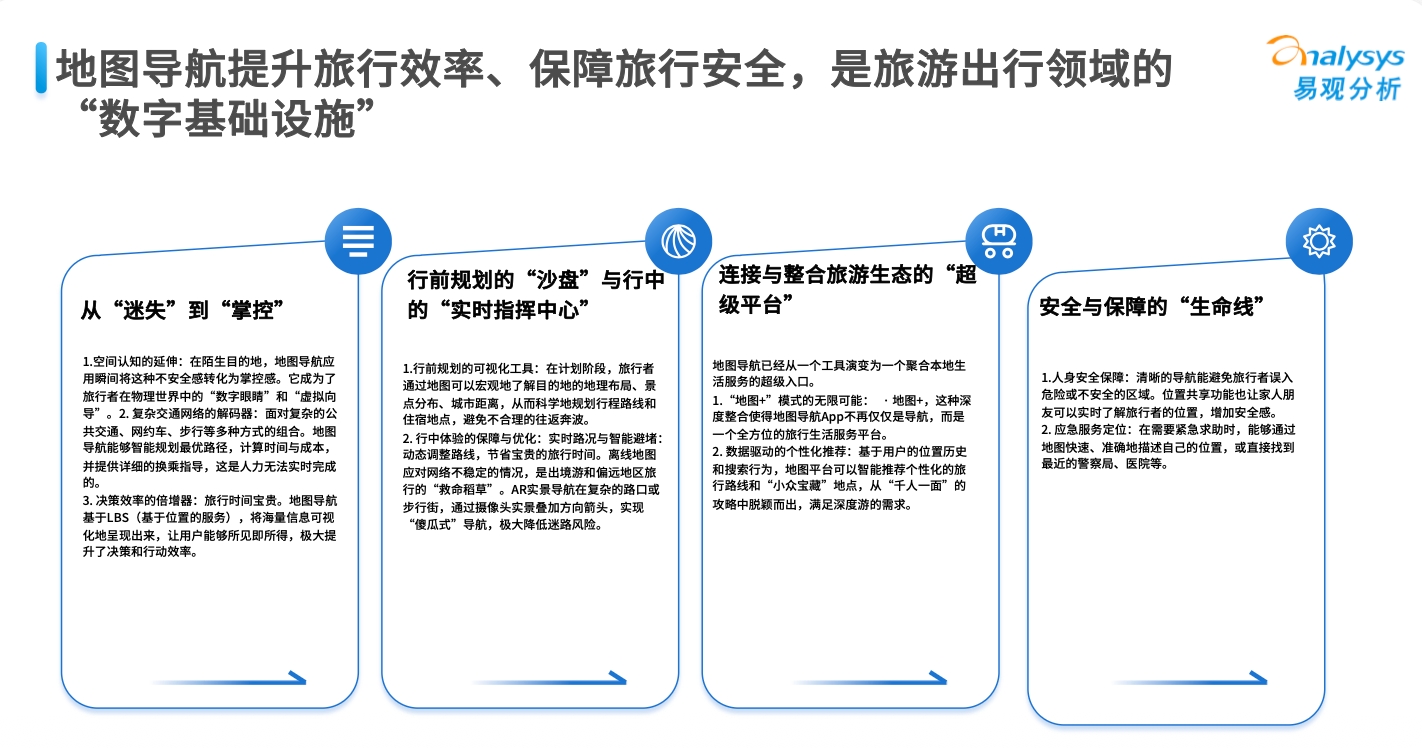
When the surprises of the destination are replaced by standardized travel guides, and the freedom of the itinerary is restricted by navigation and preset schedules, and "where to go, how to get there, and how to play" are all written in advance in the travel guide documents, traveling is becoming more and more like a templated "task execution".
The "Shi Lu" APP, which grows based on the HarmonyOS ecosystem, is precisely a gentle counter - attack against this travel pain point. This self - driving route planning app developed by a couple tries to make travel return to its original intention of "poetry and the distant place" with an innovative concept that combines romance and intelligence.
In the traditional travel ecosystem, route planning is linear - from point A to point B, and the algorithm aims for the shortest distance or the optimal time. However, real travel is never linear. It is full of temporary deviations, unexpected scenery, and sudden decisions.
Shi Lu breaks this one - way logic by using the distributed architecture of HarmonyOS and achieves real system - level flexibility through "non - linear free route planning". Users can set multiple points of interest at the same time, and the system will automatically generate the optimal combined route and make dynamic adjustments according to the weather, traffic, and personal preferences.
Meanwhile, based on the global marking ability of the HarmonyOS Petal Maps, every stop and every inspiration during the journey can be automatically recorded as "shareable geographical memories", allowing everyone to have their own poetry and distant place in the digital world.
The multi - person collaboration and AA - system accounting system also solve the collaboration anxiety in the travel of couples, families, and friend groups. Through the distributed capabilities of HarmonyOS, Shi Lu can synchronize the task flow on different devices, supporting multiple people to plan simultaneously, conduct real - time bill - splitting, and manage budgets.
The traditional digitalization of the cultural and tourism industry is essentially a stacking of information - more travel guides, more complex recommendations, and more detailed routes. However, when this addition - mode reaches its limit in terms of user experience, people no longer need more information but a system that understands them better.

This is where the value of HarmonyOS lies: through intention recognition and distributed collaboration, it makes the system an entity that understands travelers rather than a tool that guides them. Shi Lu is precisely a micro - example of this innovative logic, which turns travel planning from a burden for one person into a jointly participated journey.
When travel no longer relies on information stacking but on system understanding, the HarmonyOS ecosystem endows the cultural and tourism industry with a brand - new growth logic: allowing technology to understand emotions and making travel more like travel.
In the HarmonyOS ecosystem, the starting point of innovation is no longer traffic and entrances, but every connection between the user and the world. When the operating system has the ability to "understand the context", travel changes from task execution to emotional experience - the route is no longer just the end point of navigation but becomes an interaction between humans and nature, and between humans and memories.
For developers, this means that tourism is no longer just an extension of destination - based economy, but a new technology track centered on experience and based on understanding.
Audio Entertainment Track: Let Music Return to Purity and Give the Freedom of Listening to Every Ear
No one can resist the magic of music.
In the view of the Analysys report, music is the most emotionally penetrating and culturally rooted content form in the audio entertainment field. It is both a "direct express train of emotions" and an "all - day background sound". From sports to commuting, from studying to being alone, as music penetrates into different scenarios of people's lives, music has changed from a single consumer content to a daily emotional engine and an identity label.
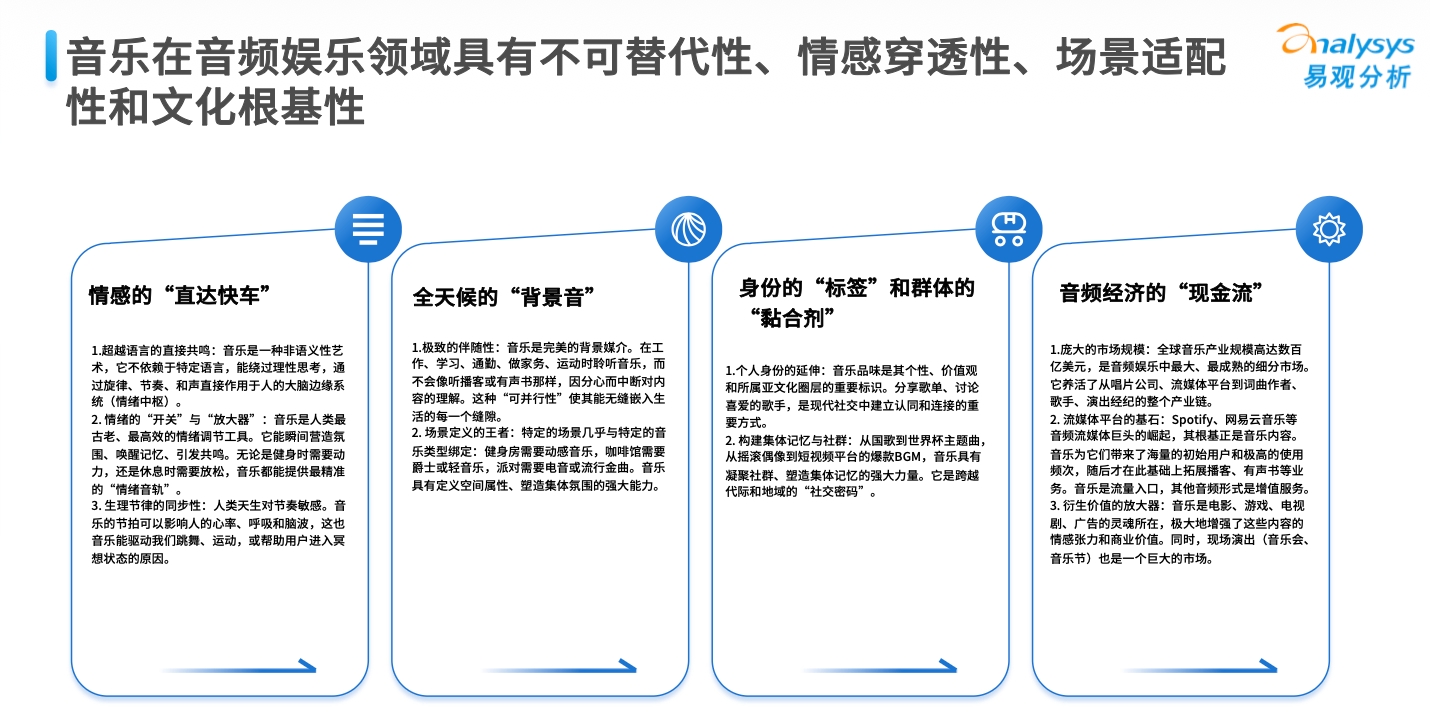
However, as the commercialization of mainstream music platforms deepens, the user experience is easily eroded by "algorithm control" and "advertising - based recommendations".
It cannot be denied that this is also an experience gap brought about by the rapid expansion of the entire music industry. According to the IFPI report, by 2024, the global recorded music revenue had reached 29.6 billion US dollars, and the streaming subscription business contributed more than 67% of the market share. As early as 2023, Luminate's "2023 Year - End Report" showed that the global music industry's streaming play volume in 2023 exceeded 4 trillion times, setting a new single - year record and increasing by 34% year - on - year.
From scale growth to experience differentiation, the digital music industry is undergoing an upgrade and transformation. The Tang Xin Music, which is based on the HarmonyOS ecosystem, is providing a development paradigm for experience innovation in the music industry through system - level AI and distributed capabilities.
For example, through the "touch - to - transfer music" function, Tang Xin Music makes music sharing return to an intuitive and impulsive act. Behind this is the near - field communication brought by the distributed capabilities of HarmonyOS - two HarmonyOS devices can be lightly touched to synchronize playback and share playlists. This distributed romance eliminates the need for users to perform additional cumbersome operations.
There is also the distributed Party mode that enables multi - device resonance. Relying on the distributed capabilities of HarmonyOS, users can synchronously play the same song on different terminals such as mobile phones, tablets, and computers, achieving millisecond - level rhythm synchronization and spatial sound - field collaboration. This multi - device collaboration makes HarmonyOS a technical medium for connecting emotions.
In terms of minimalist interaction, what Tang Xin Music aims to do is to make music return to its instinct - "play as soon as it is opened". There are no ads, no recommendations, and no jumps. Users only need one click to enter the playback interface within 0.5 seconds. This is the result of the software - hardware collaboration capabilities of the HarmonyOS system.
But speed is not everything. What Tang Xin Music pursues is also an experience philosophy of "zero - redundancy design": the interface only retains the most core functions, not creating complexity through information stacking but presenting focus through simple interaction.
This design concept is inspired by the excellent app "Bian Dan" in the HarmonyOS ecosystem - from the UI structure to the logical path, the team adheres