The power gallium nitride market ushers in a golden era.
In the wave of the global technology industry's transformation towards high efficiency and low power consumption, gallium nitride (GaN), as the core material of the third - generation semiconductors, is breaking the performance bottleneck of traditional silicon - based devices with its unique advantages of wide bandgap, high electron mobility, and high - temperature resistance. Since 2025, from the breakthrough in substrate technology to the mass production of automotive - grade products, from the popularization of fast - charging in consumer electronics to the large - scale application in AI data centers, the power gallium nitride industry has witnessed multiple resonances of technological maturity, explosive application scenarios, and commercial implementation. A golden era of continuous growth has arrived.
The arrival of this golden era is not an accidental technological leap but an inevitable result of the coordinated evolution of the industrial chain, the upgrading of market demand, and the resonance of policy support.
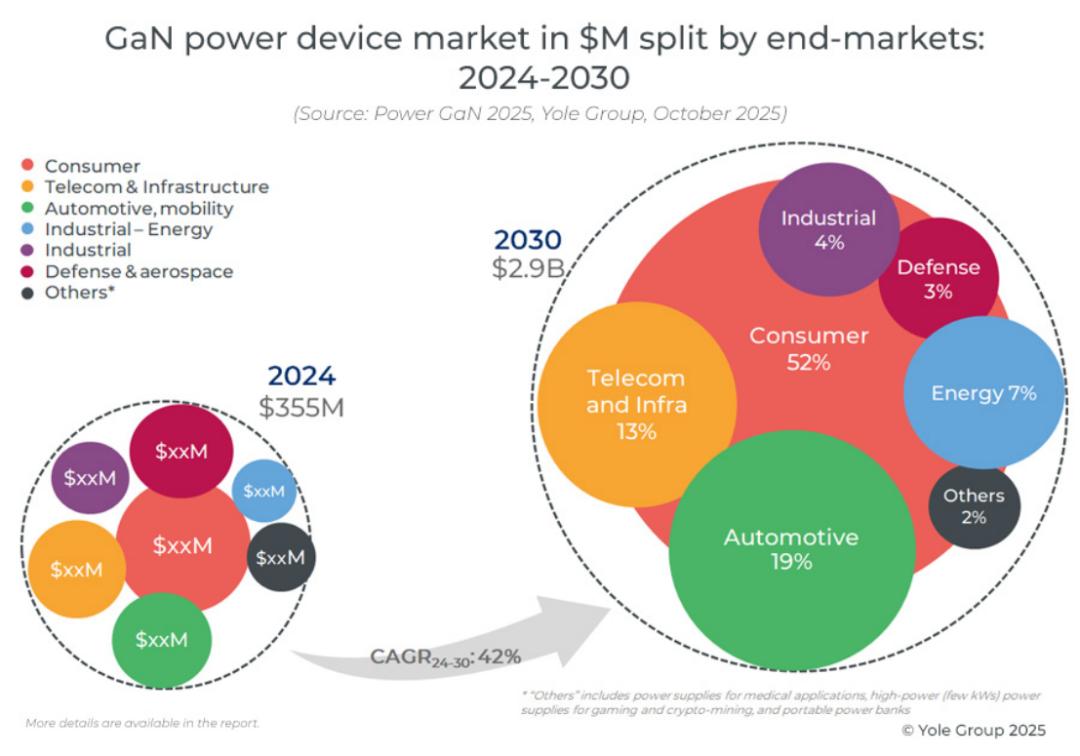
On October 29th, Yole Group released the latest version of the "Power GaN 2025" report. The report shows that the market for power gallium nitride (GaN) devices is growing at an astonishing speed. It has increased from $355 million in 2024 to approximately $3 billion in 2030, with a compound annual growth rate (CAGR) of up to 42%, achieving a six - fold increase in the next six years. "Power GaN is transforming from potential into production reality," said Roy Dagher, an analyst of compound semiconductor technology and market at Yole Group. "We see all end - markets accelerating their adoption. Its efficiency, compactness, and performance advantages make it a key technology for power electronics in the next decade."
Source:
Full - chain upgrade, entering a new stage of large - scale commercialization
In the first half of 2025, China's gallium nitride (GaN) industry officially bid farewell to the "technology verification period" and fully entered the "large - scale commercialization stage." From upstream substrate epitaxy to mid - stream device manufacturing, and then to downstream scenario implementation and commercial monetization, the entire industrial chain shows a trend of coordinated upgrade. Leading listed companies, through technological innovation and precise layout, are promoting China's continuous improvement of its voice in the global gallium nitride competition.
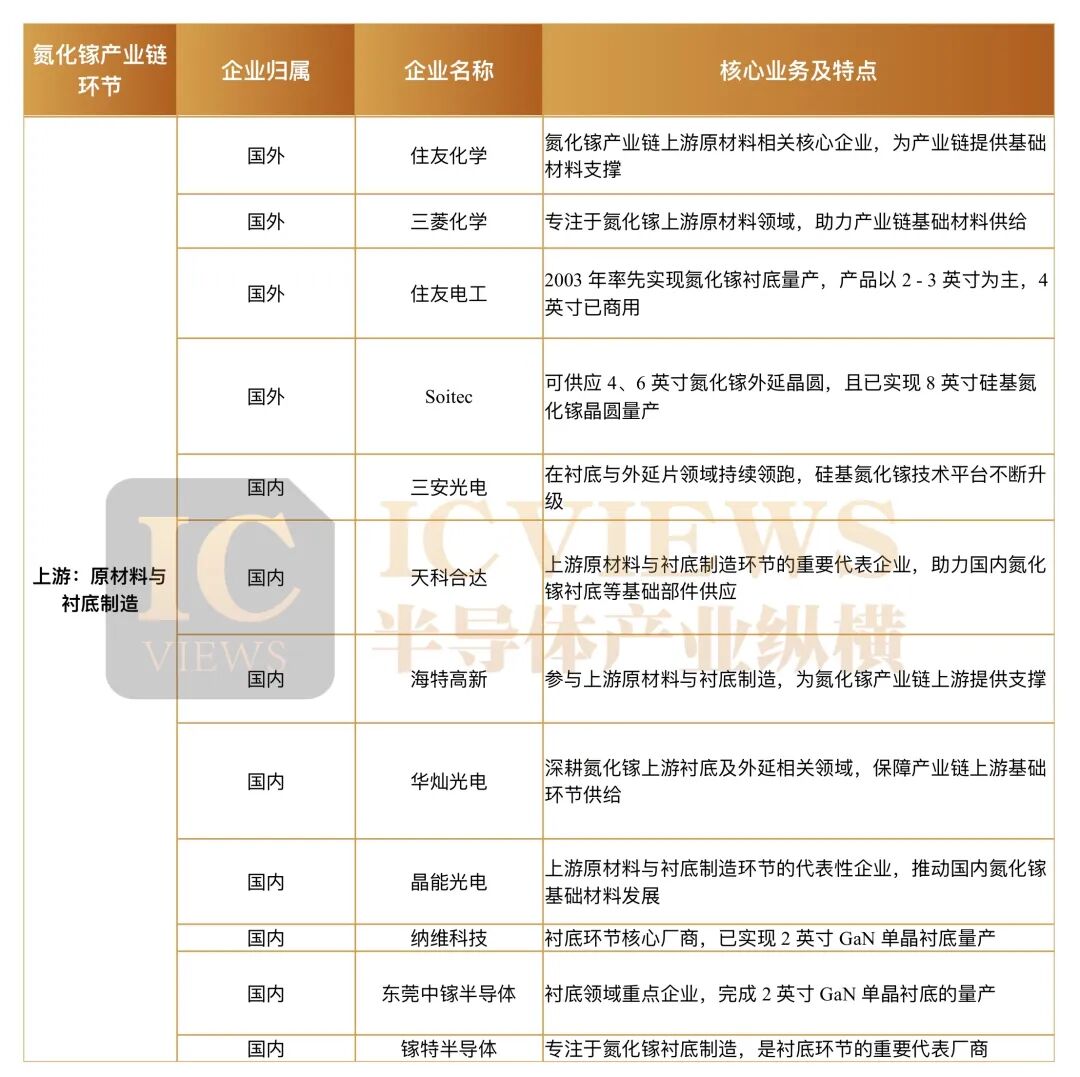
Raw materials and substrate manufacturing
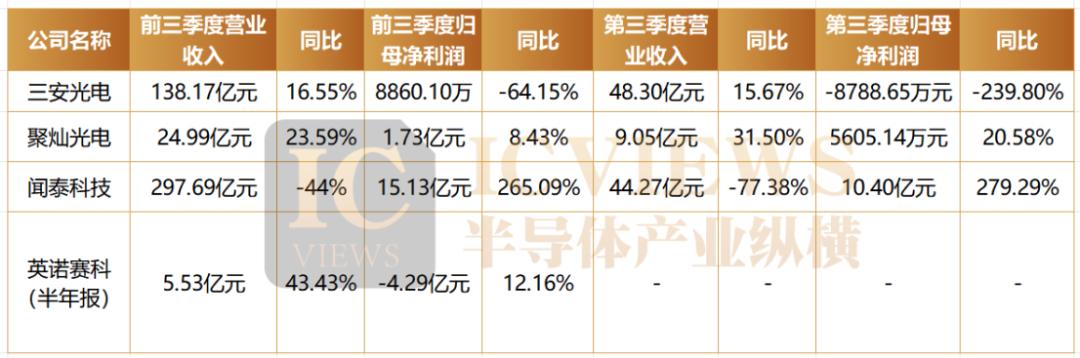
Since this year, Sanan Optoelectronics has been continuously deepening its layout in the field of gallium nitride technology. The company is continuously upgrading and expanding its core silicon - based gallium nitride technology platform. Notably, Sanan Optoelectronics has started to build a radio - frequency silicon - based gallium nitride foundry platform. This forward - looking layout aims to reserve core technologies for future high - frequency and high - power consumer radio - frequency application scenarios and seize the market opportunity.
As of August this year, the monthly production capacity of silicon - based gallium nitride of its subsidiary, Hunan Sanan, has stabilized at 2,000 wafers. According to the company's public information, to meet market demand, its gallium nitride product line in the integrated circuit field has been continuously expanding its production capacity.
Jucan Optoelectronics has a clear strategy of consolidating traditional advantages and exploring new growth curves in the field of gallium nitride. In deepening its gallium nitride business, the company has continuously optimized its core gallium nitride - based blue - green LED business. Through equipment technical transformation and refined management, production efficiency has been steadily improved, and product output has reached a record high in the same period. At the same time, high - end gallium nitride products represented by Mini LED, high - efficiency lighting, and automotive lighting have performed particularly well, achieving strong sales and production, and the operating income of related businesses has reached historical highs.
Meanwhile, its gallium arsenide red - yellow light project was officially put into production in January 2025. This breakthrough marks the company's successful transformation from a single blue - green light supplier to a full - spectrum LED chip supplier covering red, yellow, blue, and green lights. The project's production capacity has ramped up rapidly, and the current monthly output has exceeded 50,000 wafers. The production equipment with a monthly capacity of 100,000 wafers has also been basically in place.
Device design and manufacturing
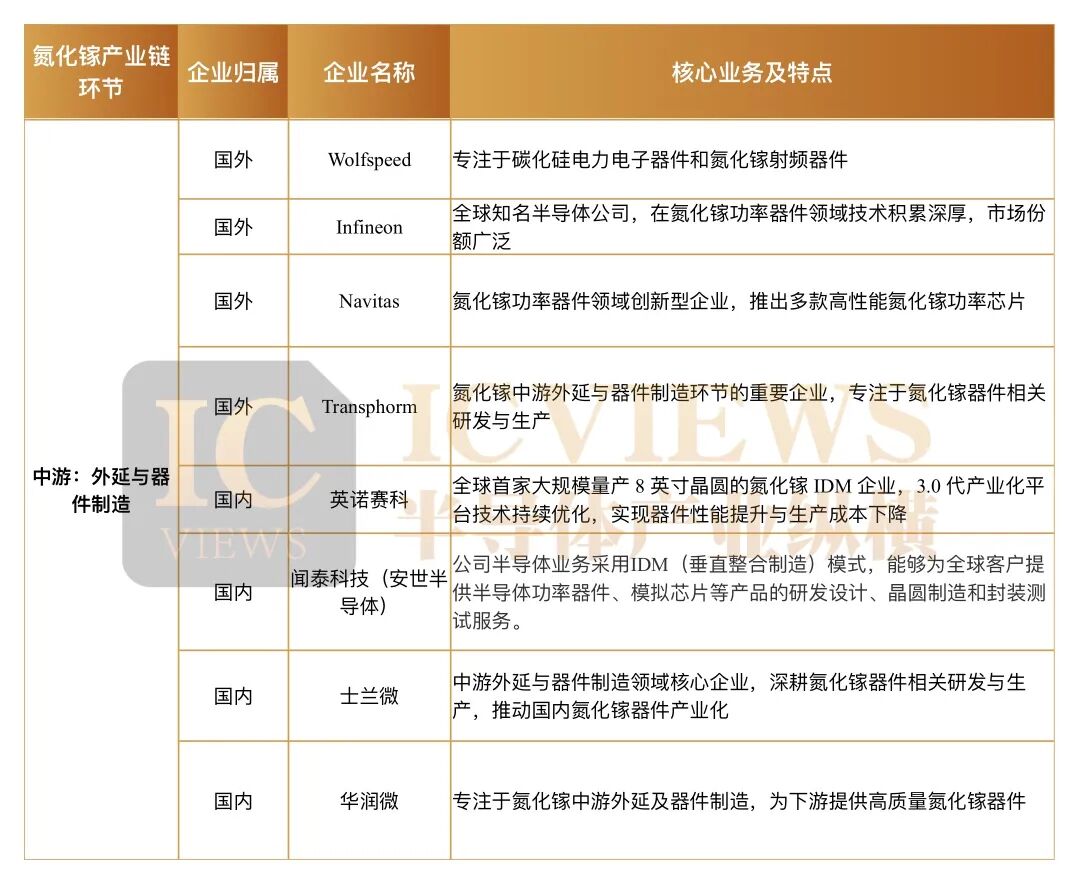
This year, WEN Technologies has continuously enriched its GaN product line and has built a portfolio of enhancement - mode GaN FET products covering 40V to 700V. Among them, the new low - voltage 40V bidirectional device can be used in the battery management systems of mobile devices and laptops, while the high - voltage 650V and 700V devices are effective in scenarios such as LED drivers and AC/DC converters. It is particularly worth mentioning that the Haosi Power Gemini small - sized range extender unveiled at the 2025 Shanghai Auto Show uses 650V cascaded gallium nitride devices provided by WEN Technologies. This technology significantly improves system stability by optimizing gate drive.
It is also making steady progress in production capacity construction. The 8 - inch SiC and GaN production line launched last year has completed the installation of equipment. At the same time, the GaN and SiC production line invested $200 million by the company in Hamburg is also progressing smoothly and is expected to be put into operation by the end of 2025, which will provide solid production capacity support for the mass production of third - generation semiconductor products.
Innosec also showed strong development momentum in the field of gallium nitride this year. The company has formulated an aggressive expansion plan, aiming to significantly increase the monthly production capacity of its 8 - inch GaN wafers from the current 13,000 to 20,000 by the end of 2025. It has released a new 100V product with an innovative top - cooling package, aiming to optimize the efficiency of solar and energy storage systems. At the same time, its third - generation 700V GaN device platform has been fully launched. This generation of products has reduced the chip area by 30% and achieved significant improvements in energy efficiency and thermal management performance. In addition, it has launched multiple new products, including 100V bidirectional devices and high - power co - packaged gallium nitride ICs, targeting high - end application scenarios such as data centers and robots.
At the same time, the company signed a GaN technology development and manufacturing agreement with STMicroelectronics and established a joint laboratory with United Automotive Electronics to jointly develop advanced new - energy vehicle power electronics systems based on GaN technology.
Penetration in multiple fields opens up growth space
Power GaN devices, with their core advantages of high efficiency, energy - saving, and miniaturization, are accelerating their penetration in multiple key fields, and the market pattern is gradually becoming clear. By 2030, the consumer and mobile fields will become the absolute dominant forces, accounting for more than 50% of the market share. Their core applications are concentrated in scenarios such as fast chargers below 300W, over - voltage protection (OVP) devices, household appliances, and power management of mobile devices. These fields close to end - consumers have become the primary positions for the large - scale application of GaN devices due to their high technological maturity and low replacement cost.
The data center and telecommunications fields are regarded as the "golden track" for GaN devices. The explosive growth of artificial intelligence computing and data traffic is driving the upgrade of the power architecture of data centers. GaN devices, meeting the core requirements of power supply units (PSUs) above 3 kilowatts, can effectively optimize the form factor of equipment, reduce heat loss, and lower operating costs, making them the core choice for the next - generation power systems. The announcement of NVIDIA's new data center architecture in 2025 triggered a wave of cooperation in the industry. Leading power semiconductor manufacturers such as Texas Instruments, Navitas, Infineon Technologies, Innosec, and onsemi have joined in, aiming to integrate GaN devices into the 800V high - voltage DC power system. This series of cooperation marks the start of the large - scale deployment of GaN devices. According to Yole Group's prediction, related products will be commercially launched for the first time around 2027; by 2030, this field will account for 13% of the market share, with revenues exceeding $380 million and a compound annual growth rate (CAGR) of up to 53%. As Roy Dagher said, "The combination of AI, electrification, and sustainable development goals makes GaN indispensable in the next - generation server and telecommunications power systems."
The automotive and mobility fields show strong high - growth potential. Although there has been some delay due to the short - term slowdown in the electric vehicle market, the long - term growth momentum is strong. It is expected that the compound annual growth rate from 2024 to 2030 will reach 73%, and the market share will be about 19% in 2030. The industry has witnessed several important milestones: Changan Automobile launched the first GaN - based on - board charger (OBC), GaN devices have been widely used in lidar (LiDAR) systems for advanced driver - assistance systems (ADAS), and the application scenarios of on - board chargers (<11kW) and DC - DC converters are also continuously expanding. With the deepening of automotive electrification and intelligence, the penetration rate of GaN devices in core areas such as automotive power management and assisted driving will continue to increase.
The industrial and energy grid fields are emerging as the third major growth driver for power GaN devices. It is expected to account for about 11% of the market share by 2030. Technological breakthroughs in the energy field are particularly significant. Enphase Energy launched the first GaN - based micro - inverter, laying the foundation for efficiency upgrades in the photovoltaic field. In addition, GaN devices are also gradually being implemented in battery energy storage systems and portable energy storage devices; in the fields of robots and motor drives, the adoption rate of GaN devices is expected to enter an acceleration period from 2028 - 2029. The coordinated development of industrial automation and the new energy industry will open up broad space for the application of GaN in this field.
From material innovation to device revolution
Currently, the 6 - inch silicon - based gallium nitride (GaN - on - Si) technology route still dominates the field of gallium nitride technology. This technology route has become the market mainstream due to its significant cost advantage - the cost of silicon substrates is only one - tenth of that of silicon carbide, and it can be directly produced using existing semiconductor production lines. In the field of wafer foundry, TSMC has long been in the leading position, with a monthly production capacity of 3,000 - 4,000 6 - inch GaN wafers. However, with the industrial upgrade, TSMC has confirmed that it will stop some GaN production lines in the next two years. This strategic adjustment reflects the profound changes taking place in the global GaN industrial pattern.
The industry is rapidly transitioning to 8 - inch wafers, and this change will have a profound impact on the industry pattern. According to Yole's research prediction, by 2030, 8 - inch wafers will capture more than 80% of the market demand. The core driving force for this transition lies in the significant improvement in cost - effectiveness - 8 - inch wafers can provide more chip output than 6 - inch wafers, effectively reducing the unit manufacturing cost. Leading technology companies have made substantial progress in this field. Through its independently developed 3.0 - generation process platform, Innosec has increased the chip output per wafer by 80% compared with 6 - inch wafers and reduced the chip manufacturing cost by 40% compared with the industry average. At the same time, international giants such as STMicroelectronics are also actively building 8 - inch GaN wafer fabs to prepare for future market competition.
In the field of epitaxial technology, multiple breakthroughs have been made recently. GaN - based devices are mainly fabricated based on hetero - epitaxial materials, and high - density linear dislocations have always been a key challenge restricting the expansion of GaN - based electronic devices to higher - voltage applications. To address this problem, research institutions have proposed the "dual - channel dislocation transport" model, innovatively regarding dislocations as one - dimensional carrier channels that can be engineered, opening up new ideas for "defect engineering" in GaN devices. In terms of material system innovation, Shenzhen Pinghu Laboratory made a breakthrough in 2025, for the first time fabricating high - quality AlGaN/GaN hetero - structures on commercial 8 - inch SiC substrates. The test results show that the dislocation density is 10 - 15 times lower than that of GaN on conventional Si substrates, and the two - dimensional electron gas mobility of the AlGaN/GaN hetero - structure is as high as 1870 cm²/V·s, and these indicators have reached the international leading level.
In terms of device innovation, the breakthrough in vertical gallium nitride (vGaN) technology is particularly remarkable. In 2025, onsemi launched a vertical gallium nitride power semiconductor with a single - chip design, capable of withstanding voltages of 1,200 volts and above. Compared with the currently commercially available lateral GaN devices, this innovative technology marks a major change in the design concept of gallium nitride devices. This technology uses GaN - on - GaN homo - substrate technology, allowing current to flow vertically through the chip, bringing multiple advantages: High - end power systems based on this technology can reduce energy loss by nearly 50%, the size of passive components can be reduced by about half, and the device volume is about one - third of that of lateral devices. This single - chip vertical structure design achieves higher power density, better thermal stability, and remains robust under extreme conditions.
With the continuous growth of demand for high - efficiency and high - power - density devices in fields such as AI data centers, electric vehicles, and renewable energy, gallium nitride technology is facing unprecedented development opportunities. The transition from 6 - inch to 8 - inch wafers, from defect control of epitaxial materials to the innovation of vertical - structure devices, these breakthroughs not only solve the long - standing reliability and performance bottlenecks in the industry but also lay a solid foundation for the large - scale application of gallium nitride technology in a wider range of application scenarios.
This article is from the WeChat official account "Semiconductor Industry Insights" (ID: ICViews), author: Fang Yuan, published by 36Kr with permission.