The most popular lab at MIT is going to integrate AI into mattresses.
In the 1950s, the MIT Media Lab was researching a new technology that was considered "stupid" at the time: moving, shrinking, and enlarging pictures by touching the screen with fingers.
Since touching the screen with fingers would leave unsightly fingerprints, this action was regarded as rude and stupid at that time. However, fifty years later, with the application of the iPhone, the once - despised touch technology of MIT has been widely used by billions of people.
There are many cases of the MIT Media Lab transitioning from the laboratory to the industry. These include the E - Ink screen used in Amazon Kindle, Lego tools combined with Steam's children's programming, and the smart glasses display products that were the earliest research on wearable technology and later became the prototype of Google Glass.
Even today, the MIT Media Lab still retains the habit of translating advanced laboratory technologies into industrial applications. On October 27th, at a closed - door demonstration event of the MIT Media Lab, Joseph A. Paradiso, a tenured professor at the Massachusetts Institute of Technology, announced his latest research result - the "FiberCircuits" smart fiber platform.
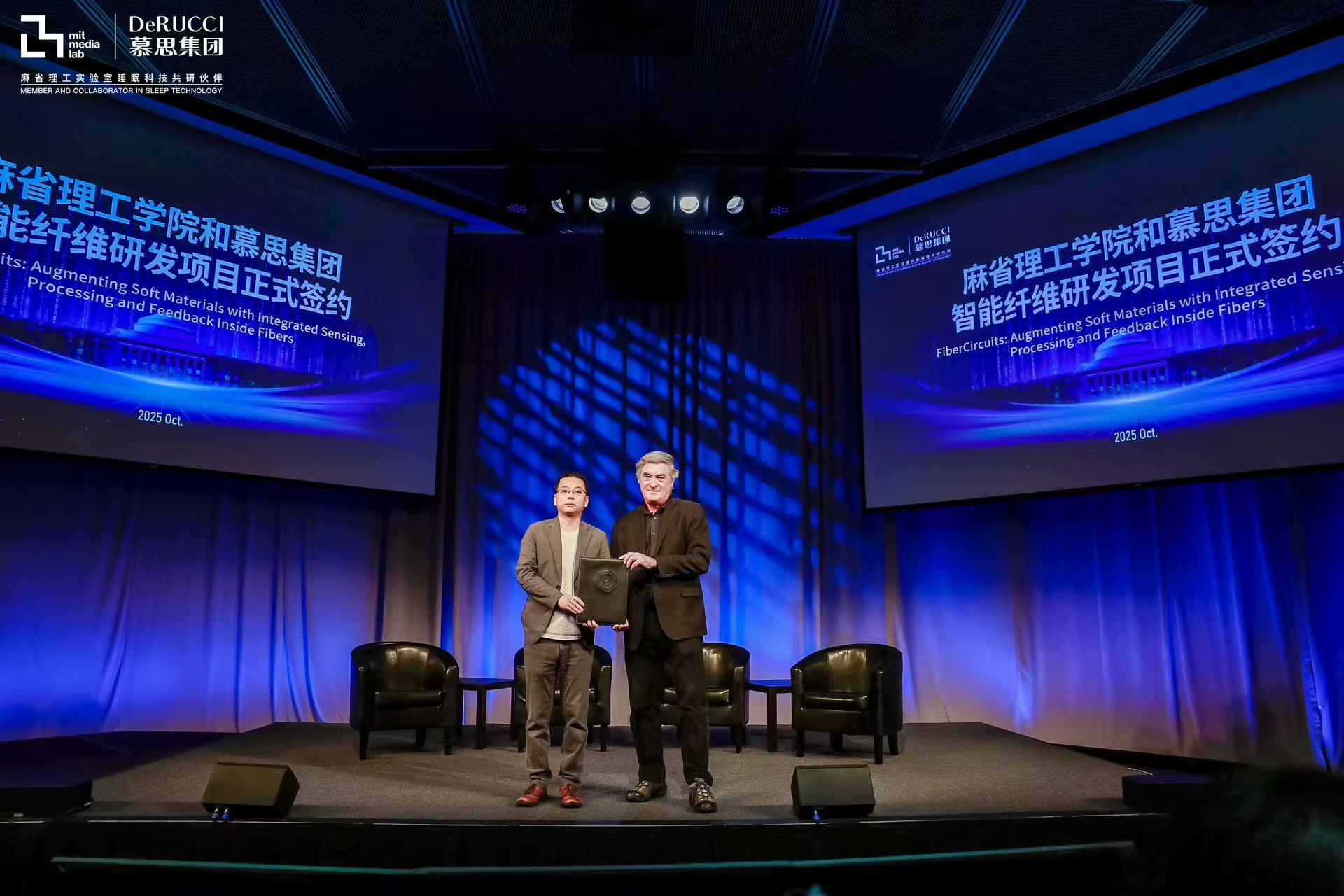
On the left is Chen Wenze, CTO of DeRUCCI Group. On the right is Joseph A. Paradiso, a tenured professor at the Massachusetts Institute of Technology.
This is an interdisciplinary comprehensive technology that integrates sensor materials, artificial intelligence, and soft furniture. Specifically, it is an integrated design of signal collection, edge reasoning, and feedback mechanisms by embedding micro - sensors and AI chips in fibers.
Professor Paradiso pointed out that FiberCircuits marks the entry of human - computer interaction into the "weavable intelligence" stage - when fibers themselves have the ability to sense and think, technology can understand and improve human sleep in a more natural way.
During the research and development process of this technology, in addition to Professor Paradiso from MIT, the other cooperation partner is DeRUCCI Health Sleep Co., Ltd. (hereinafter referred to as "DeRUCCI"), a leading brand in the bedding industry. DeRUCCI has launched several AI sleep products, and its offline sleep experience stores cover 14 countries around the world, with more than 5,700 offline stores.
1. The Smart Fiber Platform Can Help You Sleep Better
The importance of sleep is self - evident. The MIT Media Lab once conducted such a set of control experiments:
After 30 consecutive nights of sleep monitoring of 174 college students, sleep experts from Harvard Medical School found that after only three nights, the regularity of sleep was strongly correlated with indicators such as reaction, energy, and well - being.
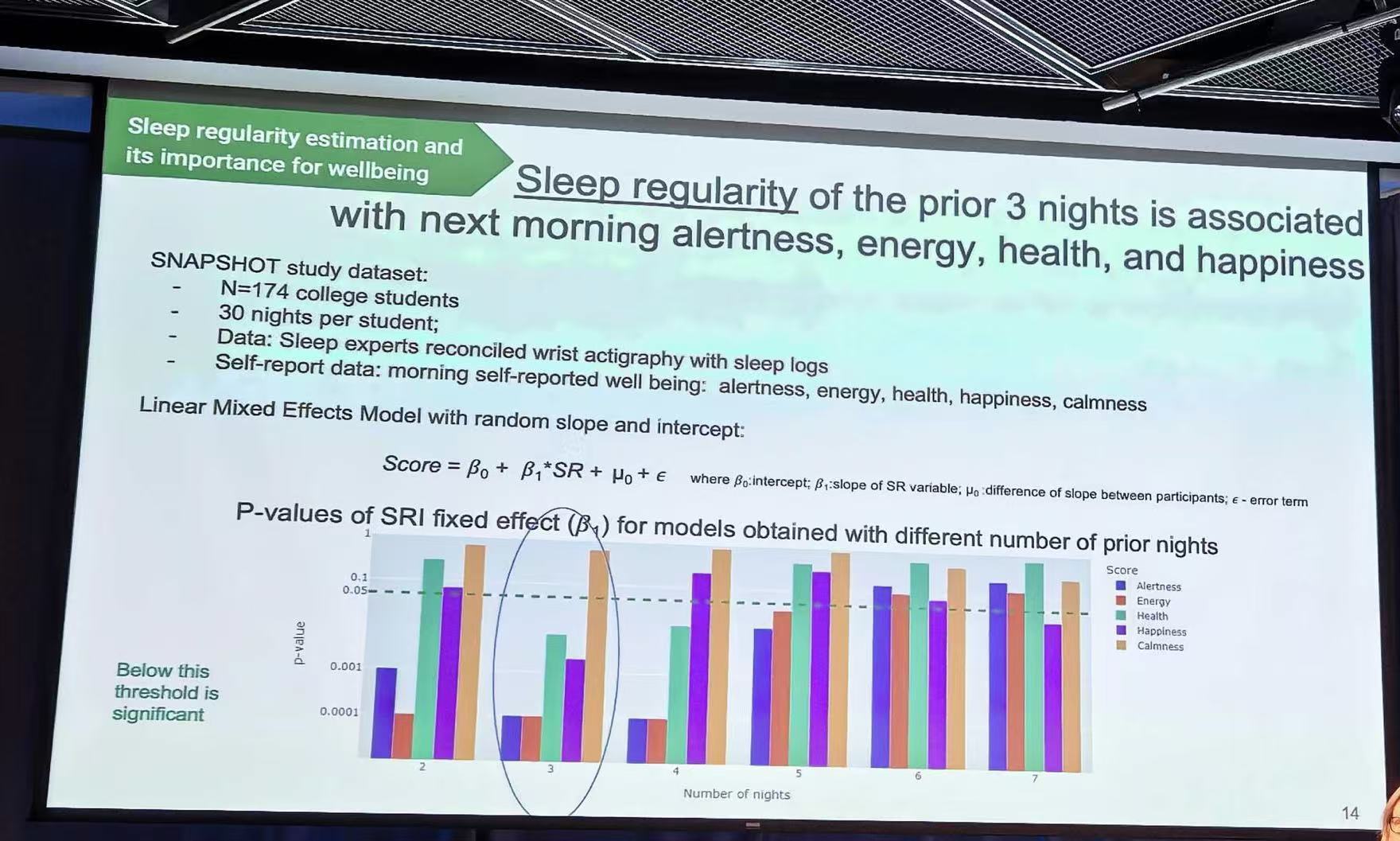
Data from the sleep control experiment conducted by the MIT Media Lab
The researchers talked about ways to use smart devices to improve sleep fatigue: once these indicators can be decoded from sensors, we are also very interested in how to "drive" - that is, to create a device that can take actions on the body to improve its functions, such as reducing fatigue, making you feel more energetic, and performing better in emotional regulation or attention.
The "FiberCircuits" smart fiber platform is such a technology for improving sleep with smart devices.
The core of the FiberCircuits technology lies in enabling flexible materials to achieve the closed - loop function of "sensing - computing - feedback". The research team embedded integrated circuits as small as 0.9 millimeters into weavable flexible circuits, enabling the fibers to capture real - time signals of breathing, body temperature, skin electrical reactions, and micro - movements.
That is to say, the FiberCircuits technology can endow fibers themselves with the ability to sense and think, and technology can understand and improve human sleep in a more natural way.
The Chinese cooperation team of this technology, the researchers from DeRUCCI Group, which specializes in bedding research, combined with China's research foundation in the fields of sleep science and home health, constructed experimental models and test platforms for the sleep postures and breathing characteristics of different populations, providing a large amount of data support for the signal collection and algorithm training of FiberCircuits.
Since 2025, DeRUCCI Group has started to build a sleep model in the "sleep" field. "The most important data here is the sleep stage data we collected, including deep sleep, light sleep, and dreams, etc." said Chen Wenze, CTO of DeRUCCI Group.
At the event that day, the research teams of both sides jointly demonstrated several experimental verification prototypes for sleep science:
A mattress verification platform based on FiberCircuits can test the sensitivity of low - density distributed sensor networks in posture recognition;
An eye mask prototype integrates photoplethysmography (PPG) and electromyography (EMG) modules to study the monitoring accuracy of breathing rhythms and nighttime muscle activities;
A pillow structure based on an inertial measurement unit (IMU) and skin electrical sensors is used to analyze the dynamic relationship between pressure changes and environmental feedback.
That is to say, compared with wearing a bracelet, DeRUCCI hopes to make the sleep monitoring of consumers more "unnoticeable" and achieve "contact detection" such as blood oxygen indicators.
"Unnoticeable monitoring is the bottom line we adhere to for user experience. We are looking for various ways to collect more data, such as temperature, humidity, and pressure." Chen Wenze said.
2. The Mattress Company Most Knowledgeable about AI
For DeRUCCI, which has been established for more than 20 years, AI has become the core goal of the group's strategic transformation. This cooperation with MIT is also based on the needs of the AI strategy to find new resource providers and partners globally.
From the perspective of the division of labor in the cooperation between the two sides, MIT provided some basic research directions and raw data processing for technologies such as sensors and materials, while DeRUCCI took the lead in the algorithms of the FiberCircuits technology on the edge side.
"We hope to place most of the reasoning actions, as well as the data and functions that can fit our physiological characteristics, on the edge side. This can reduce interference to users and protect the privacy and security of user data." Chen Wenze said.
The FiberCircuits platform can also conduct algorithm verification through light, sound, or micro - stimulation feedback mechanisms, achieving non - invasive and low - power signal interaction. DeRUCCI's Chinese team assisted in completing the multi - dimensional signal calibration experiments related to sleep monitoring and participated in the batch testing of fiber materials to ensure the stability and universality of model training.
In addition to the cooperation with the world - top university MIT, DeRUCCI also cooperates with technology giants such as Huawei in China. In September this year, it released the "Sleep Magic Cube" smart mattress jointly developed with Huawei HarmonyOS, which focuses on the different needs of different users for the mattress in the scenario of two people sleeping together, realizing the independent adjustment function of "left - right zoning".
Cooperating with Huawei represents DeRUCCI's pursuit of higher industry standards. According to Chen Wenze's disclosure to the media, "In the hardware testing stage, under the requirements of national standards, we might only need to conduct 200 or 300 tests." However, after the completion of the DeRUCCI Smart Bed project of the Sleep Magic Cube, DeRUCCI counted that nearly 900 hardware tests were conducted, and the additional certification cost alone "exceeded one million".
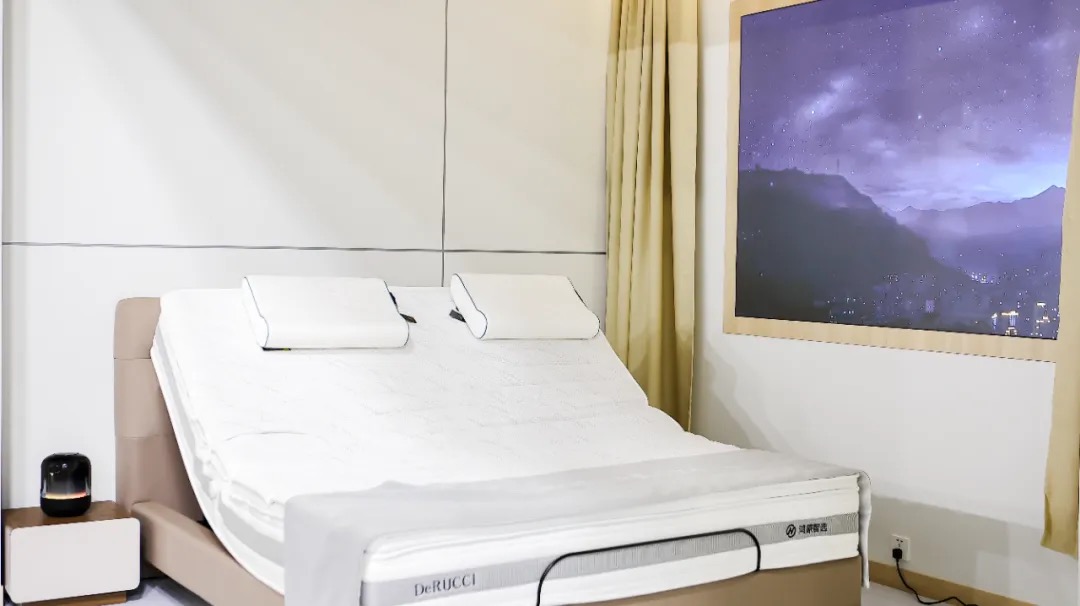
The picture is from DeRUCCI Group
From the perspective of the product effects that AI can achieve, DeRUCCI can currently perform basic consumer sleep detection and provide sleep suggestions to users through the APP. For example, based on the user's sleep state the previous night, it provides suggestions on sleep time, diet, and exercise.
In the next few years, DeRUCCI plans to solve more problems that trouble consumers, such as "sleep apnea", through its products and integrate AI into more product lines.
"Currently, many products and cooperations are still in the incubation stage, but our (DeRUCCI's) determination to transform from the traditional furniture industry to the technology industry remains unchanged." Chen Wenze said.