From a god's-eye view, DeepMind identified Melissa five days in advance, and intensity forecasting no longer relies on luck.
In ancient myths, it was the gods who controlled the storms.
They stirred up the waves and unleashed thunder, making humans pray in fear.
Two thousand years later, an AI silently computed in a server room in London.
It had no emotions and no understanding of faith, yet it could predict the course of disasters before a hurricane even took shape.
The model of DeepMind predicted that Hurricane Melissa would rapidly intensify.
This time, the warning of the storm no longer came from God, but from an algorithm.
The First Whisper of the Storm: When Machines Foresee Fury
On October 21st, shadows gradually emerged in the satellite cloud images over the Caribbean Sea. The sea surface temperature was still warm, and the air pressure only dropped slightly.
But in the DeepMind server room in London, a curve predicting hurricane intensity suddenly soared - the model showed that there was a 50% - 60% chance that an unnamed storm would escalate to Category 5.
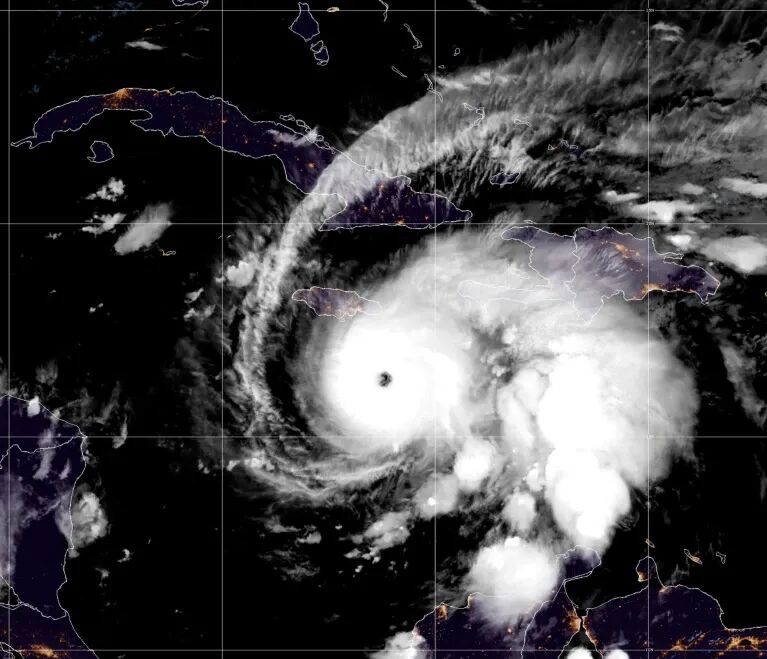
On October 23rd, the model raised this probability to over 80%.
At that time, people didn't realize that this storm, named Hurricane Melissa, would sweep across Jamaica and tear through the coast.
From a meteorological perspective, although progress has been made in "path prediction", "intensity change" has long been considered a difficult problem - the multiple subtle interactions of internal vortices, sea temperature, air pressure, humidity, etc. within a cyclone have exhausted traditional numerical models.
The DeepMind model delivered an outstanding performance in intensity prediction this time: during training, two sets of datasets were used - one was the global meteorological observation database, and the other was the exclusive observation data of about 5,000 cyclones over 45 years.
This cyclone memory bank is considered the key to its breakthrough. This means that before the storm arrives, the machine has already marked the opportunity for an "outbreak".
The NHC put it into actual use. In the 13 storms this year, the model "performed well in both path and intensity prediction".
At this moment, the timeline was extended - from a possible storm to an impending one.
Humans and machines monitored that curve together in the atmospheric turbulence, and the laws of nature were gradually revealed.
Algorithmic Memory: How Does AI Crack the "Blind Spots" of Storms?
Meteorologists can predict where a hurricane is going relatively accurately, but how strong it will be has always been a blind spot.
Traditional numerical simulation models rely on huge computing power and complex equations, and often have difficulty capturing sudden changes in hurricane intensity in a short time.
Storms like Melissa often escalate from Category 3 to Category 5 in just two days.
This is the problem that DeepMind wants to solve.
In the official project Weather Lab, the team trained the model with two types of data: the global reanalysis meteorological dataset and the historical observation database of about 5,000 cyclone events over the past 45 years.
This gives the model a set of "cyclone memories" that can actively identify signals that often indicate rapid intensification.
DeepMind said that the system can generate up to 50 possible future scenarios in a single prediction, foreseeing the formation, path, and intensity changes of cyclones within the next 15 days.
DeepMind demonstrated the prediction process of the model for Cyclone Alfred in an experiment.
It generated multiple possible paths (thin blue lines) and then gave the most likely result with an "average path" (thick blue line).
This means that AI no longer only outputs a single result, but informs meteorologists of all possibilities.
In the area south of Madagascar and the Indian Ocean, the model also successfully predicted multiple cyclones.
It not only accurately tracked Cyclones Honde and Garance during the active period but also captured the formation and intensification trends of Jude and Ivone nearly a week in advance.
This stable prediction ability across different seas and multiple cyclones makes the model truly "globally applicable" - it doesn't rely on regional experience but understands the climate system through long - term pattern learning.
The experimental data released by DeepMind shows that within a 5 - day prediction window, both the path error and intensity error of the model are significantly lower than those of mainstream systems (ECMWF, NOAA HAFS - A).
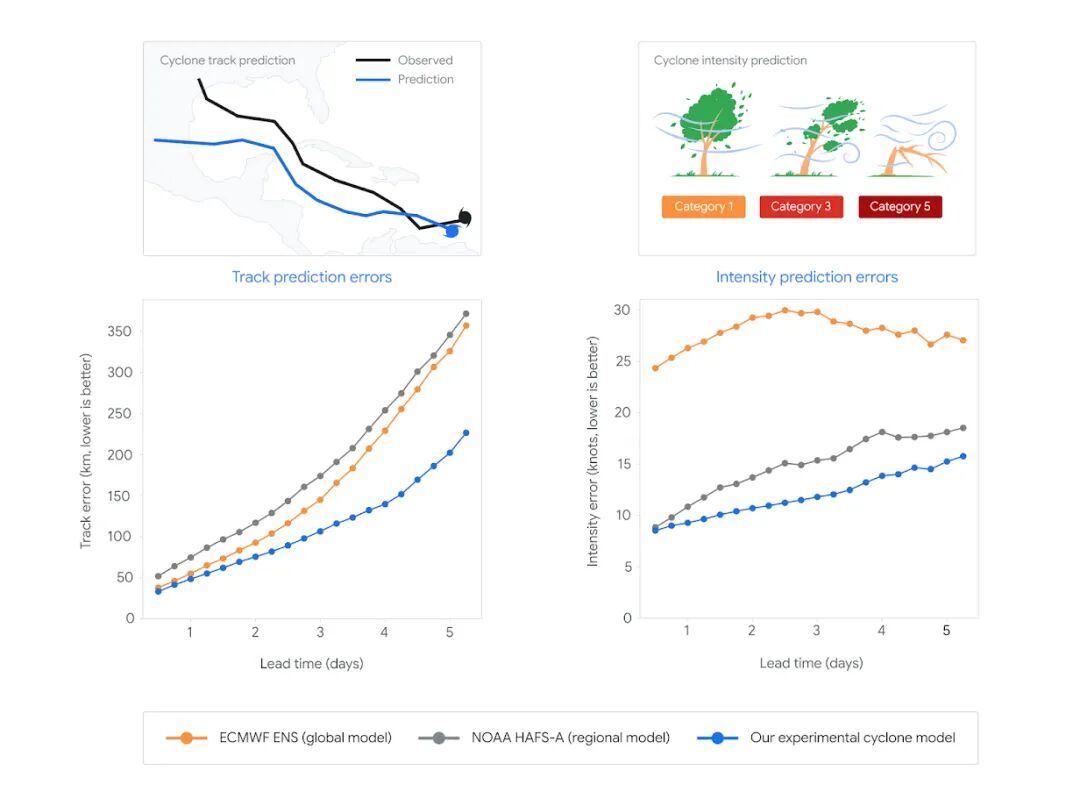
Error comparison of the DeepMind AI model in path and intensity prediction. The orange line represents the ECMWF global model, the gray line represents the NOAA regional model, and the blue line represents the DeepMind experimental cyclone model. The horizontal axis represents the number of days in advance of the prediction, and the vertical axis represents the error value. It can be seen that the AI model is significantly better than traditional models in the five - day forecast.
Compared with traditional models that require several hours of high - computing - power operation, the AI model can complete the entire calculation process within a few minutes and supports real - time updates.
For this reason, it is considered the first dedicated AI system for cyclones that combines path accuracy and intensity prediction.
James Franklin, a former NHC hurricane expert, commented:
I've never seen a new model go live so quickly and perform so well.
DeepMind's research is also considered the "critical point" of AI meteorology. It doesn't replace humans, but for the first time, it allows humans to see the upward trend of a storm before it forms.
AI on the Job: The Meteorological Bureau Gets a "New Colleague"
For scientists at the NHC, the emergence of the AI prediction model was initially just an experimental project.
Before the start of the hurricane season, they quietly incorporated the DeepMind model into their working system and ran it in parallel with traditional numerical simulation models as a "control group".
The results were obvious.
In the 13 named storms this year, the DeepMind model ranked among the top in both path and intensity prediction, especially during the critical stage when a storm suddenly escalated to a high - level one.
Brian McNoldy, a meteorological researcher at the University of Miami, commented:
Among all the hurricane prediction models in use, it is already at the forefront and may even be the best.
Traditional systems rely on high - performance computing centers and consume several hours of computing power. In contrast, this AI model can give results within a few minutes and can be continuously updated.
In the case of Hurricane Melissa, this model was officially written into the NHC's internal forecast for the first time.
On October 21st, it predicted that there was a more than 50% chance that Melissa would become a Category 5 hurricane; on October 23rd, this probability was raised to 80%.
The next day, the NHC cited this data in its announcement - "There is a significant possibility of it becoming a Category 5 storm."
This citation became a historic moment for AI prediction in actual use. AI was written into meteorological history at this moment, but scientists remained cautious.
In the NHC control room, the algorithm worked side by side with human forecasters - on the screen, on one side was the colorful cloud map of traditional physical simulation, and on the other side was the probability distribution map of the AI model, and the two corroborated each other.
For researchers, this kind of co - work was not only novel but also a relief: when the machine can identify the outbreak trend of a storm within a few minutes, humans can finally focus more energy on decision - making and response.
The Price of Prophecy: AI Can Calculate Storms but Can't Understand Them
When Hurricane Melissa landed in Jamaica as predicted by the AI, bringing up to 75 centimeters of rainfall and leaving hundreds of thousands of people without power, the DeepMind team didn't celebrate immediately.
They wrote a very calm sentence in their paper:
We are glad to provide useful references for the NHC, but we should not evaluate the overall ability of the model based on a single case.
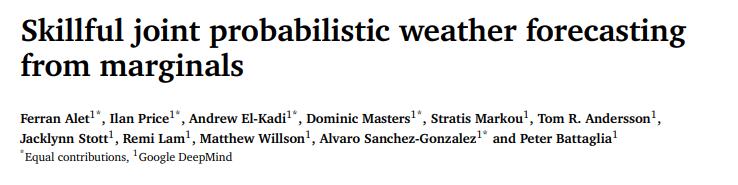
Paper link: https://arxiv.org/abs/2506.10772
The AI's prophecy is accurate, but it doesn't understand what a disaster really is. It can only see abnormal fluctuations in data but can't prevent the storm from coming or understand that a storm means destruction and panic.
This is also clear to all scientists: prediction does not equal control.
In the past few decades, meteorologists have tried to understand the atmosphere through more intensive observations and stronger computing power. Now, AI provides a brand - new entry point.
It no longer pursues physical completeness but captures precursors through pattern recognition.
But for this reason, it also has natural boundaries.
The algorithm can find patterns in thousands of samples but can't decide which port needs to be evacuated first; it can identify that a storm is forming but can't judge how humans should respond.
For NHC forecasters, the addition of AI is both a relief and a responsibility. They must judge which predictions are reliable enough and which are just illusions.
Because every warning means an economic shutdown, personnel evacuation, and the spread of panic.
Ferran Alet, a researcher at DeepMind, said in an interview:
The goal of AI is to help humans react earlier, not to replace humans.
This sentence sounds gentle but reveals a more realistic premise - the power of the algorithm is truly meaningful only when humans understand it.
The shadow of Hurricane Melissa has long since dissipated. The Caribbean Sea has returned to calm, the sea temperature has gradually dropped on the satellite map, and the news push has replaced it with the name of the next storm.
In the meteorological center in Miami, the DeepMind model is still running in the background. It receives new satellite data, updates the probability distribution, and recalculates the cyclone path for the next 15 days.
It has no emotions and never stops.
This season's storms made scientists realize for the first time that forecasting is no longer just predicting the weather but managing uncertainty.
In this long - distance race against nature, AI has become a new observer - it neither feels afraid nor proud.
Maybe one day in the future, the first warning of all disasters will come from an algorithm. But deciding how to respond and how to save still can only be done by humans.
The sound of the storm has faded, but the dialogue between humans and machines has just begun.
References:
https://www.nature.com/articles/d41586-025-03539-x
https://arxiv.org/abs/2506.10772
https://deepmind.google/discover/blog/weather-lab-cyclone-predictions-with-ai/?utm_source=chatgpt.com
This article is from the WeChat official account "New Intelligence Yuan". The author is New Intelligence Yuan, and the editor is Qing Qing. It is published by 36Kr with permission.