Automobile companies from China, Japan, and South Korea have collectively quarreled fiercely over this matter.
Recently, after gold and the stock market, solid-state batteries have become a new hot topic for public discussion.
In 2025, the solid-state battery field witnessed explosive growth. Since September alone, more than 10 enterprises have successively announced their latest progress in the solid-state battery field. Enterprises such as Phylion Battery, CALB, Narada Power Source, and Sunwoda have successively released new solid-state battery products or achievements.
The Ministry of Science and Technology and the Ministry of Industry and Information Technology of China conducted research and confirmed that all-solid-state batteries are a disruptive technology for the future. They launched a special stimulus plan worth 6 billion yuan, and six enterprises including CATL received the first batch of support. Academician Ouyang Minggao of the Chinese Academy of Sciences led the establishment of an industry-university-research platform, and the government promoted the development of solid-state batteries through policy documents and industry standards, forming an industrial strategy that combines offense and defense.
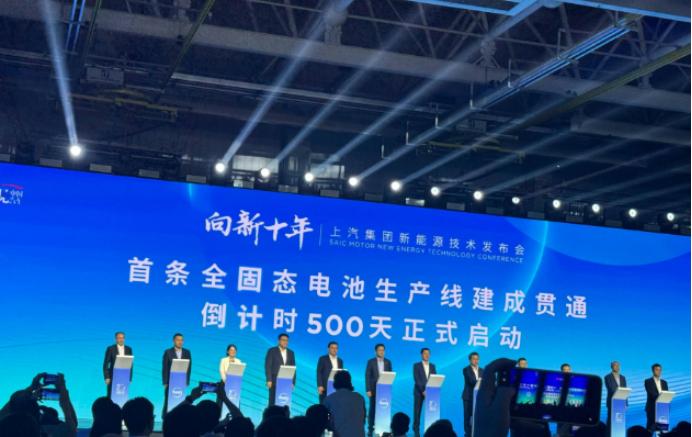
It has to be said that the imagination brought by solid-state batteries is indeed alluring. Slogans like "1500 kilometers of range after a 10-minute charge", "mass production in 2025", and "20 years ahead of China" have been around for more than 10 years. However, in reality, no company has truly released products related to solid-state battery vehicles.
So, the question arises: Is the solid-state battery really a hot trend or just a false demand?
01
Victims of Electric Vehicle Fires Can No Longer Tolerate It
When it comes to electric vehicles, many automobile enterprises still can't escape the problem of "battery fires".
In recent years, in various scenarios such as during or after a collision, or in a stationary state, electric vehicles from Tesla, NIO, XPeng, Xiaomi, etc., have caught fire. Once the door handle can't be opened, it becomes a nightmare for many electric vehicle owners.

After all, safety is a major pain point of traditional lithium batteries. The flammability of liquid electrolytes leads to the risk of battery thermal runaway. Statistics show that 31% of electric vehicle fires are related to the battery. In contrast, solid-state batteries use solid electrolytes instead of liquid electrolytes, fundamentally solving the flammability problem.
Not to mention, in terms of energy density, there is still great room for improvement in the batteries of current new energy vehicles.
Public data shows that the energy density of current mainstream liquid lithium batteries generally ranges from 180 to 220 Wh/kg, and the upper limit of the vehicle's cruising range is about 700 kilometers. In contrast, the energy density of solid-state batteries is expected to exceed 500 Wh/kg, and the cruising range can be increased to more than 1500 kilometers. Moreover, they may be able to complete a quick charge in about ten minutes.
Therefore, governments around the world have regarded solid-state batteries as the high ground of future energy strategies. In early 2024, the Ministry of Industry and Information Technology, the Ministry of Science and Technology, and the Ministry of Finance issued the "Accelerated Action Plan for the Industrialization of New Energy Vehicle Solid-State Batteries (2024 - 2026)", proposing to set up a national special fund of 5 billion yuan to support the research and development and industrialization of core technologies such as all-solid-state electrolyte materials.
In February 2025, eight departments including the Ministry of Industry and Information Technology issued the "Action Plan for the High - quality Development of the New Energy Storage Manufacturing Industry", clearly supporting the development of solid-state batteries for energy storage and proposing to accelerate the research on long - life and high - safety solid-state battery technologies.
It has to be said that the research, development, and mass production of solid-state batteries are urgently needed.
02
Can Solid-State Batteries Be the Lifesaving Solution?
With the development of technology, many people have placed their hopes on this new hot trend: solid-state batteries.
On the one hand, it directly addresses the traditional pain points of electric vehicles.
Solid-state batteries are hailed as the "ultimate technology" for electric vehicles. In various scenarios, with them, range anxiety and safety hazards will be completely eliminated.
On the other hand, they can be used in many occasions. Specifically, in terms of application areas, electric vehicles will account for 80% of solid-state battery applications (65% for passenger cars and 15% for commercial vehicles), consumer electronics will account for 12%, aerospace will account for 5%, and energy storage will account for 3%. Not only in the automotive field but also in other fields, they can be used, which also greatly opens up the growth space.
Specifically, in terms of market scale, it is estimated that the global solid-state battery shipments will reach 614.1 GWh by 2030, and the proportion of all-solid-state batteries will be close to 30%. The global solid-state battery market scale is expected to reach 1.2 trillion yuan.
It is worth mentioning that different application scenarios have significantly different requirements for battery performance: the automotive industry focuses on energy density and fast - charging capabilities, consumer electronics pursue thinness, and the aerospace field emphasizes safety and weight energy density.
Over the years, automobile enterprises around the world have been actively deploying in the field of solid-state batteries, and their development routes are also different.
Toyota claimed that "it will achieve small - scale mass production of all - solid - state batteries in 2025", and BMW announced that "it will launch a prototype vehicle equipped with solid - state batteries in 2026". CATL and BYD also demonstrated relevant R & D achievements at technology press conferences. SAIC and Changan announced their respective mass - production schedules.
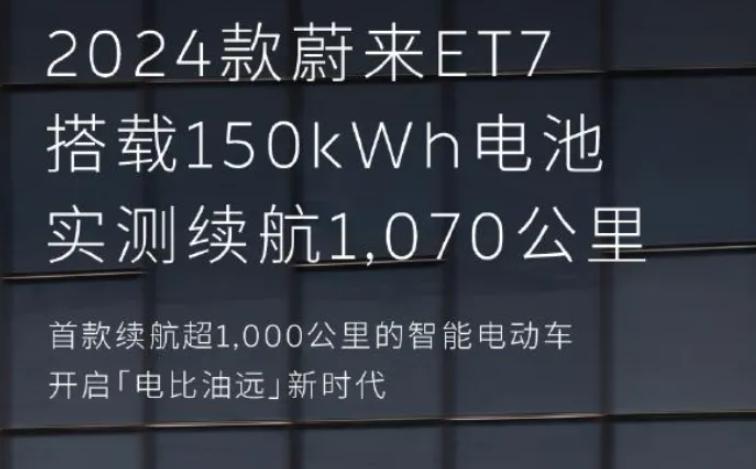
Based on various predictions, the commercialization of solid - state batteries will be promoted in stages. Before 2027, semi - solid - state batteries will be commercially applied in the high - end electric vehicle field, and all - solid - state batteries will be in the stage of technological breakthrough and small - scale on - vehicle verification. By 2027, all - solid - state batteries are expected to start mass - loading. Initially, they will be mostly used in high - end electric vehicles, aerospace, and other fields with high requirements for performance and safety. As the application scale expands and the cost decreases, all - solid - state batteries are expected to reach an industrialization turning point around 2030.
Automobile enterprises around the world have different focuses when it comes to solid - state batteries.
For example, Japan, represented by Toyota, has chosen to focus on one track - the sulfide route. It has made huge investments for fifteen years in the hope of ultimate success.
South Korea has chosen both the oxide and sulfide routes, and so far, no obvious results have been seen.
China has adopted a path of "parallel promotion of multiple routes and semi - solid - state transition". This approach is more practical, using "transition products to open the market and the market to support R & D". By simultaneously promoting three technical routes of polymers, oxides, and sulfides, it effectively disperses R & D risks.
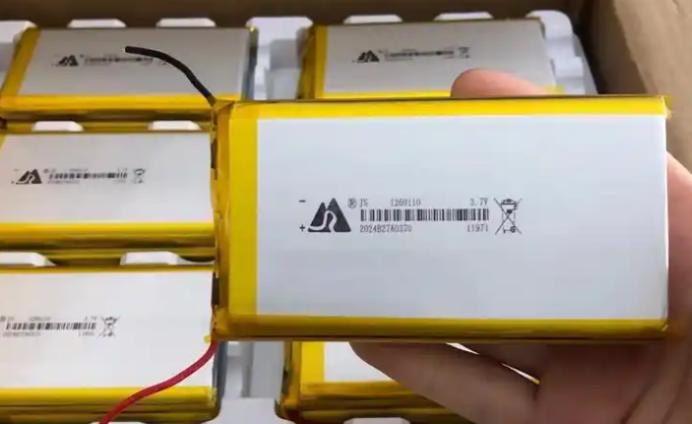
The semi - solid - state battery product is also a viable option. The so - called semi - solid - state means not pursuing the ultimate all - solid - state but retaining a small amount of liquid or gel and gradually transitioning to the solid state.
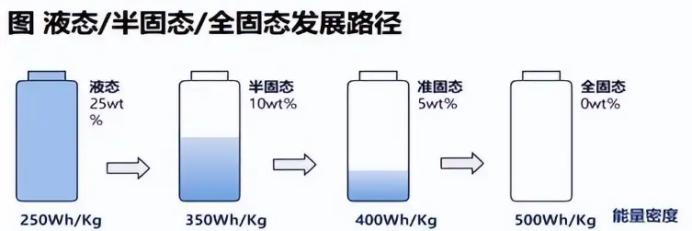
Regardless of the route, it is certain that solid - state batteries are no longer just a technology but have become a competition of national strategic strength.
03
Industrialization Will Be a Major Challenge
Although it is an inevitable trend, there are still two major problems to be solved for current solid - state batteries.
The first problem is the high cost. The material cost of all - solid - state batteries is 2 yuan per watt - hour, which is 3 - 5 times that of traditional lithium batteries. It is imaginable that once vehicles are produced, the selling price will be high. The high cost has become the primary problem for the world.
The difficulty of technological investment is also not low. There is a solid - solid contact between the solid electrolyte and the electrode. The small contact area leads to a large interface impedance. During the charging and discharging process, the electrode will expand and contract, which may cause the separation of the solid electrode and the electrolyte interface, affecting the battery life.
Equally troublesome is the lithium dendrite problem. Metal lithium anodes may still grow dendrites during cycling, which may pierce the electrolyte and cause a short - circuit. Although solid electrolytes can theoretically inhibit dendrite growth, further improvements are still needed in practical applications.
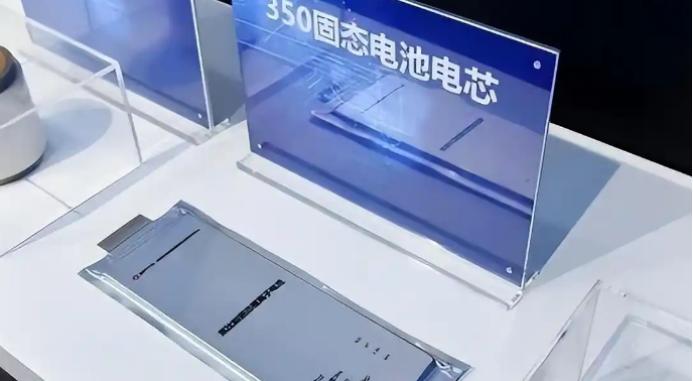
The second problem is industrialization.
The solid - state battery industry chain covers upstream materials, mid - stream manufacturing, and downstream applications, but each link is not yet mature. In the upstream material field, key raw materials such as lithium sulfide have not yet formed a stable supply system. It is imaginable that in the next 5 years, it will not only be a critical period for technological breakthroughs in solid - state batteries but also a strategic integration period for the industry chain ecosystem.
Solid electrolyte materials have become the focus of competition, and it requires the joint efforts of a group of people. Nowadays, automobile enterprises and battery enterprises jointly build joint laboratories to promote the vertical integration of "materials - cells - systems". Support is given to the localization of core equipment such as solid - electrolyte coaters to reduce production costs. At the same time, accelerating the formulation of performance, safety, and cycle - life certification standards for all - solid - state batteries and pre - arranging solid - state battery recycling technologies to establish a closed - loop utilization network for key materials are also necessary steps to accelerate the maturity of industrialization.
Some experts pointed out that "all - solid - state batteries with an energy density of 400 Wh/kg are expected to be industrialized between 2027 and 2028".
It has to be said that only by overcoming the challenge of industrialization can solid - state batteries have more possibilities.
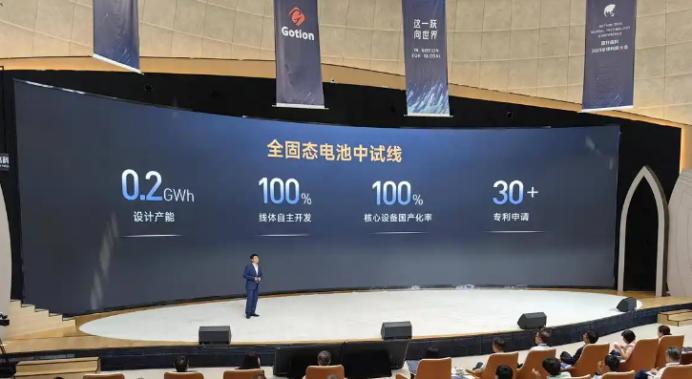
In short, to determine whether a hot trend is effective, it has to be verified by the market. The difficulty of all - solid - state batteries means that their commercial mass - production path will inevitably be long and tortuous.
Only when it is implemented in user experience can it be an effective hot trend.
This article is from the WeChat public account "Jin Cuodao Car Review", author: Aorui Bai. It is published by 36Kr with authorization.