Working non-stop for 12 hours, frantically reading 1,500 research papers in one go, and writing 42,000 lines of code, AI scientists are intensifying the fierce competition in the scientific research circle.
Finish six months' work in half a day. AI scientists are the real over - achievers.
Kosmos, an AI scientist that can search for literature, write code, produce reports, and write papers entirely on its own without human intervention.
Although it's highly competitive, it's not engaging in ineffective competition. It can work continuously for up to 12 hours. On average, it can read 1,500 papers and write 42,000 lines of analysis code in one research session. Moreover, the entire process is traceable, so goodbye to fabricating data. Maybe it can even submit papers to top - tier conferences.
Furthermore, 79% of its research results can be replicated by human scientists.
Not only does it have high - quality research, but it also doesn't have a bias in subjects. It has made 7 real discoveries in fields such as metabolomics, neuroscience, and materials science, including some unpublished human research results, and the conclusion data all match.

Doctors, are you trembling? (doge)

Let's first take a look at Kosmos' scientific research capabilities.
Search 1,500 papers and write 42,000 lines of code in 12 hours
In the field of neuroprotective metabolomics, Kosmos successfully replicated an unpublished discovery.
Based on a mouse brain metabolomics dataset, it conducted an analysis centered on the research goal of "the metabolic mechanism of hypothermia protecting the brain".
First, using pathway enrichment analysis (Figure c below), it found that compared with the normal - temperature group, the most significantly different metabolic pathway in the hypothermia group was nucleotide metabolism. Then, using a heat map (Figure d below) to analyze the changes in the precursor substances and products of nucleotides, it found that under hypothermia, the precursor substances decreased and the products increased, which is consistent with the characteristics of the activation of the nucleotide salvage pathway (an energy - saving metabolic mode).
To confirm that it was not due to other pathways, it analyzed the substance associations in the de novo synthesis pathway (Figure e below) and found no obvious association between the precursors and products, ruling out this possibility. Finally, using a bar chart (Figure b below), it visually showed that the contents of purine and pyrimidine salvage products in the hypothermia group indeed increased.
The most crucial part is the result verification. Figure g below compares the changes in the top 15 key metabolites analyzed by Kosmos with the unpublished analysis results of humans, and the log10 fold - change values of the two almost completely overlap (R² = 0.998).
This means that Kosmos not only found the conclusion that "hypothermia protects the brain by activating the nucleotide salvage pathway" on its own, but also the change trends of specific metabolites are exactly the same as those in human research, perfectly replicating this unpublished discovery.

Previously, there were also AI scientists. For example, when Sakana AI, a startup founded by Llion Jones, one of the authors of Transformer, released their The AI Scientist, it came with 10 of its own academic papers, which sparked quite a discussion.
However, its ten studies all focused on the field of AI models. It has to be said that it has a bias in subjects.
There was also the previous Robin system, which only focused on drug R & D and was unable to conduct interdisciplinary research. Moreover, it could only generate about 4,000 lines of code in a single study, and it frequently had problems with context connection.

Now, Kosmos has broken through these limitations and raised the level of interdisciplinary research and endurance to a new height.
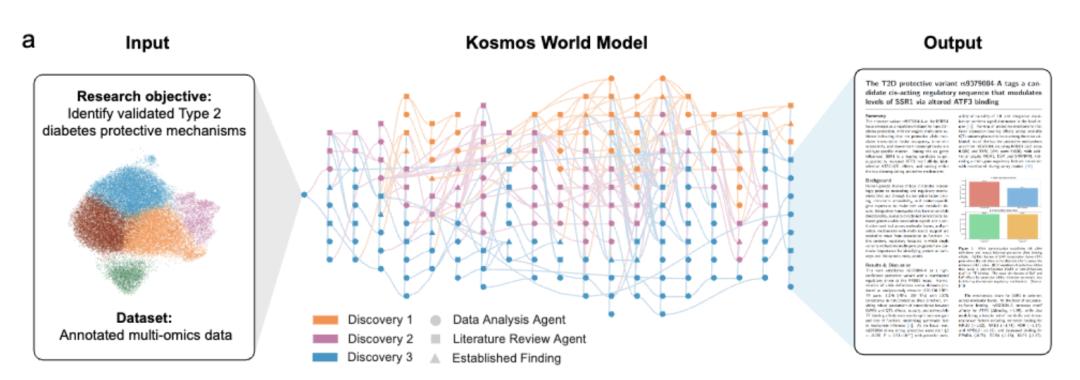
The secret lies in its structured world model, which is equivalent to giving the AI tools responsible for data analysis and literature search a shared brain, so that the two modules can synchronize information in real - time.
The working principle of Kosmos is not complicated. In essence, it is a fully automated process of "cyclic iteration + information sharing". Scientists only need to give it two core instructions:
An open - ended research goal
The corresponding dataset
It will immediately start the dual - track mode of data analysis and literature search. The entire process, from data analysis to writing the paper, does not require any human intervention.
In each round, the data - analysis AI will automatically write code to process data and explore variable relationships, while the literature - search AI will accurately search for relevant papers based on the analysis results to verify ideas. Then, through the shared brain, it integrates the information and determines the next direction.
This cycle can run for more than 200 rounds. When Kosmos believes that the research goal is achieved, it will automatically organize all the discoveries into a scientific research report, and each sentence will be marked with the corresponding code or literature source. Say goodbye to fabricating data!
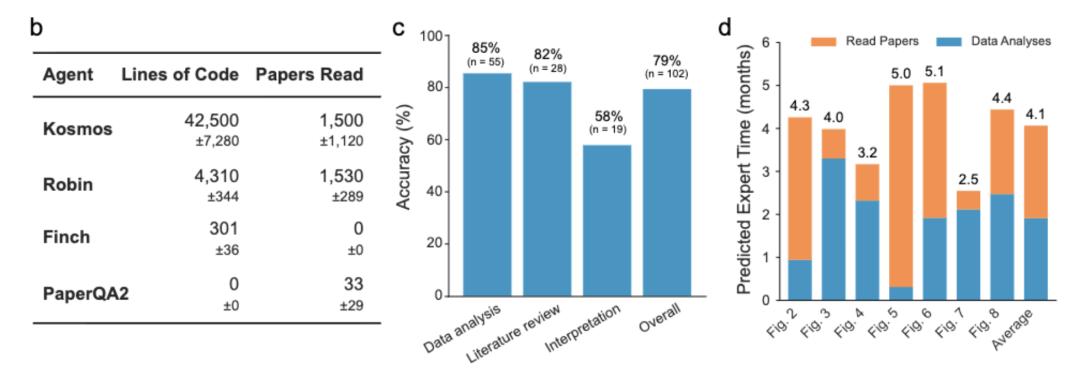
Through this process, Kosmos can work continuously for up to 12 hours. On average, it can read 1,500 papers and write 42,000 lines of analysis code in one research session (9.8 times that of Robin).
After evaluation by human scientists, it was found that its research results in 20 rounds are equivalent to the workload of a human team in six months. Moreover, the more research rounds there are, the more valuable discoveries it makes. It's not engaging in ineffective competition.
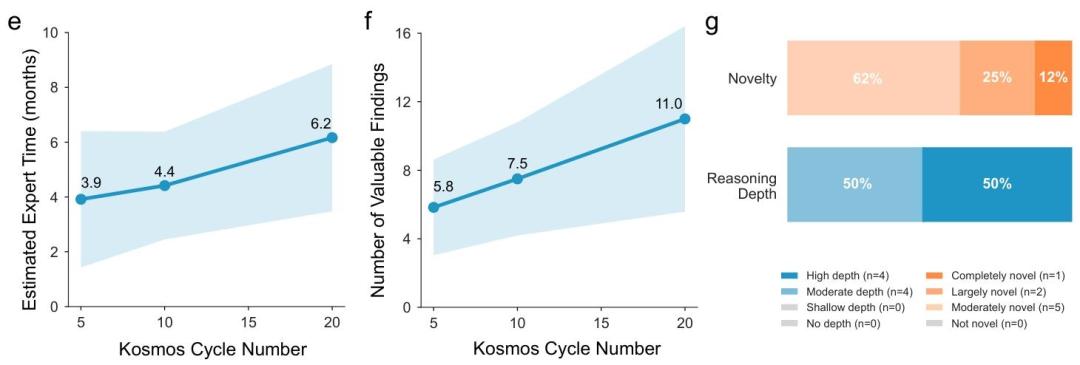
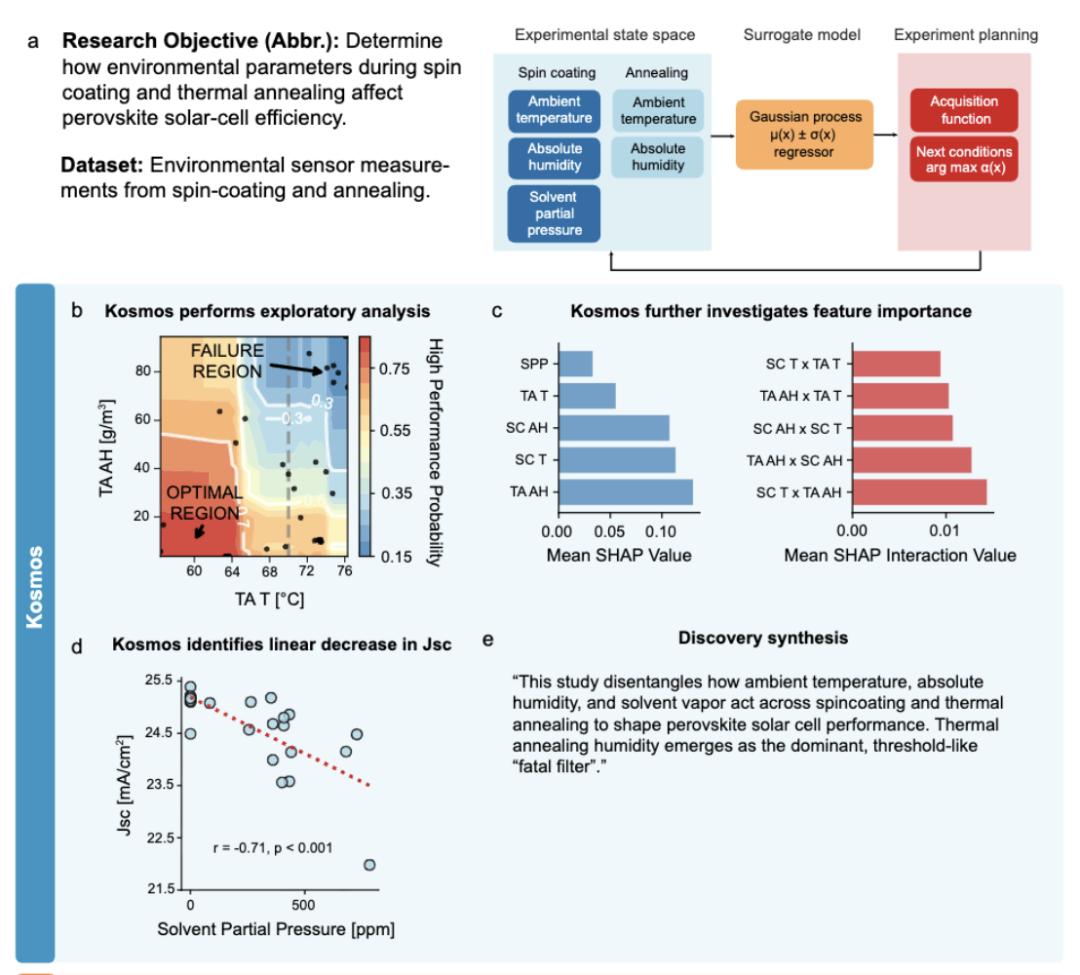
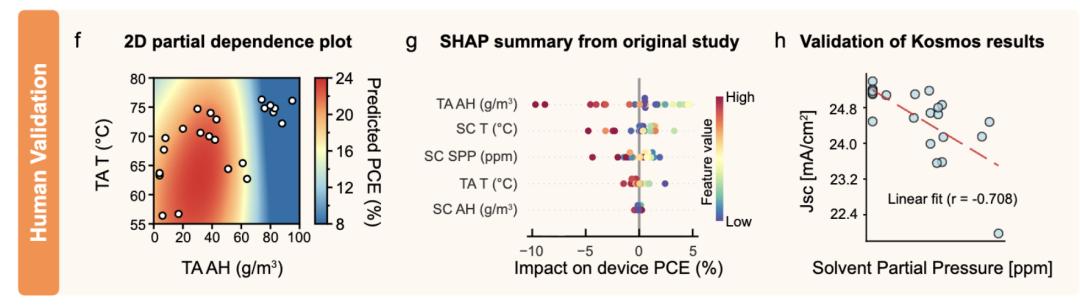
In addition to replicating unpublished human research, it has also discovered new laws. For example, the "death switch" of perovskite solar cells (the rapid efficiency decline caused by environmental factors such as high temperature and humidity) is the humidity during annealing; the protective protein for myocardial fibrosis is SOD2; it has even invented a new scientific research analysis method - using piecewise regression to find the critical point of protein changes in Alzheimer's disease.
However, Kosmos also has its shortcomings. One is that it may focus on research results that are statistically significant but of little scientific significance, and it often uses absolute statements when interpreting data. Another is that its efficiency decreases when processing datasets exceeding 5GB.
Team Introduction
Ludovico Mitchener and Michaela Hinks, technicians from Edison Scientific, led the Kosmos project.
Mitchener holds a master's degree in Computing (Artificial Intelligence and Machine Learning) from Imperial College London and a master's degree in Natural Sciences from University College London. He also participated in an AI project on criminal psychology at Imperial College London.
As an occasional angel investor, Mitchener was also included in the Forbes 30 Under 30 list in the science field.
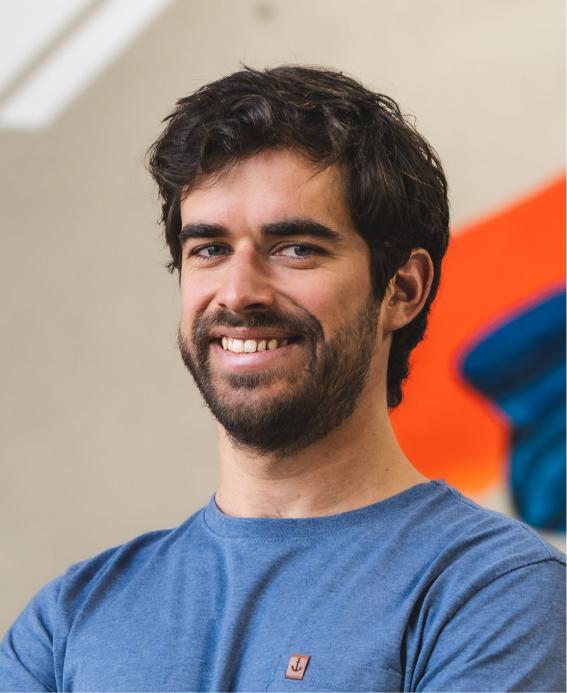
Michaela Hinks obtained a doctorate in the Department of Bioengineering from Stanford University and once interned at X.
During her doctoral studies, she developed a technology for rapid and batch detection. With this technology, it is possible to directly observe in cells whether multiple proteins are simultaneously attached to the same DNA segment and their specific attachment situations. Later, she also applied this technology to synthetic genes to verify the basic laws and principles behind the gene transcription process in human cells.
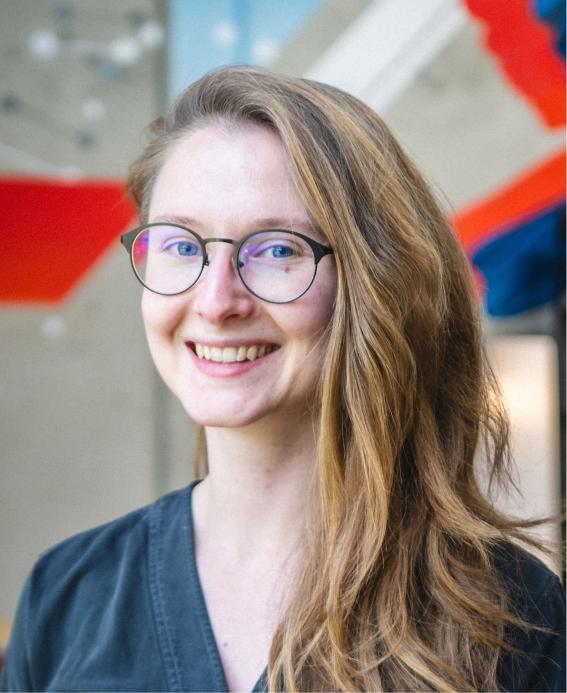
Edison Scientific is a brand - new subsidiary split from FutureHouse. FutureHouse is a non - profit organization dedicated to developing AI Agents to automate research in biology and other complex scientific fields.
Previously, FutureHouse released Robin, the predecessor of Kosmos. In May this year, Robin discovered that Ripasudil, a ROCK inhibitor used in clinical treatment of glaucoma, has potential therapeutic effects on dry age - related macular degeneration (dAMD), an eye disease that can cause blindness, which was recognized by many medical experts.
Sam Rodriques serves as the CEO of Edison Scientific. He is a physicist and bioengineer who has invented technologies for spatial and temporal transcriptomics, brain mapping, gene therapy, and nanomanufacturing.
Before founding FutureHouse, he briefly ran an academic laboratory at the Francis Crick Institute.
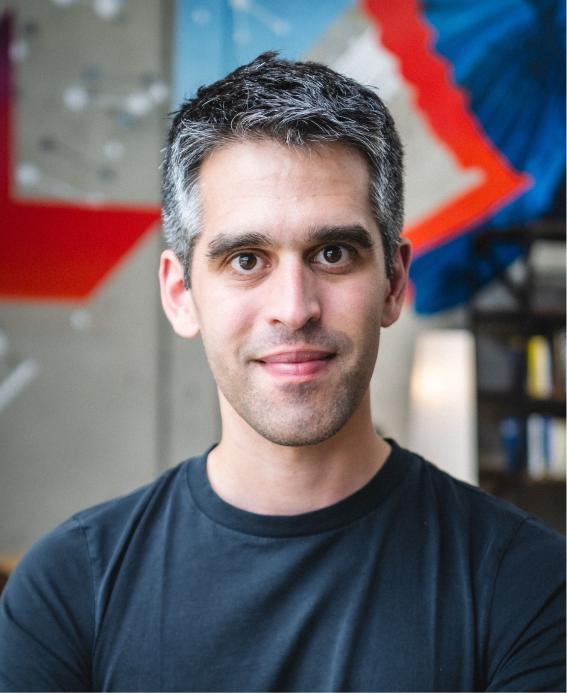
Andrew White is the technical director of Edison Scientific. He is a researcher with more than 50 peer - reviewed publications and books in the fields of LLMs, chemistry, interpretable AI, statistical mechanics, and chemical engineering. He has also won multiple awards, including the Young Investigator Award from the National Science Foundation (NSF) and the National Institutes of Health (NIH) in the United States.
Andrew White also serves as a peer reviewer for more than 30 journals and a reviewer for multiple national and private funding agencies. He is also a member of the Chemical Sciences Roundtable of the National Academy of Sciences in the United States.
Paper address:
https://arxiv.org/abs/2511.02824
Reference links:
[1]https://x.com/SGRodriques/status/1986086198004072772
[2]https://x.com/iScienceLuvr/status/1986023952037417109
This article is from the WeChat official account "QbitAI". Author: Wen Le. Republished by 36Kr with permission.